Photo: Wikipedia
Find The Best Places To Live
in Columbia
PRO TIP! You can paste a Zillow or Redfin link to get info on that property.
What It's Like Living in Columbia, SC
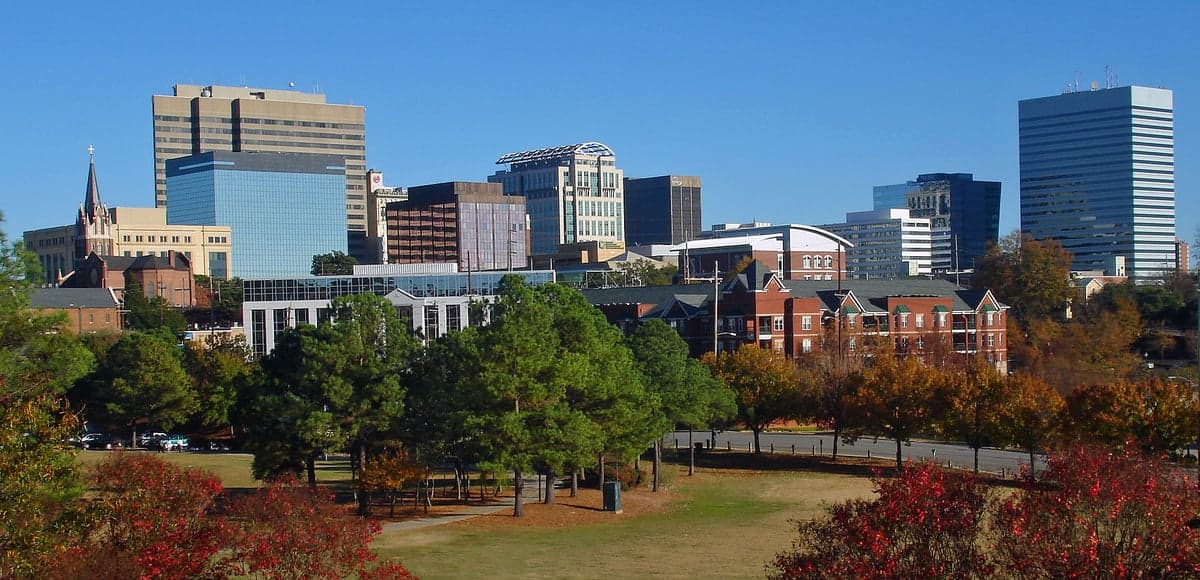
Columbia has a way of surprising people. It’s the state capital, home to the University of South Carolina, and a city that feels both small and big at the same time. With a population just over 138,000, it’s not sprawling, but it’s dense with character—a place where you’ll run into someone you know at the grocery store, yet still find a new restaurant or bar to try every weekend. The median age here is 28.7, which tells you a lot: this is a young city, driven by students, recent graduates, and young professionals, but it also has deep roots for families who’ve been here for generations.
The Daily Rhythm: Work, Errands, and Weekend Plans
Life in Columbia moves at a manageable pace. The average commute is just over 17 minutes, which means you can live in a quiet neighborhood like Shandon or Rosewood and still be downtown in ten minutes. Most people shop at the usual chains—Publix, Kroger, Walmart—but the real local flavor comes from places like the Soda City Market on Main Street every Saturday morning. That’s where you’ll grab a bag of fresh produce, a breakfast taco, and a coffee while wandering past stalls of local honey, pottery, and hot sauce. It’s a weekly ritual that defines the city’s social rhythm.
Weekends often revolve around the outdoors. The Three Rivers Greenway is a network of paved trails along the Saluda, Broad, and Congaree rivers, perfect for biking, running, or just walking the dog. Congaree National Park is a 30-minute drive south, offering boardwalk trails through old-growth floodplain forest—a genuinely underrated natural gem. For a more social scene, you’ll find people at Riverfront Park, where the old canal locks and the Columbia Canal provide a scenic backdrop for a Sunday stroll.
Sports, Community, and the Gamecock Factor
You cannot understand Columbia without understanding Gamecock football. The University of South Carolina’s Williams-Brice Stadium holds over 77,000 people, and on fall Saturdays, the entire city shifts its schedule around kickoff. Tailgating is a full-contact sport here—grills, cornhole, and enough barbecue to feed a small army. Even if you’re not a student, you’ll find yourself drawn into the energy. High school football is also a big deal, with schools like Dutch Fork and Irmo regularly competing for state championships, drawing crowds that rival some small colleges.
Beyond football, the city supports a minor league baseball team, the Columbia Fireflies, who play at Segra Park. It’s a low-key, family-friendly outing—cheap tickets, fireworks on Fridays, and a solid craft beer selection. Basketball and soccer at USC also draw decent crowds, but nothing compares to the fall frenzy.
What’s There to Do: Food, Music, and Festivals
Columbia’s food scene punches above its weight. You’ll find everything from upscale Southern comfort at Hampton Street Vineyard to no-frills fried chicken at Lizard’s Thicket, a local chain that’s been around since the 1970s. For a night out, the Vista district is the go-to: a former warehouse area turned entertainment hub with breweries like Columbia Craft and River Rat Brewery, plus live music venues like The Senate and New Brookland Tavern. Five Points, near campus, is younger and rowdier, with bars like Bar None and Jake’s packed on weekends.
Festivals are a big part of the identity. The South Carolina State Fair in October is a massive event, drawing over half a million people. St. Patrick’s Day in Five Points is a legendary block party that’s been running for decades. And the Indie Grits Film Festival showcases Southern independent film and art. For music, the Colonial Life Arena hosts major touring acts, but smaller venues like The White Mule offer a more intimate experience.
Pros and Cons of Living Here
Let’s be honest about the trade-offs. The cost of living is a genuine advantage—the index sits at 94, well below the national average. The median home value is around $243,500, which means a young professional or a small family can actually afford a decent house in a walkable neighborhood. The median household income is $55,653, which aligns with the lower cost of living, but it’s not a high-income city. If you’re in tech, healthcare, or government work (state jobs are a major employer), you’ll do fine. If you’re in a low-wage service role, it can still be tight.
The weather is a double-edged sword. Summers are hot and humid—think 90°F with 80% humidity from June through August. Air conditioning is non-negotiable. Winters are mild, with occasional ice storms that shut the city down for a day or two. Spring and fall are gorgeous, with blooming dogwoods and crisp football weather.
The biggest frustration for many residents is crime. The violent crime rate is 370.4 per 100,000, which is above the national average. It’s concentrated in certain areas—north of downtown and parts of the Eau Claire neighborhood—but it’s a concern that comes up in conversations. Most people I know take standard precautions: lock your car, don’t leave valuables in sight, and be aware of your surroundings at night. Property crime is more widespread than violent crime, but it’s a reality you have to account for.
On the flip side, the city is highly educated—46.1% of adults hold a bachelor’s degree or higher, which is well above the national average. That creates a culture of book clubs, lecture series, and a surprisingly robust arts scene for a city this size. The Columbia Museum of Art and the Koger Center for the Arts regularly host exhibitions and performances that would feel at home in a much larger city.
Ultimately, Columbia works best for someone who wants a slower pace without sacrificing access to culture, sports, and a solid job market. It’s not a place for people who crave constant nightlife or cutting-edge trends. But if you want a city where you can own a home, walk to a farmers market, and yell at a football game with 77,000 of your closest friends, it’s hard to beat.

Similar small cities to Columbia
* Values derived from national, state, county, city and local statistics and may differ in a specific area. Last updated: 2026-04-23T04:57:37.000Z
Narrative content on this page is AI-generated and may contain mistakes. Verify any details that matter before acting on them.
ReloMaps may earn a commission from affiliate links at no extra cost to you.

