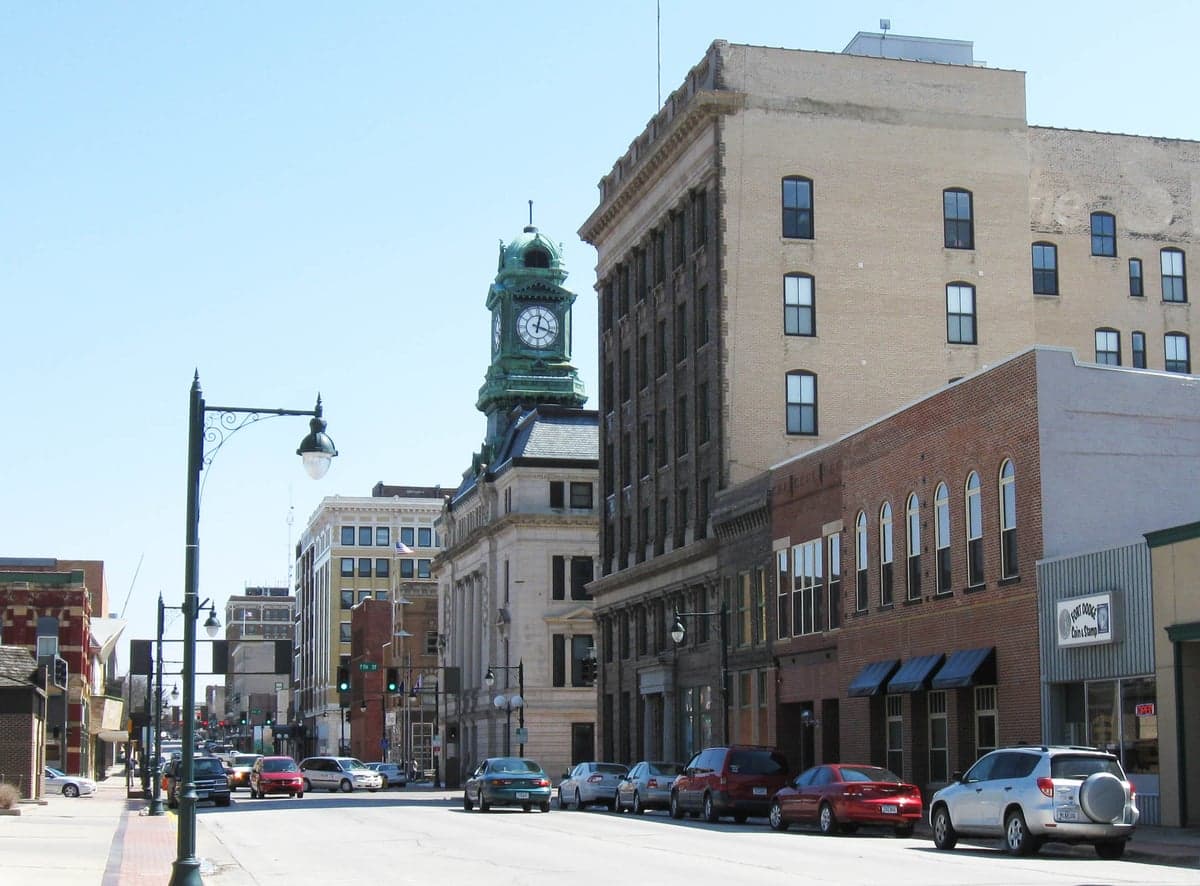
Photo: Wikipedia
Strategic Assessment of Fort Dodge, IA
Workable tactical position. Some exposure to population density or targets, but generally defensible in a crisis.
What does the Strategic Assessment tell us?
Our Strategic Assessment grades tactical survivability of an area. Major population centers, military targets, fallout zones, natural disasters, and border exposure all drive risk — lower exposure means a more defensible position in a crisis.
This is heavily inspired by Joel Skousen's Strategic Relocation book. Highly recommended you checkout the book ($)What does this tell us?
Our Strategic Assessment grades tactical survivability of an area. Major population centers, military targets, fallout zones, natural disasters, and border exposure all drive risk — lower exposure means a more defensible position in a crisis.
This is heavily inspired by Joel Skousen's Strategic Relocation book. Highly recommended you checkout the book ($)Strategic Pillars

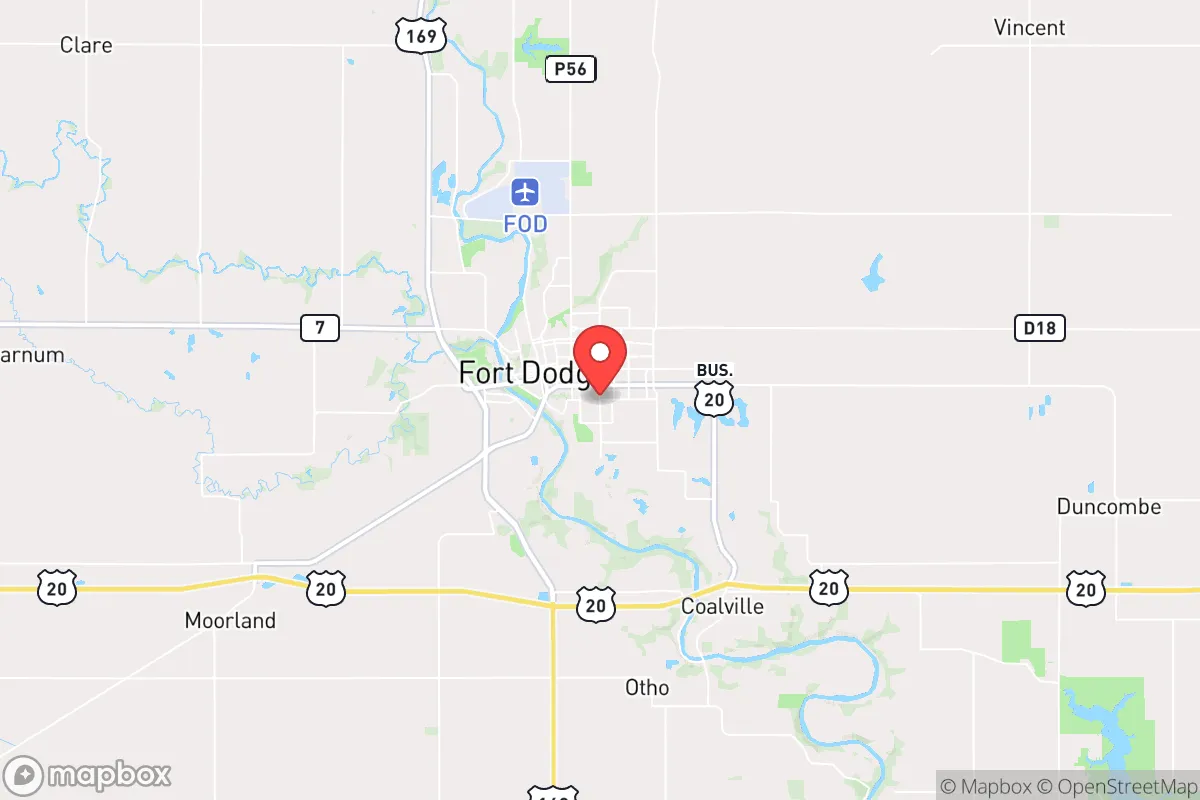
Key Distances
Regional Safe Places
Below is our recommended "safe zones" in Iowa and the surrounding area based on our strategic heuristics. For most people, it's unrealistic to live in a “safe zone” full-time due to work, family or other personal reasons. They tend to be more rural. However, many of these areas are perfect for second homes and retreat properties that double as a vacation home or even a short-term rental.
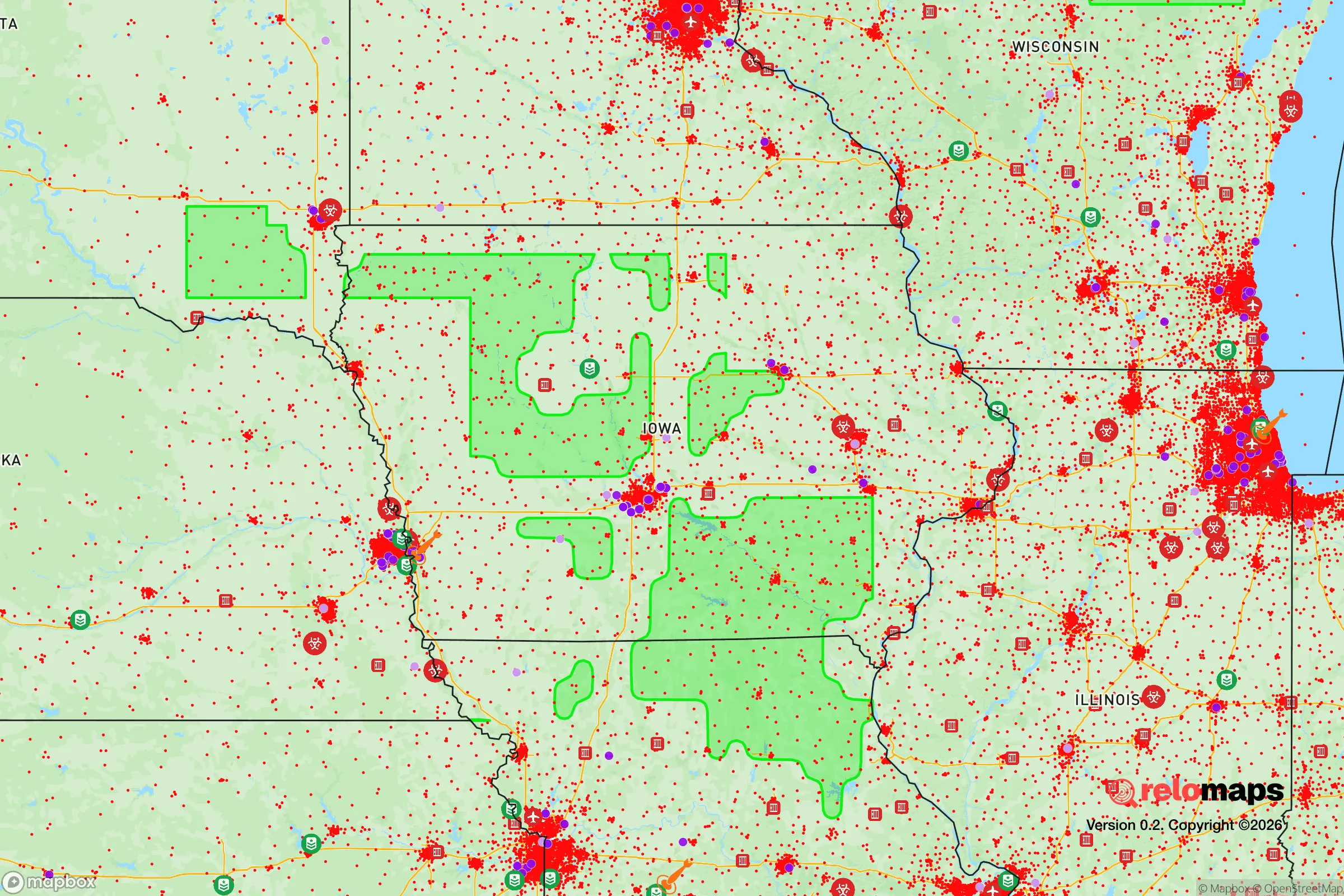
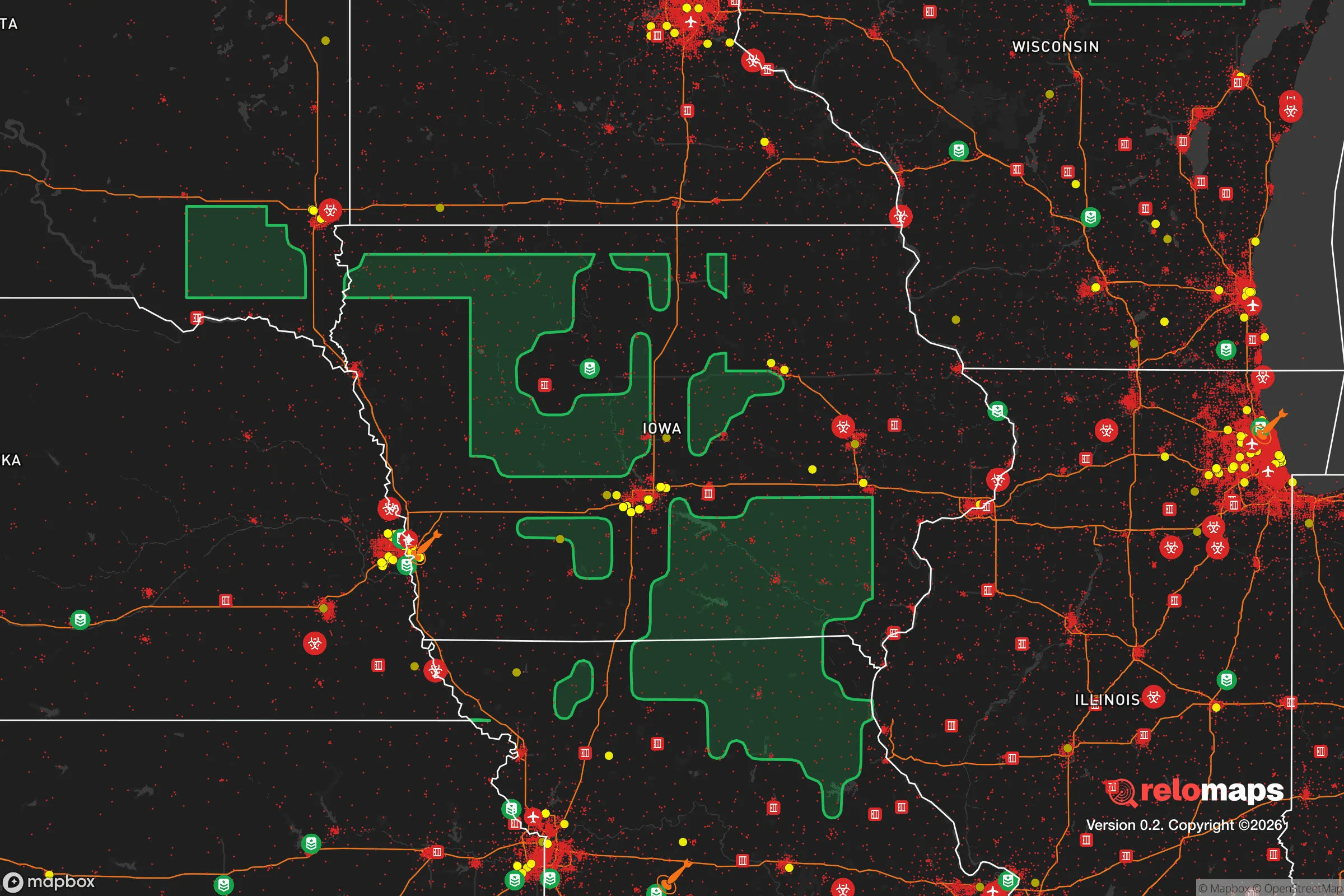


Important Note: For informational purposes only. This does not mean nothing bad ever happens in the green zones. Please use common sense. This is based on public data and modeled with AI. We tried to take a conservative approach but mistakes happen. We update this regularly as new information becomes available.
Solar Generator Recommendations
Backup power matters more here than in safer locations. We've picked three solar generators across budgets and capacity tiers — start with the budget unit if you only need a few essentials, or step up if you want to run a fridge and HVAC for days at a time.

Jackery Portable Power Station Explorer 300
Budget OptionPower on the Go: Weighing only 11 lbs, it's convenient to set up and store with book-sized foldable solar panels

BLUETTI Portable Power Station AC180
Designed for both indoor and outdoor scenarios, AC180 is highly capable as it has a robost capacity and continuous output power.

EF ECOFLOW DELTA Pro Ultra Power Station
Upgraded PickEcoFlow DELTA Pro Ultra is a whole-home energy system designed to grow with your family. Integrated with the Smart Home Panel 2, it scales to meet your evolving energy needs — keeping your home powered, intelligent, and secure through every stage of life.
We earn a commission, at no additional cost to you.
Strategic Assessment Analysis
Fort Dodge, Iowa, sits as a surprisingly resilient anchor in north-central Iowa, roughly 90 miles north of Des Moines and 130 miles west of Cedar Rapids. Its strategic value for a prepper or survivalist lies in its position outside the immediate blast radius of major population centers while still offering access to essential infrastructure, agricultural abundance, and a population that leans heavily conservative and self-reliant. The city itself has weathered economic shifts—from a historic rail and gypsum hub to a modern healthcare and manufacturing center—and its current trajectory suggests a community that knows how to adapt without losing its small-town character. For someone looking to relocate with an eye on long-term stability, Fort Dodge offers a blend of isolation and connectivity that is increasingly rare in the Midwest.
Geographic position and natural advantages for long-term stability
Fort Dodge’s location is its first and most obvious asset. It sits on the Des Moines River, which provides a reliable freshwater source, and is surrounded by some of the most productive farmland in the world. The city is roughly 90 miles from Des Moines and 130 miles from the Omaha-Council Bluffs metro, placing it far enough from major urban centers to avoid the worst of any civil unrest or disaster fallout, yet close enough to access regional medical centers and supply chains when things are stable. The terrain is flat to gently rolling, which is not ideal for defensible positions but offers excellent agricultural potential and easy movement for vehicles. The area is also rich in gypsum deposits—Fort Dodge is known as the "Gypsum Capital of the World"—which could be a resource for construction or soil amendment in a long-term scenario. The local climate is classic Midwestern: cold winters, hot summers, and a growing season that supports corn, soybeans, and livestock. For a relocator, this means you can produce your own food with relative ease, provided you have the land and know-how.
Risks, exposures, and proximity to fallout-relevant landmarks
No location is without risk, and Fort Dodge has its share. The most immediate concern is its proximity to the Iowa Army Ammunition Plant (IAAAP) in Middletown, about 150 miles southeast, and the Strategic Air Command (SAC) missile fields in western Iowa and Nebraska, which are within a 200-mile radius. While Fort Dodge itself is not a primary target, any major conflict involving nuclear or conventional strikes on those facilities could produce fallout or secondary effects. The city is also within 100 miles of the Duane Arnold Energy Center (nuclear plant) near Cedar Rapids, though that facility is permanently shut down and decommissioning is underway. More practically, Fort Dodge is vulnerable to severe weather—tornadoes, derechos, and blizzards are annual threats. The 2020 derecho that devastated Cedar Rapids missed Fort Dodge, but the city has experienced damaging storms in the past. For a prepper, this means you need a solid storm shelter and a backup plan for power outages. The city’s population of roughly 25,000 is small enough that a major disaster would not overwhelm local resources as quickly as in a larger city, but the hospital—UnityPoint Health – Fort Dodge—is a regional referral center and could become a bottleneck if a mass casualty event occurs. The local police and fire departments are professional but limited in size; mutual aid from surrounding counties would be necessary for any large-scale incident.
Practical resilience for a relocator: food, water, energy, and defensibility
For a survivalist, the practicalities of daily life matter more than abstract risk assessments. Fort Dodge scores well on food and water. The surrounding farmland is some of the most productive in the nation, and the city itself has a strong agricultural supply chain—grain elevators, feed stores, and farm equipment dealers are common. The Des Moines River runs through the city, and while it is not a pristine mountain stream, it is a reliable surface water source that can be filtered or treated. Groundwater is also accessible via wells in most rural areas outside city limits. Energy is a mixed bag: the grid is reliable under normal conditions, but the area is served by MidAmerican Energy, which relies on a mix of coal, natural gas, and wind. In a prolonged grid-down scenario, solar panels with battery storage are a viable option, and the flat terrain makes wind turbines practical for those with land. Defensibility is the weakest point. The terrain offers no natural chokepoints or high ground, and the city’s layout is typical of a Midwestern grid—open and easily traversed. For a single individual or family, the best approach is to secure a rural property within a 15- to 30-minute drive of Fort Dodge, where you can establish a retreat with good fields of fire and limited road access. The local gun culture is strong, with multiple gun shops and ranges in the area, and Iowa is a constitutional carry state, so legal barriers to self-defense are minimal. The community itself is predominantly conservative, with a strong sense of neighborly mutual aid—but also a wariness of outsiders. Building trust will take time, but once established, it can be a powerful asset.
The overall strategic picture for Fort Dodge is one of cautious optimism for a relocator with a prepper mindset. It is not a bug-out location in the mountains, nor is it a fortified compound. What it offers is a stable, low-profile base in a region that produces food, has water, and is far enough from the chaos of major cities to give you breathing room. The risks—weather, proximity to military infrastructure, and a flat, open landscape—are manageable with proper planning. The conservative culture and self-reliant ethos of the area align well with a survivalist’s values. If you are looking for a place to ride out the coming storms, Fort Dodge deserves a serious look. Just bring a good storm shelter and a willingness to put down roots in a community that values hard work and quiet preparedness over flashy prepper shows.

* Values derived from national, state, county, city and local statistics and may differ in a specific area. Last updated: 2026-04-19T09:24:08.000Z
Narrative content on this page is AI-generated and may contain mistakes. Verify any details that matter before acting on them.
ReloMaps may earn a commission from affiliate links at no extra cost to you.

