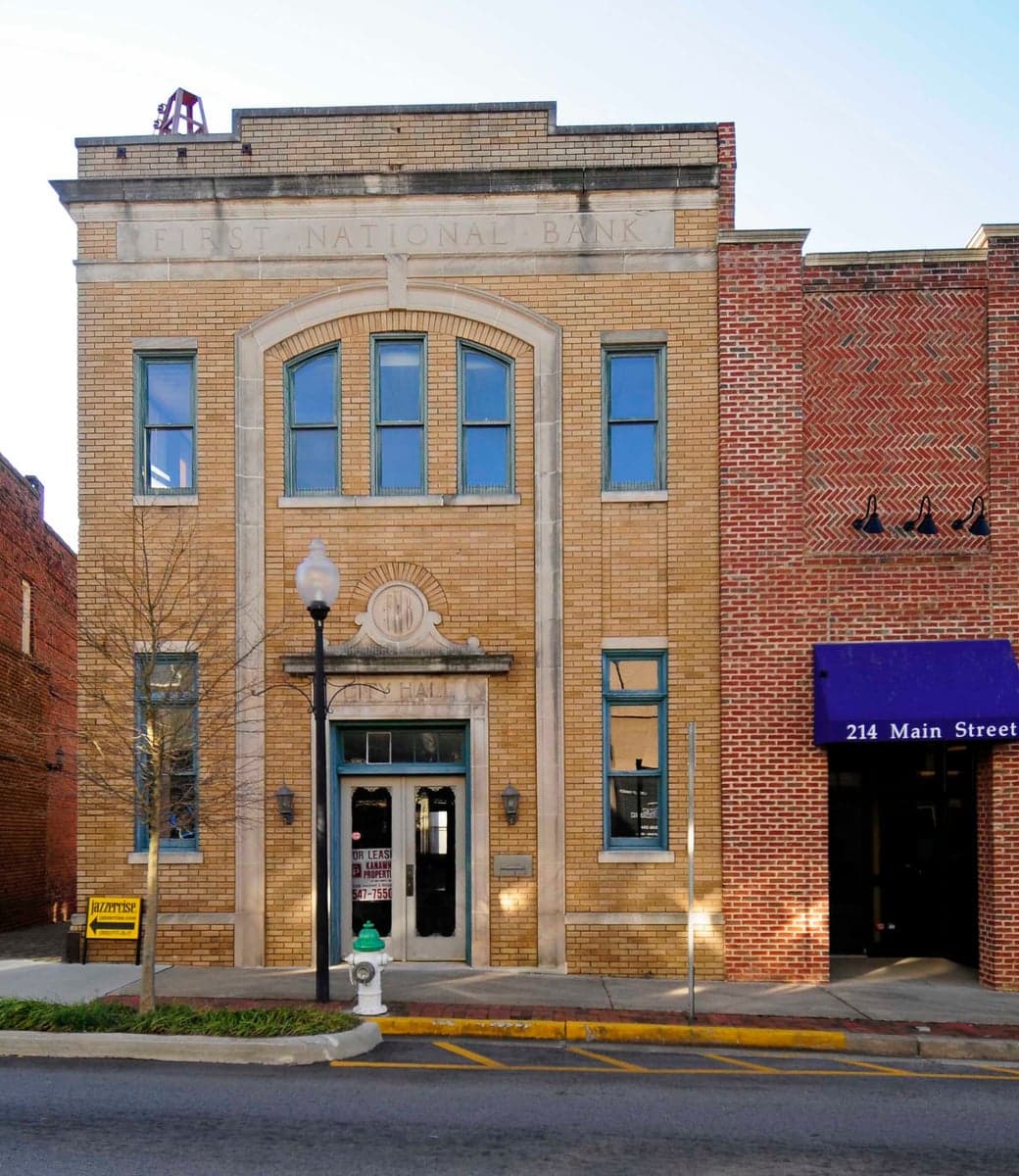
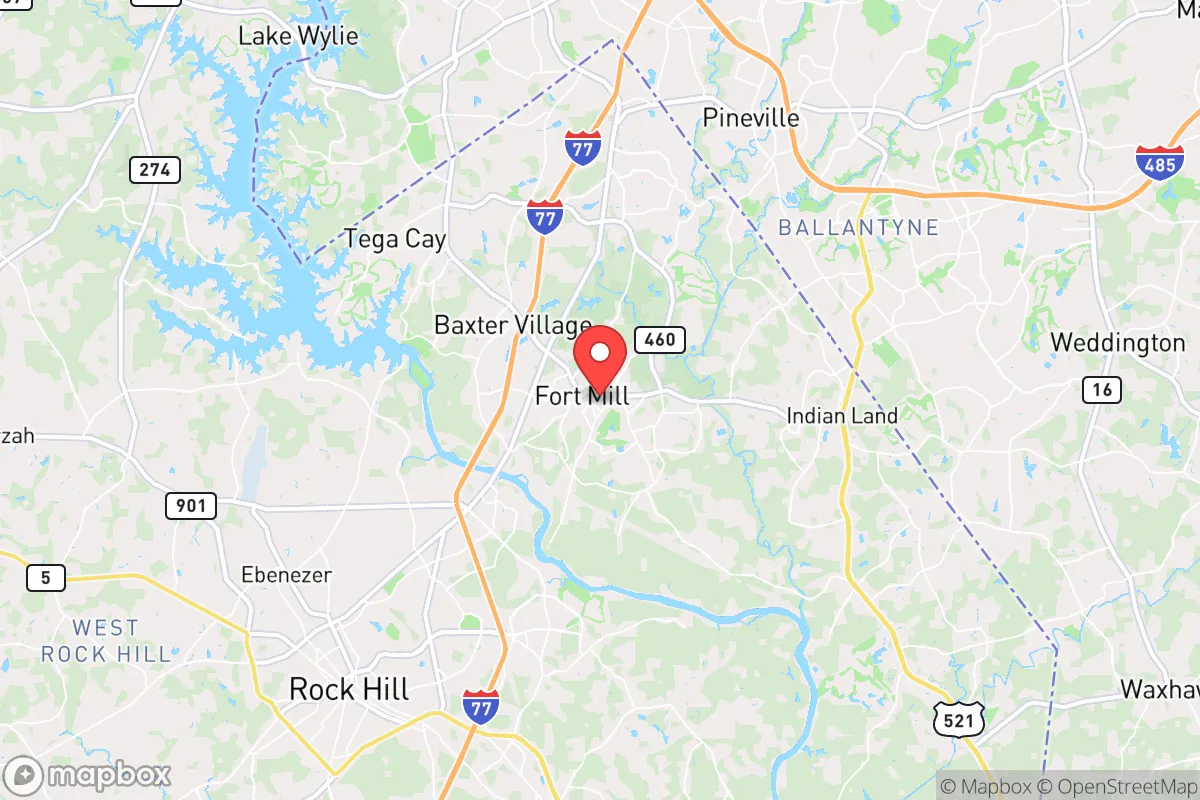
Photo: Wikipedia
Demographics of Fort Mill, SC
Affluence Level in Fort Mill, SC
An upper-middle-class area. Household wealth, education levels, and homeownership run ahead of national benchmarks.
People of Fort Mill, SC
The people of Fort Mill, South Carolina, today form a rapidly growing, predominantly white-collar community of 28,281 residents, characterized by a high education rate (58.1% college-educated) and a notably low foreign-born share (3.6%). The city’s identity is shaped by its dual nature: a historic textile-mill town that has transformed into a sought-after Charlotte exurb, attracting families and professionals seeking suburban space and strong schools. Distinctive markers include a population that is 75.5% white, 11.5% Black, 4.7% Hispanic, and 2.8% Indian (subcontinent), with a small East/Southeast Asian community at 0.5%.
How the city was settled and grew
Fort Mill’s original population was built by Scots-Irish and English settlers who arrived in the mid-18th century, drawn by land grants along the Catawba River. The town’s name derives from a colonial fort, but its first major growth wave came after the Civil War, when the Springs family established textile mills along Steele Creek. These mills drew rural white families from the surrounding Piedmont and, later, Black workers from nearby farms, creating the city’s first distinct neighborhoods. Historic mill villages like Springdale and Pleasant Valley were built by the Springs company to house these workers, with white families in one section and Black families in segregated housing nearby. By the mid-20th century, Fort Mill remained a small, insular mill town with a population under 5,000, its economy and social structure tightly tied to the textile industry.
Modern era (post-1965)
The post-1965 era brought no significant foreign-born influx—Fort Mill’s foreign-born share remains low at 3.6%—but domestic in-migration reshaped the city dramatically. The 1990s and 2000s saw the decline of textiles and the rise of Charlotte’s financial sector, pulling in white-collar families from the Northeast and Midwest. New subdivisions like Baxter Village and Regent Park absorbed this wave, offering large homes and top-rated schools (Fort Mill School District consistently ranks among South Carolina’s best). The Black population, historically concentrated in older neighborhoods like Unity and Gold Hill, has grown modestly to 11.5%, but remains largely in established enclaves rather than new developments. The Hispanic share (4.7%) is small but visible in service and construction sectors, with families settling in more affordable areas near Highway 160. The Indian-subcontinent community (2.8%) is a newer, professional cohort drawn by tech and finance jobs in Charlotte, clustering in higher-end subdivisions like Massey Preserve. East/Southeast Asian residents (0.5%) are a tiny but stable presence, often in medical or academic roles.
The future
Fort Mill’s population is heading toward continued homogenization by income and education, even as its racial makeup diversifies slowly. The city is not tribalizing into distinct ethnic enclaves—most new subdivisions are overwhelmingly white and upper-middle-class—but older neighborhoods like Unity and Gold Hill remain predominantly Black, while newer areas like Baxter Village are nearly 90% white. The Indian-subcontinent community is growing steadily, likely reaching 4-5% within a decade, but is assimilating into the broader professional class rather than forming a separate enclave. Hispanic growth is plateauing due to housing costs, while the East/Southeast Asian share is expected to remain below 1%. The foreign-born share may rise slightly but will stay well below national averages. The biggest demographic shift will be age: as Charlotte millennials age into parenthood, Fort Mill’s median age (currently around 37) will drop, reinforcing its family-oriented character.
Fort Mill is becoming a high-opportunity, culturally conservative suburb where racial diversity exists but is stratified by neighborhood and income. For a conservative-leaning mover, this means a community that values schools, safety, and stability, but where social life may be shaped by subdivision rather than citywide identity. The city’s future is one of managed growth—more of the same, rather than a radical demographic pivot.

* Values derived from national, state, county, city and local statistics and may differ in a specific area. Last updated: 2026-04-23T04:02:15.000Z
Narrative content on this page is AI-generated and may contain mistakes. Verify any details that matter before acting on them.
ReloMaps may earn a commission from affiliate links at no extra cost to you.

