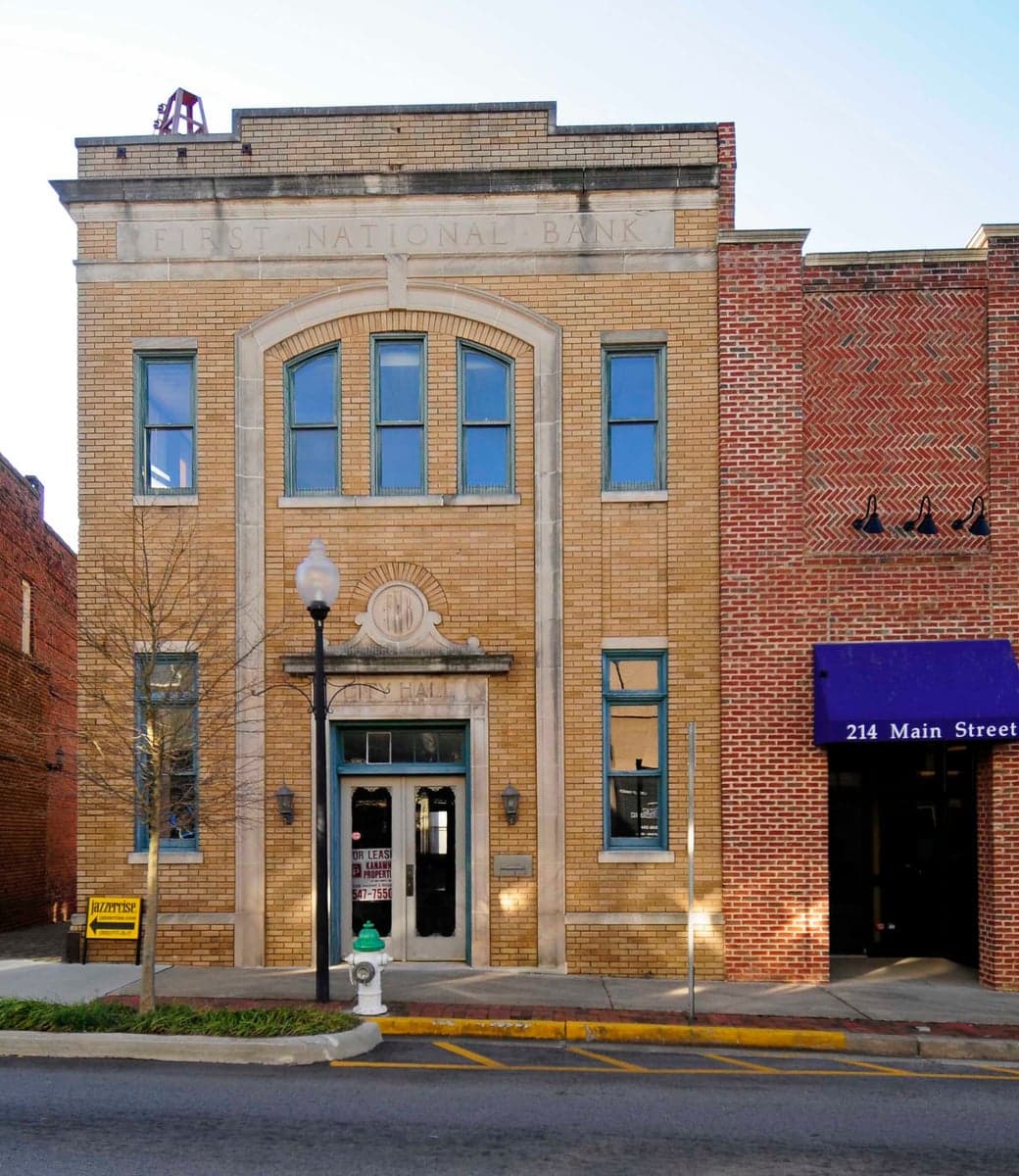
Photo: Wikipedia
Political ClimatePolitical Climate in Fort Mill, SC
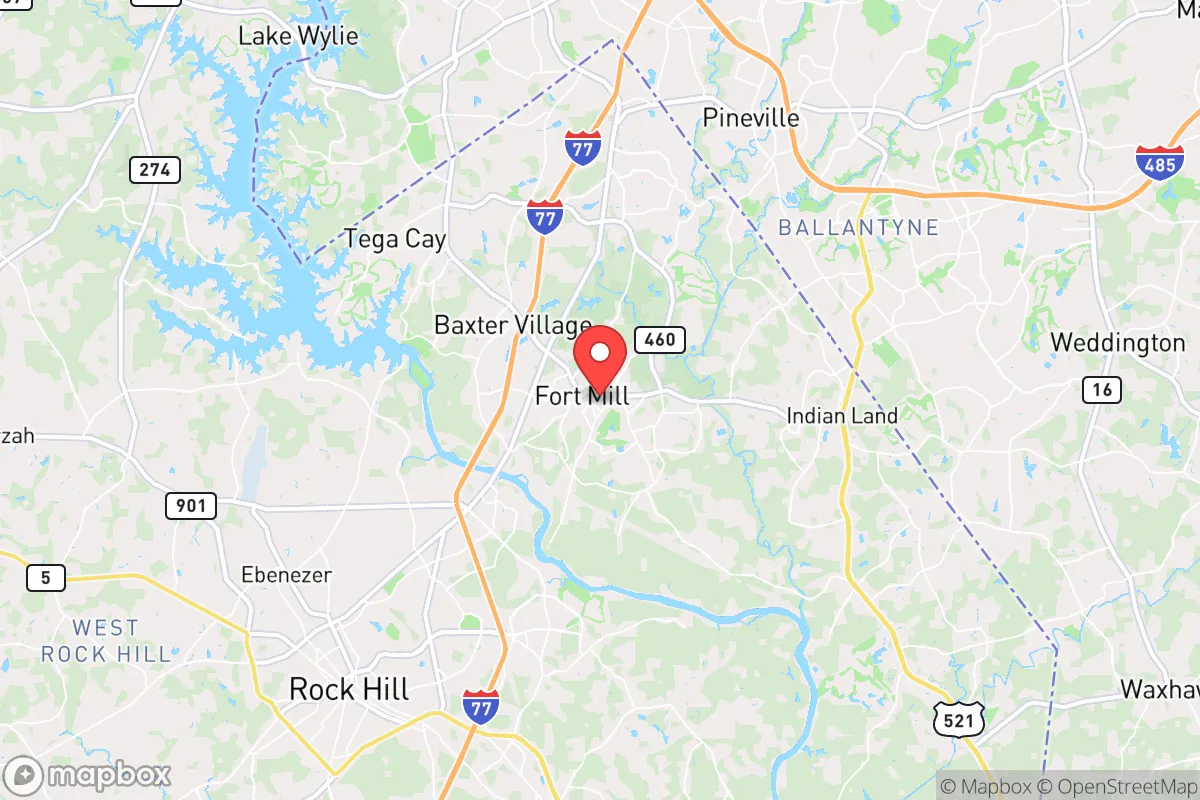
District shown is the primary district for this city’s centroid. Cities may span multiple districts.
Local Political AnalysisPolitical Analysis of Fort Mill, SC
Fort Mill has long been a reliably conservative stronghold, and while the area’s political lean is still solidly red, you can feel the ground shifting under your feet. The Cook PVI rating of R+11 tells you the district still favors Republicans by a comfortable margin, but that number doesn’t capture the cultural tension creeping in from Charlotte just across the state line. Ten years ago, you could count on your neighbors to share your values without a second thought; now, you’re starting to see more Harris signs mixed in with the Trump flags, and that’s a trend that’s got a lot of us watching closely.
How it compares
Drive ten minutes north into Charlotte, and you’re in a deep-blue urban bubble where progressive policies on taxes, policing, and school curriculum are the norm. That’s the contrast that defines Fort Mill’s political identity—we’re the buffer zone between Mecklenburg County’s leftward march and the deeper red of rural York County towns like Rock Hill and Clover. Rock Hill still votes conservative, but it’s trending purple faster than Fort Mill, thanks to its university and younger demographic. Meanwhile, Tega Cay and Lake Wylie lean more libertarian—folks there want lower taxes and less regulation, but they’re not as vocal about social issues. Fort Mill sits right in the middle: conservative on paper, but with a growing progressive minority that’s pushing for things like diversity initiatives in schools and higher density zoning. If you’re worried about government overreach, you can see the blueprint in Charlotte—higher property taxes, more mandates on businesses, and a school board that’s more focused on equity than excellence. Fort Mill hasn’t gone that far yet, but the pressure is mounting.
What this means for residents
For longtime residents, the biggest concern is that the political shift will bring the same kind of overreach we fled from up north. Property taxes in Fort Mill have already climbed 15% since 2020, partly because the county is spending more on infrastructure to keep up with growth, but also because new residents from blue states expect more government services. The school board, once a reliably conservative body, now has members pushing for critical race theory-inspired curriculum and gender identity policies that would have been unthinkable a decade ago. Local elections are where the real fight is—town council, school board, and county commission races are increasingly competitive, and a single progressive win can tip the balance on zoning, taxes, and what your kids are taught. If you value personal freedoms like the right to choose your child’s education without government interference, or the right to keep more of your paycheck, you need to stay engaged. The good news is that the R+11 rating still gives conservatives a strong base, but complacency is how you lose a town.
Culturally, Fort Mill still feels like a Southern community where people wave at each other and the church parking lots are full on Sunday. But the policy battles are heating up. The town recently debated a mask mandate for public buildings—it failed, but the fact that it was even proposed shows how the Overton window is shifting. Long-term, if the trend continues, Fort Mill could become another Rock Hill: still red on paper, but with a progressive minority large enough to force compromises on taxes, school choice, and property rights. For now, it’s still a place where a conservative can feel at home, but you’d better keep your head on a swivel and your vote ready.

State Political ClimatePolitical Climate in South Carolina
State Political AnalysisPolitical Environment in the State
South Carolina has long been a reliably red state, but the nature of that conservatism has shifted significantly over the past 15 years. The state leans Republican by about 18 points in federal elections, but the coalition is no longer just the old-school, low-country planter class and upstate textile workers. Since 2010, the state has seen a massive influx of retirees and remote workers from the Northeast and Midwest, particularly into the coastal counties and the Greenville-Spartanburg corridor. This has created a more suburban, culturally conservative but economically dynamic Republican majority, while the old Democratic strongholds in the rural "Corridor of Shame" counties have hollowed out. The 2022 gubernatorial race saw Henry McMaster win by 17 points, and the state legislature is a supermajority Republican, but the internal fights are now between the Chamber of Commerce wing and the more populist, liberty-minded faction.
Urban vs. rural divide
The political map of South Carolina is a tale of three distinct regions. The Upstate, anchored by Greenville and Spartanburg, is the engine of the state's modern conservatism. Greenville County itself is the largest county in the state and votes about 60% Republican, but it's a different kind of Republican than you'd find in the Lowcountry — more evangelical, more focused on economic development, and increasingly influenced by the massive BMW, Michelin, and GE plants. The Lowcountry, particularly Charleston and Beaufort, is where the demographic shift is most visible. Charleston County is now a swing county, voting for Biden in 2020 by a narrow margin, driven by the influx of tech workers and retirees from New York and New Jersey. Beaufort County (Hilton Head) is still red but getting purple around the edges. The Midlands, centered on Columbia, is the most politically mixed area, with Richland County (Columbia proper) being a reliable Democratic stronghold due to the state university and state government workforce, while Lexington County across the river is one of the most conservative suburban counties in the entire Southeast. The rural counties — Allendale, Marlboro, Lee — are overwhelmingly poor, majority-black, and vote 70%+ Democratic, but their populations are shrinking so fast they barely register in statewide totals anymore.
Policy environment
South Carolina's policy environment is broadly conservative, but with some notable wrinkles that matter for a new resident. The state has a flat income tax that was cut from 7% to 6.5% in 2022, with a trigger to drop further to 6% as revenue targets are hit. Property taxes are very low — the effective rate is about 0.5% of market value — but the trade-off is a high sales tax (6% state, plus local options up to 9%). There is no state-level property tax on vehicles, which is a big deal for families. On education, the state passed a universal school choice voucher program in 2023 (the Education Scholarship Trust Fund), which allows any family to use state funds for private school or homeschooling expenses. This was a major win for parental rights advocates. Healthcare is a mixed bag: the state did not expand Medicaid under the ACA, which keeps taxes low but leaves a coverage gap for low-income adults. There is no state-level rent control, no state income tax on Social Security benefits, and the state has a "right-to-work" law that keeps union influence minimal. Election laws are strict: voter ID is required, early voting was expanded to two weeks in 2022, but absentee voting requires an excuse. The state also has a constitutional carry law (permitless concealed carry) that went into effect in 2021.
Trajectory & freedom
Over the past five years, South Carolina has moved decisively in the direction of expanding personal liberty, particularly on gun rights and parental autonomy. The constitutional carry law (H. 3094) passed in 2021 was a landmark — no permit required to carry a concealed firearm for anyone 18 or older who can legally possess a gun. The state also passed a fetal heartbeat bill in 2023 (the "Fetal Heartbeat and Protection from Abortion Act"), which bans abortion after about six weeks, with exceptions for rape, incest, and the life of the mother. This was a major victory for the pro-life movement. On education, the Parents' Bill of Rights (H. 3728) passed in 2022, requiring schools to notify parents of any medical or mental health services offered and to get parental consent before any sex education or gender-related instruction. The state has also resisted federal overreach on vaccine mandates — Governor McMaster issued an executive order in 2021 banning state agencies from requiring COVID-19 vaccines. However, there are areas of concern for liberty-minded residents. The state's blue laws (restrictions on Sunday alcohol sales) remain on the books in many counties, and the state's eminent domain powers have been used aggressively for economic development projects, particularly in the Upstate. The state also has a broad "disturbing schools" law that has been criticized for criminalizing minor student behavior.
Civil unrest & political movements
South Carolina has a relatively low level of visible civil unrest compared to states like Oregon or Georgia, but there are flashpoints. The Confederate flag removal from the Statehouse grounds in 2015 after the Charleston church shooting was a watershed moment that still reverberates. The state has seen a growing Moms for Liberty presence, particularly in Lexington and Greenville counties, where school board meetings have become battlegrounds over library books and curriculum. On the left, the Indivisible movement has a strong presence in Charleston and Columbia, organizing around voting rights and environmental issues. Immigration politics are relatively quiet compared to border states, but there is a growing concern about the influx of migrants into the Greenville and Spartanburg areas for construction and manufacturing jobs. The state has a sanctuary city ban (2019 law requiring local law enforcement to cooperate with ICE), and there have been no serious attempts to repeal it. Election integrity remains a hot topic — the 2020 election in South Carolina was not seriously contested, but the state passed a voter ID law in 2021 that tightened absentee ballot procedures. The most visible political movement in the state right now is the school choice coalition, which has successfully pushed the voucher program and is now targeting curriculum transparency.
Projection
Over the next 5-10 years, South Carolina is likely to become more Republican at the state level, but more internally divided. The in-migration from the Northeast and Midwest is accelerating — the state grew by 10% between 2010 and 2020, and that pace is increasing. These new residents tend to be culturally conservative on taxes and crime but more moderate on social issues, which will create tension within the GOP. The Charleston and Greenville metros will continue to drive the economy and the politics, while the rural counties will continue to shrink. The state's flat tax is likely to be cut further, possibly to 4% or lower, as revenue from growth continues. The school choice movement will likely expand to include education savings accounts that can be used for a wider range of expenses. The biggest wild card is the coastal development — as Myrtle Beach and Hilton Head become more expensive, the political character of those areas may shift as younger, more diverse workers move in for service jobs. The state's abortion law will likely face court challenges, but the legislature is solidly pro-life and will defend it. For a conservative moving in now, the state will feel familiar but with a growing tension between the old-guard, low-tax conservatism and the newer, more culturally assertive populism.
For a new resident, the bottom line is this: South Carolina is a state where your personal freedoms are broadly respected, your taxes are low, and your kids can get a good education without the state indoctrinating them. The school choice law alone is worth the move if you have children. The gun laws are among the best in the country. The biggest practical challenges you'll face are the high sales tax (which hits everyday purchases) and the lack of Medicaid expansion (which means if you fall on hard times, healthcare is expensive). The political climate is stable but not static — the coastal areas are shifting, and the internal GOP fights over spending and development are real. If you're looking for a place where the government mostly leaves you alone and your vote actually counts, South Carolina is a solid bet. Just know that the Charleston area is getting expensive and crowded, and the Greenville area is where the real action is for jobs and conservative community.
* Values derived from national, state, county, city and local statistics and may differ in a specific area. Last updated: 2026-04-23T04:02:15.000Z
Narrative content on this page is AI-generated and may contain mistakes. Verify any details that matter before acting on them.
ReloMaps may earn a commission from affiliate links at no extra cost to you.

