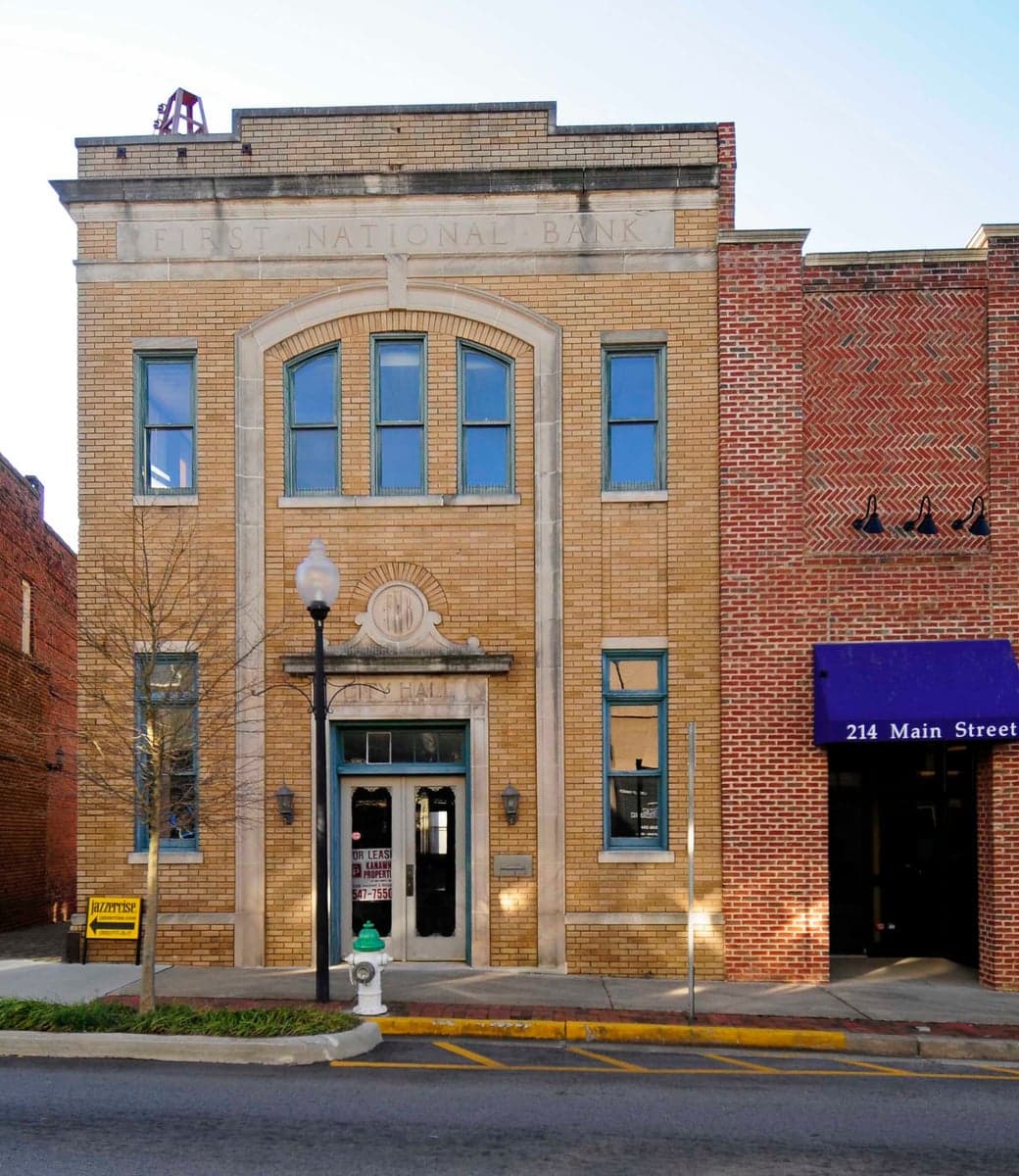
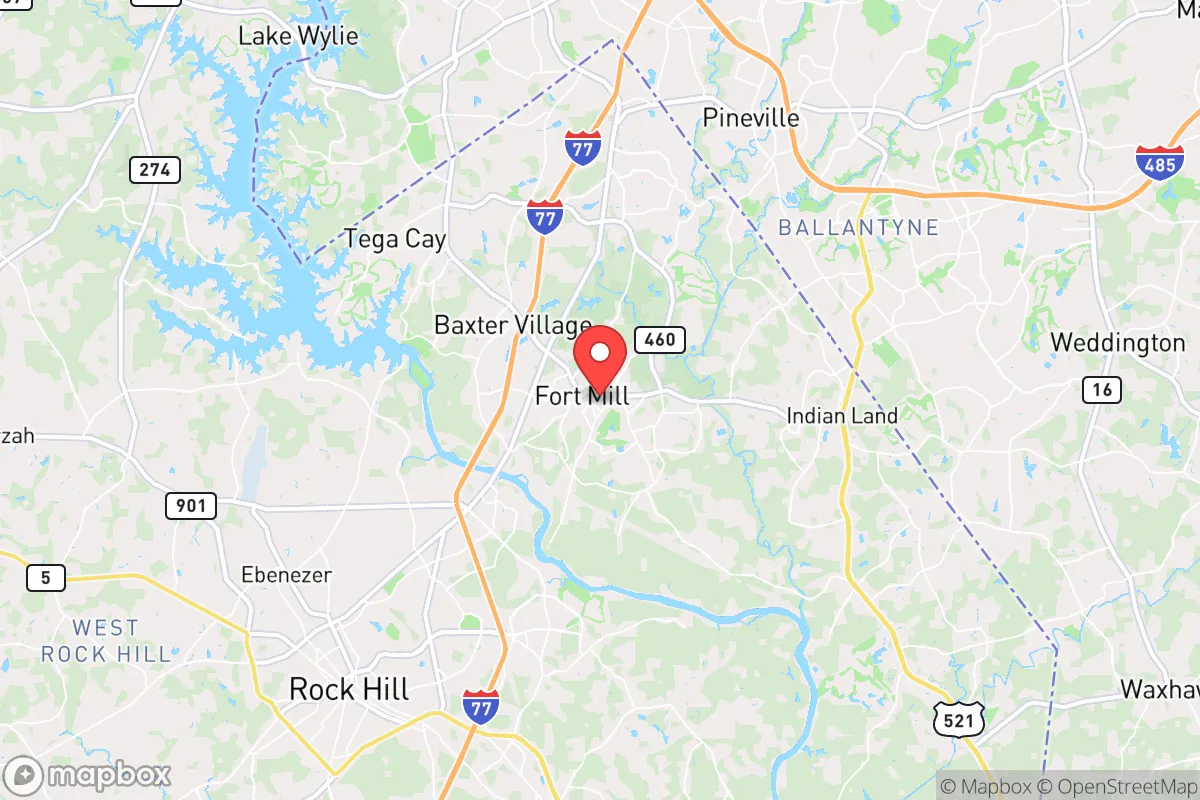
Photo: Wikipedia
Personal Sovereignty in Fort Mill, SC
Viable for self-reliance. Generally workable, though some barriers may limit total independence.
What does Personal Sovereignty tell us?
Personal Sovereignty measures your capacity for self-reliance and independence with minimal government friction. Higher scores mean fewer barriers between you and the way you want to live... but it assumes you have the space you need and good neighbors.
What does this tell us?
Personal Sovereignty measures your capacity for self-reliance and independence with minimal government friction. Higher scores mean fewer barriers between you and the way you want to live... but it assumes you have the space you need and good neighbors.
State Policy
Energy independence: Importer (25% of energy produced in-state)
Personal Liberty
Homesteading

Personal Liberty Analysis
For the individual or family prioritizing maximum personal sovereignty—the ability to live, defend, and provide for oneself without excessive government interference—Fort Mill, South Carolina, offers a markedly different environment than much of the Northeast or West Coast. While no location is a libertarian utopia, this town sits within a state that has deliberately cultivated a legal and tax framework designed to minimize friction on personal autonomy. The key question for the prepper or strategic relocator is whether the local implementation of state-level freedoms holds up under the pressures of rapid growth and proximity to a major metro area like Charlotte. The short answer is that Fort Mill provides a strong foundation for self-directed living, but the specific trade-offs—particularly regarding land use and local governance—require careful examination.
Tax burden and regulatory posture: How South Carolina’s framework supports financial autonomy
South Carolina’s state-level approach to taxation and regulation is a primary draw for those seeking to keep more of their own resources and operate with fewer bureaucratic hurdles. The state’s income tax is a flat 3% on most earned income, a structure that is both predictable and relatively low compared to the progressive, high-rate systems in states like New York or California. For a single earner or a family, this translates directly into more disposable income to allocate toward savings, land, supplies, or investments—capital that remains under your control rather than being diverted to state programs. Property taxes in York County, where Fort Mill sits, are also notably low, with an effective rate typically around 0.5% to 0.6% of assessed value, a fraction of what one might pay in the Northeast or Texas. This low property tax burden is a critical factor for long-term financial sovereignty, as it reduces the risk of being taxed out of a home you own outright. On the regulatory side, South Carolina operates with a generally light touch. Occupational licensing requirements are less onerous than in many states, and there is no state-level income tax on Social Security benefits, which matters for those planning multi-generational self-sufficiency. However, it is important to note that Fort Mill’s rapid suburbanization has led to a more active local government than in rural parts of the state. Homeowners’ associations (HOAs) are common in newer developments, and these private covenants can impose restrictions that rival or exceed municipal codes. For the sovereignty-minded, buying outside an HOA or on a larger parcel in the unincorporated areas of the county is a strategic necessity to avoid ceding control over property use to a neighborhood board.
Self-defense and gun law specifics: Constitutional carry and the castle doctrine in practice
For those who view the right to self-defense as non-negotiable, South Carolina is a strong performer. The state is a constitutional carry jurisdiction, meaning that as of 2024, any law-abiding adult 18 or older can carry a concealed or open firearm without a permit. This eliminates a layer of government permission and registration that many find objectionable. The legal framework for using deadly force is also robust. South Carolina’s Castle Doctrine explicitly states that a person has no duty to retreat from their home, vehicle, or place of business before using deadly force if they reasonably believe it is necessary to prevent imminent death or great bodily harm. This extends to occupied vehicles, which is a meaningful protection for those who live a mobile or vehicle-dependent lifestyle. Furthermore, the state has a strong Stand Your Ground law, removing the duty to retreat in any place where the individual is lawfully present. For the prepper, this means the legal system is generally on your side if you are forced to defend your property or person. The practical reality in Fort Mill, however, is that the local sheriff’s office in York County is generally supportive of gun rights, and there are multiple gun shops and ranges in the immediate area. The proximity to Charlotte does not dilute these state-level protections; local law enforcement in Fort Mill is accustomed to a high rate of firearm ownership. One caveat: magazine capacity restrictions and certain firearm features are not regulated at the state level, but federal laws still apply. For the strategic relocator, the key takeaway is that South Carolina provides a legal environment where the individual’s right to armed self-defense is treated as a fundamental liberty, not a privilege to be administered by the state.
Self-reliance and homesteading viability: Lot sizes, zoning, and off-grid feasibility near Charlotte
This is where Fort Mill presents its most significant trade-off for the sovereignty seeker. The town itself and its immediate suburbs are dominated by small-lot subdivisions, often with HOAs that restrict everything from vehicle storage to gardening and livestock. True homesteading—raising animals, maintaining a large garden, harvesting rainwater, or installing solar panels without bureaucratic pushback—is generally not feasible on a standard quarter-acre lot in a planned community. The zoning in the more developed parts of Fort Mill is oriented toward conventional suburban living, not self-sufficient rural homesteads. However, the broader York County area, particularly as you move west and south toward the unincorporated areas near Lake Wylie or the rural stretches along Highway 160, offers a different story. Here, you can find parcels of 1 to 5 acres or more that are not under HOA control. On these properties, county zoning is generally permissive regarding agricultural activities, including keeping chickens, goats, and even larger livestock, provided you have the acreage to meet setback requirements. Off-grid feasibility is mixed. South Carolina has no state-level ban on rainwater collection, and solar panel installation is generally straightforward, though net metering policies with Duke Energy are not as favorable as in some western states. The biggest practical hurdle for off-grid living in this area is the well and septic system—most rural parcels require them, which is an upfront cost but also a form of infrastructure independence. For the prepper who wants land, the strategy is clear: avoid the HOA subdivisions and target properties in the county’s rural zoning districts. The trade-off is a longer commute to Charlotte jobs, but for those prioritizing sovereignty, that is often a welcome buffer.
Personal liberties: Parental rights, medical autonomy, speech, and property in South Carolina
South Carolina has positioned itself as a state that generally respects parental authority and individual medical choice, though with some notable exceptions. On parental rights, the state has laws that require parental consent for most medical procedures on minors, and there is a strong cultural and legal presumption that parents are the primary decision-makers for their children’s education and upbringing. School boards in York County have been a battleground over curriculum transparency, but the overall trend has been toward more parental oversight, not less. For the parent concerned about government overreach into family matters, this is a favorable environment. On medical autonomy, South Carolina does not have a state-level vaccine mandate for adults, and the state legislature has passed bills limiting the ability of employers and government entities to mandate certain medical procedures. However, the state does have a prescription drug monitoring program, and access to alternative or experimental treatments is limited by the same federal regulations that apply everywhere. For the individualist, the key is that the state government is less likely to compel medical choices than in more progressive states. Free speech and property rights are also strongly protected. South Carolina is a right-to-work state, meaning you cannot be forced to join a union as a condition of employment. Property rights are generally respected, with a strong tradition of defending against eminent domain abuse, though the rapid growth in Fort Mill has led to some contentious development battles. The state’s constitution explicitly protects the right to keep and bear arms and the right to assemble. For the sovereignty-minded, the legal culture in South Carolina is one where the individual is presumed to have liberty unless a specific law restricts it, rather than the reverse.
In the broader landscape of American personal sovereignty, Fort Mill and its surrounding York County offer a compelling package for those willing to make strategic choices about where exactly they live. The state-level framework—low taxes, constitutional carry, strong self-defense laws, and respect for parental rights—provides a solid foundation. The primary challenge is local: the suburban growth machine in Fort Mill proper can erode that sovereignty through HOAs and restrictive zoning. The solution is to buy land in the unincorporated county, where the state’s libertarian leanings have more room to breathe. Compared to the regulatory density of the Northeast or the West Coast, this area is a clear win. Compared to rural Montana or Idaho, it is more constrained but offers vastly better economic opportunity and access to supplies. For the strategic relocator who values both freedom and proximity to a major job market, Fort Mill’s sovereignty profile is strong—provided you choose your specific parcel with the same care you would choose a survival retreat.

* Values derived from national, state, county, city and local statistics and may differ in a specific area. Last updated: 2026-04-23T04:02:15.000Z
Narrative content on this page is AI-generated and may contain mistakes. Verify any details that matter before acting on them.
ReloMaps may earn a commission from affiliate links at no extra cost to you.

