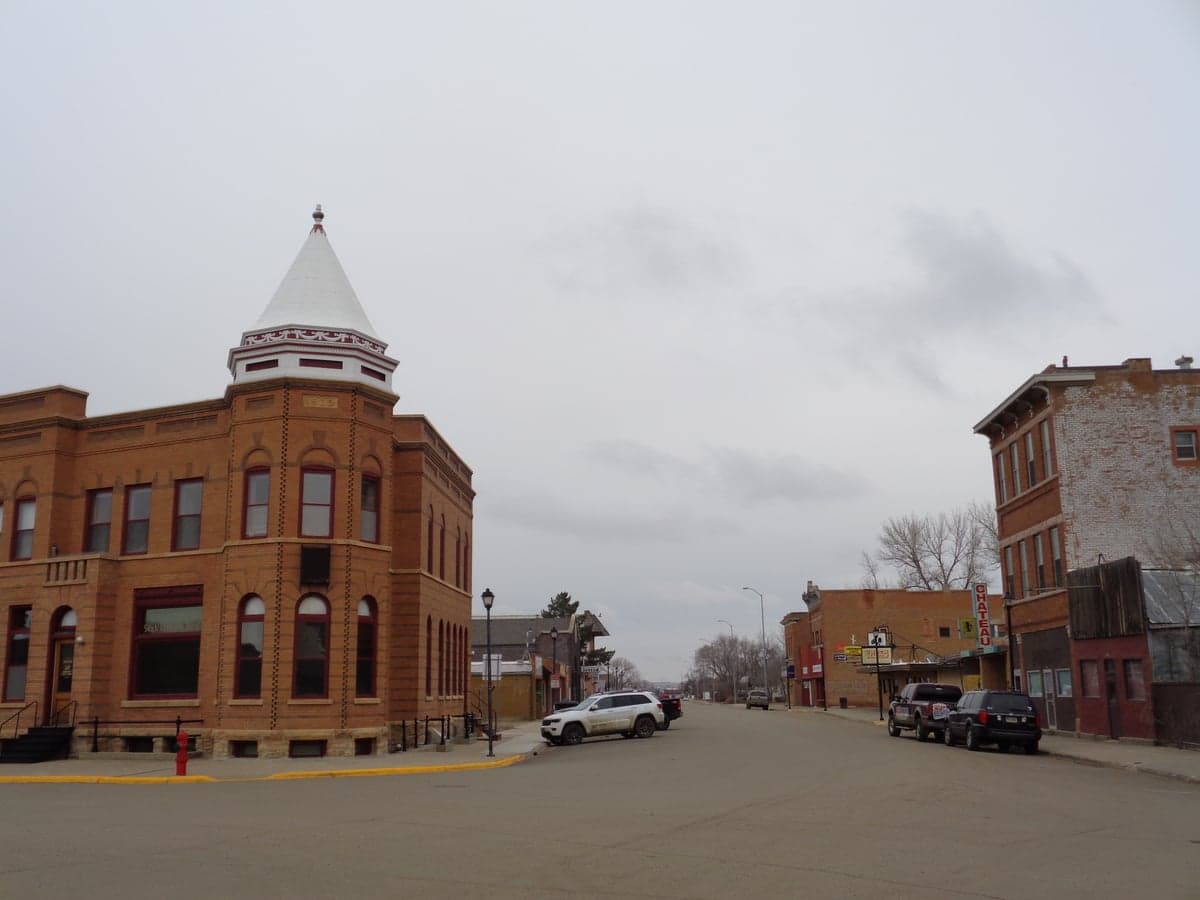
Photo: Wikipedia
Political ClimatePolitical Climate in Fort Pierre, SD
District shown is the primary district for this city’s centroid. Cities may span multiple districts.
Inherited from parent state — no local data available.
Local Political AnalysisPolitical Analysis of Fort Pierre, SD
Fort Pierre is about as reliably conservative as it gets in South Dakota, with a Cook PVI of R+15 that puts it deep in solid-red territory. The town and surrounding Stanley County have voted overwhelmingly Republican in every recent presidential election, and that trend shows no signs of weakening. If anything, the local political climate has hardened over the past decade as more folks from blue states have moved in and brought their frustrations with big-government overreach with them. The general attitude here is that the government that governs least governs best, and most residents take that pretty seriously.
How it compares
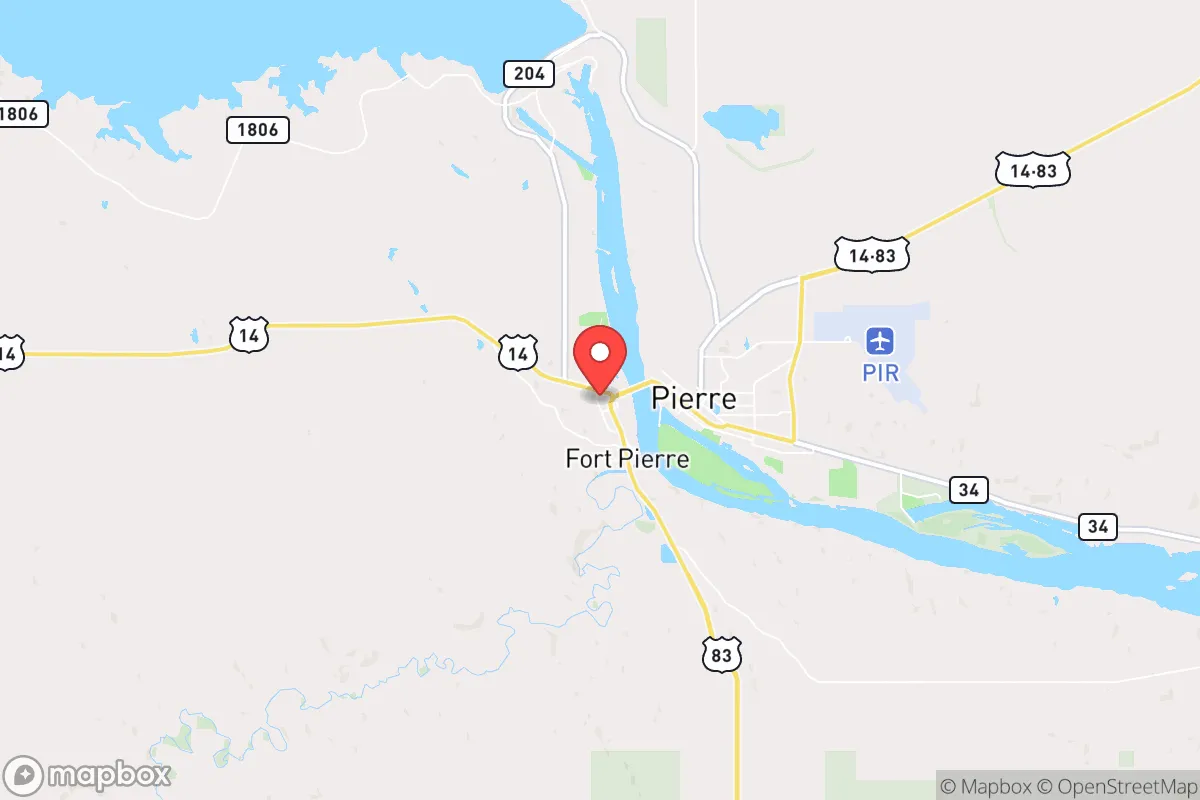
Drive 30 miles north to Pierre, the state capital, and you'll find a slightly more moderate crowd — not liberal by any stretch, but with a noticeable presence of state employees and lobbyists who tend to favor incrementalism over the kind of straight-ticket conservatism you see in Fort Pierre. Across the Missouri River, the contrast is sharper. Places like Rapid City (about 90 miles west) have seen a slow creep of progressive influence, especially among younger transplants and the tourism industry crowd. Fort Pierre, by contrast, has stayed remarkably stable. The local county commission and school board races rarely feature contested primaries from the left, and when they do, the results are lopsided. The surrounding ranch and farm country reinforces that conservative bent — these are folks who value self-reliance and don't take kindly to being told how to run their land or their lives.
What this means for residents
For people living here, the political climate translates into a pretty hands-off approach from local government. Zoning is minimal, property taxes are low compared to national averages, and there's little appetite for new regulations on businesses or gun ownership. You won't see mask mandates or vaccine passports being debated at city council meetings — that kind of overreach gets shut down fast. The downside, if you can call it that, is that public services are lean. Don't expect expansive social programs or heavy investment in public transit. The trade-off is freedom: you're largely left alone to live your life, run your business, and raise your family without a bureaucrat peering over your shoulder. That's the deal most residents here have willingly signed up for.
One cultural distinction worth noting: Fort Pierre has a strong independent streak that predates modern party labels. The annual Casey Tibbs South Dakota Rodeo and the town's deep ties to the Lower Brule Sioux Tribe and Cheyenne River Sioux Tribe create a unique blend of rural conservatism and respect for tribal sovereignty. You'll hear folks talk about "state's rights" and "local control" in the same breath as they discuss treaty rights — it's not always tidy, but it reflects a genuine belief that decisions should be made as close to the people as possible. Looking ahead, the biggest concern among long-time residents is the potential for Pierre's state-level politics to drift toward the center as the capital attracts more out-of-state influence. But Fort Pierre itself? It's likely to stay the course. The kind of person who chooses to live here does so precisely because they want to be left alone, and that's not a sentiment that fades with time.

State Political ClimatePolitical Climate in South Dakota
State Political AnalysisPolitical Environment in the State
South Dakota is a deeply conservative state, with a Republican trifecta in Pierre that has held firm for decades. The state hasn't voted for a Democratic presidential candidate since 1964, and in 2024, Donald Trump carried it by over 30 points. The dominant coalition is a mix of rural traditionalists, libertarian-leaning ranchers, and a growing number of conservative transplants fleeing blue states. Over the past 10-20 years, the state has shifted further right, driven by an influx of new residents from California and the Midwest who are drawn to the state's low taxes and light-touch government, while the small Native American and college-town populations in places like Rapid City and Brookings provide the only real counterweight.
Urban vs. rural divide
The political map is stark. The eastern corridor, anchored by Sioux Falls and Brookings, is the most moderate part of the state. Sioux Falls, home to a growing professional class and a significant healthcare sector, still votes Republican but with less enthusiasm—think 55-60% GOP instead of 75-80%. Brookings, home to South Dakota State University, is the only real blue dot, with a small but vocal progressive student population. The western half of the state, including Rapid City and the Black Hills, is rock-ribbed conservative, driven by ranching, mining, and tourism. The rural counties in between—places like Harding County and Jones County—routinely vote 85-90% Republican. The Native American reservations, like Pine Ridge and Rosebud, are overwhelmingly Democratic, but their turnout is low and their population is small, so they don't shift the statewide needle.
Policy environment
South Dakota's policy environment is a conservative dream. There is no state income tax, no corporate income tax, and no personal property tax on vehicles or business equipment. The sales tax is 4.5%, and local options can push it to 6.5% in places like Sioux Falls. Property taxes are moderate, with a homestead exemption for seniors. The regulatory posture is aggressively pro-business—permitting for a new home or business is often a matter of weeks, not months. Education policy is a mixed bag: the state has a school choice program through tax-credit scholarships, but there's no universal voucher system yet. Governor Kristi Noem has pushed for parental rights in education, including a 2023 law requiring schools to notify parents of any "sexually explicit" materials. Healthcare is a sore spot—the state refused Medicaid expansion until 2023, when a ballot initiative forced it through, but the rollout has been slow. Election laws are tight: voter ID is required, no-excuse absentee voting was expanded during COVID but then rolled back, and there's no same-day registration. The state also passed a law in 2021 banning transgender girls from female sports, which remains in effect.
Trajectory & freedom
South Dakota is becoming more free in many respects, but there are warning signs. On the plus side, the state has expanded gun rights: permitless carry was signed into law in 2019, and there are no magazine capacity limits or red-flag laws. Property rights are strong, with no statewide zoning and a "right to farm" law that protects agricultural operations from nuisance lawsuits. Medical freedom was a flashpoint during COVID—Governor Noem refused to impose a mask mandate or lockdown, and the state legislature passed a law in 2021 banning vaccine passports. However, there are creeping concerns. The state's reliance on federal dollars (about 40% of the budget) creates a vulnerability to Washington mandates. The 2023 "Don't Say Gay" style law on classroom materials has drawn legal challenges, and some conservatives worry it could lead to federal overreach. The biggest threat to freedom is the influx of new residents from high-tax states who bring progressive voting habits—Sioux Falls and Rapid City are growing fast, and their politics are slowly moderating. The state also passed a 2022 law banning abortion at all stages, with no exceptions for rape or incest, which is popular with the base but could become a liability if the national mood shifts.
Civil unrest & political movements
South Dakota is remarkably stable. There have been no major protests or riots in recent years. The most visible political movement is the Wounded Knee memorials and occasional Native American activism, but these are localized and rarely disrupt daily life. The state has no sanctuary cities—in fact, Sioux Falls passed a resolution in 2023 affirming its support for federal immigration enforcement. There was a brief controversy in 2020 when a group of armed ranchers and militia members gathered at the Mount Rushmore fireworks display to protest potential land seizures, but it fizzled out. Election integrity is a hot topic: the state's Republican Secretary of State, Monae Johnson, has pushed for stricter voter roll maintenance, and there were allegations of "ballot harvesting" on the reservations in 2022, though no charges were filed. The most significant flashpoint is the ongoing dispute over the Dakota Access Pipeline easement, which crosses the Missouri River near the Standing Rock Reservation. Protests have been small and sporadic, but the issue remains a live wire for both environmentalists and tribal sovereignty advocates. A new resident would notice that politics is not a daily topic of conversation—most people are too busy working or hunting to get worked up about it.
Projection
Over the next 5-10 years, South Dakota will likely remain deeply conservative, but the margins will tighten. The state is growing at about 1% per year, with most of that growth in Sioux Falls and the Black Hills. The new arrivals are a mixed bag: many are conservative refugees from California and Illinois, but a growing number are younger professionals who are socially moderate. The Native American population is young and growing, and if turnout increases, it could flip a few legislative seats. The biggest wildcard is the state's budget—if the federal government cuts funding, South Dakota will face tough choices on roads and schools. The abortion ban could become a national flashpoint if the Supreme Court upholds a federal ban, but for now, it's settled law. The most likely scenario is that South Dakota stays red, but the GOP majority shrinks from supermajority to simple majority, and the party shifts from "libertarian conservative" to "populist conservative" as the rural base ages out and the suburbs grow. A new resident moving in now should expect to find a state that is still very free, but with a slowly moderating edge—especially in the cities.
For a conservative individual or family looking to relocate, South Dakota offers a rare combination of low taxes, strong gun rights, and a culture that values self-reliance. The trade-off is a harsh winter, limited job diversity outside of healthcare and agriculture, and a growing tension between the old ranching culture and the new suburban sprawl. If you want to live in a place where the government stays out of your life and your neighbors mind their own business, this is still one of the best bets in the country. Just don't expect it to stay exactly the same forever—no place does.
* Values derived from national, state, county, city and local statistics and may differ in a specific area. Last updated: 2026-04-20T14:13:57.000Z
Narrative content on this page is AI-generated and may contain mistakes. Verify any details that matter before acting on them.
ReloMaps may earn a commission from affiliate links at no extra cost to you.

