
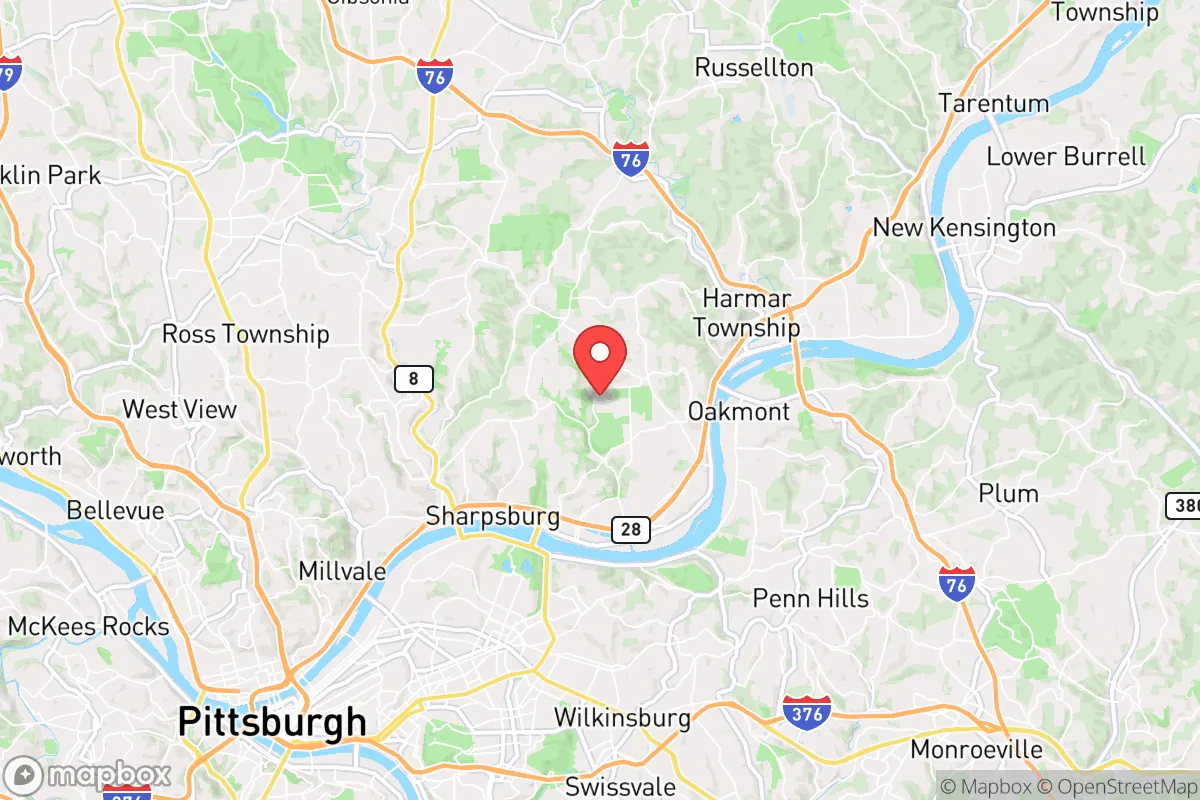
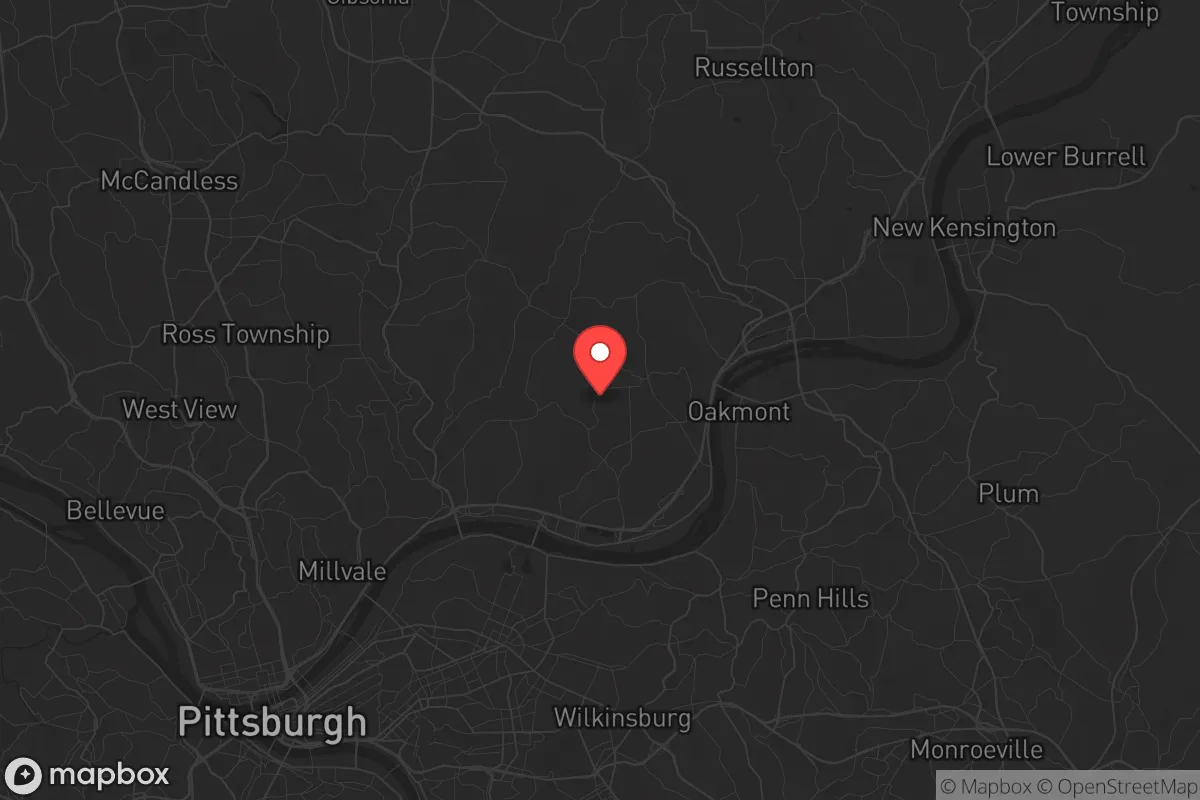
Photo: Wikipedia
Strategic Assessment of Fox Chapel, PA
Meaningful friction. Expect exposure to either population pressure, blast zones, or natural disaster risk. Consider buying a retreat property.
What does the Strategic Assessment tell us?
Our Strategic Assessment grades tactical survivability of an area. Major population centers, military targets, fallout zones, natural disasters, and border exposure all drive risk — lower exposure means a more defensible position in a crisis.
This is heavily inspired by Joel Skousen's Strategic Relocation book. Highly recommended you checkout the book ($)What does this tell us?
Our Strategic Assessment grades tactical survivability of an area. Major population centers, military targets, fallout zones, natural disasters, and border exposure all drive risk — lower exposure means a more defensible position in a crisis.
This is heavily inspired by Joel Skousen's Strategic Relocation book. Highly recommended you checkout the book ($)Strategic Pillars

Key Distances
Regional Safe Places
Below is our recommended "safe zones" in Pennsylvania and the surrounding area based on our strategic heuristics. For most people, it's unrealistic to live in a “safe zone” full-time due to work, family or other personal reasons. They tend to be more rural. However, many of these areas are perfect for second homes and retreat properties that double as a vacation home or even a short-term rental.
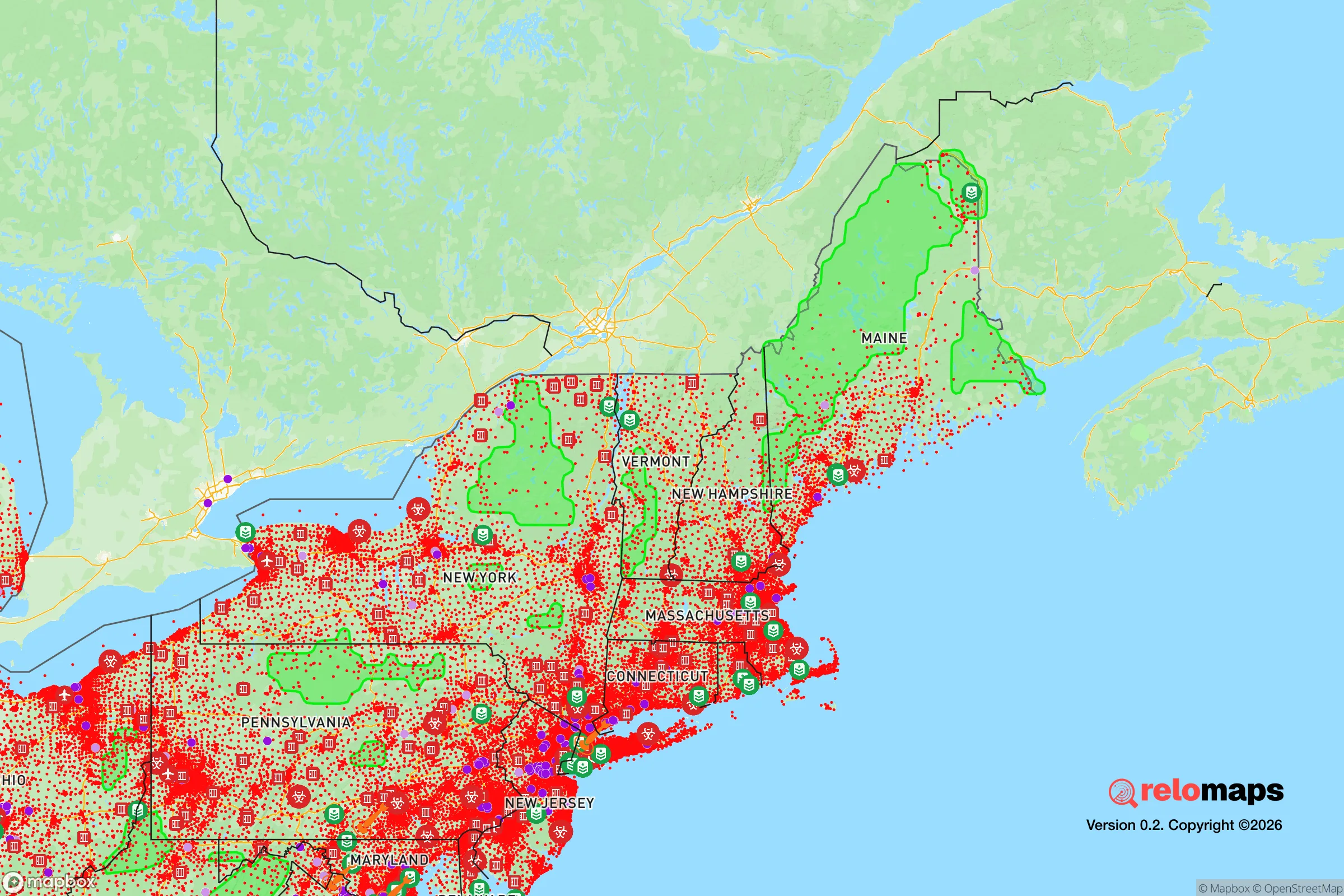
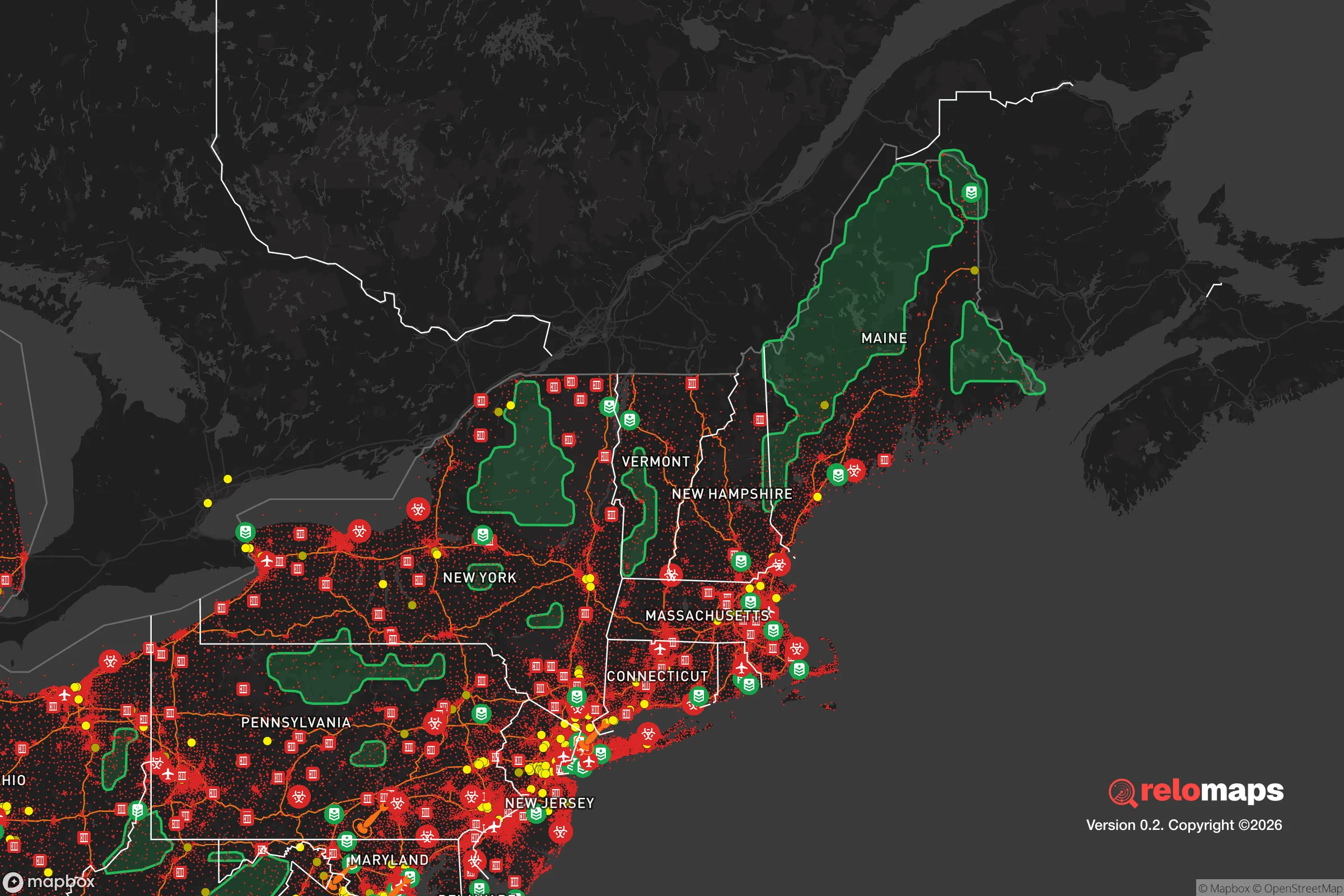


Important Note: For informational purposes only. This does not mean nothing bad ever happens in the green zones. Please use common sense. This is based on public data and modeled with AI. We tried to take a conservative approach but mistakes happen. We update this regularly as new information becomes available.
Solar Generator Recommendations
Backup power matters more here than in safer locations. We've picked three solar generators across budgets and capacity tiers — start with the budget unit if you only need a few essentials, or step up if you want to run a fridge and HVAC for days at a time.

Jackery Portable Power Station Explorer 300
Budget OptionPower on the Go: Weighing only 11 lbs, it's convenient to set up and store with book-sized foldable solar panels

BLUETTI Portable Power Station AC180
Designed for both indoor and outdoor scenarios, AC180 is highly capable as it has a robost capacity and continuous output power.

EF ECOFLOW DELTA Pro Ultra Power Station
Upgraded PickEcoFlow DELTA Pro Ultra is a whole-home energy system designed to grow with your family. Integrated with the Smart Home Panel 2, it scales to meet your evolving energy needs — keeping your home powered, intelligent, and secure through every stage of life.
We earn a commission, at no additional cost to you.
Strategic Assessment Analysis
Fox Chapel, Pennsylvania, offers a surprisingly strong strategic position for those prioritizing resilience and security, blending deep natural buffers with proximity to critical infrastructure. This affluent borough, nestled along the Allegheny River about 12 miles northeast of downtown Pittsburgh, benefits from a topography that naturally limits access and provides defensible terrain. For a relocator with a prepper or survivalist mindset, the area’s combination of wooded hills, limited road networks, and a low-density population creates a solid foundation for weathering civic unrest, mass casualty events, or large-scale disasters, though its proximity to a major metropolitan area introduces distinct risks that must be weighed carefully.
Geographic position and natural defensive advantages
Fox Chapel’s geography is its primary strategic asset. The borough sits on the eastern bank of the Allegheny River, with steep hillsides and dense forest cover that create natural chokepoints. The road network is deliberately sparse—only a handful of two-lane roads, like Fox Chapel Road and Squaw Run Road, connect the area to the outside world. This limited access makes it easier to monitor and control movement, a key advantage during civil unrest or a breakdown of public order. The surrounding Allegheny County landscape is hilly and wooded, providing ample cover and reducing the risk of large-scale population movement through the area. The borough itself is roughly 4.5 square miles, with a population under 5,000, meaning density is low and neighbors are spread out—reducing the risk of rapid contagion in a pandemic scenario or the chaos of a mass evacuation. The Allegheny River also offers a potential water source and a natural barrier to the west, though it’s navigable and could be a vector for unwanted traffic. Overall, the terrain here is a significant plus for anyone thinking about long-term self-sufficiency and security.
Risks, exposures, and proximity to fallout-relevant landmarks
No location is without vulnerabilities, and Fox Chapel’s primary risk stems from its proximity to Pittsburgh, a major population center and industrial hub. The city is home to several potential high-value targets in a conflict or terrorist scenario, including the University of Pittsburgh Medical Center (UPMC) system, the Pittsburgh International Airport, and major bridges and tunnels that could be disrupted. The area also sits within roughly 30 miles of the Beaver Valley Nuclear Power Station in Shippingport, PA, a pressurized water reactor that, while generally safe, represents a low-probability but high-consequence risk for radiological fallout. In a worst-case event, prevailing winds from the west could carry fallout toward Fox Chapel, though the hills and river valley might offer some dispersion. Additionally, the borough’s affluence makes it a potential target for looting or social unrest if economic collapse or civil disorder spreads from the city. The limited road access, while a defensive plus, also means evacuation routes are few—Fox Chapel Road and Route 28 are the main arteries, and both can become clogged quickly. For a relocator, the key is to plan for sheltering in place rather than evacuation, as getting out fast is not realistic. The proximity to Pittsburgh also means that any major disaster in the city—whether natural, economic, or man-made—will send waves of displaced people outward, and Fox Chapel’s relative wealth could make it a magnet for those seeking resources. This is not a remote mountain redoubt; it’s a suburban buffer zone that requires active preparation to manage the risks of being near a major metro area.
Practical resilience for a relocator: food, water, energy, and defensibility
For someone serious about self-reliance, Fox Chapel offers a mixed bag. On the positive side, the area has good access to fresh water from the Allegheny River, though you’ll need a filtration or purification system—river water in this region carries industrial and agricultural runoff. The borough’s water supply comes from the Pittsburgh Water and Sewer Authority, which is vulnerable to disruption, so a backup well or rainwater catchment is advisable. The wooded terrain is excellent for foraging, hunting, and small-scale gardening, with deer, turkey, and small game abundant in the surrounding state game lands like the nearby 3,000-acre North Park. Soil quality is decent for gardening, though the hilly terrain limits large-scale agriculture. For energy, the region is served by Duquesne Light, but grid failures are common in severe storms—ice storms and heavy snow can knock out power for days. Solar panels are a viable option, as the area gets about 160 sunny days per year, but tree cover may limit roof exposure. A backup generator with a fuel supply is a practical necessity. Defensibility is strong due to the terrain and limited access points, but the borough’s layout—with large, spread-out homes on multi-acre lots—means you’ll need to secure a perimeter that’s larger than in a denser suburb. The local police force is small (about 20 officers), so in a prolonged crisis, you’re largely on your own. The community is tight-knit and affluent, which can foster mutual aid networks, but it also means that neighbors may not share a prepper mindset. For a relocator, the key is to establish a self-sufficient homestead with stored food, water, and medical supplies, and to build relationships with like-minded locals. The area’s natural resources and low population density make it feasible, but it’s not a turnkey survival location—it requires active investment in infrastructure and skills.
The overall strategic picture for Fox Chapel is one of calculated trade-offs. It offers a rare combination of natural defensibility, resource access, and proximity to urban infrastructure that can be leveraged for both daily life and crisis scenarios. The risks from Pittsburgh and the nuclear plant are real but manageable with proper planning—shelter-in-place protocols, fallout shelters, and a robust supply chain. For a conservative-leaning relocator concerned about the state of the country, Fox Chapel provides a buffer zone that allows you to stay connected to economic opportunities while maintaining a degree of separation from the chaos of the city. It’s not a remote bunker, but it’s a solid strategic base for those willing to put in the work. The key is to treat it as a starting point, not a final solution—build your resilience, know your neighbors, and always have a plan B. In a world of increasing uncertainty, Fox Chapel is a place where you can dig in and hold your ground, provided you’re prepared for the realities of being near a major metro area.

* Values derived from national, state, county, city and local statistics and may differ in a specific area. Last updated: 2026-04-27T14:32:23.000Z
Narrative content on this page is AI-generated and may contain mistakes. Verify any details that matter before acting on them.
ReloMaps may earn a commission from affiliate links at no extra cost to you.

