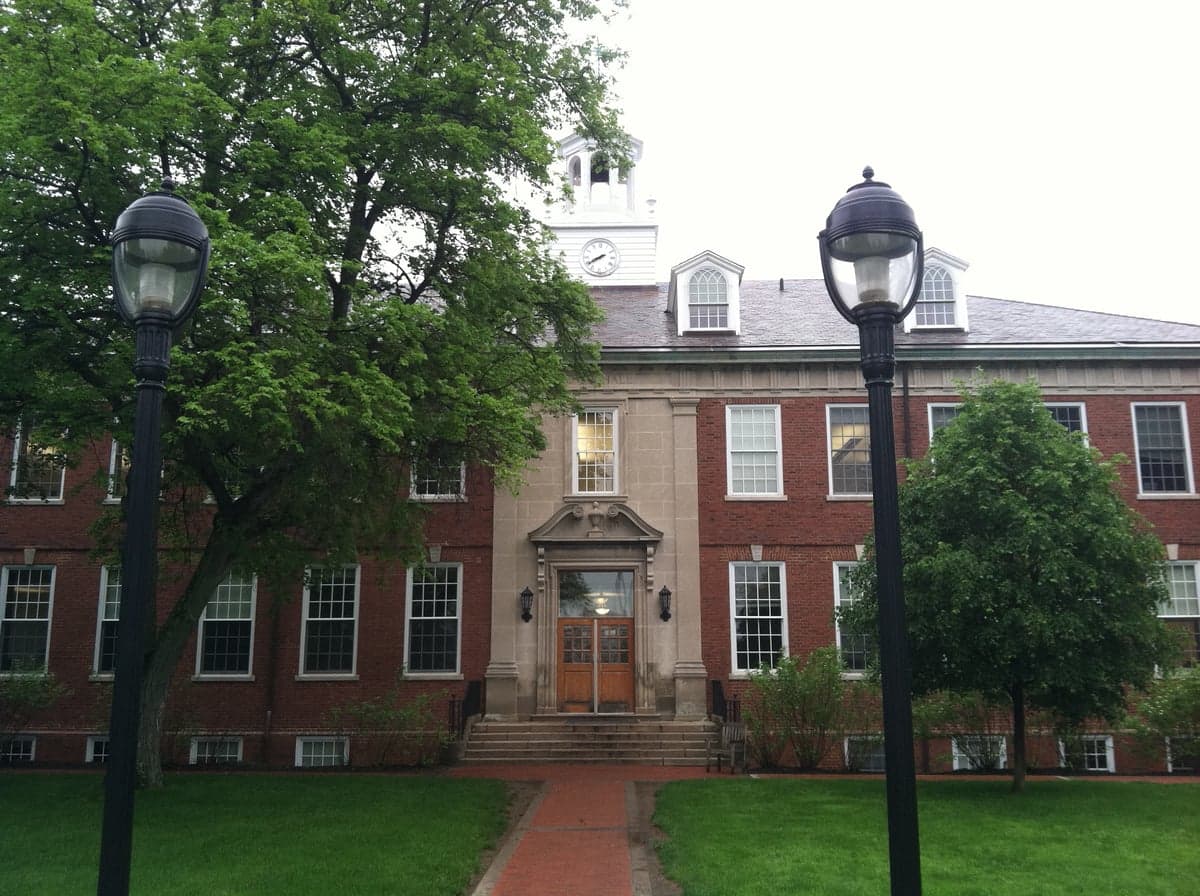
Photo: Wikipedia
Political ClimatePolitical Climate in Fox Chapel, PA
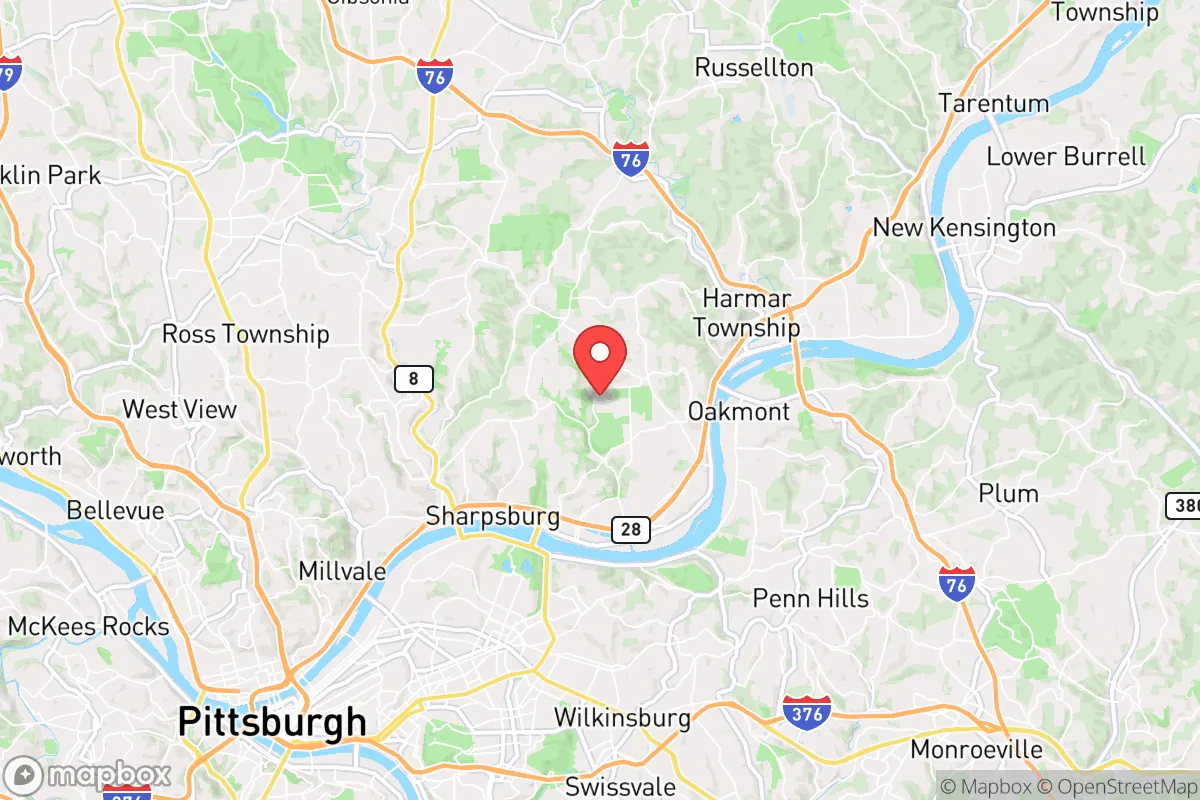
District shown is the primary district for this city’s centroid. Cities may span multiple districts.
Local Political AnalysisPolitical Analysis of Fox Chapel, PA
Fox Chapel, Pennsylvania, has long been a place where folks value their privacy, their property, and their independence, but the political winds are shifting in ways that should give any freedom-loving resident pause. The area now carries a Cook PVI of D+3, meaning it leans slightly Democratic in federal elections—a far cry from the reliably conservative stronghold it was even a decade ago. This isn't just a blip on the radar; it's a trend driven by newcomers from Pittsburgh and surrounding areas who bring big-city voting habits with them, and it’s slowly changing the character of our community.
How it compares
To understand Fox Chapel’s trajectory, you have to look at its neighbors. Just a few miles south, Pittsburgh proper is a deep-blue city where progressive policies on taxes, zoning, and public safety are the norm. Head east to Oakmont or west to Sewickley, and you’ll find more balanced, often conservative-leaning communities that still push back on overreach. But Fox Chapel is becoming an outlier—it’s wealthier and more educated than most of Allegheny County, yet its voting patterns are drifting toward the same progressive playbook that has driven up costs and eroded local control in the city. Compare it to rural Butler County to the north, where property rights and Second Amendment protections are still taken seriously, and the contrast is stark. Fox Chapel used to be a refuge from that kind of government creep; now, it’s starting to look like a suburb that’s lost its way.
What this means for residents
For those of us who’ve lived here a while, the shift isn’t just about election results—it’s about daily life. You’re seeing more pressure to adopt county-wide mandates on everything from land use to school curricula, and local officials who once stood firm against state overreach are now bending to the will of regional planners. Property taxes, already a burden, face upward pressure as the county pushes for higher spending on social programs that don’t always align with our values. The school board, once a model of fiscal restraint, is now debating policies that prioritize equity over excellence, and that’s a red flag for anyone who believes in local control. In the near term, expect more zoning battles as denser development is pushed to meet “affordable housing” quotas—a classic government solution that often tramples on private property rights. Long term, if this trend continues, Fox Chapel could lose the very character that made it attractive: low crime, strong schools, and a government that stays out of your business.
Cultural and policy distinctions worth noting
One thing that still sets Fox Chapel apart is its fierce independence on certain issues. The local police department remains well-funded and community-oriented, resisting the defund rhetoric that’s infected nearby cities. There’s also a strong tradition of volunteerism and private charity here, which means residents often solve problems without waiting for a government program. But the cultural battle lines are hardening. You’ll hear more talk at community meetings about “inclusivity” and “sustainability” that sounds like it was lifted from a Pittsburgh city council agenda, and that’s a sign that the progressive playbook is being imported. If you value your right to live as you see fit—without a bureaucrat telling you how to heat your home or what to teach your kids—keep an eye on local elections. The next few cycles will decide whether Fox Chapel remains a place where freedom is the default, or just another suburb that fell in line.

State Political ClimatePolitical Climate in Pennsylvania
State Political AnalysisPolitical Environment in the State
Pennsylvania has long been the quintessential swing state, but over the past two decades, its political center of gravity has shifted in ways that should give any freedom-minded relocator pause. The state’s overall partisan lean is now a razor-thin Democratic tilt at the presidential level—Biden won it by just 1.2 points in 2020—while down-ballot races remain deeply competitive. The trajectory over the last 10-20 years has been a slow but steady march leftward in the populous southeast, driven by Philadelphia’s sprawling suburbs, even as the vast rural interior and northern tier have hardened into Republican strongholds. The result is a state that feels like two different countries, with the outcome of every election hinging on a handful of counties that are rapidly changing.
Urban vs. rural divide
The political map of Pennsylvania is a textbook case of the urban-rural chasm. Philadelphia and its collar counties—Montgomery, Delaware, Chester, and Bucks—now deliver Democratic margins that can swamp the rest of the state. In 2020, Philadelphia County alone gave Biden a 470,000-vote cushion, while the four suburban counties added another 300,000. This wasn’t always the case: as recently as 2000, Bucks and Chester were reliably Republican. Their flip has been the single biggest driver of the state’s leftward drift. Meanwhile, the state’s second-largest city, Pittsburgh, has seen its Democratic margins shrink as the surrounding Allegheny County suburbs trend redder, but the city proper remains a deep blue bastion. The rural expanse—places like Tioga, Bradford, and Fulton counties in the north, and Franklin, Adams, and York in the south—routinely vote 70-80% Republican. The Lancaster area, once a conservative bellwether, is now a battleground as its growing Hispanic population and Amish-country transplants shift the calculus. The Lehigh Valley (Allentown, Bethlehem, Easton) is another critical swing region that has trended Democratic in recent cycles, driven by suburbanization and an influx of New York and New Jersey expats.
Policy environment
Pennsylvania’s policy environment is a mixed bag that leans more interventionist than many conservative-leaning relocators would prefer. The state income tax is a flat 3.07%, which is competitive, but property taxes are among the highest in the nation—averaging about 1.5% of home value, with no statewide homestead exemption. The sales tax is 6%, but it exempts food and clothing, which is a small mercy. On education, the state has a robust but increasingly politicized public school system, with a growing push for school choice—the Educational Improvement Tax Credit (EITC) program is popular but capped, and a full school voucher bill was narrowly defeated in 2023. Healthcare is heavily regulated, with the state expanding Medicaid under Obamacare and maintaining a strict certificate-of-need (CON) law that limits new hospital construction and services—a clear barrier to market-driven healthcare. Election laws are a sore point: no-excuse mail-in voting was passed in 2019 (Act 77), and while it’s popular, it has also fueled persistent election integrity concerns. The state has no voter ID law for in-person voting, though ID is required for first-time voters. Gun laws are relatively permissive—Pennsylvania is a “shall-issue” state for concealed carry, with no permit needed for open carry—but Philadelphia and Pittsburgh have enacted their own restrictive local ordinances that the state legislature has tried (and mostly failed) to preempt.
Trajectory & freedom
On the freedom front, Pennsylvania is a state in flux, with recent trends pointing in both directions. The good news: in 2022, the legislature passed a constitutional carry bill (Act 79), allowing permitless concealed carry for anyone 21 or older who can legally possess a firearm. That was a major win for gun rights. The same year, they passed a parental rights in education bill (Act 66) that requires schools to notify parents of any changes to a student’s health or well-being—a direct response to the transgender bathroom and pronoun debate. However, the bad news is mounting. In 2023, the Democratic governor, Josh Shapiro, signed an executive order banning conversion therapy for minors, which conservatives view as government overreach into parental medical decisions. The state also continues to expand its renewable energy mandates (the Alternative Energy Portfolio Standard), driving up electricity costs. On medical freedom, Pennsylvania did not enact any COVID-19 vaccine mandates for the general public, but school and healthcare worker mandates were imposed and largely upheld. The biggest looming threat is a proposed statewide rent control bill and a push to eliminate the CON law—both of which would expand government’s role in housing and healthcare. Property rights are generally strong, but the state’s Clean Streams Law and Act 13 (the oil and gas law) have been used to restrict drilling in certain areas, a concern for those valuing energy independence.
Civil unrest & political movements
Pennsylvania has seen its share of political flashpoints. The 2020 election aftermath was particularly heated, with Philadelphia’s ballot counting center becoming a national focus of controversy, and the state supreme court’s decisions on mail-in ballot deadlines sparking ongoing litigation. In 2021, a “Stop the Steal” rally in Harrisburg drew thousands, and the state’s election integrity audit (led by Republican lawmakers) was ultimately blocked by the courts. On the left, Pittsburgh saw massive Black Lives Matter protests in 2020, with some property damage, and the city’s progressive district attorney, Stephen Zappala, has been a lightning rod for criticism over soft-on-crime policies. Immigration politics are less volatile than in border states, but Philadelphia’s sanctuary city status (it limits cooperation with ICE) is a persistent point of contention. The state has no formal secession movement, but there is a growing “Northern Tier” sentiment in counties like Bradford and Tioga that feel ignored by Harrisburg. Election integrity remains the top grassroots concern among conservatives, with groups like Pennsylvania Voter Alliance actively monitoring for irregularities.
Projection
Looking ahead 5-10 years, the trajectory is concerning for conservatives. The in-migration from New York and New Jersey—particularly to the Lehigh Valley, Bucks County, and the Poconos—is accelerating, and these transplants tend to bring their blue-state voting habits with them. The state’s population is also aging, with the rural north and west losing young people to out-migration, while the southeast grows. This demographic shift suggests that the state will likely become more Democratic at the statewide level, making it harder to hold the governor’s mansion or flip the legislature. However, the state’s legislative districts are heavily gerrymandered in favor of Republicans (the state House map was redrawn in 2022 to be more competitive), so the GOP could retain a foothold in the legislature even as the governorship and presidential elections tilt left. The wild card is whether the growing conservative exodus from blue states to places like Lancaster, York, and the Poconos can offset the liberal inflow. If current trends hold, expect more progressive policies on education, healthcare, and energy, with a continued fight over election laws and gun rights.
Bottom line for a new resident: If you’re a conservative looking to relocate, Pennsylvania offers a mixed bag. The rural areas and many suburbs still provide a strong community of like-minded people, low taxes on income, and solid gun rights. But you’ll be fighting an uphill battle against the demographic tide in the southeast, and you’ll need to be prepared for high property taxes, a growing regulatory burden, and a state government that is likely to become more progressive over time. Choose your county carefully—Franklin, Adams, or Lancaster are safer bets than Bucks or Chester—and get involved in local politics if you want to preserve the freedoms that remain. This is not a state where you can coast; it’s a state where you’ll need to stay engaged.
* Values derived from national, state, county, city and local statistics and may differ in a specific area. Last updated: 2026-04-27T14:32:23.000Z
Narrative content on this page is AI-generated and may contain mistakes. Verify any details that matter before acting on them.
ReloMaps may earn a commission from affiliate links at no extra cost to you.

