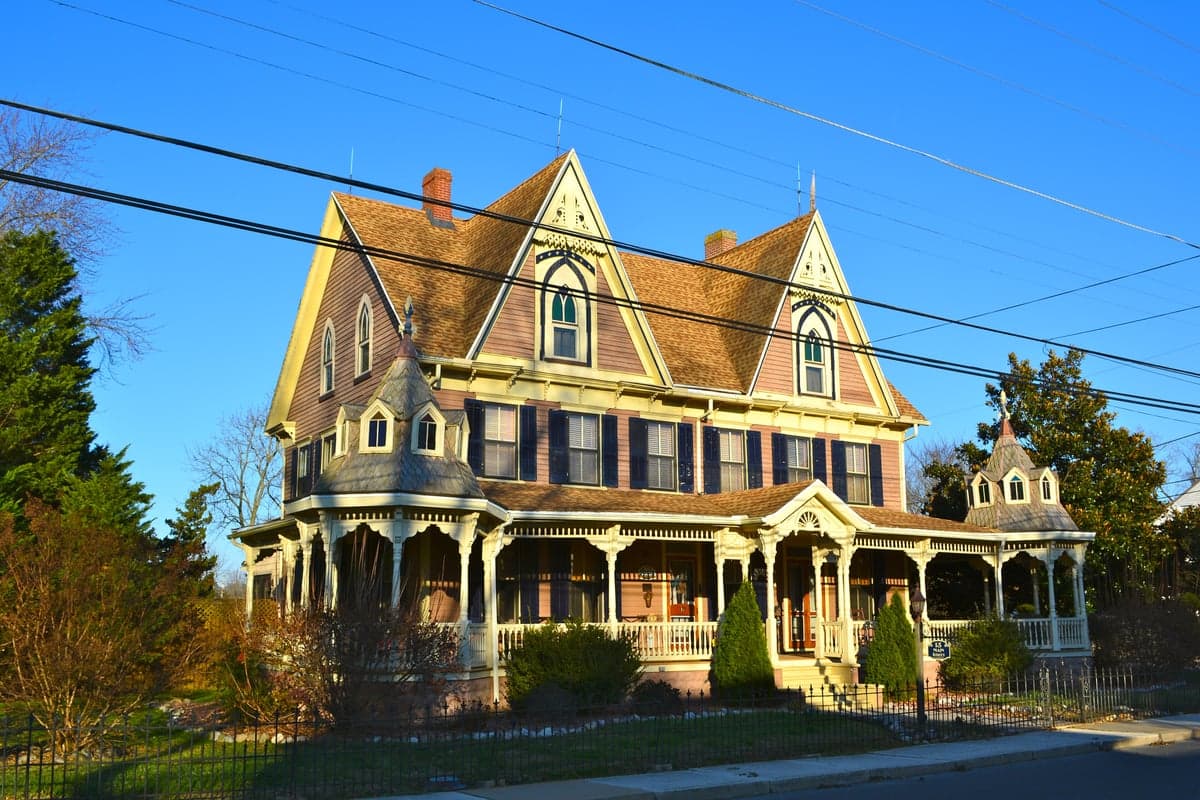
Photo: Wikipedia
Strategic Assessment of Frankford, DE
Multiple tactical vulnerabilities. Population density, target proximity, or disaster risk are likely compounding. A retreat property and exit planning is required.
What does the Strategic Assessment tell us?
Our Strategic Assessment grades tactical survivability of an area. Major population centers, military targets, fallout zones, natural disasters, and border exposure all drive risk — lower exposure means a more defensible position in a crisis.
This is heavily inspired by Joel Skousen's Strategic Relocation book. Highly recommended you checkout the book ($)What does this tell us?
Our Strategic Assessment grades tactical survivability of an area. Major population centers, military targets, fallout zones, natural disasters, and border exposure all drive risk — lower exposure means a more defensible position in a crisis.
This is heavily inspired by Joel Skousen's Strategic Relocation book. Highly recommended you checkout the book ($)Strategic Pillars

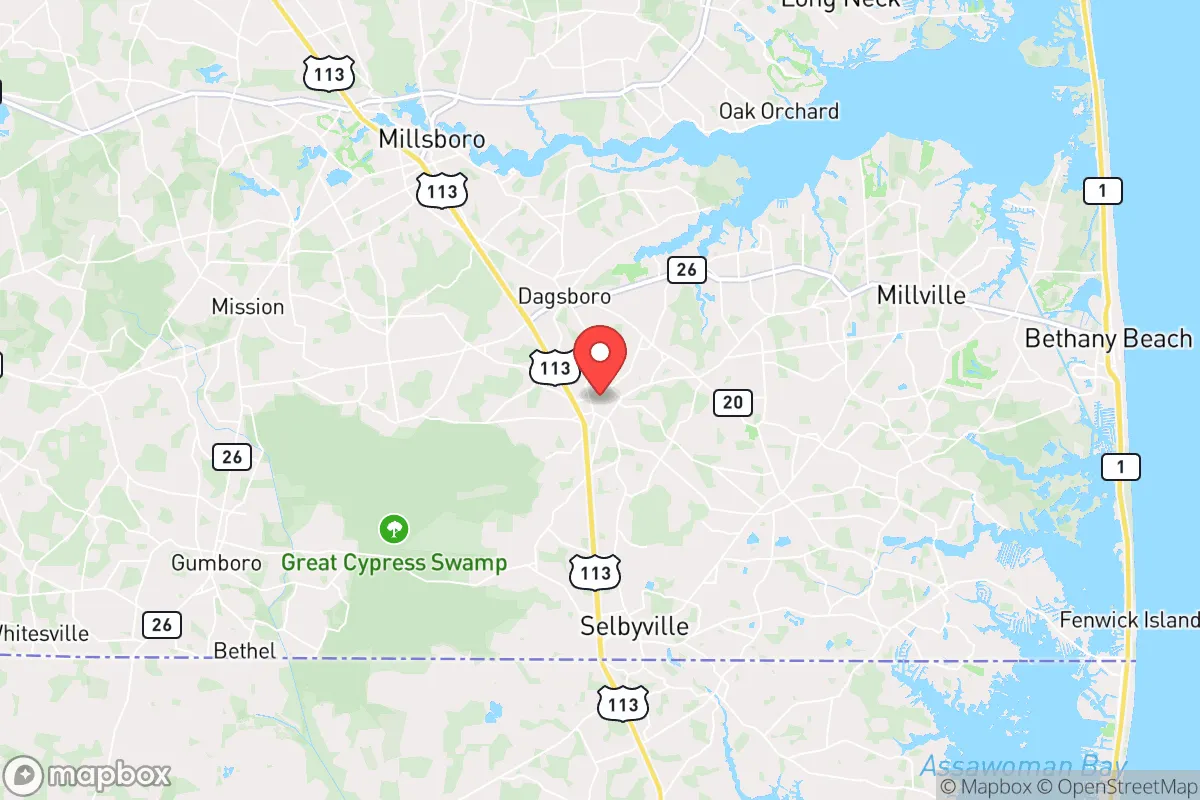
Key Distances
Regional Safe Places
Below is our recommended "safe zones" in Delaware and the surrounding area based on our strategic heuristics. For most people, it's unrealistic to live in a “safe zone” full-time due to work, family or other personal reasons. They tend to be more rural. However, many of these areas are perfect for second homes and retreat properties that double as a vacation home or even a short-term rental.
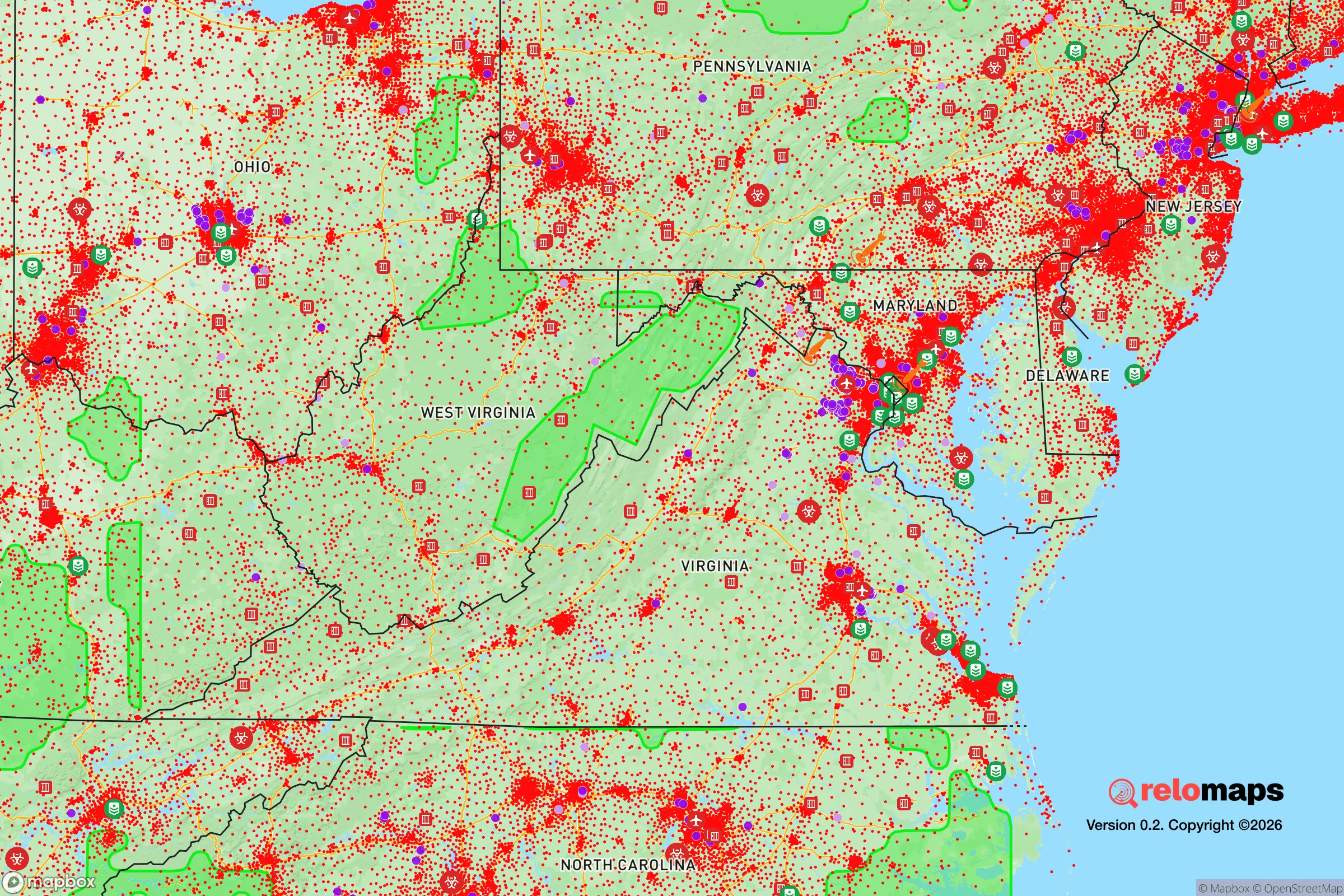
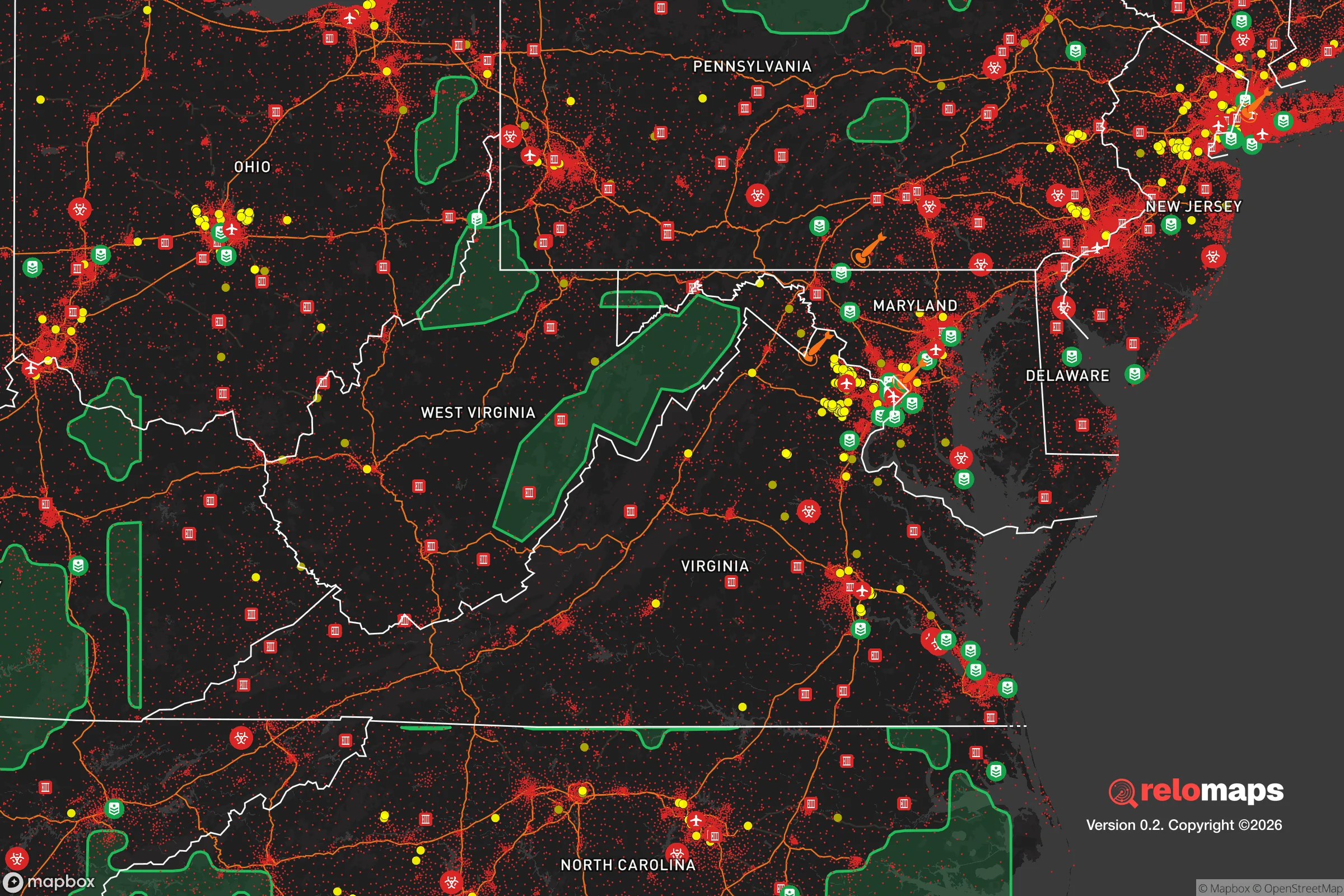


Important Note: For informational purposes only. This does not mean nothing bad ever happens in the green zones. Please use common sense. This is based on public data and modeled with AI. We tried to take a conservative approach but mistakes happen. We update this regularly as new information becomes available.
Solar Generator Recommendations
Backup power matters more here than in safer locations. We've picked three solar generators across budgets and capacity tiers — start with the budget unit if you only need a few essentials, or step up if you want to run a fridge and HVAC for days at a time.

Jackery Portable Power Station Explorer 300
Budget OptionPower on the Go: Weighing only 11 lbs, it's convenient to set up and store with book-sized foldable solar panels

BLUETTI Portable Power Station AC180
Designed for both indoor and outdoor scenarios, AC180 is highly capable as it has a robost capacity and continuous output power.

EF ECOFLOW DELTA Pro Ultra Power Station
Upgraded PickEcoFlow DELTA Pro Ultra is a whole-home energy system designed to grow with your family. Integrated with the Smart Home Panel 2, it scales to meet your evolving energy needs — keeping your home powered, intelligent, and secure through every stage of life.
We earn a commission, at no additional cost to you.
Strategic Assessment Analysis
Frankford, Delaware, sits in a quiet corner of Sussex County that offers a surprisingly resilient mix of isolation and accessibility for those thinking seriously about long-term preparedness. Its location roughly 10 miles from the Atlantic coast and 15 miles from the Maryland line places it far enough from major population centers to avoid the worst of any cascading collapse, yet close enough to supply routes and regional resources to sustain a self-reliant household. For a conservative-leaning relocator weighing the risks of civic unrest, supply-chain disruptions, or larger-scale disasters, Frankford presents a strategic foothold in a state that often flies under the radar of prepper analysis.
Geographic position and natural advantages for long-term security
Frankford’s position in the Delmarva Peninsula is its strongest card. The peninsula is a natural cul-de-sac: bounded by the Chesapeake Bay to the west and the Atlantic Ocean to the east, with only two major road bridges (the Chesapeake Bay Bridge and the Delaware Memorial Bridge) connecting it to the mainland. In a scenario where those bridges are compromised or controlled, the peninsula becomes a de facto island. That isolation cuts both ways, but for a prepared individual, it means a dramatically reduced risk of mass migration from urban centers. The surrounding landscape is flat, agricultural, and sparsely populated—Sussex County has a population density of roughly 200 people per square mile, compared to over 1,100 in New Castle County near Wilmington. The soil is sandy but workable, and the water table is high, meaning private wells are viable across most of the area. The climate is temperate, with no wildfire risk to speak of and minimal tornado activity compared to the Midwest. Hurricanes are a periodic concern, but the peninsula’s low elevation and proximity to the coast mean storm surge is the primary threat, not wind damage—and Frankford sits about 30 feet above sea level, well inland from the worst of it. For a prepper, the natural advantages here are about buffer space, water access, and a climate that supports year-round food production with modest effort.
Risks, exposures, and proximity to fallout-relevant landmarks
No location is without vulnerabilities, and Frankford has a few that demand attention. The most obvious is the Salem-Hope Creek nuclear generating station, located roughly 30 miles north in New Jersey, across the Delaware Bay. In the event of a major release, prevailing winds from the southwest would carry fallout away from Frankford, but a shift in weather patterns could put the area in a downwind plume. The risk is low but not zero, and any serious prepper should have a radiation detection kit and a plan for sheltering in place for 48–72 hours. More immediate is the proximity to Ocean City, Maryland, about 20 miles southeast. Ocean City is a seasonal tourist magnet that swells to over 300,000 people on summer weekends. In a crisis—whether a natural disaster or civil unrest—that population could attempt to flee inland, and Frankford sits directly on the likely evacuation routes (Route 54 and Route 113). That makes the town a potential chokepoint for traffic and desperate people. The nearby Indian River Inlet and the Delaware Seashore State Park are also high-traffic recreational zones that could become chaotic in a sudden evacuation. On the positive side, there are no major military installations, chemical plants, or refineries within a 20-mile radius. The largest industrial presence is the poultry processing plants in nearby Millsboro and Georgetown, which are more of a logistical asset than a hazard. The biggest risk to Frankford is not a direct strike but the secondary effects of a crisis in the Baltimore-Washington corridor, about 120 miles west. That corridor is home to over 8 million people, and any major disruption there—economic collapse, civil unrest, or a mass casualty event—would send ripple effects across the entire Delmarva region. Frankford’s distance from that corridor is its best defense, but it’s not a complete shield.
Practical resilience for a relocator: food, water, energy, and defensibility
For someone serious about self-sufficiency, Frankford offers a workable baseline. The water table is shallow—typically 10 to 20 feet down—so drilling a private well is affordable and reliable. Most homes in the area already have wells, and the water quality is generally good, though testing for agricultural runoff (nitrates from poultry farming) is advisable. Rainwater catchment is also viable, with an average of 45 inches of precipitation per year. Food production is where Frankford really shines. The growing season runs from April to October, and the sandy loam soil is well-suited for root vegetables, beans, corn, and squash. Local farmers’ markets and roadside stands are common, and the area has a strong tradition of home gardening and small-scale livestock keeping. Chickens, goats, and even a few head of cattle are not unusual on residential lots of an acre or more. The nearby poultry industry means feed and supplies are readily available. For energy, solar is the obvious play. Sussex County gets about 4.5 peak sun hours per day, and net metering is available through Delaware Electric Cooperative, which serves Frankford. Battery storage is becoming more common, and a modest solar array paired with a propane backup generator can cover most household needs. Defensibility is a mixed bag. Frankford is flat and open, with no natural chokepoints or high ground. The town itself is small—roughly 1,000 residents—and spread out, which makes it hard to secure a perimeter. But that same sprawl means neighbors are far enough apart that a single household can maintain operational security. The local law enforcement presence is minimal; the Delaware State Police cover the area, with a response time of 15–30 minutes in most cases. For a relocator, the practical approach is to buy a property with good road access but not on a main thoroughfare, invest in a well and solar, and establish relationships with nearby farmers and homesteaders. The Amish and Mennonite communities in the area (concentrated around Dover and Harrington, about 40 miles north) are a resource for traditional skills and barter networks, though they keep to themselves.
The overall strategic picture for Frankford is one of moderate resilience with clear trade-offs. It is not a bug-out location in the remote wilderness sense—you won’t find mountains, caves, or deep forests here. What you will find is a low-profile, agriculturally productive area with good water access, a mild climate, and a buffer from the worst of the urban chaos. The proximity to Ocean City and the nuclear plant are real concerns, but they are manageable with planning and situational awareness. For a conservative-leaning individual or family looking to put down roots in a place that can sustain a self-reliant lifestyle without drawing attention, Frankford is worth a serious look. The key is to act before the next crisis drives prices up and availability down—because once the bridges are locked down, this corner of Delaware will be one of the better places to be stuck.

* Values derived from national, state, county, city and local statistics and may differ in a specific area. Last updated: 2026-04-29T20:57:14.000Z
Narrative content on this page is AI-generated and may contain mistakes. Verify any details that matter before acting on them.
ReloMaps may earn a commission from affiliate links at no extra cost to you.

