Photo: Wikipedia
Political ClimatePolitical Climate in Frankford, DE
District shown is the primary district for this city’s centroid. Cities may span multiple districts.
Inherited from parent state — no local data available.
Local Political AnalysisPolitical Analysis of Frankford, DE
Frankford, Delaware, sits in a political climate that’s been shifting steadily leftward, and if you’ve lived here as long as I have, you’ve felt it in the air. The Cook PVI clocks Sussex County at D+8, which means Democrats hold a solid eight-point advantage over Republicans in federal elections—a far cry from the conservative stronghold this area used to be. Back in the 90s and early 2000s, Frankford was reliably red, with most folks voting for limited government and local control. Now, the precincts around town are trending blue, driven by an influx of retirees from the Northeast and younger families priced out of coastal cities. The trajectory is clear: we’re moving from a quiet, rural conservative pocket into a more progressive-leaning suburb, and that shift is accelerating with every new housing development.
How it compares
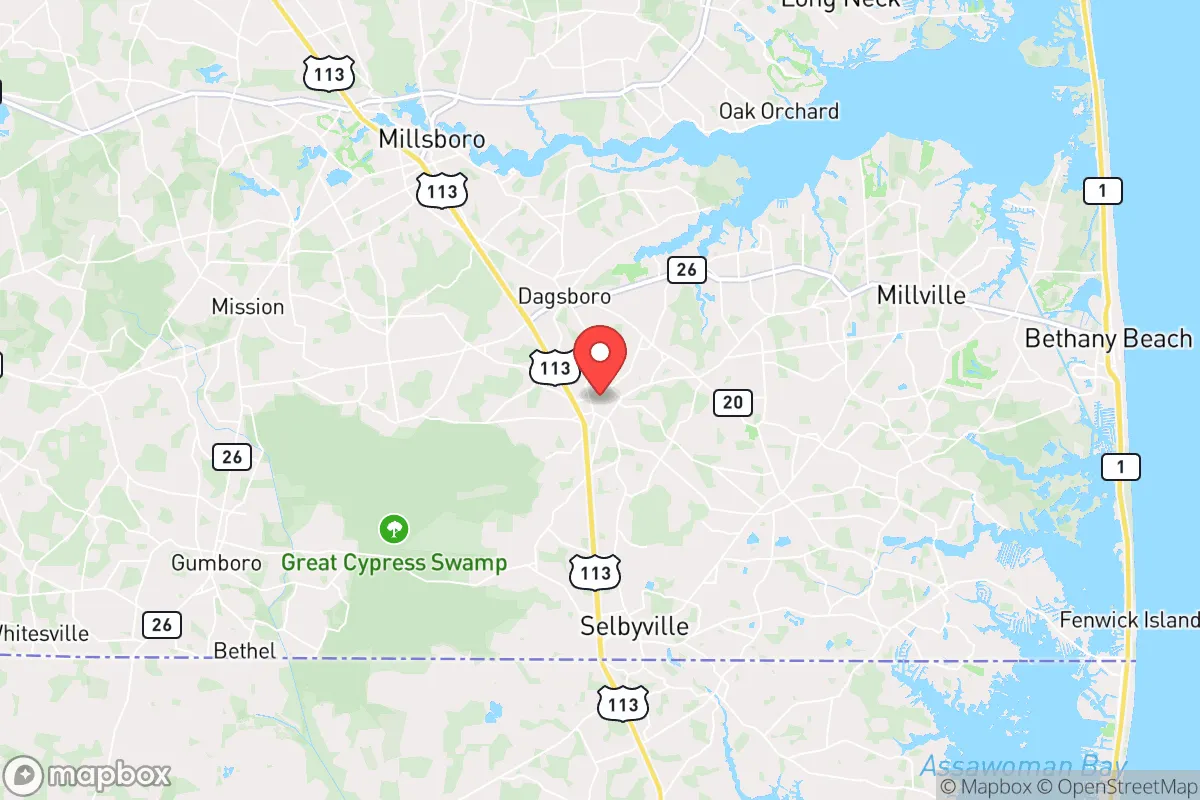
Frankford’s political lean is a stark contrast to the surrounding towns that still hold onto their conservative roots. Head west to Dagsboro or Millsboro, and you’ll find precincts that vote Republican by 10 to 15 points—places where the “Don’t Tread on Me” flags still fly high and town council meetings are packed with folks fighting zoning changes. Down south, Selbyville is a mixed bag, but it’s still more conservative than Frankford, with a strong base of farmers and small business owners who distrust government overreach. Up the road in Bethany Beach and Ocean View, you’ve got a different story: those coastal towns are even bluer than Frankford, with seasonal residents pushing for stricter environmental regulations and higher taxes. So Frankford sits right in the middle—a bellwether that’s losing its conservative character as the county’s population grows. The real contrast is with the rural areas west of Route 113, where folks still remember when Frankford was one of them.
What this means for residents
For those of us who value personal freedoms and limited government, the shift is concerning. The D+8 lean means local elections are increasingly dominated by candidates who favor more regulation—think stricter building codes, higher impact fees, and a push for county-wide zoning that could limit what you can do on your own land. I’ve seen it firsthand: a neighbor wanted to put up a small workshop on his property, and the new rules made it a six-month ordeal. Property taxes are creeping up too, as the county expands services to accommodate growth, and that’s a direct hit on your wallet. On the flip side, if you’re okay with more government involvement in daily life—like mandated green energy upgrades or tighter rental restrictions—you might find the new direction comfortable. But for long-time residents, the loss of local control stings. The school board and county council races are where this really plays out; progressive candidates are winning by narrow margins, and they’re pushing policies that feel like overreach to anyone who remembers when Frankford handled its own business.
Culturally, Frankford is still a small town at heart—the volunteer fire company, the annual community day, the church suppers—but the political winds are changing faster than the landscape. You’ll notice fewer “Keep Frankford Free” signs and more yard signs for state-level progressive candidates. The policy distinction that stands out is the county’s embrace of inclusionary zoning and affordable housing mandates, which sound good on paper but often mean more government control over private property. If the trend holds, I’d expect Frankford to keep drifting left, especially as younger, more diverse families move in. For those of us who value the old ways—low taxes, personal responsibility, and minimal interference—it’s a tough pill to swallow. Keep an eye on the next county council election; that’s where the real fight for Frankford’s soul will happen.

State Political ClimatePolitical Climate in Delaware
State Political AnalysisPolitical Environment in the State
Delaware has long been a blue state in presidential elections, voting Democratic by double digits in every cycle since 2008, but its political climate is far more nuanced than the statewide totals suggest. The state’s small size and dense population mean that New Castle County—home to Wilmington and over half the state’s residents—drives the Democratic majority, while Kent and Sussex counties have trended redder over the past two decades. For a conservative considering a move here, the key takeaway is that Delaware’s politics are a tale of two states: a progressive, government-heavy north and a more libertarian-leaning, rural south, with the balance slowly shifting southward as retirees and remote workers flood Sussex County beaches.
Urban vs. rural divide
The political map of Delaware is stark. New Castle County, anchored by Wilmington and its suburbs like Newark and Middletown, reliably delivers 60%+ of the vote for Democrats. This is where the state’s largest employers—including Bank of America, JPMorgan Chase, and the University of Delaware—are concentrated, and where union influence and government-sector jobs are strongest. In contrast, Kent County (Dover) is a true swing area, flipping between parties in state races, while Sussex County—home to Lewes, Rehoboth Beach, and Georgetown—has become a Republican stronghold, voting +15 to +20 points red in recent cycles. The divide isn’t just about population density; it’s cultural. Sussex County’s growth is driven by retirees from the Northeast and Mid-Atlantic who bring conservative fiscal values but often moderate social views, while New Castle County’s growth comes from young professionals and government contractors who lean left. The result is a state where a conservative can find a welcoming community in the southern half but will feel increasingly isolated in the north.
Policy environment
Delaware’s policy environment is a mixed bag for conservatives. On taxes, the state is relatively friendly: no sales tax and a flat income tax rate of 6.6% on most income, though property taxes are low by national standards. However, the regulatory posture is decidedly progressive. Governor John Carney (D) signed a paid family leave law in 2022 that mandates up to 12 weeks of paid leave funded by a payroll tax, and the state has aggressively expanded Medicaid under the ACA. Education policy is a flashpoint: Delaware has a school choice program that includes charter schools and a voucher-like “Opportunity Scholarship” program, but the state teachers’ union remains powerful, and per-pupil spending is among the highest in the nation. Election laws lean Democratic: no-excuse absentee voting and same-day registration were enacted in 2022, and the state has automatic voter registration. For a conservative, the biggest red flag is the gun control regime: Delaware passed a “permit to purchase” law in 2022 requiring a background check and training for handgun purchases, a ban on “assault weapons” in 2024, and a magazine capacity limit of 17 rounds. These laws were pushed through by the Democratic supermajority in the legislature, with little Republican input.
Trajectory & freedom
Delaware is becoming less free by any objective measure, especially for gun owners and parents. The 2024 “assault weapons” ban (HB 450) and the 2022 permit-to-purchase law (HB 8) have made the state a national leader in gun control, and there’s talk of a “red flag” law that would allow confiscation without due process. On parental rights, the state’s 2023 “Safe Schools” law requires schools to adopt policies that affirm LGBTQ+ students’ identities, including allowing name and pronoun changes without parental consent—a major concern for conservative families. Medical freedom took a hit with the 2021 vaccine mandate for healthcare workers, though it was later repealed. Property rights are relatively strong, with no statewide rent control and a homestead exemption that protects primary residences from forced sale for tax debts. But the trend is clear: the Democratic supermajority in the General Assembly (26-15 in the House, 15-6 in the Senate) has little incentive to compromise, and the governor’s office has been Democratic since 2017. For a conservative, the trajectory is toward more government involvement in daily life, not less.
Civil unrest & political movements
Delaware has seen relatively little civil unrest compared to neighboring states, but the political movements are active. The 2020 Black Lives Matter protests in Wilmington and Dover were large but peaceful, with some property damage in downtown Wilmington. On the right, the Delaware Republican Party has been revitalized by grassroots groups like the Sussex County Tea Party and the Delaware Family Policy Council, which have successfully pushed for school board candidates and local ordinances. Immigration politics are muted: Delaware is not a sanctuary state, but Wilmington has a “welcoming city” ordinance that limits cooperation with ICE. The biggest flashpoint in recent years was the 2022 election integrity debate, when the state’s permanent absentee voter list and universal mail-in ballot law (passed during COVID) were challenged in court. The Delaware Supreme Court upheld the law, but the controversy energized conservative voters in Sussex and Kent counties. A new resident would notice the stark difference in political signage: in Sussex, you’ll see “Don’t Tread on Me” flags and Trump signs; in New Castle, it’s “In This House We Believe” yard signs.
Projection
Over the next 5-10 years, Delaware will likely become more polarized. The in-migration of retirees to Sussex County (especially Lewes and Rehoboth Beach) will continue to boost Republican votes, but the growth of Wilmington’s suburbs—particularly Middletown, which has seen a 30% population increase since 2020—will add more Democratic voters. The state’s Democratic supermajority is unlikely to be broken, given that New Castle County’s population is growing faster than Sussex’s. Expect more progressive legislation: a state-level universal healthcare study is already underway, and a wealth tax on high-income earners has been proposed. For a conservative moving in now, the realistic outlook is that you’ll have a strong voice in local and county politics in Sussex or Kent, but state-level policy will continue to shift left. The best bet is to find a community in southern Delaware where local government is still responsive to conservative values, while accepting that state laws on guns, taxes, and education will become more restrictive.
Bottom line for a new resident: Delaware offers low taxes and a high quality of life, but the political climate is increasingly hostile to conservative values at the state level. If you’re a parent concerned about school curriculum or a gun owner who values the Second Amendment, you’ll find a welcoming community in Sussex County but will need to stay engaged in local politics to protect your freedoms. The state is not a lost cause, but it’s trending in a direction that requires vigilance. For a single conservative or a family, the practical takeaway is to choose your location carefully—Georgetown or Millsboro will feel very different from Newark or Wilmington—and to get involved in the local Republican Party or a grassroots group to have a voice in the fight ahead.
* Values derived from national, state, county, city and local statistics and may differ in a specific area. Last updated: 2026-04-29T20:57:14.000Z
Narrative content on this page is AI-generated and may contain mistakes. Verify any details that matter before acting on them.
ReloMaps may earn a commission from affiliate links at no extra cost to you.

