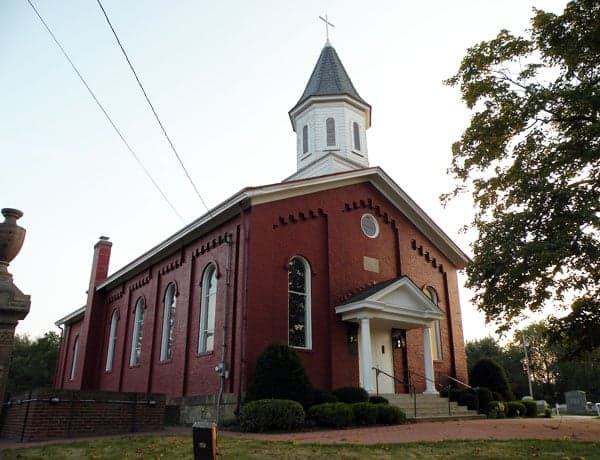
Photo: Wikipedia
Strategic Assessment of Franklin Park, PA
Meaningful friction. Expect exposure to either population pressure, blast zones, or natural disaster risk. Consider buying a retreat property.
What does the Strategic Assessment tell us?
Our Strategic Assessment grades tactical survivability of an area. Major population centers, military targets, fallout zones, natural disasters, and border exposure all drive risk — lower exposure means a more defensible position in a crisis.
This is heavily inspired by Joel Skousen's Strategic Relocation book. Highly recommended you checkout the book ($)What does this tell us?
Our Strategic Assessment grades tactical survivability of an area. Major population centers, military targets, fallout zones, natural disasters, and border exposure all drive risk — lower exposure means a more defensible position in a crisis.
This is heavily inspired by Joel Skousen's Strategic Relocation book. Highly recommended you checkout the book ($)Strategic Pillars

Key Distances
Regional Safe Places
Below is our recommended "safe zones" in Pennsylvania and the surrounding area based on our strategic heuristics. For most people, it's unrealistic to live in a “safe zone” full-time due to work, family or other personal reasons. They tend to be more rural. However, many of these areas are perfect for second homes and retreat properties that double as a vacation home or even a short-term rental.
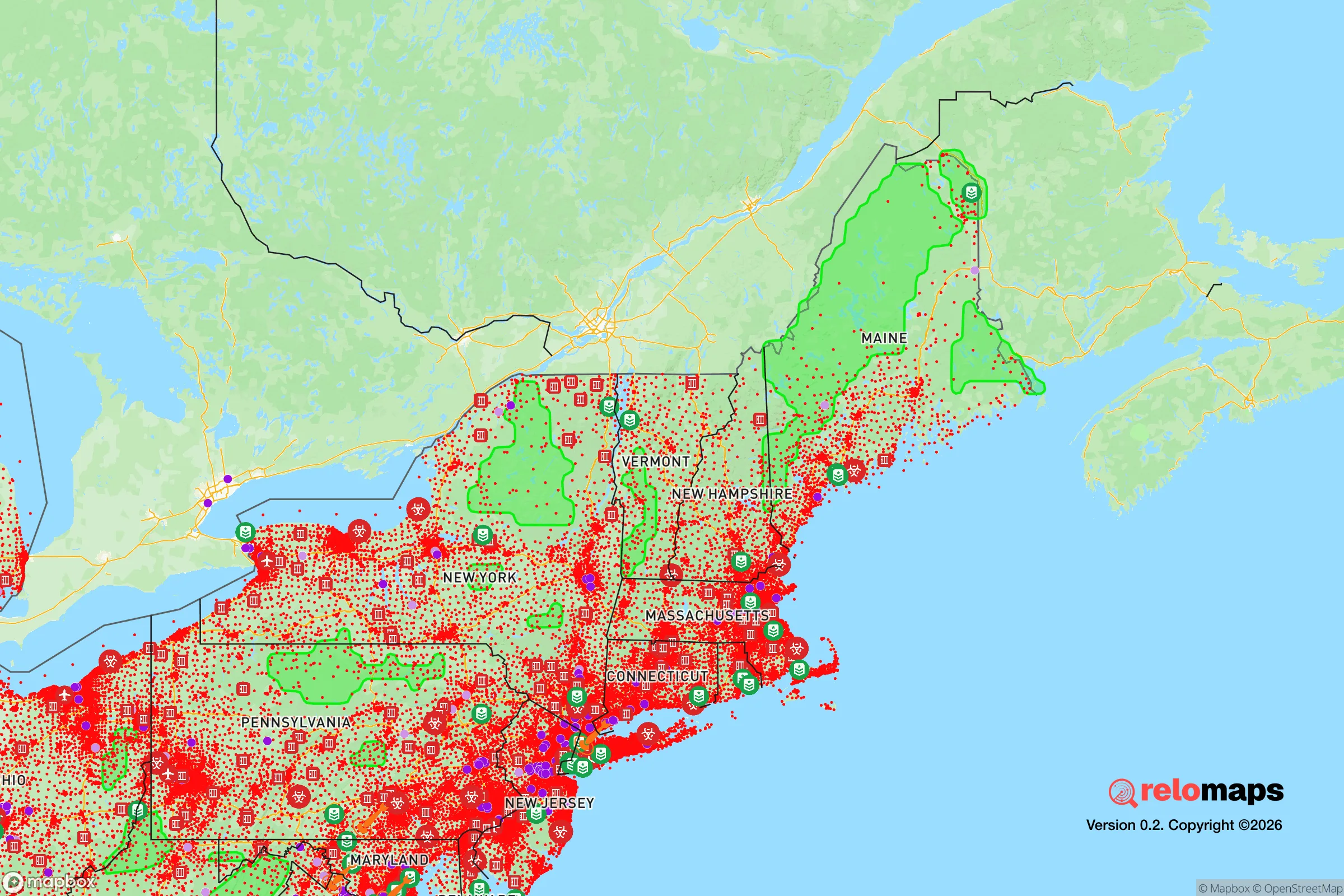
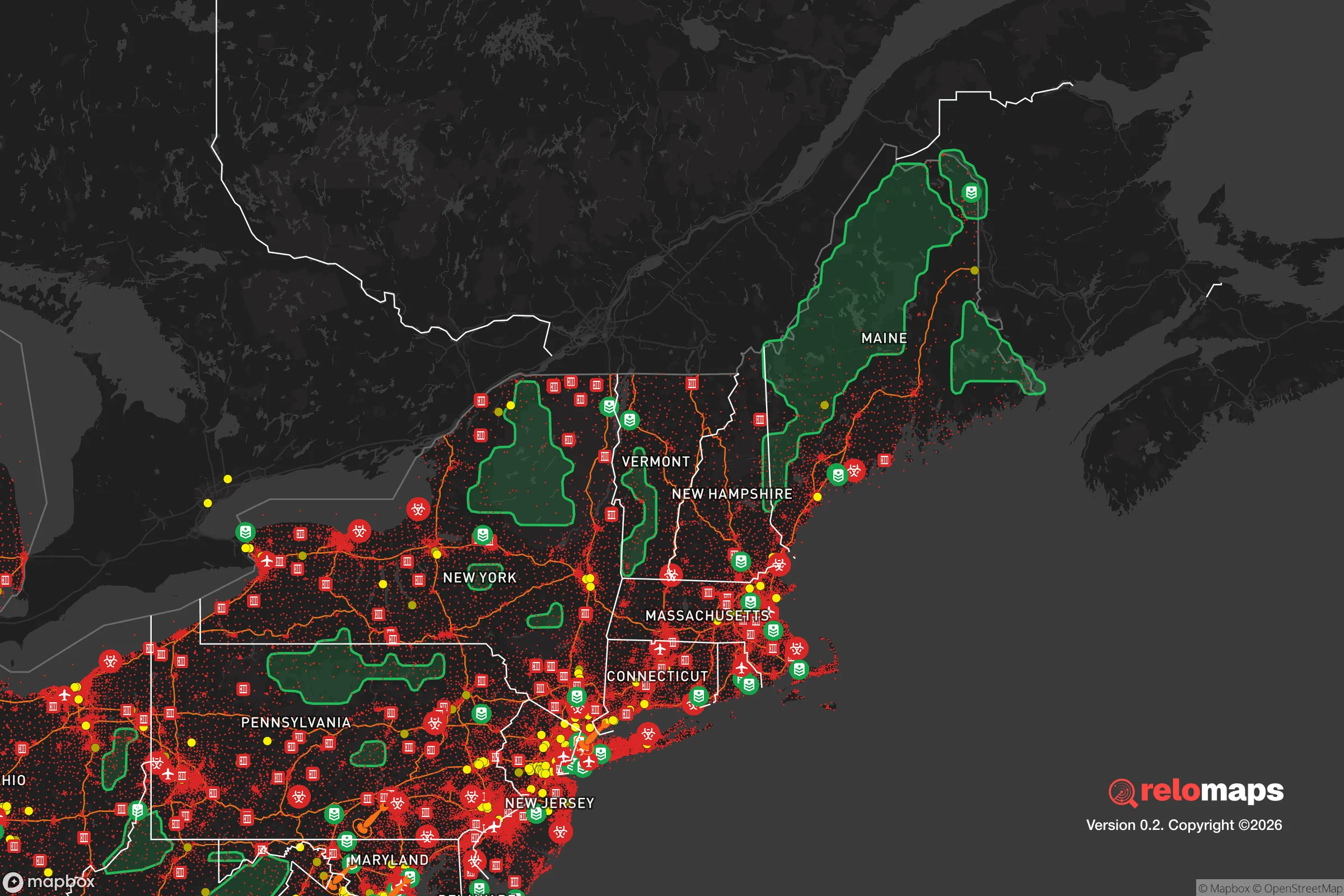


Important Note: For informational purposes only. This does not mean nothing bad ever happens in the green zones. Please use common sense. This is based on public data and modeled with AI. We tried to take a conservative approach but mistakes happen. We update this regularly as new information becomes available.
Solar Generator Recommendations
Backup power matters more here than in safer locations. We've picked three solar generators across budgets and capacity tiers — start with the budget unit if you only need a few essentials, or step up if you want to run a fridge and HVAC for days at a time.

Jackery Portable Power Station Explorer 300
Budget OptionPower on the Go: Weighing only 11 lbs, it's convenient to set up and store with book-sized foldable solar panels

BLUETTI Portable Power Station AC180
Designed for both indoor and outdoor scenarios, AC180 is highly capable as it has a robost capacity and continuous output power.

EF ECOFLOW DELTA Pro Ultra Power Station
Upgraded PickEcoFlow DELTA Pro Ultra is a whole-home energy system designed to grow with your family. Integrated with the Smart Home Panel 2, it scales to meet your evolving energy needs — keeping your home powered, intelligent, and secure through every stage of life.
We earn a commission, at no additional cost to you.
Strategic Assessment Analysis
Franklin Park, Pennsylvania, sits in a strategic sweet spot that few suburban communities can claim: close enough to Pittsburgh’s resources to matter, far enough from its chaos to survive. For a relocator thinking in terms of resilience—civic unrest, supply chain collapse, or a mass casualty event—this borough in Allegheny County offers a rare combination of defensible geography, local governance, and access to critical infrastructure. It’s not a bugout cabin in the woods, but it’s not a soft target in the city core either. Franklin Park is a place where a prepared family can hold ground, build community, and ride out the worst without being overrun.
Geographic position and natural buffers that favor long-term survival
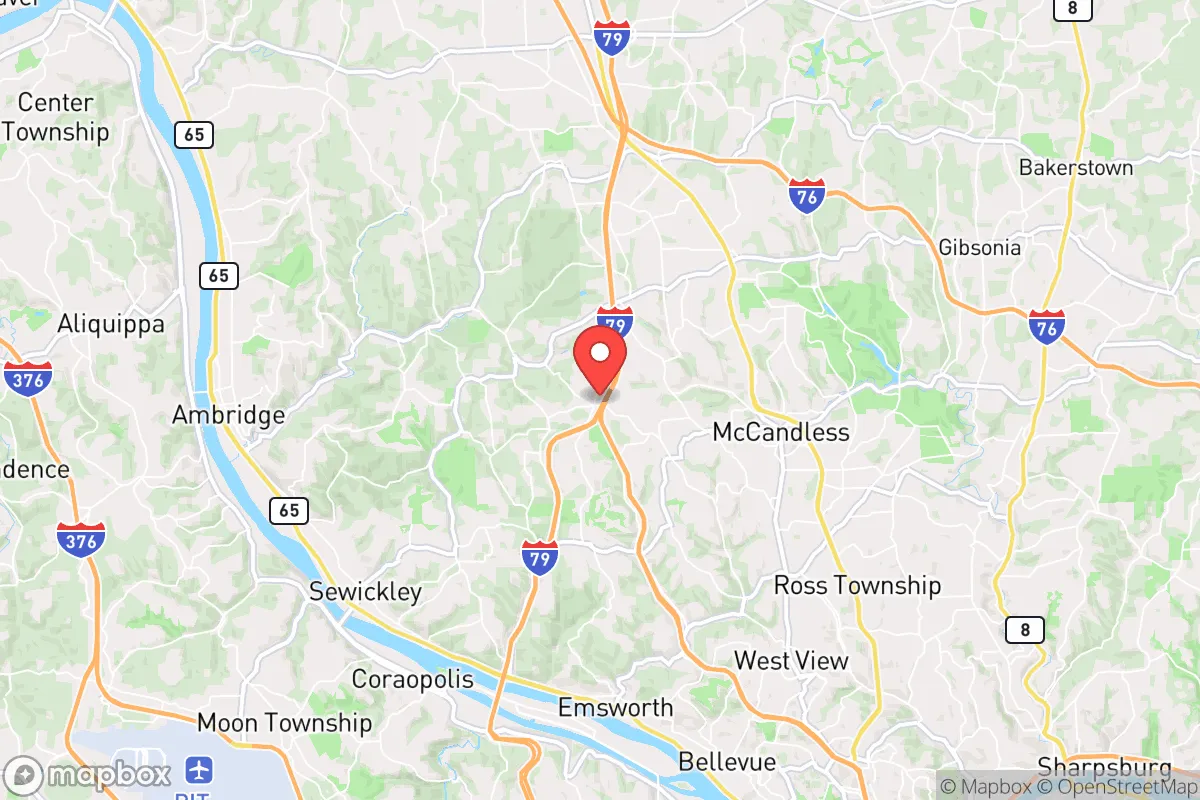
Franklin Park sits atop the rolling hills of northern Allegheny County, roughly 12 miles northwest of downtown Pittsburgh. That distance matters. In a scenario where urban centers become ungovernable—riots, grid failure, or disease outbreak—those 12 miles represent a buffer of suburban sprawl, wooded ravines, and limited arterial roads. The borough is not on a major interstate; it’s served by PA-910 and local roads that can be easily monitored or blocked if necessary. The terrain itself is a defensive asset: steep slopes, creek valleys, and tree cover break up sightlines and slow any movement from the city. For a relocator, this means you’re not in the blast zone of a Pittsburgh-centric event, but you’re close enough to gather intel or trade if things stabilize. The area’s natural water sources—Pine Creek and its tributaries—run through the borough, offering a backup supply if municipal water fails. The local watershed is part of the Ohio River basin, which means groundwater recharge is reliable, unlike arid regions. Franklin Park’s elevation also provides a communication advantage: line-of-sight radio and cell signals are stronger here than in the valleys below, which is critical for maintaining contact with a network during a grid-down event.
Risks, exposures, and proximity to fallout-relevant landmarks
No location is immune, and Franklin Park has its liabilities. The most obvious is its proximity to Pittsburgh itself—a major population center, transportation hub, and potential target for civil unrest or a coordinated attack. The city’s bridges, tunnels, and industrial facilities (including the Neville Island chemical complex and the Edgar Thomson steel works) are high-value targets. A mass casualty event at any of these could send shockwaves—literally and socially—into the suburbs. Franklin Park is also within 20 miles of the Pittsburgh International Airport, a likely staging ground for federal response or, in a worst-case scenario, a secondary target. The borough sits near the intersection of I-79 and the Pennsylvania Turnpike (I-76), both of which could become chokepoints or refugee corridors during an evacuation. That means you need a plan for traffic, not just threats. On the natural disaster front, the area is low-risk for earthquakes and hurricanes, but heavy snow and ice storms can knock out power for days. The 2022 Christmas blizzard left parts of Allegheny County without power for a week. Franklin Park’s tree canopy, while beautiful, becomes a liability in ice storms—falling limbs and downed lines are a recurring issue. Flooding is minimal in the borough itself, but low-lying areas along Pine Creek can surge after heavy rain. For a prepper, the key takeaway is that Franklin Park’s risks are manageable with preparation: a generator, a chainsaw, and a vehicle capable of navigating snow and mud. The bigger concern is human-caused events radiating from Pittsburgh, which requires a solid intelligence network and a willingness to bug in or bug out based on real-time conditions.
Practical resilience for a relocator: food, water, energy, and defensibility
Franklin Park is zoned for single-family homes on lots that average a quarter to half an acre—enough space for a substantial garden, rainwater catchment, and a small livestock setup without attracting attention. The borough’s code enforcement is moderate; you can keep chickens and bees with a permit, and there are no outright bans on vegetable gardens or composting. For a family looking to reduce dependency on grocery stores, this is a green light. Water is the first concern in any grid-down scenario. Franklin Park’s municipal water comes from the Pittsburgh Water and Sewer Authority, which draws from the Allegheny River. That system is vulnerable to contamination, pump failure, or cyberattack. A well is rare in the borough, but a 1,500-gallon cistern tied to gutter downspouts can provide enough water for a family of four for two months with rationing. The local soil is clay-heavy but workable; raised beds with imported topsoil yield solid results for potatoes, beans, and squash. Energy resilience is where Franklin Park shines. The borough has no HOA restrictions on solar panels, and many homes have south-facing roofs. A 5kW solar array with battery storage can run a fridge, lights, and a well pump indefinitely. Natural gas is available in most neighborhoods, which means a dual-fuel generator is a practical backup. Defensibility is more about community than fortifications. Franklin Park has its own police department—not county sheriff patrols—which means faster response times and local accountability. The borough’s layout, with cul-de-sacs and winding roads, naturally limits through traffic. A single downed tree or disabled vehicle can block an entire street. For a relocator, this means you can secure your immediate neighborhood with minimal effort. The local gun culture is present but not aggressive; Allegheny County is not a constitutional carry area, but permits are issued shall-issue. A responsible owner will have no trouble securing firearms for defense. The biggest practical gap is medical infrastructure. The nearest trauma center is UPMC Passavant in McCandless, about 10 minutes away. In a mass casualty event, that facility will be overwhelmed. A relocator should have a trauma kit, advanced first aid training, and a plan for treating injuries at home for at least 72 hours. Stockpiling prescription medications is also critical—pharmacy chains in the area will close or be looted quickly during unrest.
The overall strategic picture for Franklin Park is one of calculated viability. It is not a remote retreat, and it will never be immune to the problems of the Pittsburgh metro area. But for a relocator who wants to stay connected to a regional economy while maintaining a defensible, self-sufficient household, it offers a rare balance. The borough’s natural buffers, moderate zoning, and local governance create a framework where preparation pays off. The risks are real—proximity to a major city, ice storms, and potential infrastructure attacks—but they are not disqualifying. Franklin Park is a place where a conservative-minded family can build a life that is both comfortable and resilient, without the isolation of deep rural living. If the country holds together, you’re 20 minutes from a Pirates game. If it doesn’t, you’re on high ground with water, food, and a plan. That’s the kind of hedge that makes strategic sense in 2026.

* Values derived from national, state, county, city and local statistics and may differ in a specific area. Last updated: 2026-05-01T10:35:29.000Z
Narrative content on this page is AI-generated and may contain mistakes. Verify any details that matter before acting on them.
ReloMaps may earn a commission from affiliate links at no extra cost to you.

