Photo: Wikipedia
Political ClimatePolitical Climate in Franklin Park, PA
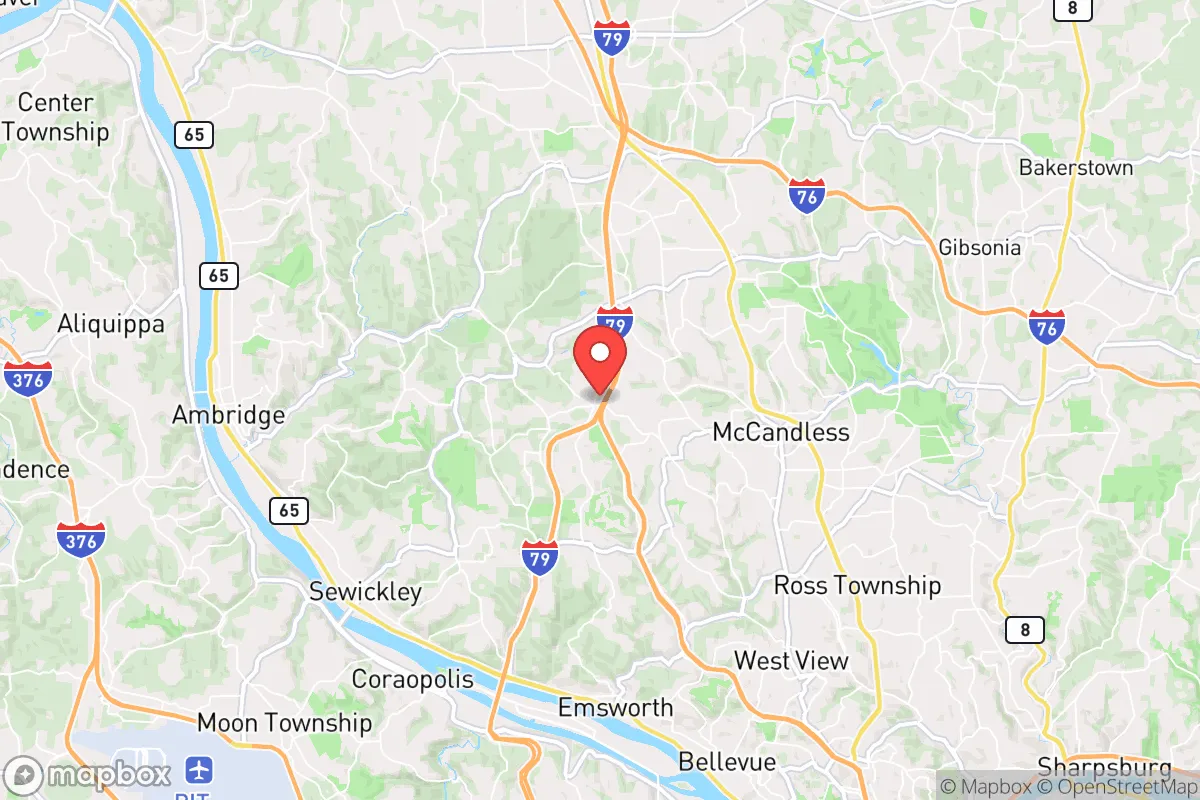
District shown is the primary district for this city’s centroid. Cities may span multiple districts.
Local Political AnalysisPolitical Analysis of Franklin Park, PA
Franklin Park, Pennsylvania, sits in a bit of a political bubble. Its Cook PVI of D+3 tells you the district leans Democratic, but if you’ve lived here as long as I have, you know that number doesn’t tell the whole story. This town used to be a rock-solid conservative stronghold, and while the official registration numbers have shifted, the *feel* of the place still has a strong, independent, keep-the-government-out-of-my-business streak. The trajectory is concerning, though. We’re seeing the same progressive creep that’s swallowed up Pittsburgh’s eastern suburbs, and it’s coming for us next if we’re not careful.
How it compares
Drive ten minutes south into Franklin Park proper, and you’re in a different world than Pittsburgh’s city limits, where the machine politics and progressive social experiments run wild. Head west to Sewickley, and you’ll find a similar demographic shift—old money families who’ve been there for generations being slowly replaced by younger, more left-leaning transplants. The real contrast is east, toward Hampton Township or Richland, where the PVI flips to R+5 or R+8. Those towns still elect school boards that focus on academics over activism. Here in Franklin Park, we’re stuck with a D+3 district that’s been gerrymandered to dilute our voice, and every election cycle brings another wave of candidates who think they know better than you how to run your life, your business, and your kid’s education.
What this means for residents
For the average family, the political climate here means you have to stay vigilant. The local school board, for example, has seen quiet battles over curriculum transparency and parental rights—the kind of fights that would have been unthinkable a decade ago. You’ll see more “equity” initiatives and DEI training mandates creeping into district budgets, funded by your property taxes. The borough council, meanwhile, has flirted with zoning overreach and “sustainability” ordinances that sound nice but add red tape to simple home improvements. If you value personal freedom—the right to send your kid to school without indoctrination, to build a fence on your own property without three layers of permits, or to run a small business without a dozen new regulations—you’re going to feel the squeeze. The long-term trend is clear: more government, less liberty. It’s not a crisis yet, but it’s a slow erosion, and the only way to stop it is to show up at every local meeting and vote in every primary.
Culturally, Franklin Park still holds onto some of its old character. You’ll find plenty of pickup trucks with American flags, and the volunteer fire department is still the backbone of the community. But the new developments are bringing in folks from the city who don’t share those values. They see government as a tool for social engineering, not a necessary evil to be kept in check. The policy distinction that matters most right now is the school board’s direction—if we lose that battle, the whole town’s character will follow. My advice? Keep your ear to the ground, get to know your neighbors, and don’t assume the old ways will hold forever. They won’t, unless we fight for them.

State Political ClimatePolitical Climate in Pennsylvania
State Political AnalysisPolitical Environment in the State
Pennsylvania is a classic purple state that has been drifting leftward over the past two decades, though it remains a genuine battleground where neither party holds a commanding grip. The state voted for Democrats in four of the last six presidential elections, but the margins are razor-thin—Biden won by just 1.2 points in 2020, and Trump carried it by 0.7 points in 2016. The real story is the slow erosion of the old Republican strongholds in the Philadelphia suburbs and the simultaneous hardening of the rural and exurban vote, creating a state that feels like two different countries stitched together by a few swing counties.
Urban vs. rural divide
The political map of Pennsylvania is brutally simple: the cities and their inner suburbs vote blue, and everything else votes red. Philadelphia and its collar counties—Montgomery, Delaware, Chester, and Bucks—are the Democratic engine, delivering margins of 200,000 to 400,000 votes that Republicans can never quite overcome. Pittsburgh and its Allegheny County base are similarly reliable for Democrats, though the surrounding southwestern counties like Washington and Westmoreland have shifted hard red. The real battlegrounds are the "collar counties" around Philadelphia that used to be Republican-leaning but have flipped decisively: Bucks County went from +5 R in 2012 to +4 D in 2020, and Chester County went from +9 R to +8 D over the same period. Meanwhile, the vast rural expanse—places like Tioga, Bradford, and Potter counties in the north, and Franklin, Adams, and York counties in the south—vote 65-75% Republican. The I-81 corridor through central Pennsylvania, anchored by Harrisburg and Scranton, is a mix of blue-collar union Democrats and Trump Republicans, making it the most contested ground in the state.
Policy environment
Pennsylvania's policy environment is a mixed bag that reflects its purple status. The state income tax is a flat 3.07%, which is relatively low and hasn't changed in years. Property taxes, however, are among the highest in the nation—the effective rate is about 1.5% of home value, and there's no statewide homestead exemption, so homeowners in high-value areas like Philadelphia's Main Line or Pittsburgh's Fox Chapel pay dearly. Sales tax is 6% (8% in Philadelphia and Pittsburgh), and groceries and clothing are exempt. The regulatory climate is moderate but trending worse: the state has a prevailing wage law that drives up construction costs, and the Department of Environmental Protection is aggressive on permitting, especially for energy projects. On education, Pennsylvania has a school choice program—the Educational Improvement Tax Credit (EITC) and Opportunity Scholarship Tax Credit (OSTC)—that allows businesses to fund scholarships for private and parochial schools, but it's capped and constantly under attack from the teachers' unions. Election laws are a flashpoint: the state has no-excuse mail-in voting (passed in 2019 under Act 77), and voter ID is required only for first-time voters, not for regular elections. This has fueled ongoing controversy, especially after the 2020 election saw widespread use of drop boxes and ballot curing.
Trajectory & freedom
On the freedom front, Pennsylvania is a state in slow retreat. The most concerning trend is the erosion of Second Amendment rights: in 2022, the legislature passed a preemption law that prevents local municipalities from enacting their own gun ordinances, but Philadelphia and Pittsburgh have openly defied it with "ghost gun" bans and safe storage requirements. The state Supreme Court, which has a 5-2 Democratic majority, has upheld these local restrictions, creating a patchwork of gun laws that makes it hard for law-abiding citizens to know what's legal. On medical freedom, Pennsylvania was one of the first states to pass a COVID-19 vaccine mandate for healthcare workers, and the state's emergency powers law (Act 21 of 2020) gave the governor broad authority to shut down businesses and schools—authority that was only partially reined in by a 2022 constitutional amendment limiting emergency declarations to 21 days without legislative approval. Parental rights are under pressure: the state Department of Education has pushed "culturally responsive" curriculum guidelines that some districts have used to introduce gender ideology in elementary schools, and there's no statewide parental opt-out for sex education. Property rights are relatively strong—there's no statewide rent control, and zoning is mostly local—but the growing use of conservation easements and environmental regulations on farmland is a concern for rural landowners.
Civil unrest & political movements
Pennsylvania has seen its share of political flashpoints. The 2020 election aftermath was particularly intense in Philadelphia, where Republican poll watchers were allegedly barred from counting rooms, leading to years of litigation and a still-unresolved audit by the state Senate. The city of Philadelphia is a sanctuary city, refusing to cooperate with ICE detainers, and the state's "Clean Slate" law automatically seals certain criminal records, which has been criticized for reducing accountability. On the left, the Working Families Party and progressive activists have gained influence in Philadelphia and Pittsburgh, pushing for defunding the police and rent control—so far unsuccessfully. On the right, the Pennsylvania Freedom Caucus has emerged as a powerful force in the state House, blocking budget deals and pushing for election integrity reforms. The most visible protest movements have been around abortion: after the Dobbs decision, Philadelphia and Pittsburgh saw large pro-choice rallies, while rural areas held counter-protests. The state's abortion law remains relatively restrictive—24-hour waiting period, parental consent for minors, no public funding—but the Democratic governor has vetoed any further restrictions.
Projection
Over the next 5-10 years, Pennsylvania is likely to continue its slow leftward drift, driven by demographic changes. The Philadelphia suburbs are becoming more diverse and more Democratic as young professionals and immigrants move in, while the rural areas are aging and shrinking. The state is projected to lose a congressional seat after the 2030 census, and that seat will almost certainly come from a rural Republican district. The wild card is the energy transition: the Marcellus Shale natural gas boom has made Pennsylvania the second-largest gas producer in the country, but the state's severance tax is among the lowest, and there's growing pressure from environmental groups to impose a higher tax or ban fracking outright. If that happens, it would devastate the economies of Washington, Greene, and Susquehanna counties, which are heavily dependent on gas drilling. The political implications are huge: those counties are currently red, but a collapse of the energy sector could either radicalize them further or push them toward populist Democrats. The state's pension crisis—Pennsylvania has one of the most underfunded public pension systems in the country—will eventually force tax increases or service cuts, which will be a political firestorm regardless of who's in charge.
For a conservative moving to Pennsylvania, the bottom line is this: you can find a welcoming community in the rural areas and exurbs, but you'll be fighting an uphill battle at the state level. The cities and their suburbs control the legislature and the governorship, and they're using that power to push policies that will make the state less free over time. If you're looking for a place where your rights are secure and your vote counts equally, you might want to look at states with stronger constitutional protections and more competitive elections. But if you're willing to fight—and you have the patience for a long-term political war—Pennsylvania offers a chance to be part of the most important battleground in American politics.
* Values derived from national, state, county, city and local statistics and may differ in a specific area. Last updated: 2026-05-01T10:35:29.000Z
Narrative content on this page is AI-generated and may contain mistakes. Verify any details that matter before acting on them.
ReloMaps may earn a commission from affiliate links at no extra cost to you.

