 Popular
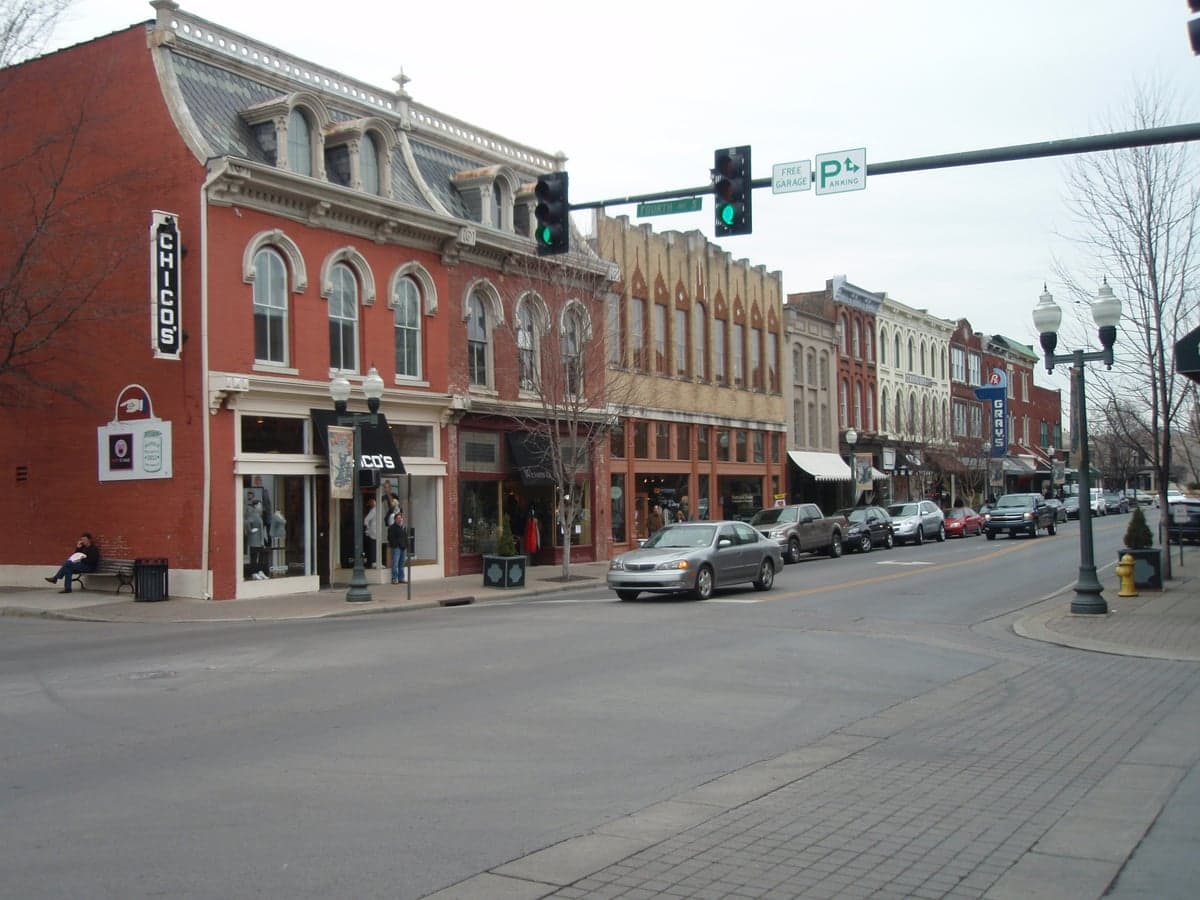
Photo: Wikipedia
Personal Sovereignty in Franklin, TN
Viable for self-reliance. Generally workable, though some barriers may limit total independence.
What does Personal Sovereignty tell us?
Personal Sovereignty measures your capacity for self-reliance and independence with minimal government friction. Higher scores mean fewer barriers between you and the way you want to live... but it assumes you have the space you need and good neighbors.
What does this tell us?
Personal Sovereignty measures your capacity for self-reliance and independence with minimal government friction. Higher scores mean fewer barriers between you and the way you want to live... but it assumes you have the space you need and good neighbors.
State Policy
Energy independence: Importer (25% of energy produced in-state)
Personal Liberty
Homesteading

Personal Liberty Analysis
Franklin, Tennessee offers a notably high degree of personal sovereignty compared to most of the United States, particularly for those who prioritize minimal government interference in daily life, self-defense, and family autonomy. The city sits within Williamson County, a jurisdiction that consistently ranks among the most fiscally conservative and property-rights-friendly in the nation, while Tennessee as a whole has enacted some of the strongest preemption laws in the country to prevent local governments from infringing on state-level freedoms. For a survivalist or prepper evaluating relocation, Franklin presents a strategic balance of suburban infrastructure and rural-adjacent access, though the rapid growth and rising property values demand careful planning to secure the kind of self-reliant lifestyle many seek.
Tax burden and regulatory posture: How Tennessee’s fiscal policies protect your autonomy
Tennessee is one of nine states with no state income tax on wages, which directly preserves more of your earnings for savings, investments, or prepping supplies. The state’s sales tax rate is high at 7% (with local add-ons bringing it to around 9.25% in Franklin), but this consumption-based model means you control your tax liability by controlling your spending—a key advantage for those who live frugally and stockpile. Property taxes in Williamson County are among the lowest in the nation for a high-income area, averaging roughly 0.55% of assessed value, which keeps the cost of owning land and a home manageable. Tennessee’s regulatory environment is aggressively pro-business and anti-red tape, with no state-level building codes in unincorporated areas (though Franklin city has its own codes) and a right-to-work law that limits union power. For a prepper, this means fewer bureaucratic hurdles for constructing outbuildings, installing solar panels, or drilling a well—provided you’re outside city limits. The state also has a strong preemption law that prevents local governments from enacting their own zoning or land-use restrictions that are stricter than state standards, though Franklin’s city council does impose some suburban-style HOA-like regulations within its jurisdiction.
Self-defense and gun law specifics: What the Second Sanctuary status means for you
Tennessee is a constitutional carry state as of 2021, meaning no permit is required to carry a handgun openly or concealed for anyone 21 or older who can legally possess a firearm. Franklin and Williamson County are designated Second Amendment Sanctuary areas, with local officials publicly stating they will not enforce any federal gun laws they deem unconstitutional. Tennessee law explicitly prohibits any local government from regulating the possession, carrying, or storage of firearms, so Franklin cannot impose its own magazine bans, waiting periods, or registration schemes—a critical protection for preppers building a defensive arsenal. The state also has a strong Stand Your Ground law with no duty to retreat in any place you are lawfully present, and Castle Doctrine protections extend to your vehicle and workplace. For those concerned about government overreach, Tennessee’s firearm preemption is among the most comprehensive in the South, and the state legislature has repeatedly rejected attempts to create a firearm registry or red flag law. The only notable restriction is that private sales between individuals do not require a background check, but federal law still applies to licensed dealers—a common-sense balance that preserves privacy while maintaining legal channels.
Self-reliance and homesteading viability: Lot sizes, zoning, and off-grid feasibility in Franklin
Within Franklin city limits, most residential lots are small (0.25–0.5 acres) and subject to HOA covenants that restrict chickens, livestock, and external structures like sheds or greenhouses without approval. This is a significant limitation for anyone wanting to raise food or store bulk supplies visibly. However, Williamson County’s unincorporated areas offer a different reality, with minimum lot sizes of 1–3 acres in many rural zoning districts, and no county-wide ban on rainwater collection or composting toilets. The county allows accessory dwelling units (ADUs) on properties over 1 acre, which can serve as a bunker, workshop, or rental income source. Off-grid solar is legally viable—Tennessee has no state-level net metering requirement, but it also doesn’t prohibit off-grid systems, and many rural homeowners use solar panels with battery storage without issue. The biggest hurdle is water: Franklin’s municipal water supply is reliable, but drilling a well in the county costs $8,000–$15,000 depending on depth, and the underlying karst geology can make septic system placement tricky. For a serious prepper, the best strategy is to buy land in the county’s rural pockets (like the Leiper’s Fork area or near the Natchez Trace) where zoning is minimal, neighbors are sparse, and you can legally keep goats, chickens, and a substantial food garden without HOA interference.
Personal liberties: Parental rights, medical autonomy, speech, and property protections
Tennessee has some of the strongest parental rights laws in the country, including a 2023 law that requires schools to notify parents of any material changes to a student’s health or well-being and prohibits medical interventions for gender dysphoria in minors. This aligns with a broader state posture that prioritizes family decision-making over government or institutional authority. Medical autonomy is robust for adults: Tennessee has no state-level vaccine mandate for employment or public services, and while it does not allow recreational marijuana, CBD and hemp-derived products are widely available. The state’s emergency powers law was reformed in 2021 to limit a governor’s ability to shut down businesses or mandate lockdowns without legislative approval—a direct response to COVID-era overreach that preppers will appreciate. Free speech is protected by both the First Amendment and a state constitutional provision that explicitly prohibits any law “abridging the freedom of speech,” and Franklin has no local hate speech ordinances or content-based restrictions. Property rights are further secured by Tennessee’s strong eminent domain protections, which require a public use finding and full market-value compensation, and the state’s “right to farm” law shields agricultural operations from nuisance lawsuits—relevant if you plan to keep livestock or run a small homestead.
In the broader context of American personal sovereignty, Franklin and its surrounding county represent a rare convergence of low taxes, strong gun rights, parental autonomy, and regulatory restraint that is increasingly difficult to find in suburban America. The city itself leans more toward a polished, HOA-governed lifestyle that may feel restrictive for hardcore preppers, but the county’s rural areas offer a genuine alternative within a 15-minute drive. Compared to states like California, New York, or Illinois, Franklin feels like a fortress of liberty; compared to rural Montana or Idaho, it’s more constrained but offers better infrastructure, healthcare access, and economic opportunity. For the strategic relocator who wants to maintain a low profile while building resilience, Franklin provides a legal and cultural environment where you can quietly prepare without fear of government intrusion—provided you choose your specific parcel wisely and stay outside the city’s more restrictive zoning boundaries.

* Values derived from national, state, county, city and local statistics and may differ in a specific area. Last updated: 2026-04-15T23:53:45.000Z
Narrative content on this page is AI-generated and may contain mistakes. Verify any details that matter before acting on them.
ReloMaps may earn a commission from affiliate links at no extra cost to you.

