 Popular
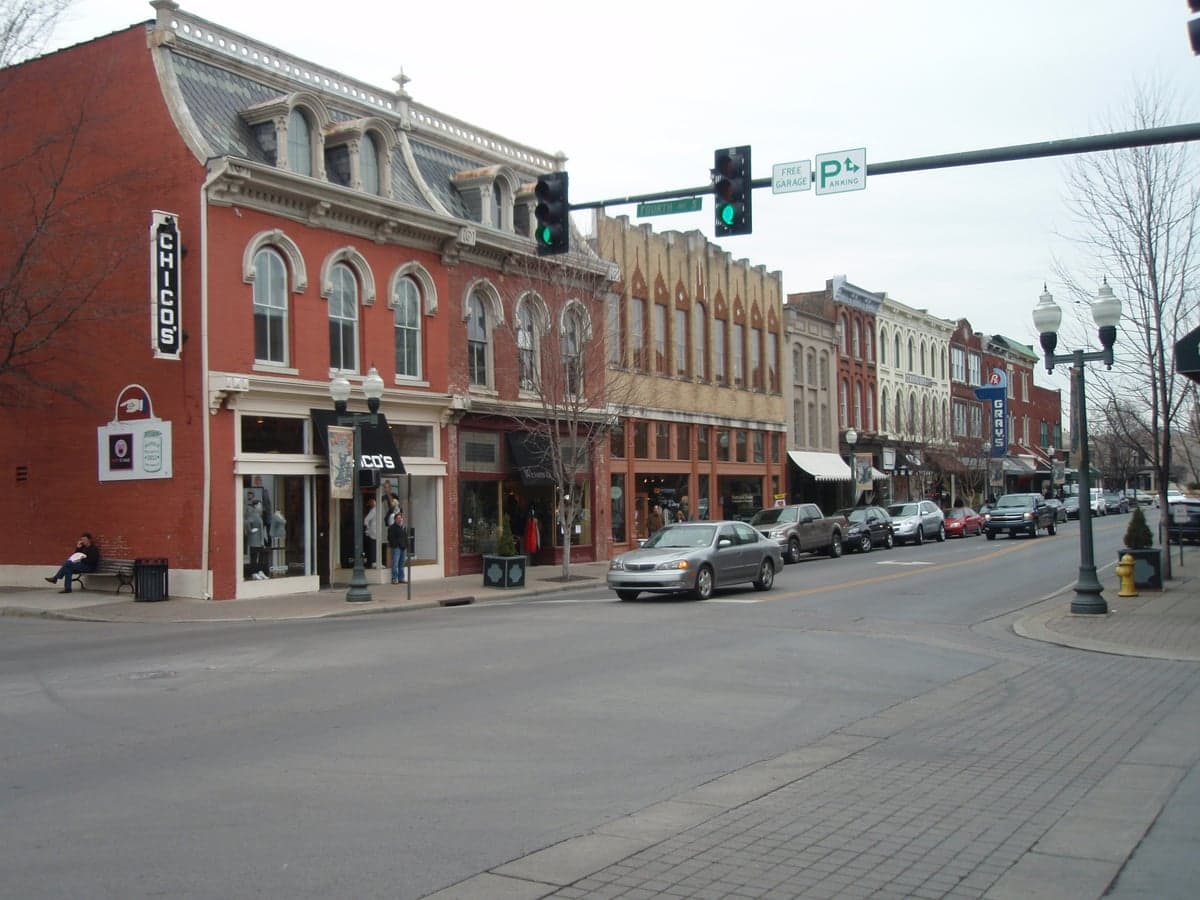
Photo: Wikipedia
Demographics of Franklin, TN
Affluence Level in Franklin, TN
An upper-middle-class area. Household wealth, education levels, and homeownership run ahead of national benchmarks.
People of Franklin, TN
The people of Franklin, Tennessee today number roughly 85,575, forming a predominantly white (74.3%), highly educated (64.3% college degree) community with a notably bifurcated professional class—longtime Williamson County families alongside a wave of corporate transferees and entrepreneurs drawn by the city’s reputation for top-ranked schools and low crime. The city’s identity is shaped by a strong conservative civic culture, a historic downtown that functions as a social and commercial hub, and a population that is both growing and diversifying, with significant Indian-subcontinent (5.5%) and Hispanic (7.3%) communities now established in specific neighborhoods. Franklin is not a transient bedroom suburb; it is a destination city where newcomers often put down roots, and where the demographic story is less about replacement and more about layered arrival.
How the city was settled and grew
Franklin was founded in 1799 as the seat of Williamson County, drawing its first wave of settlers—primarily Scots-Irish and English farmers—via the Natchez Trace and the Cumberland River. These early families, names like Hardin, McGavock, and Buford, built the plantation economy that dominated the area through the antebellum period, centered on the fertile Harpeth River valley. The Civil War Battle of Franklin (1864) devastated the town and its population, but Reconstruction brought a slow recovery led by merchants and lawyers who rebuilt the downtown core around the Public Square. The historic Harlinsdale Farm and McGavock Cemetery neighborhoods still bear the names of these founding families, and the descendants of the original white settlers remain a visible presence in the city’s civic and philanthropic leadership. The post-Reconstruction era saw a small but stable Black population, many descended from enslaved families, who formed the core of the Hard Bargain neighborhood—a historically African American community just south of downtown that remains a distinct enclave today. By 1900, Franklin was a quiet county seat of about 3,000 people, largely untouched by industrialization.
Modern era (post-1965)
The modern demographic transformation of Franklin began in earnest after the 1965 Hart-Cellar Act and, more decisively, with the completion of Interstate 65 in the 1970s, which turned the city into a commuter-accessible suburb of Nashville. The first major wave of domestic in-migration came in the 1980s and 1990s as white-collar professionals—many from the Midwest and Northeast—relocated for jobs in healthcare (HCA Healthcare’s headquarters moved to Nashville in 1968), finance, and the burgeoning music industry. These newcomers settled overwhelmingly in master-planned subdivisions like Westhaven (a 1,700-acre, New Urbanist community developed from 2004 onward) and Fieldstone Farms, which offered large homes on cul-de-sacs and access to Williamson County’s nationally ranked schools. The 2000s and 2010s brought a second, more diverse wave: Indian-subcontinent professionals, many working in IT and engineering at companies like Dell, Philips, and Caterpillar’s regional offices, began clustering in neighborhoods such as McKay’s Mill and Berry Farms, drawn by the same school system and a growing network of Indian-owned businesses and temples. The Hispanic population, now 7.3%, grew more gradually, concentrated in the Franklin South corridor and in service-industry roles, with many families living in the older, more affordable housing stock near the historic downtown. The East/Southeast Asian population (3.4%) is smaller and more dispersed, with no single dominant enclave, though a notable Vietnamese-American community has formed around the Cool Springs commercial district. The Black population (5.8%) has remained relatively stable, with the historic Hard Bargain neighborhood experiencing some gentrification pressure from the downtown revival, while newer Black residents tend to settle in the more suburban western and southern edges of the city.
The future
Franklin’s population is projected to continue growing, likely reaching 100,000 by 2035, driven by ongoing corporate relocations and the city’s reputation as a safe, high-amenity suburb. The most significant demographic trend is the growth of the Indian-subcontinent community, which has doubled in share over the past decade and is now the largest non-white group; this population is highly educated, English-proficient, and economically integrated, and is likely to continue expanding through both professional migration and family reunification. The Hispanic population is growing more slowly, partly due to housing costs that now exceed $600,000 for a median home, which limits in-migration of lower-income families. The white population, while still the majority, is aging slightly, and the city is seeing a modest inflow of young families from California and the Northeast who are drawn by the political and cultural climate. The city is not tribalizing into isolated enclaves—neighborhoods like Westhaven and Berry Farms are increasingly mixed by ethnicity and income—but distinct cultural nodes are emerging: the Indian community around the Sri Ganesha Temple in nearby Nashville and the Cool Springs commercial corridor, and the Hispanic community around the St. Philip Catholic Church area in Franklin South. The Hard Bargain neighborhood is undergoing a careful revitalization that aims to preserve its historic character while adding new housing, though displacement remains a concern.
For a conservative-leaning individual or family moving to Franklin today, the city offers a stable, growing, and increasingly diverse population that remains culturally anchored by its historic white Southern roots, its strong evangelical Christian presence, and its commitment to fiscal conservatism and local governance. The demographic change is real but gradual, and it is occurring within a framework of economic prosperity and social cohesion that has so far avoided the sharp polarization seen in larger metropolitan areas. The bottom line: Franklin is becoming a more cosmopolitan version of itself—still deeply conservative, still family-oriented, but with a visible and growing Indian and Hispanic presence that is reshaping the city’s cuisine, festivals, and school demographics without fundamentally altering its political character.

* Values derived from national, state, county, city and local statistics and may differ in a specific area. Last updated: 2026-04-15T23:53:45.000Z
Narrative content on this page is AI-generated and may contain mistakes. Verify any details that matter before acting on them.
ReloMaps may earn a commission from affiliate links at no extra cost to you.

