 Popular
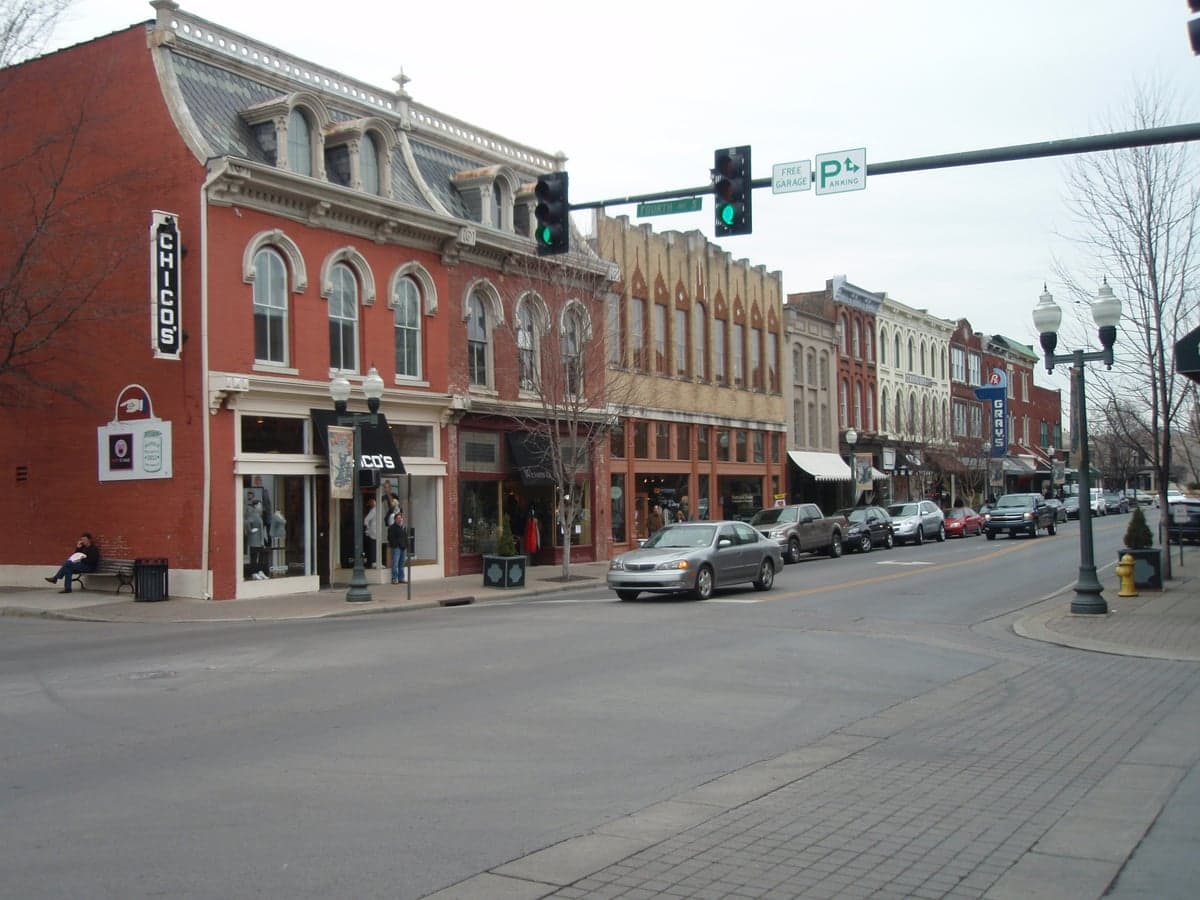
Photo: Wikipedia
Political ClimatePolitical Climate in Franklin, TN
District shown is the primary district for this city’s centroid. Cities may span multiple districts.
Local Political AnalysisPolitical Analysis of Franklin, TN
Franklin, Tennessee, has long been a reliably conservative stronghold, and that hasn't changed much at the ballot box—the area carries a Cook PVI of R+10, meaning it votes about ten points more Republican than the national average. But if you've lived here as long as I have, you've seen the character of that conservatism shift. It used to be a quiet, don't-bother-me kind of place where folks just wanted to be left alone to run their businesses and raise their families. Now, with all the growth and transplants pouring in from California and Illinois, you're starting to see a subtle but real pressure to adopt more progressive policies, especially around land use and local ordinances. The core is still solidly red, but the edges are fraying in ways that make a long-time resident pay attention.
How it compares
Drive twenty minutes north into Nashville, and you might as well be in a different country politically—Davidson County is deep blue, with all the big-city government overreach you'd expect. That contrast is stark and getting starker. Meanwhile, towns like Spring Hill and Columbia to the south are still holding the line with a more traditional, limited-government mindset, though they're feeling the same growth pressures. Franklin sits right in the middle of that tension: we're the affluent, polished face of Williamson County, which means we attract both conservative families who value low taxes and good schools, and a newer wave of professionals who bring more progressive social ideas. The surrounding rural areas, like Fairview and parts of rural Williamson County, are still rock-ribbed conservative, and they serve as a reminder of what Franklin was like twenty years ago.
What this means for residents
For those of us who moved here specifically to escape the overreach we saw in other states, the warning signs are there. The city council has had debates about zoning changes that sound innocent enough—"affordable housing initiatives" and "complete streets" planning—but often come with strings attached that can infringe on property rights and increase local government control. The school board, while still conservative, has faced organized pressure from activist groups pushing for curriculum changes that many of us see as unnecessary government meddling in what kids are taught. The good news is that the R+10 lean means these progressive pushes usually get voted down or watered down, but it takes constant vigilance. You can't just assume Franklin will stay the way it was; you have to show up to those city council meetings and school board hearings, because the people pushing for change are organized and well-funded.
One cultural distinction that still holds strong here is the sense of personal responsibility and community self-reliance. You don't see the same appetite for heavy-handed government programs that you do in Nashville or even in some of the closer-in suburbs. The churches are full, the volunteer fire departments are strong, and people generally believe that neighbors should help neighbors without a government mandate. That said, the biggest long-term concern I hear from other long-time residents is about the trajectory of the school system and local planning boards. If the progressive influence continues to grow with each new wave of transplants, we could see Franklin start to mirror the very places people fled. For now, it's still a great place to live if you value freedom and common sense, but keep your eye on those local elections—that's where the real fight for the soul of this town is happening.

State Political ClimatePolitical Climate in Tennessee
State Political AnalysisPolitical Environment in the State
Tennessee has been a reliably red state for decades, but the nature of that conservatism has shifted significantly since the 2010s. The state’s overall partisan lean is now solidly Republican — Donald Trump carried it by 30 points in 2020 and 2024 — but the coalition driving that majority has changed. The old-school, moderate-to-conservative Democratic strongholds in the Mississippi Delta and parts of Nashville have collapsed, replaced by a more uniformly conservative, culturally traditionalist Republican base that is increasingly concentrated in the fast-growing suburbs and exurbs of Nashville, Knoxville, and Chattanooga. Over the last 10-20 years, the state has moved from a “purple-ish red” to a deep, unapologetic red, driven by in-migration from blue states and a legislative supermajority that has consolidated power in the statehouse.
Urban vs. rural divide
The political map of Tennessee is a textbook example of the urban-rural split. The three major metro areas — Nashville (Davidson County), Memphis (Shelby County), and Knoxville (Knox County) — are the only real blue dots, and even they are shrinking in relative influence. Nashville is the most liberal, with a Democratic mayor and a city council that has pushed for transit taxes, affordable housing mandates, and a sanctuary city posture (though state law preempts that). Memphis is similarly blue, driven by a large African American population and a long history of Democratic machine politics. Knoxville is a lighter shade of blue, with a more moderate Democratic presence. But the real story is the explosive growth of the suburbs and exurbs: Williamson County (Franklin, Brentwood) is one of the wealthiest and most conservative counties in the nation, and it’s growing fast. Rutherford County (Murfreesboro) and Wilson County (Lebanon) have flipped from purple to deep red as Nashville’s sprawl pushes conservative families outward. Meanwhile, rural West Tennessee (like Weakley County) and East Tennessee (like Greene County) are deeply red, with Trump winning some precincts by 80+ points. The divide isn’t just partisan — it’s cultural. Rural and suburban voters see Nashville and Memphis as out-of-touch liberal islands, while urbanites view the rest of the state as backward. That tension drives a lot of the legislative agenda in Nashville.
Policy environment
Tennessee’s policy environment is aggressively conservative, with a focus on low taxes, limited regulation, and cultural traditionalism. There is no state income tax — only a 7% sales tax on most goods (and a higher rate on prepared food) — which makes it a magnet for retirees and remote workers from high-tax states like California and New York. The state’s regulatory posture is business-friendly: it’s a right-to-work state, with no mandatory union membership, and the legislature has repeatedly blocked local minimum wage hikes and paid leave mandates. On education, Tennessee has a robust school choice program — the Education Savings Account (ESA) program was expanded in 2023 to cover all counties, allowing parents to use state funds for private school tuition, tutoring, or homeschooling. The state also passed a “Parents’ Bill of Rights” in 2022, requiring schools to notify parents of any changes to a child’s mental or physical health (a direct response to transgender policies). Healthcare is a mixed bag: Tennessee refused to expand Medicaid under the ACA, leaving a coverage gap for low-income adults, but the state has a strong network of rural hospitals and a growing telehealth sector. Election laws are strict: voter ID is required, early voting is limited to two weeks, and the state purges inactive voters regularly. The legislature also passed a law in 2023 making it a felony for election officials to send unsolicited absentee ballot applications. Overall, the policy environment is designed to maximize personal freedom in economic and family matters, while restricting government overreach in education and healthcare.
Trajectory & freedom
Tennessee is becoming more free in several key areas, but the trajectory is not uniform. The biggest expansion of personal liberty came in 2021 with the passage of constitutional carry (permitless carry of handguns), making Tennessee one of the most gun-friendly states in the country. In 2023, the legislature passed a law banning local governments from enforcing any federal gun laws that conflict with state law — a direct nullification move. On parental rights, the 2022 “Parents’ Bill of Rights” and the 2023 ban on gender-affirming care for minors (the first such law in the nation) were seen by conservatives as protecting children from government and medical overreach. On speech, the state passed a law in 2023 requiring public colleges to report on “intellectual diversity” and prohibiting them from requiring diversity statements in hiring. However, there are concerning trends. The state’s tax burden is regressive — the sales tax hits low-income families hardest — and property taxes in fast-growing counties like Williamson and Rutherford have risen sharply as home values double. The legislature also passed a law in 2024 banning local governments from regulating short-term rentals (like Airbnb), which some see as a property rights win but others view as a loss of local control. The biggest freedom concern is the state’s abortion ban — a near-total ban with no exceptions for rape or incest, passed in 2022 after Dobbs. For pro-life conservatives, this is a victory; for those who prioritize medical autonomy, it’s a significant restriction. Overall, the state is moving toward more freedom on guns, speech, and education, but with tighter constraints on healthcare and local governance.
Civil unrest & political movements
Tennessee has seen its share of political flashpoints, but they are localized and rarely spill into daily life for most residents. The most visible unrest has been in Nashville, where protests over the 2023 Covenant School shooting (a mass shooting at a private Christian school) led to a massive, ongoing debate over gun control. Thousands of protesters — mostly parents and students — marched on the state capitol, demanding red flag laws and an assault weapons ban. The Republican supermajority responded by passing a law in 2024 that criminalizes “unauthorized” protests at the capitol and expands the governor’s power to call in the National Guard. That law has been challenged in court, but it’s a clear signal that the state is willing to crack down on disruptive activism. On the right, there is a growing “Tennessee Three” movement — named after the three Democratic state representatives who were expelled in 2023 for leading a gun control protest on the House floor (two were later reinstated). That event galvanized progressive activists, but it also energized conservative voters who saw it as a necessary defense of legislative order. Immigration politics are less heated than in border states, but there is a small but vocal movement in rural counties (like Lincoln County) to declare themselves “Second Amendment sanctuaries” and resist federal immigration enforcement. Election integrity controversies have been minimal — the 2020 and 2022 elections ran smoothly, with no major fraud allegations — but the legislature has passed laws to tighten absentee ballot rules and ban private funding of election administration (a response to the 2020 “Zuckerbucks” controversy). The most visible flashpoint for a new resident would be the constant presence of political signage — “Let’s Go Brandon” flags, pro-gun bumper stickers, and “Trump Won” banners are common in rural and suburban areas, while Nashville and Memphis have more “Black Lives Matter” and “Trans Rights” signs. It’s a state where people wear their politics on their sleeves, but it rarely leads to physical conflict.
Projection
Over the next 5-10 years, Tennessee will likely become more conservative, not less, driven by two powerful forces: in-migration and legislative entrenchment. The state is adding about 80,000 new residents per year, and the vast majority are coming from blue states like California, Illinois, and New York. While some of these newcomers are moderate or liberal (especially those moving to Nashville), the bulk are conservative families and retirees seeking lower taxes, safer neighborhoods, and more cultural alignment. The suburbs of Nashville — particularly Williamson, Rutherford, and Wilson counties — are growing at 3-4% annually, and they are voting more Republican with each cycle. Meanwhile, the Democratic strongholds in Memphis and Nashville are shrinking as a share of the state’s population. The legislative supermajority is unlikely to be broken anytime soon, meaning the policy trajectory will continue: more school choice, more gun rights, more restrictions on abortion and transgender care, and more preemption of local government authority. The biggest wildcard is the state’s fiscal health. Tennessee has a $2 billion surplus, but the sales tax-dependent revenue model is vulnerable to a recession. If the economy turns, the state may be forced to cut services or raise taxes, which could erode the “low tax” appeal. Another risk is the growing tension between the state and its largest cities. Nashville and Memphis are increasingly at odds with the legislature over housing, transit, and policing, and there is a real possibility of a “home rule” fight that could lead to state takeovers of local functions (like the 2023 takeover of the Nashville airport board). For a new resident, the projection is clear: Tennessee will remain a deeply red, culturally traditionalist state with a strong economy and low taxes, but with a growing divide between the urban cores and the rest of the state. If you’re moving here for freedom, you’ll find it — as long as you’re not in Nashville or Memphis.
For a new resident, the bottom line is this: Tennessee offers a high degree of personal and economic freedom, especially if you value gun rights, school choice, and low taxes. The state is safe, growing, and politically stable, with a government that is actively pushing back against federal overreach and progressive cultural trends. However, that freedom comes with trade-offs: a regressive tax system, limited healthcare access for low-income residents, and a political environment that can feel hostile to anyone outside the conservative mainstream. If you’re a conservative single person or parent looking for a place where your values are reflected in law and daily life, Tennessee is one of the best bets in the country. Just be prepared for the heat — both the weather and the political temperature.
* Values derived from national, state, county, city and local statistics and may differ in a specific area. Last updated: 2026-04-15T23:53:45.000Z
Narrative content on this page is AI-generated and may contain mistakes. Verify any details that matter before acting on them.
ReloMaps may earn a commission from affiliate links at no extra cost to you.

