Photo: Wikipedia
Demographics of Freeport, NY
Affluence Level in Freeport, NY
An upper-middle-class area. Household wealth, education levels, and homeownership run ahead of national benchmarks.
People of Freeport, NY
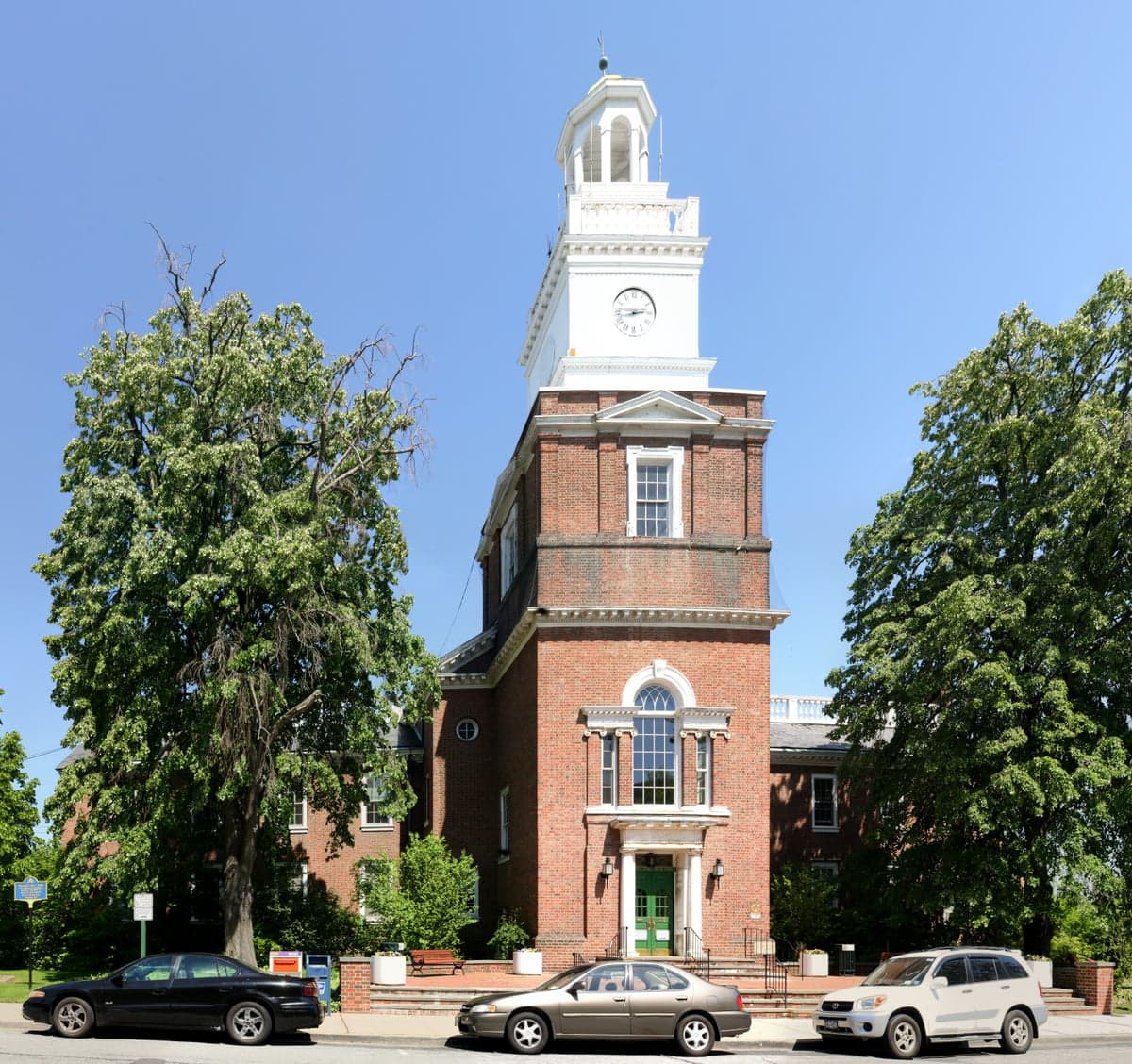
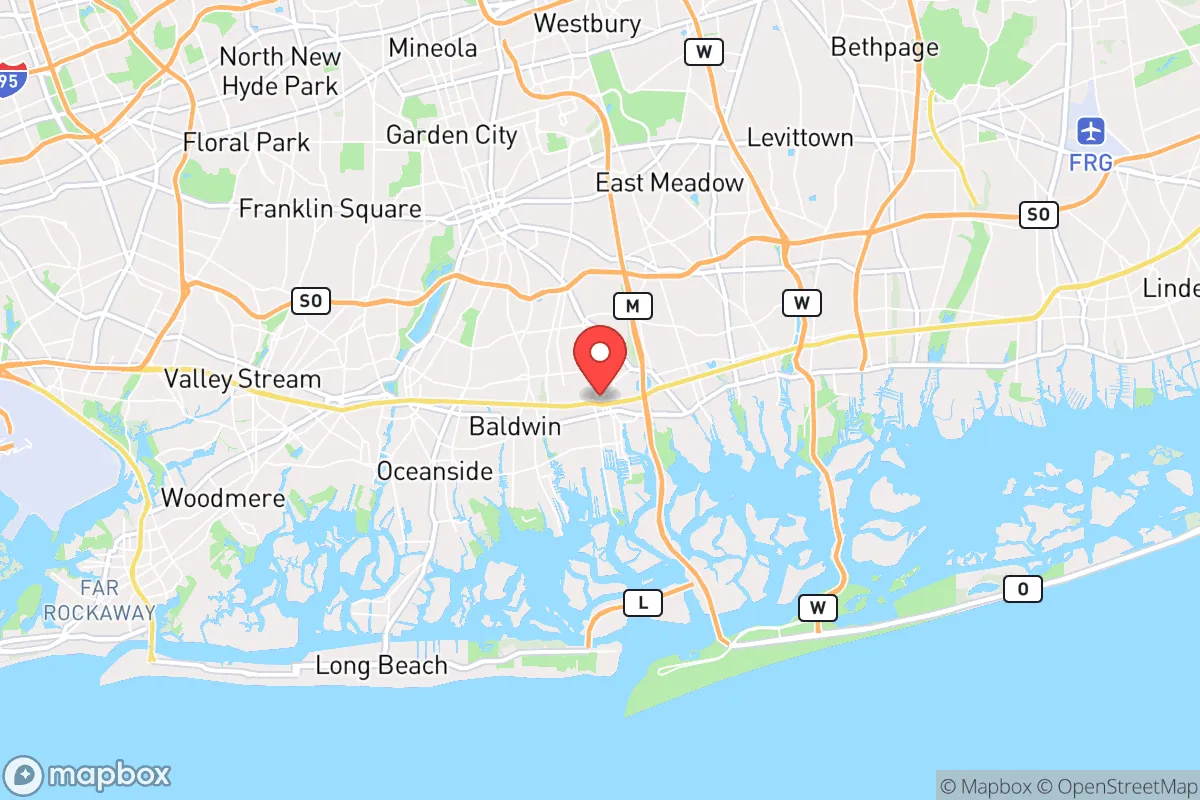
Freeport, New York, is a densely populated South Shore village of 44,102 residents that stands out on Long Island for its racial and ethnic diversity, with a population that is 43.2% Hispanic, 32.9% Black, and 19.0% White. Its identity is shaped by a working-class and middle-class character, a historic downtown along the Nautical Mile, and a significant foreign-born population of 13.2%. The village feels more urban and integrated than many neighboring Nassau County communities, with distinct neighborhoods that trace their roots to specific waves of migration.
How the city was settled and grew
Freeport’s original settlers were English and Dutch farmers and whalers who arrived in the mid-17th century, drawn by the area’s abundant salt marshes and access to the Atlantic via what is now the Nautical Mile. The village was formally incorporated in 1892, and its early growth was fueled by the oyster and fishing industries, which attracted a wave of German and Irish immigrants in the late 1800s. These groups settled primarily in the North Freeport area, near the railroad line, and in the South Freeport waterfront district, where they worked the docks and canneries. By the early 20th century, Italian immigrants arrived to work in the growing shellfish trade and established a tight-knit enclave in the Roosevelt Avenue corridor, near the center of the village. The construction of the Meadowbrook Parkway in the 1950s spurred suburban development, drawing Jewish families from New York City into the Brookside and Lakeview sections, which offered newer housing stock and larger lots.
Modern era (post-1965)
The post-1965 immigration reforms and the broader Great Migration reshaped Freeport dramatically. Black families, many moving from the South and from Brooklyn, began settling in the South Freeport and Roosevelt Avenue neighborhoods during the 1960s and 1970s, drawn by affordable housing and proximity to jobs on the waterfront and in local manufacturing. By 1980, the Black population had grown to roughly 30%, and the White population began a steady decline as older ethnic groups moved east to Levittown and Massapequa. The Hispanic population, primarily of Puerto Rican and Dominican origin, surged in the 1990s and 2000s, concentrating in the North Freeport and Brookside sections, where they found older, multi-family homes and rental stock. Today, the Hispanic share of 43.2% is the largest single group, and the village has a notable Central American presence, particularly from El Salvador and Guatemala. The East/Southeast Asian community remains small at 1.1%, with a scattering of Chinese and Filipino families in the Lakeview area, while the Indian subcontinent population is negligible at 0.4%. The White population, now 19.0%, is concentrated in the Brookside and Lakeview neighborhoods, where older Italian and Jewish families have remained.
The future
Freeport’s population is trending toward a continued Hispanic majority, driven by both immigration and higher birth rates among Hispanic families. The Black population has stabilized near one-third, with younger Black families increasingly moving to more suburban parts of Nassau County, such as Uniondale and Roosevelt. The White population is likely to continue its slow decline, as older residents age in place and few new White families move in. The village is not homogenizing into a single enclave; rather, it is tribalizing along the lines established in the 1990s, with North Freeport becoming more heavily Hispanic, South Freeport remaining predominantly Black, and Brookside and Lakeview retaining a mixed but aging White and Hispanic character. The foreign-born share of 13.2% is below the national average for a village this size, suggesting that assimilation is occurring, but the Hispanic cultural footprint—visible in storefronts, churches, and public schools—is deepening. Over the next 10 to 20 years, Freeport will likely become a majority-Hispanic village with a large Black minority and a small White remnant, resembling other South Shore communities like Hempstead and Roosevelt.
For a conservative-leaning individual or family considering a move to Freeport, the village offers a genuinely diverse, dense, and walkable environment with a strong sense of local identity, but it is not a place of rapid demographic stability. The public schools reflect the population shift, with a student body that is over 60% Hispanic and roughly 25% Black, and the tax base is heavily residential, with limited commercial growth. Freeport is becoming a Hispanic-majority working-class village, and newcomers should expect a community where English is often a second language and where the cultural and political center of gravity is moving away from the older White and Black establishments. It is a place of real integration, but also of distinct, persistent neighborhood boundaries.

* Values derived from national, state, county, city and local statistics and may differ in a specific area. Last updated: 2026-04-19T20:25:13.000Z
Narrative content on this page is AI-generated and may contain mistakes. Verify any details that matter before acting on them.
ReloMaps may earn a commission from affiliate links at no extra cost to you.

