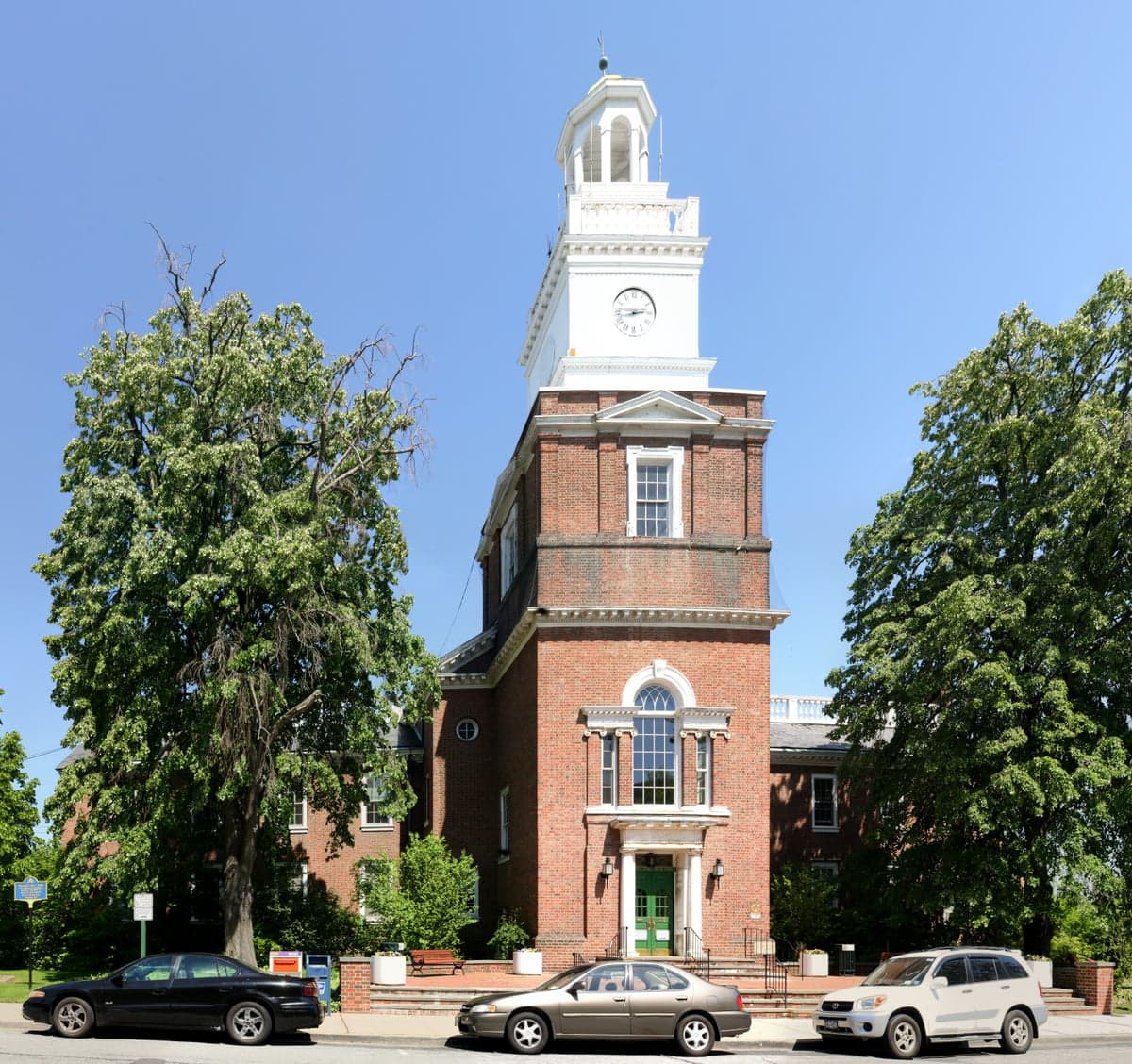
Photo: Wikipedia
Political ClimatePolitical Climate in Freeport, NY
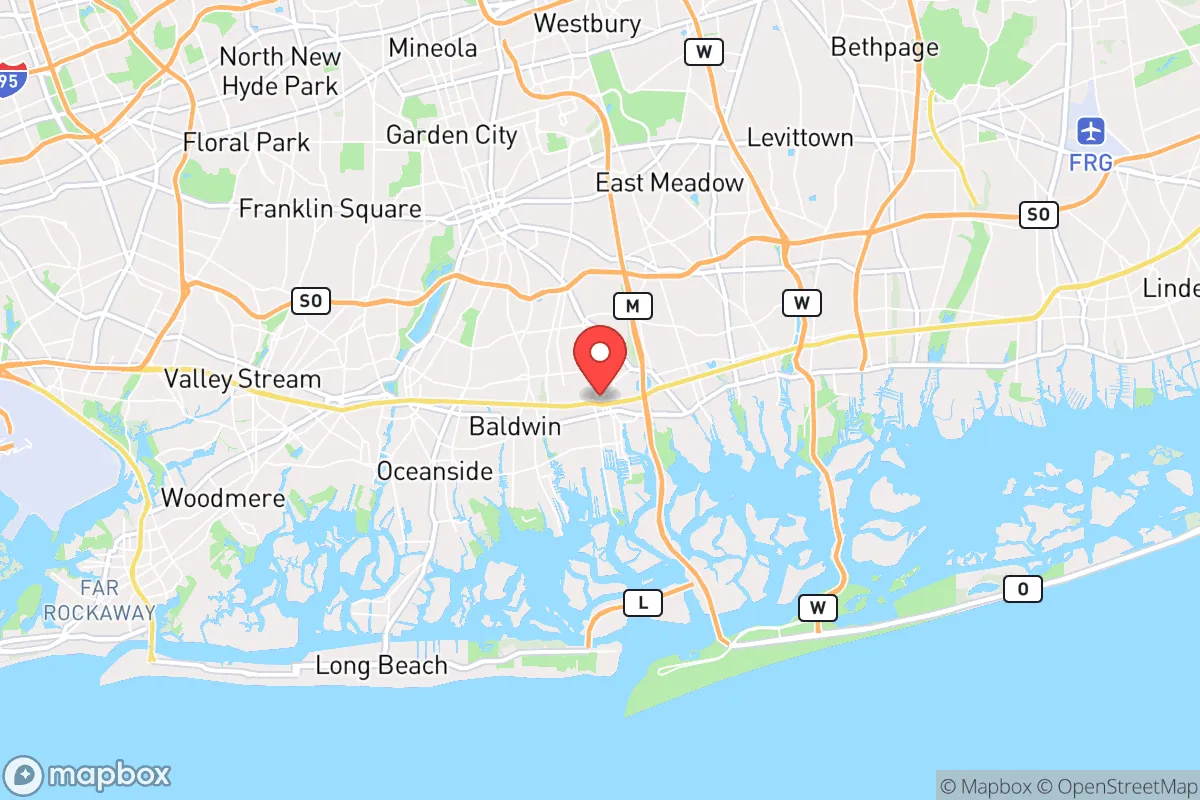
District shown is the primary district for this city’s centroid. Cities may span multiple districts.
Local Political AnalysisPolitical Analysis of Freeport, NY
Look, I've been around Freeport my whole life, and I've watched this town change. Politically, it's a solidly blue area—the Cook PVI is D+2, which means it leans about two points more Democratic than the national average. That's not a shocker for a Long Island village with a diverse population and a strong union presence. But here's the thing: it wasn't always this way. Twenty years ago, you'd see a lot more split-ticket voting, especially among the older Italian and Irish families who still remember when the village was a lot more conservative. Now, the local elections are dominated by Democrats, and the progressive wing is getting louder every cycle. The trajectory is clear: Freeport is moving further left, and it's happening faster than a lot of folks are comfortable with.
How it compares
If you drive ten minutes north to Merrick or Wantagh, you'll hit towns that are noticeably more conservative—those areas are solidly Republican, with a lot of Nassau County's old-school "law and order" crowd. Head east to Massapequa, and you're in deep red territory. Freeport, by contrast, is a blue island in a sea of purple and red. The contrast is stark: you can go from a town where the local government is pushing "sanctuary city" policies to one where the biggest issue is property taxes and school funding. That political split isn't just a talking point; it affects how the village is run. Freeport's leadership is more aligned with the county's urban core, like Hempstead and Roosevelt, than with its immediate neighbors. That means a different set of priorities—and a different set of headaches.
What this means for residents
For the average guy or gal just trying to live their life, the political climate here means you're going to see more government involvement in things that used to be left alone. The village council has been pushing zoning changes that make it easier to build higher-density housing, which sounds good on paper but means more traffic and less privacy. There's also a growing push for "equity" initiatives in the school district, which translates to more bureaucracy and less focus on the basics. If you value your Second Amendment rights, you'll find the local sentiment hostile—Freeport has its own gun laws that go beyond the state's already strict rules. And if you run a small business, the local tax burden and regulatory creep are real concerns. The progressive agenda isn't just a talking point here; it's a daily reality that affects your wallet and your freedoms.
One thing that sets Freeport apart culturally is its Nautical Mile—a strip of waterfront bars and restaurants that's a bit of a libertarian oasis in the middle of all this. It's where locals go to blow off steam, and the vibe is decidedly "live and let live." But even that's under pressure, with noise ordinances and parking restrictions getting tighter every year. The long-term outlook? If the current trend holds, Freeport will continue to drift left, becoming more like a mini–New York City than a traditional Long Island village. That's fine if you're on board with that vision. But if you're someone who values personal freedom and limited government, you might want to keep an eye on the exit signs.

State Political ClimatePolitical Climate in New York
State Political AnalysisPolitical Environment in the State
New York State has been a solidly blue stronghold for decades, with Democrats holding every statewide office and supermajorities in both legislative chambers, but the real story is the growing chasm between the deep-blue urban core and the increasingly red, frustrated hinterlands. Over the past 10-20 years, the state has lurched further left on taxes, crime, and education, driven by New York City’s five boroughs and the downstate suburbs, while upstate counties like Wyoming, Orleans, and Steuben have flipped from purple to deep red. If you’re a conservative weighing a move here, you need to understand that your experience will be radically different depending on whether you land in Manhattan or Malone.
Urban vs. rural divide
The political map of New York is a tale of two states. New York City alone accounts for roughly 40% of the state’s population and delivers a Democratic margin of over 1.5 million votes, making it nearly impossible for Republicans to win statewide. The city’s outer boroughs—Brooklyn, Queens, and the Bronx—are among the most progressive jurisdictions in America, with socialist-aligned city council members and a defund-the-police movement that has real policy teeth. Meanwhile, the downstate suburbs of Nassau County and Suffolk County on Long Island have become battlegrounds; Nassau still leans red in local races, but Suffolk flipped blue in the 2020 presidential election and hasn’t looked back. Upstate, the picture is starkly different. Erie County (Buffalo) and Monroe County (Rochester) are blue islands surrounded by a sea of red, with counties like Allegany, Chenango, and Lewis routinely voting 65-70% Republican. The North Country—places like Plattsburgh and Watertown—is culturally conservative but economically dependent on state government and union jobs, creating a weird tension where voters support Trump but rely on Albany’s largesse.
Policy environment
New York’s policy environment is a case study in progressive overreach. The state has the highest combined state and local tax burden in the nation, with income tax rates topping 10.9% for top earners and property taxes that can exceed 3% of home value in places like Westchester County and Rockland County. The 2019 “Green Light Law” allows undocumented immigrants to obtain driver’s licenses, and the state is a full sanctuary jurisdiction, meaning local law enforcement cannot cooperate with ICE detainers. Education policy is dominated by the teachers’ unions, with school funding per pupil among the highest in the country but test scores middling; the state’s “Raise the Age” law treats 16- and 17-year-old offenders as juveniles, and bail reform passed in 2019 eliminated cash bail for most misdemeanors and non-violent felonies, leading to a surge in repeat offending that has only been partially walked back. On healthcare, New York runs its own exchange and has expanded Medicaid to the fullest extent under Obamacare, and there’s a standing push for single-payer (the “New York Health Act”) that keeps getting tabled but never dies. Election laws are among the most permissive in the country: no-excuse absentee voting, early voting, same-day registration, and automatic voter registration at the DMV.
Trajectory & freedom
Over the past five years, New York has become less free by almost any measure. The 2022 “Concealed Carry Improvement Act” (CCIA), passed after the Supreme Court’s Bruen decision, turned New York into a “sensitive places” nightmare, banning firearms in virtually every public space including parks, theaters, and private businesses unless the owner explicitly posts a sign allowing them. The law is being challenged in court, but for now, it’s a de facto ban on carrying in most of the state. On parental rights, the state’s “Gender Expression Non-Discrimination Act” (GENDA) and subsequent guidance from the State Education Department require schools to affirm a student’s chosen gender identity without parental notification, a flashpoint in districts like Williamsville (near Buffalo) and Pittsford (near Rochester) where parents have organized against it. Medical autonomy took a hit with the state’s strict COVID-19 vaccine mandates for healthcare workers and public employees, which remain in effect for some categories. Property rights are under constant assault from the state’s rent control laws in New York City and the 2019 Housing Stability and Tenant Protection Act, which effectively ended vacancy decontrol and made it nearly impossible for small landlords to evict problem tenants. The only bright spot for freedom advocates was the 2024 repeal of the “Sullivan Act” provision that required a “proper cause” statement for a concealed carry permit—but that was forced by the courts, not by Albany.
Civil unrest & political movements
New York has been a hotbed of political activism on both sides. The 2020 Black Lives Matter protests in New York City were among the largest and most destructive in the country, with looting in Midtown and a sustained occupation of Foley Square that led to the city council cutting the NYPD budget by $1 billion. On the right, the “Second Amendment Sanctuary” movement has taken root in over 30 upstate counties, with sheriffs in Delaware County and Otsego County publicly refusing to enforce the CCIA. The “Parents’ Rights” movement exploded in 2021-2022, with school board meetings in Guilderland and Niskayuna drawing hundreds of protesters over critical race theory and LGBTQ curriculum. Immigration politics are a constant flashpoint: New York City’s “right to shelter” law has been overwhelmed by the arrival of over 100,000 asylum seekers since 2022, leading to tent cities in Flushing Meadows and a political crisis that has pitted Mayor Eric Adams against Governor Kathy Hochul. There’s also a small but vocal secession movement in the Southern Tier and North Country, with groups like “New York State of Mind” pushing for upstate counties to break away and form a 51st state—though it’s more a cry of frustration than a realistic plan.
Projection
Over the next 5-10 years, New York will likely become more progressive at the state level, driven by continued in-migration of young, left-leaning professionals to New York City and the inner suburbs, and out-migration of conservatives to Florida, Texas, and the Carolinas. The 2020 census cost the state a congressional seat, and the 2030 census could cost another, as upstate population continues to decline. The state’s fiscal situation is precarious—New York has the second-highest debt burden in the nation, and the COVID-era federal aid is running out. Expect higher taxes, more mandates on businesses, and continued erosion of Second Amendment rights. The one wild card is the courts: the Supreme Court’s Bruen decision has already forced some rollbacks, and future rulings on the CCIA or on parental rights could blunt the worst of Albany’s impulses. But for a conservative moving in now, the realistic expectation is that you will be living under a one-party state that is hostile to your values, with your only refuge being a red county where local officials push back as much as they can.
Bottom line for a new resident: If you’re a conservative, don’t move to New York City or its immediate suburbs unless you’re prepared for high taxes, progressive policies, and a constant cultural battle. The upstate red counties—places like Orleans County, Wyoming County, and Steuben County—offer a more affordable, community-oriented life with lower crime and a like-minded political environment, but you’ll still be subject to state-level laws on guns, taxes, and education that you can’t vote your way out of. New York is a beautiful state with incredible natural resources, but it’s also a state where your freedom is increasingly conditional on where you live and how much you’re willing to fight for it.
* Values derived from national, state, county, city and local statistics and may differ in a specific area. Last updated: 2026-04-19T20:25:13.000Z
Narrative content on this page is AI-generated and may contain mistakes. Verify any details that matter before acting on them.
ReloMaps may earn a commission from affiliate links at no extra cost to you.

