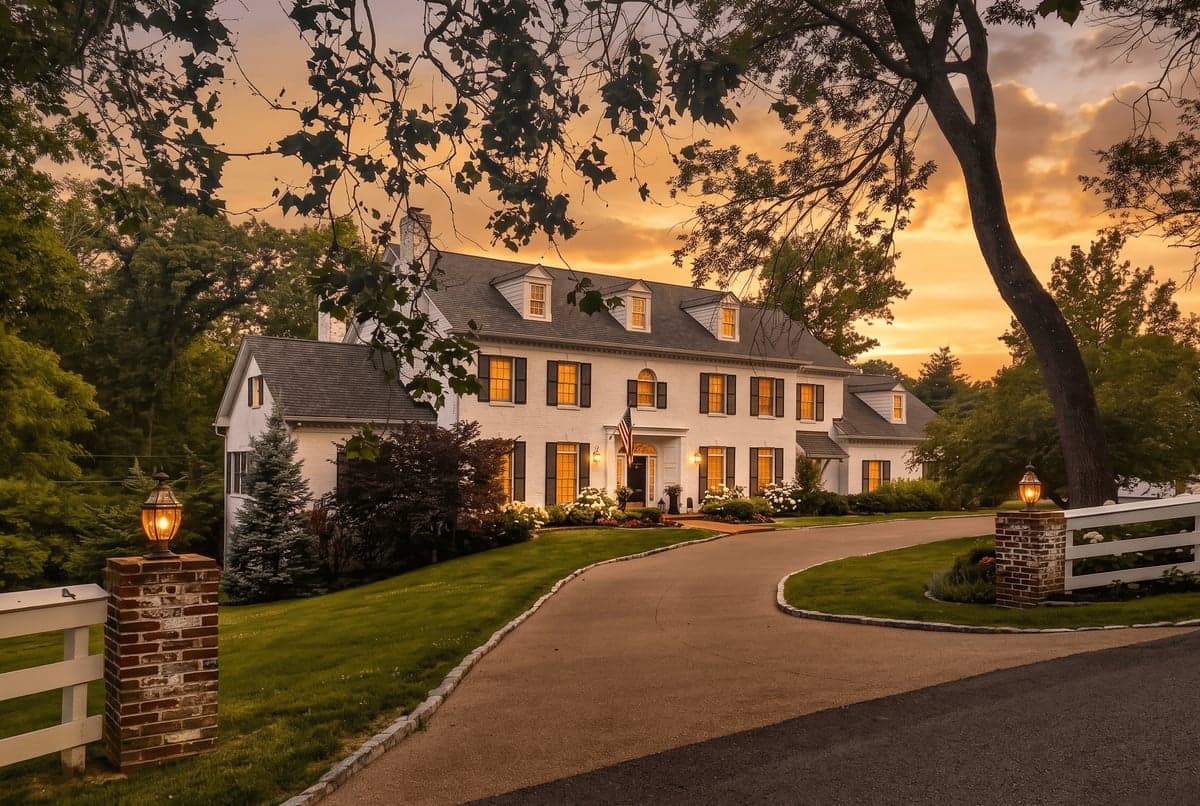
Photo: Made with AI
Strategic Assessment of Frontenac, MO
Meaningful friction. Expect exposure to either population pressure, blast zones, or natural disaster risk. Consider buying a retreat property.
What does the Strategic Assessment tell us?
Our Strategic Assessment grades tactical survivability of an area. Major population centers, military targets, fallout zones, natural disasters, and border exposure all drive risk — lower exposure means a more defensible position in a crisis.
This is heavily inspired by Joel Skousen's Strategic Relocation book. Highly recommended you checkout the book ($)What does this tell us?
Our Strategic Assessment grades tactical survivability of an area. Major population centers, military targets, fallout zones, natural disasters, and border exposure all drive risk — lower exposure means a more defensible position in a crisis.
This is heavily inspired by Joel Skousen's Strategic Relocation book. Highly recommended you checkout the book ($)Strategic Pillars

Key Distances
Regional Safe Places
Below is our recommended "safe zones" in Missouri and the surrounding area based on our strategic heuristics. For most people, it's unrealistic to live in a “safe zone” full-time due to work, family or other personal reasons. They tend to be more rural. However, many of these areas are perfect for second homes and retreat properties that double as a vacation home or even a short-term rental.


Important Note: For informational purposes only. This does not mean nothing bad ever happens in the green zones. Please use common sense. This is based on public data and modeled with AI. We tried to take a conservative approach but mistakes happen. We update this regularly as new information becomes available.
Solar Generator Recommendations
Backup power matters more here than in safer locations. We've picked three solar generators across budgets and capacity tiers — start with the budget unit if you only need a few essentials, or step up if you want to run a fridge and HVAC for days at a time.

Jackery Portable Power Station Explorer 300
Budget OptionPower on the Go: Weighing only 11 lbs, it's convenient to set up and store with book-sized foldable solar panels

BLUETTI Portable Power Station AC180
Designed for both indoor and outdoor scenarios, AC180 is highly capable as it has a robost capacity and continuous output power.

EF ECOFLOW DELTA Pro Ultra Power Station
Upgraded PickEcoFlow DELTA Pro Ultra is a whole-home energy system designed to grow with your family. Integrated with the Smart Home Panel 2, it scales to meet your evolving energy needs — keeping your home powered, intelligent, and secure through every stage of life.
We earn a commission, at no additional cost to you.
Strategic Assessment Analysis
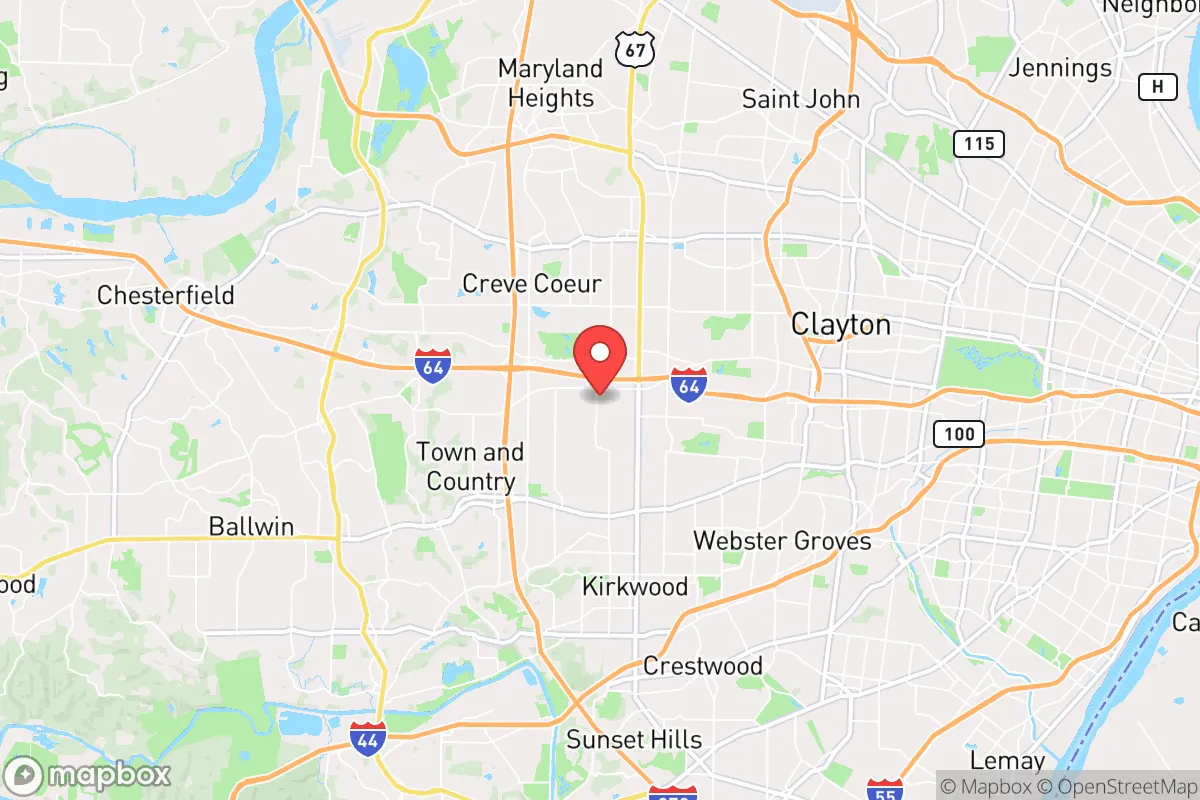
Frontenac, Missouri, offers a strategic paradox for the relocation-minded reader focused on resilience: it sits within the affluent, well-resourced St. Louis County corridor, yet its specific position provides a buffer from the densest urban risks while retaining access to critical supply chains and infrastructure. The area’s resilience profile is shaped less by dramatic natural defenses and more by its status as a low-key, high-asset suburb with a relatively stable power grid, good water access, and a population density that avoids the worst of a collapse scenario. For a single individual or family thinking seriously about disaster readiness, Frontenac represents a “gray zone” — not a remote redoubt, but a defensible, resupply-capable position that leverages proximity to resources without being swallowed by the chaos of a major city center.
Geographic position and natural advantages for long-term stability
Frontenac sits on the bluffs overlooking the Missouri River, roughly 15 miles west of downtown St. Louis. This elevation — the area sits about 600 feet above sea level — provides a meaningful advantage against the two most common natural threats in the region: river flooding and tornadoes. While the Missouri River floodplain is notorious for catastrophic inundation (as seen in 1993 and 2019), Frontenac’s position on the higher ground of the St. Charles County line keeps it well above the 100-year flood zone. The local topography is rolling, wooded hills, not flat farmland, which slightly reduces tornado risk compared to the open plains to the west. The area is also far enough from the New Madrid Seismic Zone (roughly 150 miles southeast) that a major earthquake would cause shaking but not the liquefaction or total infrastructure collapse expected in Memphis or Cairo. For a relocator, the key takeaway is that Frontenac avoids the worst of the Midwest’s natural hazards while sitting on a stable, well-drained piece of ground with good surface water access from the Missouri River — a critical asset for long-term water independence if municipal systems fail.
Risks, exposures, and proximity to fallout-relevant landmarks
The most significant risk for Frontenac in a serious disaster scenario is its proximity to St. Louis itself — a major metropolitan area with a population of roughly 2.8 million in the metro region. In a grid-down, supply-chain-collapse, or civil-unrest event, Frontenac is close enough to experience spillover effects from the city: refugees moving west along Highway 40/64, looting radiating outward from distressed neighborhoods, and potential contamination if the city’s industrial or nuclear infrastructure is compromised. St. Louis is home to the Callaway Nuclear Plant (about 80 miles west, upwind), the Weldon Spring radioactive waste site (about 30 miles west), and multiple chemical plants along the Mississippi River. A major incident at any of these could affect Frontenac depending on wind direction, though the prevailing westerlies actually push fallout away from the area toward the east. More concerning is the Lambert-St. Louis International Airport (about 12 miles northeast) and the Scott Air Force Base (about 30 miles southeast) — both are potential targets in a conflict scenario. Frontenac is also within the blast-radius concern for a ground burst at Scott AFB, though the probability is low. For the conservative-leaning reader, the calculus is clear: Frontenac is not a remote survivalist location, but it is far enough from the urban core to avoid the worst of a city’s collapse, and its wealthy, low-crime character makes it less likely to be a target of civil unrest than closer-in suburbs like Clayton or University City.
Practical resilience for a relocator: food, water, energy, and defensibility
Frontenac’s practical resilience is a mixed bag, and the relocator needs to understand the trade-offs. Water is the strongest asset: the Missouri River is less than two miles from most of Frontenac, providing a massive, renewable surface water source. The municipal water supply comes from the Missouri River via the St. Louis County Water Company, which has backup generators and a relatively hardened infrastructure. In a long-term outage, a relocator with a simple hand pump or gravity filter could access the river, though the steep bluffs make hauling water a physical challenge. Food is a weakness: Frontenac is a wealthy bedroom community with no significant agricultural land within its borders. The nearest farmable ground is in St. Charles County to the west, but that’s a 15-20 minute drive. For long-term self-sufficiency, a relocator would need to establish a garden on their own property (most lots are 1-3 acres, enough for a substantial kitchen garden) or build relationships with farmers in the surrounding counties. Energy is average: the grid is maintained by Ameren Missouri, which has a decent reliability record but is vulnerable to ice storms and summer thunderstorms. Solar is viable — the area gets about 200 sunny days per year — but homeowners’ associations in Frontenac are strict, and solar panel installation may require approval. Natural gas is widely available for backup heating. Defensibility is the most nuanced factor. Frontenac is a classic “target-rich” environment: expensive homes, luxury cars, and well-stocked pharmacies and grocery stores. In a collapse scenario, it could attract attention from desperate populations. However, the community is gated in many sections, with private security patrols and a low crime rate that suggests strong social cohesion. The local police department is well-funded and responsive. For a relocator, the defensibility strategy is not about fortifying a remote cabin but about being part of a neighborhood watch network, maintaining a low profile, and having a plan to either hold ground or bug out to a more remote secondary location (the Ozarks are two hours south).
The overall strategic picture for Frontenac is one of calculated trade-offs. It is not a bug-out location — it is a “ride it out” location for someone who values access to medical care, supply chains, and community resources over absolute isolation. The area’s resilience is built on wealth, infrastructure, and geographic moderation rather than remoteness or rugged terrain. For a family with school-age children or a single professional who needs to maintain a career in the St. Louis region, Frontenac offers a defensible, well-positioned base that can handle most regional disasters — flood, tornado, economic disruption — but would struggle in a nationwide grid-down or nuclear event. The smart relocator will treat Frontenac as a Phase 1 location: a place to build resources, skills, and a network, with a pre-planned bug-out route to the Missouri Ozarks or the Mark Twain National Forest if the situation degrades beyond what a wealthy suburb can withstand. It is a solid choice for the pragmatic conservative who wants to be prepared without living off-grid, but it demands honest assessment of its vulnerabilities — especially the proximity to St. Louis’s potential for civil unrest and the lack of local food production.

* Values derived from national, state, county, city and local statistics and may differ in a specific area. Last updated: 2026-09-29T01:23:54.000Z
Narrative content on this page is AI-generated and may contain mistakes. Verify any details that matter before acting on them.
ReloMaps may earn a commission from affiliate links at no extra cost to you.

