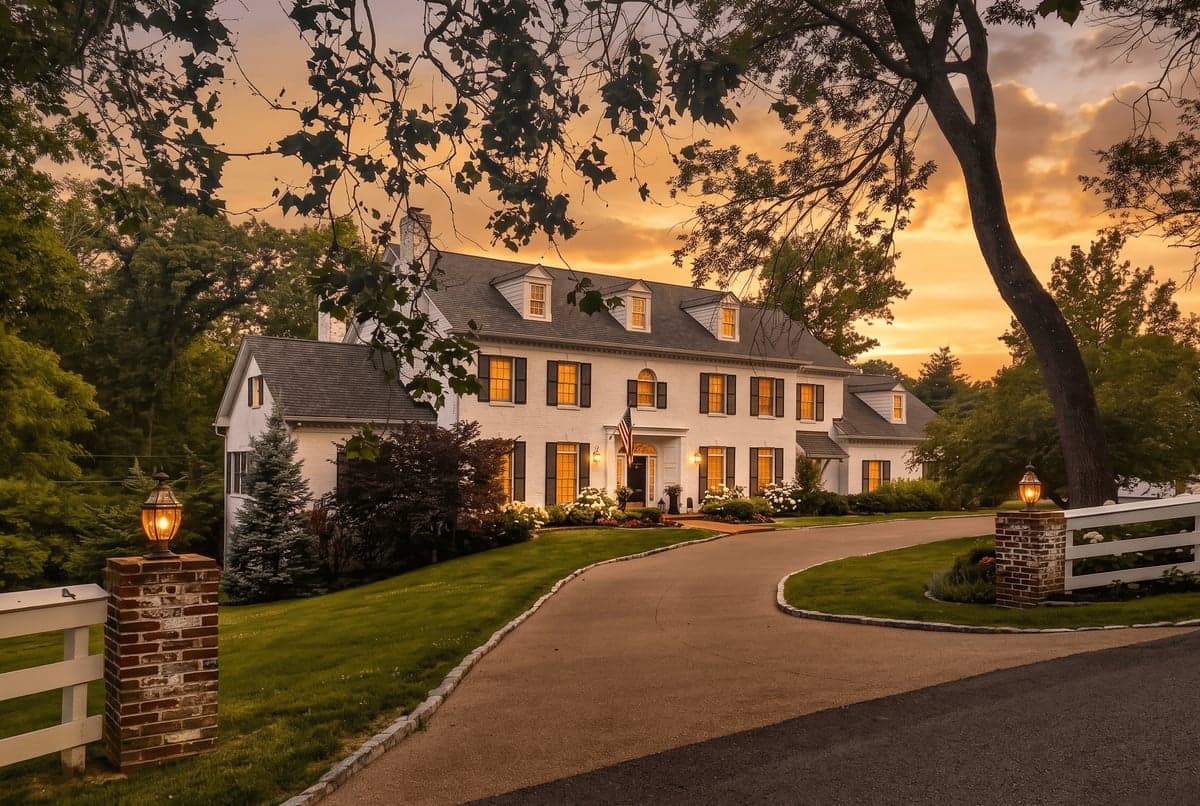
Photo: Made with AI
Political ClimatePolitical Climate in Frontenac, MO
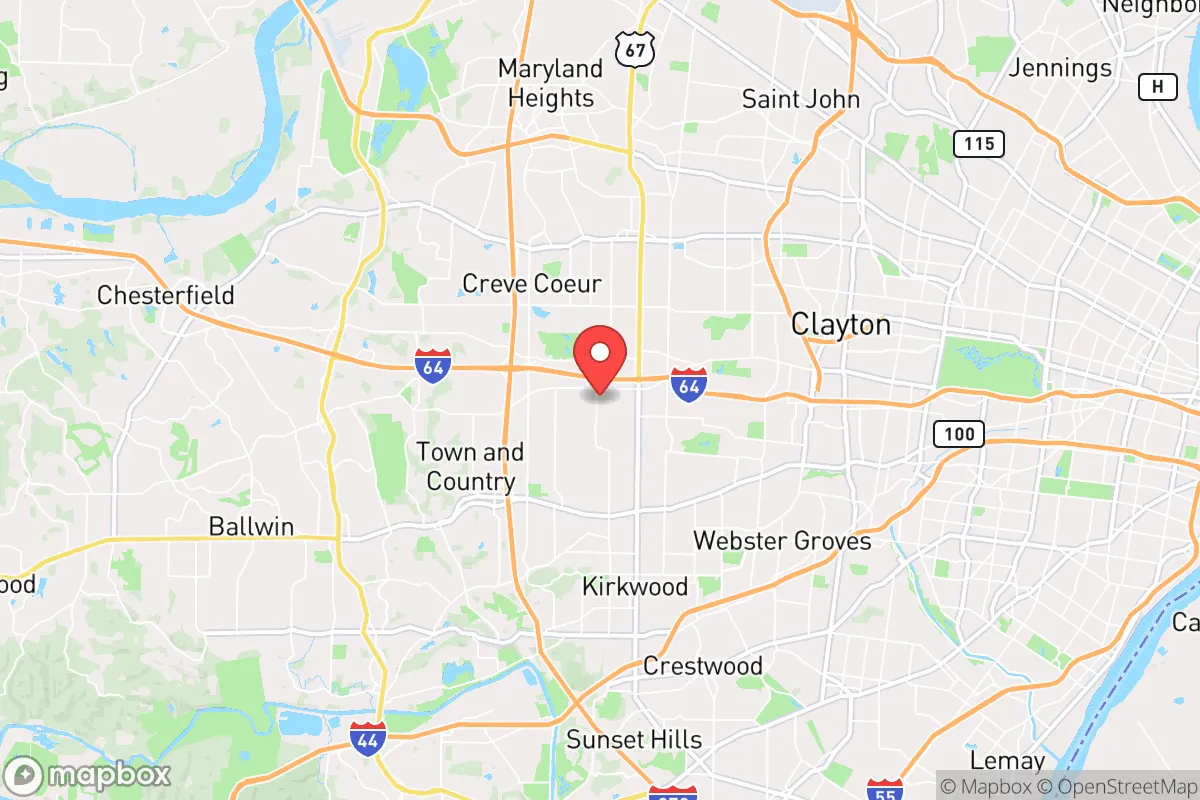
District shown is the primary district for this city’s centroid. Cities may span multiple districts.
Local Political AnalysisPolitical Analysis of Frontenac, MO
Frontenac, Missouri, leans reliably Republican, though it’s a bit more moderate than the state as a whole. The Cook Partisan Voting Index (PVI) for the area is R+4, meaning it votes about four points more Republican than the national average. That’s a softer shade of red compared to Missouri’s statewide PVI of R+8, which reflects the deep-red rural and exurban counties that dominate state elections. In practice, Frontenac’s politics are shaped by its affluent, well-educated population in west St. Louis County—folks who tend to favor fiscal conservatism and stable governance but are less fired up by the culture-war issues that drive turnout in places like Jefferson County or the Bootheel.
How it compares
Frontenac sits in a political bubble within St. Louis County, which as a whole leans Democratic (PVI D+7) thanks to the city of St. Louis and inner-ring suburbs. Drive ten miles east into the city proper, and you’ll find a solidly blue electorate; head twenty miles west to towns like Wildwood or Eureka, and the R+ lean gets stronger, closer to Missouri’s statewide average. Frontenac’s R+4 puts it in a sweet spot: it’s red enough to reliably elect Republicans to county and state offices, but not so red that moderate or even some liberal residents feel out of place. In the 2024 presidential primary, for example, Frontenac precincts gave Nikki Haley a stronger share than most of Missouri, signaling a preference for establishment conservatism over populist fire. That’s a key contrast with the state’s R+8 tilt, which is driven by overwhelming GOP margins in rural areas—places where Trump won 75-80% of the vote.
What this means for residents
For conservative residents, Frontenac offers a comfortable environment where Republican candidates usually win, but the local GOP is more country-club than grassroots. You’ll see yard signs for state senators and county executives, not so many for hardline primary challengers. Liberal residents, meanwhile, aren’t isolated—they’re a visible minority, especially in the school district and local civic groups. The Ladue School District, which serves Frontenac, tends to be more politically mixed than the surrounding county, and local elections often hinge on school funding or development policy rather than national wedge issues. That said, Missouri’s state-level policies—like its near-total abortion ban and permitless carry gun law—apply here too, so liberal residents live under laws they largely oppose. The practical effect is that Frontenac’s political climate is less intense than the state’s overall; neighbors might disagree on taxes or zoning, but you’re unlikely to see the kind of open conflict that flares up in more polarized suburbs.
Culturally, Frontenac stands apart from much of Missouri in its emphasis on local governance and quality-of-life issues. The city’s small size (about 3,600 residents) means town hall meetings focus on leaf pickup, road maintenance, and park improvements—not the cultural flashpoints that dominate state politics. Property taxes are a perennial topic, and the city’s affluent base keeps services high without the fiscal strain seen in poorer parts of the state. For newcomers, the takeaway is simple: Frontenac is a Republican-leaning enclave where the politics are polite, the schools are strong, and the state’s redder complexion is felt more in policy than in daily neighborly interactions. If you’re looking for a place where your vote aligns with the majority but you won’t be shunned for a different opinion, this is it.

State Political ClimatePolitical Climate in Missouri
State Political AnalysisPolitical Environment in the State
Missouri has been a reliably Republican state for most of the past two decades, with a Cook Partisan Voting Index of R+8, meaning it votes about eight points more Republican than the nation as a whole. The state has shifted rightward since the early 2000s, when it was still a bellwether that could go either way—it voted for George W. Bush in 2000 and 2004, then flipped to John McCain in 2008 and has stayed red in every presidential election since. The dominant coalition is a mix of rural conservatives, suburban voters in the Kansas City and St. Louis exurbs, and a growing number of transplants from blue states who are drawn by lower taxes and a more traditional lifestyle.
Urban vs. rural divide
The political map of Missouri is a textbook example of the urban-rural split. The two major metros—St. Louis and Kansas City—are deep blue, with St. Louis City and County consistently voting Democratic by 30-40 points in statewide races. Kansas City’s Jackson County is similarly Democratic, though its northern suburbs like Liberty and Kearney are increasingly competitive. The real Republican strongholds are the rural and exurban counties that ring these cities: St. Charles County, just west of St. Louis, has become a GOP bastion, voting +20-25 points Republican in recent cycles. Downstate, the Ozarks region—places like Springfield, Branson, and the Lake of the Ozarks area—is deeply conservative, with Greene County (Springfield) voting +30 points Republican in 2024. The Bootheel in the southeast, historically more Democratic, has trended red as cultural issues have overtaken economic ones. The only notable exception is Boone County (Columbia), home to the University of Missouri, which leans Democratic and often flips the script in local races.
Policy environment
Missouri’s policy environment is shaped by a Republican supermajority in the legislature and a conservative governor (Mike Parson through 2024, with a GOP successor likely). The state has a flat income tax rate of 4.95%, which was cut from 5.3% in 2022, and the legislature is pushing toward elimination of the income tax entirely. Sales taxes are high—around 8-9% in most areas—but property taxes are among the lowest in the country, averaging about 0.9% of home value. The state is a right-to-work state (though voters repealed the law in 2018, the legislature has kept it effectively in place through other means). Education policy is dominated by school choice: Missouri has a robust charter school system in St. Louis and Kansas City, and a tax-credit scholarship program for private schools. The state has some of the loosest gun laws in the nation, including permitless carry for adults 19 and older, no background checks for private sales, and a 2021 law that nullifies federal gun regulations (the Second Amendment Preservation Act, which has been challenged in court). Election laws are moderately restrictive: voter ID is required, absentee voting requires an excuse, and early voting is limited to two weeks before Election Day. The state does not have a sanctuary city policy; in fact, a 2023 law bans local governments from adopting sanctuary policies and requires cooperation with federal immigration enforcement.
Recent policy direction
Over the past five years, Missouri has moved decisively toward a more conservative policy posture. In 2023, the legislature passed a near-total abortion ban with no exceptions for rape or incest, only for medical emergencies—this after voters had rejected a similar ban in 2018. The state also enacted a parental rights law that requires schools to notify parents of any changes to a student’s mental or physical health, effectively limiting discussions of gender identity in classrooms. On gun rights, the Second Amendment Preservation Act (2021) explicitly declares federal gun laws unenforceable in Missouri, though a federal court has blocked parts of it. The state has also expanded school choice with a universal education savings account program passed in 2024, allowing families to use public funds for private or homeschool expenses. On the tax front, the legislature passed a phased reduction of the corporate income tax from 6.25% to 4% by 2026. Property rights are strong: Missouri is a “show me” state for eminent domain, requiring strict public use justification. Privacy and surveillance laws are minimal—there’s no statewide data privacy law, and law enforcement can access cell phone location data without a warrant in some cases. Medical and bodily autonomy is sharply restricted post-Dobbs, with the abortion ban and no protections for gender-affirming care for minors (banned in 2023). Voting access has tightened: the 2022 voter ID law requires a photo ID, and the state purged over 100,000 inactive voters from the rolls in 2023.
Civil unrest & political movements
Missouri has seen its share of political flashpoints. The 2014 Ferguson protests after the Michael Brown shooting were a national catalyst for the Black Lives Matter movement, and St. Louis continues to see periodic demonstrations over police accountability and racial justice. More recently, the 2020 protests in Kansas City and Columbia were large but largely peaceful. On the right, the Missouri Freedom Caucus has become a powerful force in the legislature, pushing for further tax cuts, gun rights, and anti-abortion measures. The state has also been a battleground for election integrity: in 2020, then-Governor Parson deployed the National Guard to polling places in St. Louis after the city extended voting hours, and the 2022 law tightened absentee ballot rules. Immigration politics are less visible than in border states, but the 2023 anti-sanctuary law has been used to pressure local governments in St. Louis and Kansas City that have informal non-cooperation policies. There’s no serious secession or nullification movement beyond the gun nullification law, which is more about federal overreach than leaving the Union. A new resident would notice the political divide most in the suburbs: in St. Charles County, you’ll see Trump flags and “Let’s Go Brandon” bumper stickers, while in St. Louis City, you’ll see Black Lives Matter signs and pride flags.
Projection
Over the next 5-10 years, Missouri is likely to become even more Republican, but with a twist. The rural areas are depopulating—many small towns in the Ozarks and Bootheel are losing young people to cities—while the suburbs of St. Louis and Kansas City are growing, especially the exurbs like Wentzville, O’Fallon, and Lee’s Summit. These exurbs are trending redder as they fill with families fleeing higher taxes in Illinois and Kansas. At the same time, the urban cores are becoming more Democratic and more diverse, but their population growth is slower. The net effect is a slow rightward drift, though the margin may narrow in statewide races if Democrats can turn out young voters in Columbia and the cities. The biggest wild card is the abortion issue: if a ballot initiative to restore abortion access qualifies for the 2024 or 2026 ballot (as it likely will), it could drive turnout among moderates and suburban women, potentially flipping some legislative seats. But the legislature’s supermajority is safe for the foreseeable future. A relocator moving in now should expect a state that is culturally conservative, with low taxes, loose gun laws, and a strong emphasis on local control, but with a persistent urban-liberal minority that keeps the politics lively.
For a new resident, the bottom line is that Missouri offers a predictable conservative policy environment with low taxes and strong property rights, but you’ll need to navigate a sharp urban-rural divide. If you’re a conservative, you’ll find your values reflected in state law and most local governments outside the cities. If you’re a liberal, you’ll have a vibrant community in St. Louis, Kansas City, or Columbia, but you’ll face an uphill battle on state-level issues like abortion, gun rights, and education. The state is stable, affordable, and politically engaged—just be ready for the culture war to show up in your local school board meeting.
* Values derived from national, state, county, city and local statistics and may differ in a specific area. Last updated: 2026-09-29T01:23:54.000Z
Narrative content on this page is AI-generated and may contain mistakes. Verify any details that matter before acting on them.
ReloMaps may earn a commission from affiliate links at no extra cost to you.

