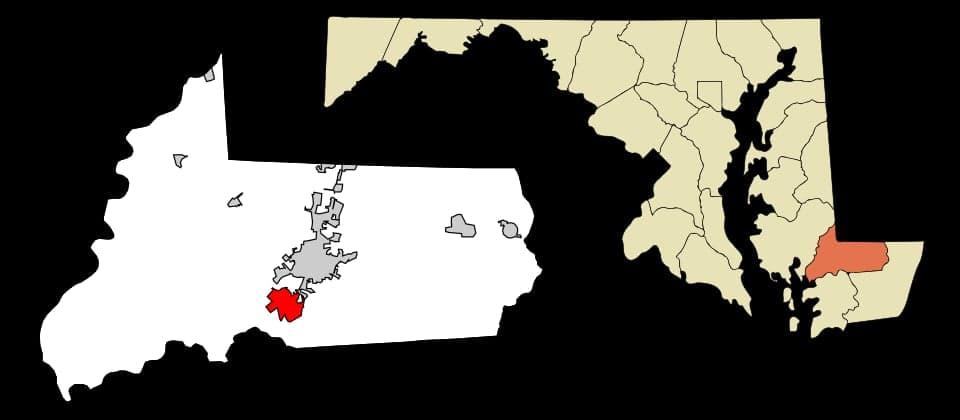
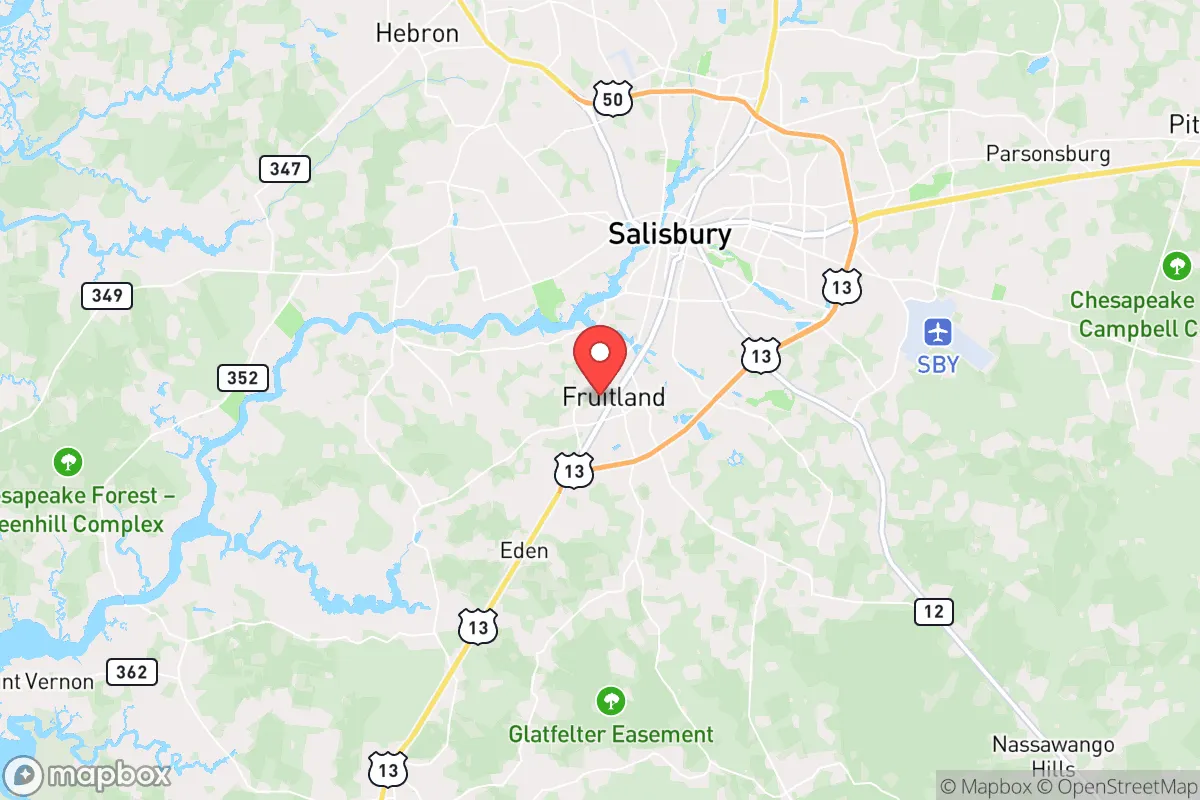
Photo: Wikipedia
Personal Sovereignty in Fruitland, MD
Viable for self-reliance. Generally workable, though some barriers may limit total independence.
What does Personal Sovereignty tell us?
Personal Sovereignty measures your capacity for self-reliance and independence with minimal government friction. Higher scores mean fewer barriers between you and the way you want to live... but it assumes you have the space you need and good neighbors.
What does this tell us?
Personal Sovereignty measures your capacity for self-reliance and independence with minimal government friction. Higher scores mean fewer barriers between you and the way you want to live... but it assumes you have the space you need and good neighbors.
State Policy
Energy independence: Importer (8% of energy produced in-state)
Personal Liberty
Homesteading

Personal Liberty Analysis
For the liberty-minded individual or family evaluating Fruitland, Maryland, the personal sovereignty picture is a study in contrasts: the town itself offers a quiet, low-key environment with practical advantages for self-reliance, but it sits firmly within a state whose regulatory and tax apparatus leans heavily toward centralized control. Fruitland’s small-town character—roughly 5,500 residents, with a working-class and agricultural heritage—provides a buffer against the most aggressive urban policy trends, yet you cannot escape the long arm of Annapolis. The key question for a survivalist or prepper is whether the local conditions allow enough breathing room to offset the state-level constraints. The answer is nuanced: Fruitland offers tangible opportunities for autonomy in daily life, but only if you are prepared to navigate Maryland’s dense web of laws and taxes with deliberate strategy.
Tax burden and regulatory posture: what it costs to live free in Fruitland
Maryland ranks among the highest-tax states in the nation, and Fruitland residents feel that weight directly. The state’s income tax is progressive, topping out at 5.75%, and localities add their own—Wicomico County levies an additional 3.2%, bringing the combined top marginal rate to nearly 9%. Property taxes are moderate by regional standards, with Wicomico County’s rate around $1.08 per $100 of assessed value, but the state’s estate tax and inheritance tax can hit families planning multi-generational homesteads. Sales tax is 6%, with no local add-ons, but it applies broadly. For a prepper mindset, the regulatory posture is more concerning: Maryland has some of the strictest environmental and land-use regulations on the East Coast, including the Critical Area Act that restricts development near the Chesapeake Bay and its tributaries—a factor if you’re eyeing waterfront or wetland-adjacent property. Building permits, septic system approvals, and well-drilling all involve state-level oversight that can slow down off-grid projects. The takeaway: Fruitland’s tax burden is high, and the regulatory climate demands patience and paperwork, but the town’s lower property values (median home price around $220,000) partially offset the cost of entry.
Self-defense and gun law specifics: what you can and cannot do in Fruitland
This is the most critical area for the sovereignty-minded reader, and the news is mixed. Maryland is a “may issue” state for concealed carry, but a 2022 Supreme Court ruling (NYSRPA v. Bruen) forced the state to loosen its standards. As of 2025, the Maryland State Police now issue permits on a “shall issue” basis for self-defense, but the process remains burdensome: you must complete a 16-hour training course, pass a live-fire qualification, submit fingerprints, and pay fees totaling over $200. The permit is valid for two years, with a renewal requiring 8 hours of training. Open carry is generally prohibited in public without a permit, and even then, many businesses and all government buildings are off-limits. Magazine capacity is capped at 10 rounds for long guns and 10 for handguns purchased after 2013. The state also maintains a “handgun roster” that bans many popular models unless they are specifically approved. For long guns, Maryland’s “assault weapons” ban (enacted in 2013) prohibits the sale of many semi-automatic rifles, including AR-15 pattern firearms, though pre-ban rifles owned before October 1, 2013, are grandfathered. Private firearm sales require a background check through a licensed dealer. In Fruitland itself, local law enforcement is generally professional and not hostile to legal gun owners, but you are operating under some of the most restrictive state laws in the country. For the prepper, this means investing in a quality safe, understanding the grandfathering rules, and considering a legal trust for NFA items (suppressors are legal with a tax stamp, but Maryland requires additional paperwork).
Self-reliance and homesteading viability: lot sizes, zoning, and off-grid feasibility
Fruitland’s zoning and land-use patterns offer genuine opportunities for self-reliance that are rare in more urbanized Maryland. The town’s residential zones include R-1 (single-family) districts with minimum lot sizes of 10,000 to 20,000 square feet—roughly a quarter-acre to half-acre—which is enough for a substantial garden, a small orchard, and a chicken coop. Some outlying areas near the Wicomico River or along Route 13 have parcels of 1 to 5 acres, particularly in the unincorporated parts of the county just outside town limits. Zoning allows for “accessory dwelling units” (ADUs) on lots over 10,000 square feet, which could serve as a guest house or rental income. However, off-grid living faces hurdles: Maryland requires connection to public water and sewer where available, and in Fruitland, most developed lots are tied into municipal systems. For true off-grid feasibility (solar, well, septic), you need to look at rural parcels in the county, where well and septic permits are obtainable but subject to health department inspections and the Critical Area Act if within 1,000 feet of tidal waters. Rainwater collection is legal but regulated—you cannot collect from a roof that has certain coatings, and the water cannot be used for potable purposes without treatment. Livestock is allowed on lots of 2 acres or more in agricultural zones, but within town limits, chickens are permitted (hens only, no roosters) with a permit. For the serious homesteader, Fruitland is a compromise: you can grow food and keep small livestock, but full energy independence and water autonomy require moving to the county’s rural fringe.
Personal liberties: parental rights, medical autonomy, speech, and property
Maryland’s track record on personal liberties is a source of concern for conservative families. Parental rights in education have been under pressure: the state mandates LGBTQ-inclusive curriculum in public schools, and parents do not have a blanket right to opt their children out of specific lessons—only a general opt-out for “family life and human sexuality” instruction. School board meetings in Wicomico County have seen heated debates over library materials and gender policies, and the state legislature has considered bills that would limit parental notification when a child changes gender identity at school. Medical autonomy is similarly constrained: Maryland has a vaccine mandate for school attendance (with medical and religious exemptions, but the religious exemption has been narrowed in practice), and the state’s COVID-era emergency orders gave the governor broad powers that many liberty-minded residents found excessive. On speech and assembly, Maryland has no specific laws that suppress conservative viewpoints, but the state’s hate crime statutes are broadly written, and some activists have used them to challenge political speech. Property rights are relatively strong in Fruitland—eminent domain is rare, and zoning is enforced consistently—but the state’s environmental regulations can restrict what you do with your land, especially near waterways. For the parent or individual who values medical choice and educational freedom, Fruitland offers a community where conservative values are common, but the legal framework is increasingly stacked against them. The best strategy is to be engaged locally—attend town council meetings, join the county’s Republican club, and build relationships with neighbors who share your priorities.
Overall, Fruitland’s personal sovereignty profile is a mixed bag that rewards the informed and prepared. The town’s small size, lower cost of land, and rural-adjacent character give you more room to practice self-reliance than you would find in the D.C. suburbs or Baltimore. But Maryland’s state-level tax burden, gun restrictions, and erosion of parental rights mean you cannot simply retreat and ignore the outside world. Compared to a place like rural West Virginia or the Florida Panhandle, Fruitland is a compromise—you get proximity to the Chesapeake Bay and a temperate climate, but you pay for it in compliance costs and legal vigilance. For the strategic relocator who values sovereignty, Fruitland is viable if you are willing to fight for your freedoms at the local level and keep a close eye on Annapolis. It is not a sanctuary, but it is a place where a determined family can carve out a life of genuine independence.

* Values derived from national, state, county, city and local statistics and may differ in a specific area. Last updated: 2026-04-22T01:44:57.000Z
Narrative content on this page is AI-generated and may contain mistakes. Verify any details that matter before acting on them.
ReloMaps may earn a commission from affiliate links at no extra cost to you.

