Photo: Wikipedia
Strategic Assessment of Gadsden, AL
Workable tactical position. Some exposure to population density or targets, but generally defensible in a crisis.
What does the Strategic Assessment tell us?
Our Strategic Assessment grades tactical survivability of an area. Major population centers, military targets, fallout zones, natural disasters, and border exposure all drive risk — lower exposure means a more defensible position in a crisis.
This is heavily inspired by Joel Skousen's Strategic Relocation book. Highly recommended you checkout the book ($)What does this tell us?
Our Strategic Assessment grades tactical survivability of an area. Major population centers, military targets, fallout zones, natural disasters, and border exposure all drive risk — lower exposure means a more defensible position in a crisis.
This is heavily inspired by Joel Skousen's Strategic Relocation book. Highly recommended you checkout the book ($)Strategic Pillars

Key Distances
Regional Safe Places
Below is our recommended "safe zones" in Alabama and the surrounding area based on our strategic heuristics. For most people, it's unrealistic to live in a “safe zone” full-time due to work, family or other personal reasons. They tend to be more rural. However, many of these areas are perfect for second homes and retreat properties that double as a vacation home or even a short-term rental.
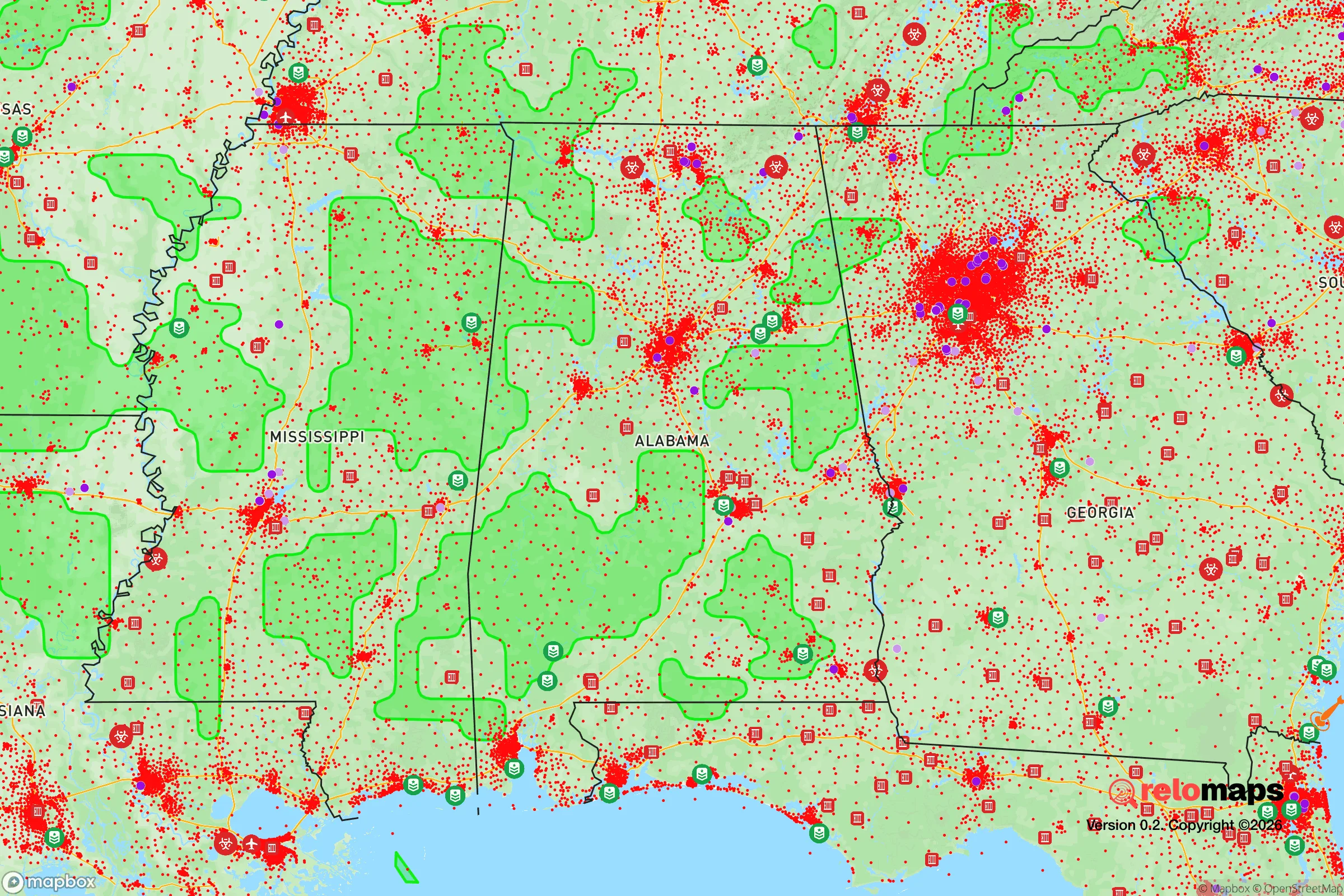
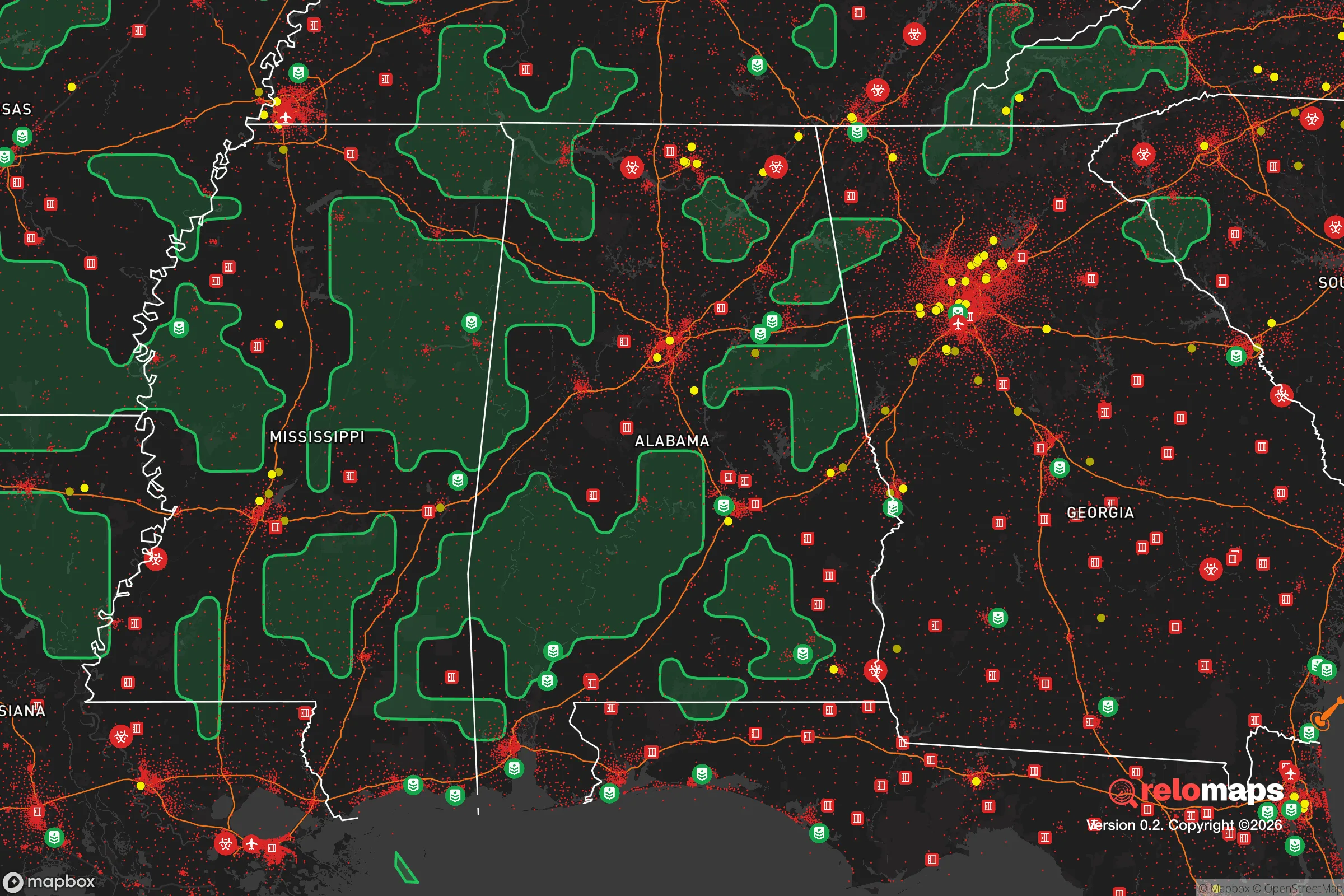


Important Note: For informational purposes only. This does not mean nothing bad ever happens in the green zones. Please use common sense. This is based on public data and modeled with AI. We tried to take a conservative approach but mistakes happen. We update this regularly as new information becomes available.
Solar Generator Recommendations
Backup power matters more here than in safer locations. We've picked three solar generators across budgets and capacity tiers — start with the budget unit if you only need a few essentials, or step up if you want to run a fridge and HVAC for days at a time.

Jackery Portable Power Station Explorer 300
Budget OptionPower on the Go: Weighing only 11 lbs, it's convenient to set up and store with book-sized foldable solar panels

BLUETTI Portable Power Station AC180
Designed for both indoor and outdoor scenarios, AC180 is highly capable as it has a robost capacity and continuous output power.

EF ECOFLOW DELTA Pro Ultra Power Station
Upgraded PickEcoFlow DELTA Pro Ultra is a whole-home energy system designed to grow with your family. Integrated with the Smart Home Panel 2, it scales to meet your evolving energy needs — keeping your home powered, intelligent, and secure through every stage of life.
We earn a commission, at no additional cost to you.
Strategic Assessment Analysis
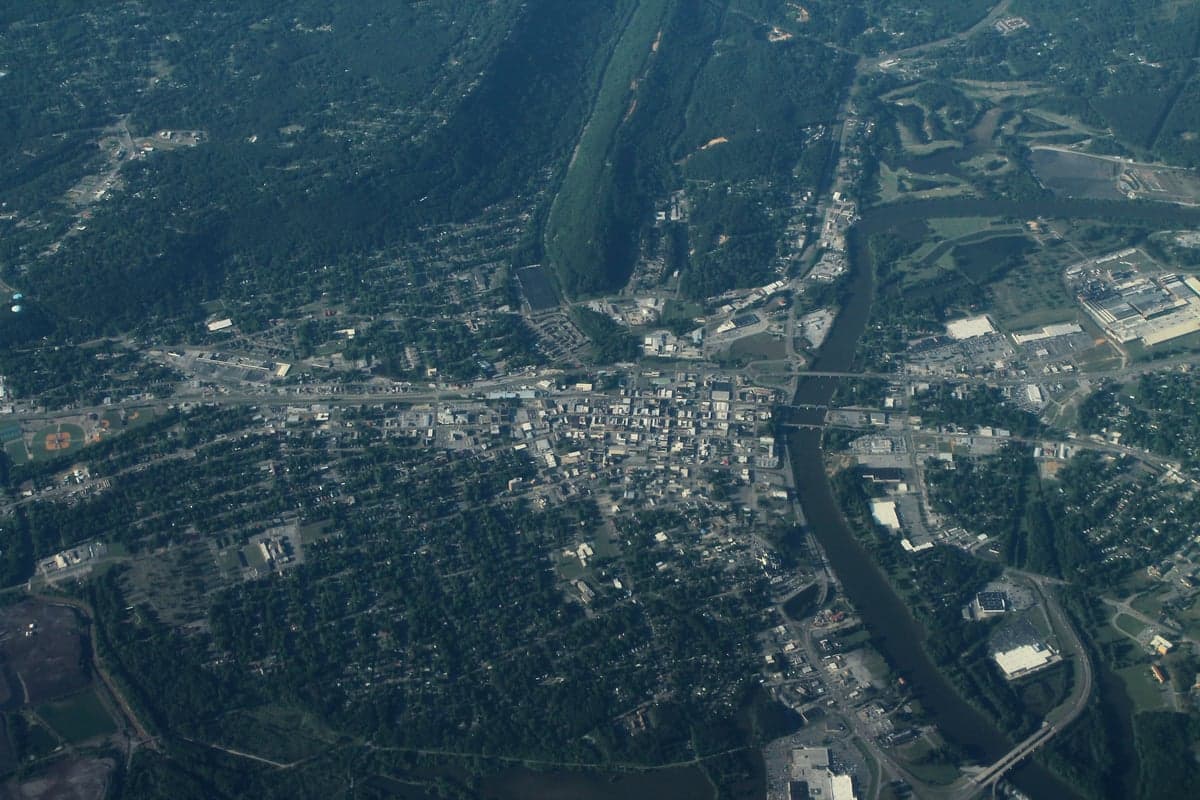
Gadsden, Alabama, sits in a geographic sweet spot that offers genuine strategic depth for those thinking seriously about long-term resilience. Tucked into the southern end of the Appalachian foothills along the Coosa River, this city of roughly 33,000 people is far enough from major metropolitan chaos to avoid the worst of fallout risks, yet close enough to regional infrastructure to make practical relocation workable. For a conservative-leaning prepper or survival-minded family, Gadsden’s combination of natural barriers, water access, and relative isolation from high-value targets makes it a location worth a hard look—especially if you’re weighing the trade-offs between remoteness and everyday livability.
Geographic position and natural advantages for long-term security
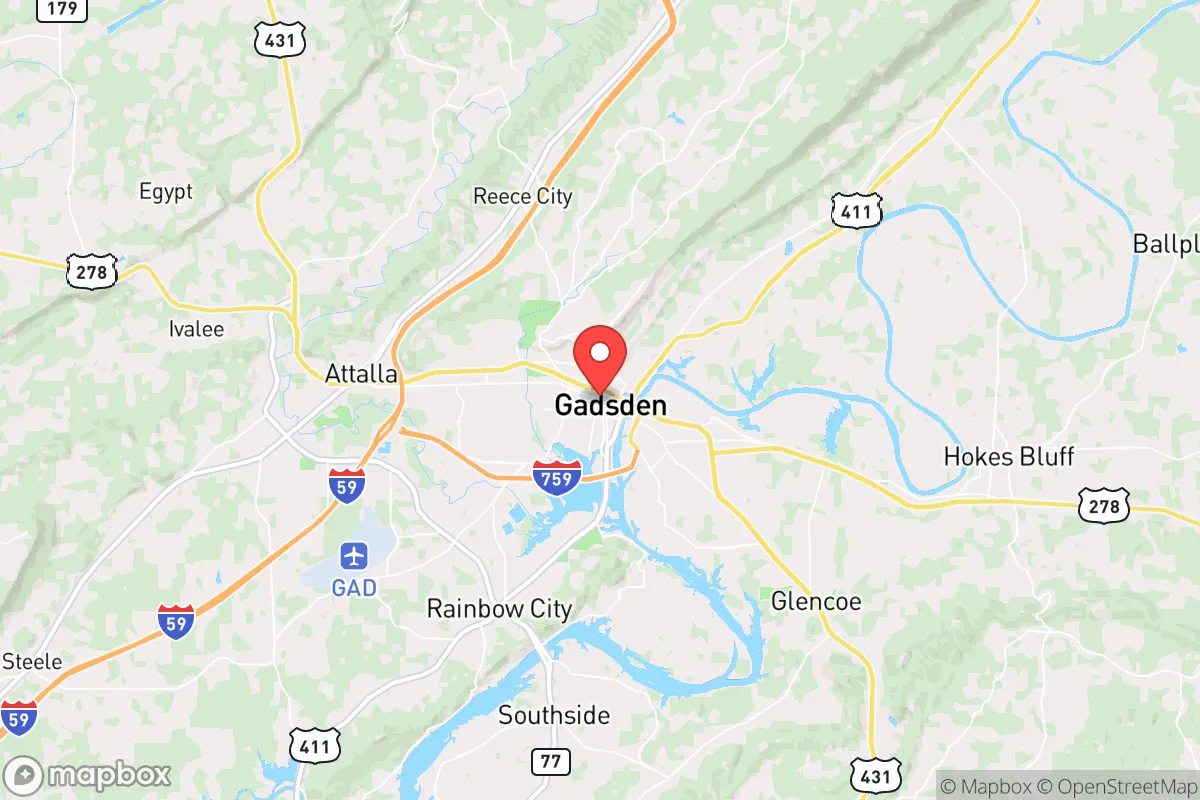
Gadsden’s location in Etowah County places it at the intersection of several natural and man-made features that matter for resilience. The Coosa River runs right through town, providing a reliable surface water source that’s less prone to drought than many parts of the Southeast. To the north and east, the Appalachian foothills rise into ridges and hollows that create natural chokepoints and defensible terrain—useful if you’re thinking about movement control or simply wanting to put distance between yourself and any organized threat. The area sits roughly 60 miles northeast of Birmingham and about 90 miles southwest of Chattanooga, Tennessee, which means you’re outside the immediate blast and fallout zones of those cities while still being able to access their medical and supply networks in a stable period. Interstate 59 runs through Gadsden, connecting it to both I-20 and I-75, giving you multiple egress routes if you need to bug out further into the rural deep South or up into the Tennessee Valley. The terrain itself—rolling hills, mixed hardwood forest, and limestone bluffs—offers good cover and concealment, and the local soil is workable for small-scale agriculture if you’re planning to grow food.
Risks, exposures, and proximity to fallout-relevant landmarks
No location is without vulnerabilities, and Gadsden has a few that a serious prepper needs to account for. The most obvious is the city’s industrial history: Gadsden was home to a major Goodyear tire plant (now owned by Giti Tire) and still has active manufacturing facilities, including a steel mill and chemical processing operations. In a collapse scenario, these could become targets for looting or, worse, sources of toxic releases if not properly secured. The Coosa River, while a water asset, also means that any upstream contamination from the Gadsden Steam Plant or industrial sites could compromise your water supply if you’re not filtering or storing ahead of time. On the macro level, Gadsden is within roughly 150 miles of the Tennessee Valley Authority’s nuclear facilities—specifically the Browns Ferry Nuclear Plant near Athens, Alabama, and the Sequoyah plant near Chattanooga. That’s outside the immediate lethal fallout zone for a worst-case event, but still close enough that prevailing winds could carry particulate matter your way. More practically, the area’s proximity to Birmingham and Atlanta (about 120 miles) means that if civil unrest or mass casualty events hit those cities, Gadsden could see a surge of refugees or secondary effects like supply chain disruptions. The city itself has a modest police force and a county sheriff’s department, but in a prolonged crisis, law enforcement resources would be stretched thin—especially if the interstate becomes a conduit for displaced populations.
Practical resilience for a relocator: food, water, energy, and defensibility
For someone actually moving to Gadsden with a prepper mindset, the practical day-to-day resilience picture is mixed but workable. Water is the strongest asset: the Coosa River is a perennial stream with good flow, and the area’s average annual rainfall of around 54 inches means rainwater catchment is viable for most of the year. You’ll want to invest in a good filtration system—Berkey or a DIY sand filter—because the river carries agricultural runoff and industrial sediment. Food production is feasible but not effortless: the growing season runs from April to October, and the local soil is clay-heavy in many spots, so raised beds or container gardening with imported topsoil will give better yields. There are several local farms and farmers’ markets (the Gadsden Farmers Market runs seasonally) that can serve as supply sources before any crisis, and the surrounding county has decent deer and turkey populations for hunting. Energy-wise, Gadsden is served by Alabama Power, which has a relatively reliable grid, but you’ll want solar panels with battery storage as a backup—the area gets about 210 sunny days per year, which is average for the region but enough for a modest off-grid setup. Defensibility is where Gadsden’s terrain shines: the hills and hollows around the city offer numerous properties with good line-of-sight and natural barriers. Look for land on the north or east sides of town, away from the main industrial corridors, where you can have a well, septic, and a buffer of trees. The local gun culture is strong—Alabama is a constitutional carry state, and Etowah County has a history of high firearm ownership—so you won’t stand out as an outlier if you’re armed and trained. Just be aware that the area has a moderate property crime rate (about 30% above the national average per capita), so securing your perimeter with cameras, lighting, and reinforced doors is a baseline requirement, not paranoia.
Overall, Gadsden presents a solid strategic option for a conservative relocator who wants to be prepared without going full-off-grid in the middle of nowhere. It’s not a fortress—no place is—but it offers a realistic balance of natural resources, geographic isolation from major targets, and enough local infrastructure to make daily life functional before things go sideways. The key is to buy property with water access and defensible terrain, build your supplies before any crisis hits, and integrate into the local community enough to have neighbors you can trust. If you’re looking for a place that’s far enough from the chaos to breathe but close enough to civilization to matter, Gadsden deserves a spot on your short list.

* Values derived from national, state, county, city and local statistics and may differ in a specific area. Last updated: 2026-04-19T18:52:08.000Z
Narrative content on this page is AI-generated and may contain mistakes. Verify any details that matter before acting on them.
ReloMaps may earn a commission from affiliate links at no extra cost to you.

