Photo: Wikipedia
Demographics of Garden City, ID
Affluence Level in Garden City, ID
A middle-class area roughly in line with national averages across income, home values, education, and employment.
People of Garden City, ID
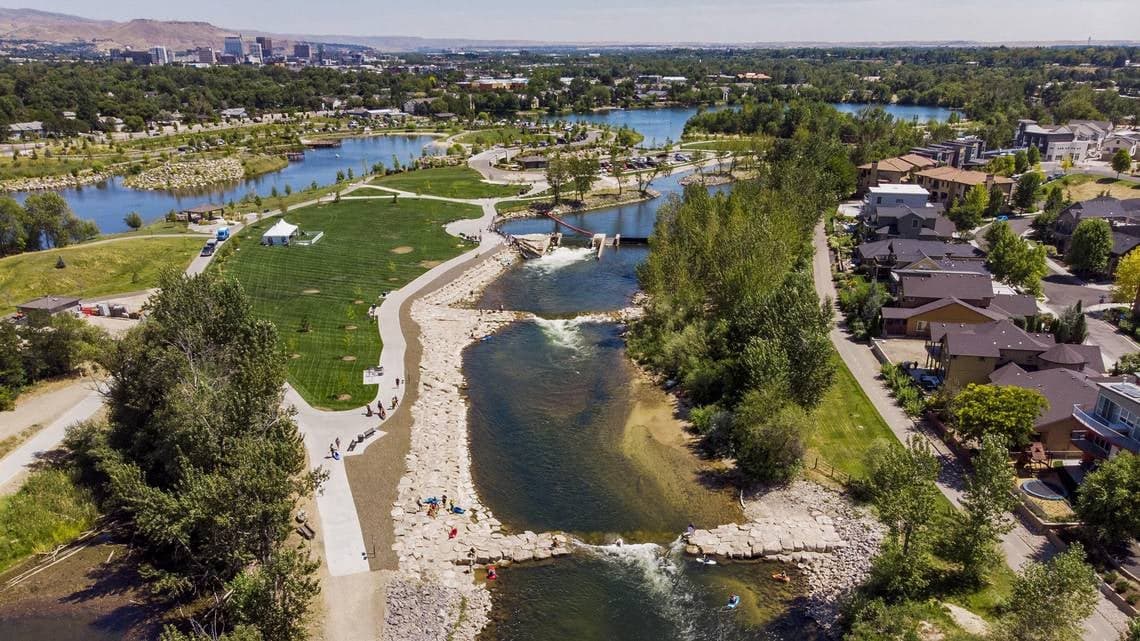
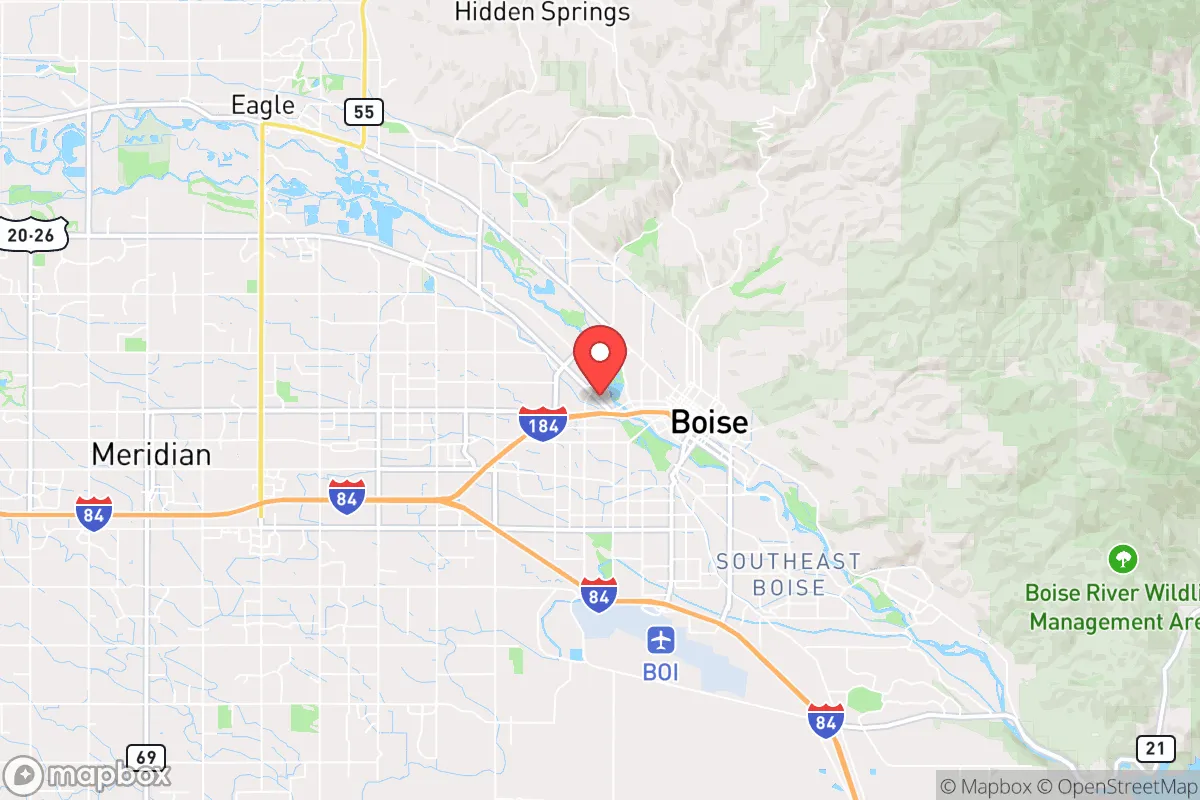
Garden City, Idaho, is a small, densely populated enclave of 12,483 residents, characterized by its working-to-middle-class roots and a population that is overwhelmingly white (83.5%) with a notable Hispanic minority (10.4%). The city’s identity is shaped by its tight geography—sandwiched between the Boise River and the city of Boise—and a history of blue-collar industry that has given way to a more suburban, family-oriented character. With a low foreign-born rate of 1.3% and a college-educated share of 38.4%, Garden City today feels like a stable, largely native-born community where long-time residents mix with younger families seeking affordable housing near Boise’s job centers.
How the city was settled and grew
Garden City’s human history begins not with pioneers but with a post-1900 land boom. Originally part of the Boise River floodplain, the area was settled in the 1890s by farmers drawn to the fertile bottomland. The city was officially incorporated in 1905, and its early population was almost entirely white, native-born homesteaders of Northern European descent—primarily English, German, and Scandinavian stock. These early residents built the first homes in what is now the Historic Glenwood District, a neighborhood along Glenwood Street that remains the city’s oldest residential core. The arrival of the Boise-Payette Lumber Company in the 1910s drew a second wave of workers, many of them single men and families from the rural Midwest, who settled in the Boise River Corridor area near the lumber mills. By mid-century, Garden City was a small, insular community of roughly 2,000 people, with a population that was nearly 100% white and heavily reliant on agriculture, lumber, and the nearby Boise rail yards.
Modern era (post-1965)
The post-1965 era brought two major shifts: suburbanization and a modest Hispanic influx. As Boise expanded westward in the 1970s and 1980s, Garden City became a landing pad for white families priced out of the city’s core. New subdivisions like Sunset Park and Riverstone (the latter a planned community built in the 2000s) absorbed these domestic migrants, who were predominantly white, middle-class, and drawn by larger lots and lower taxes. The Hispanic population, which now stands at 10.4%, began growing in the 1990s as agricultural and construction jobs attracted workers from Mexico and Central America. These families concentrated in the West Garden City area, a lower-income stretch near the Boise River where older, smaller homes and rental properties offered affordable entry points. Unlike many Idaho towns, Garden City saw almost no Asian or Black growth—East/Southeast Asian residents make up just 0.5% of the population, and Indian-subcontinent residents 0.2%—reflecting the city’s limited draw for immigrant communities outside of Hispanic labor networks. The foreign-born share remains very low at 1.3%, underscoring that Garden City’s modern growth has been driven almost entirely by domestic in-migration from within Idaho and neighboring states.
The future
Garden City’s population is heading toward gradual homogenization, not tribalization. The white share (83.5%) is stable, with no signs of rapid decline, while the Hispanic share (10.4%) is growing slowly but steadily, likely reaching 12–14% by 2035 as second-generation families age into homeownership. The city’s small size and lack of major employers mean it will not attract large new immigrant waves; instead, growth will come from Boise spillover—young white professionals and families seeking cheaper housing in neighborhoods like Riverstone and the emerging Boise River Greenbelt district. The Indian and East/Southeast Asian populations are too small to form distinct enclaves and will likely remain below 1% each. The biggest demographic shift is generational: the city’s median age is rising as older homeowners stay put, but new development along the riverfront is drawing younger buyers, creating a mild age bifurcation between the historic Glenwood area (older, longer-term residents) and the newer subdivisions (younger families).
For someone moving in now, Garden City is becoming a stable, predominantly white, family-oriented suburb with a small but established Hispanic community. It is not a place of rapid ethnic change or immigrant-driven growth; rather, it is a quiet, affordable alternative to Boise where the population is slowly aging and diversifying only at the margins. The city’s future is one of steady, moderate growth—more of the same, not a transformation.

* Values derived from national, state, county, city and local statistics and may differ in a specific area. Last updated: 2026-04-19T06:40:34.000Z
Narrative content on this page is AI-generated and may contain mistakes. Verify any details that matter before acting on them.
ReloMaps may earn a commission from affiliate links at no extra cost to you.

