Photo: Wikipedia
Demographics of Garland, TX
Affluence Level in Garland, TX
A middle-class area roughly in line with national averages across income, home values, education, and employment.
People of Garland, TX
The people of Garland, Texas today form a dense, majority-minority population of 245,298, characterized by a Hispanic plurality at 45.0%, a significant White population at 24.5%, a Black community at 15.3%, and a notable East/Southeast Asian presence at 9.2%, with Indian-subcontinent residents at 1.9%. This is a working-to-middle-class suburban city with a 25.0% college-educated rate, where 18.9% of residents are foreign-born, giving it a distinctly immigrant-inflected character compared to many North Texas suburbs. Garland’s identity is less about a single heritage and more about layered waves of migration that have created distinct ethnic enclaves within its borders, from historic downtown to the Firewheel area.
How the city was settled and grew
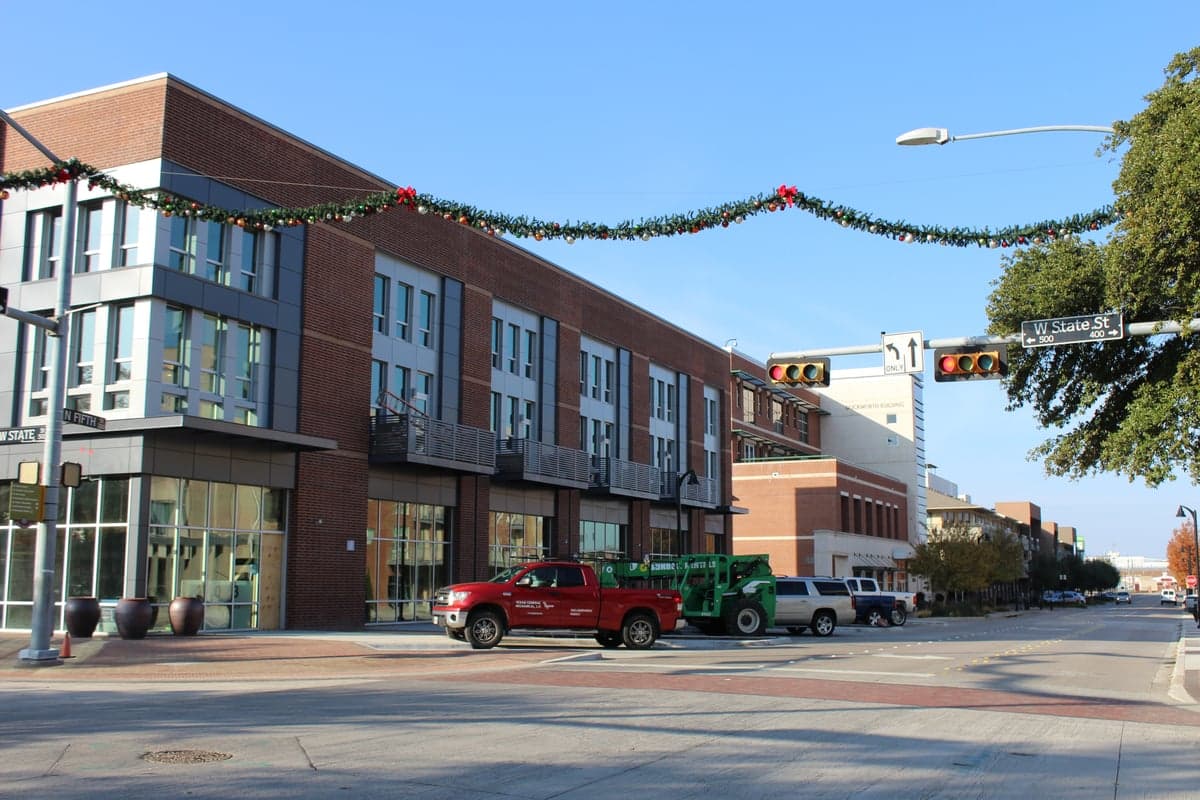
Garland was founded in 1891 as a railroad town, incorporated along the Santa Fe line that connected it to Dallas. The original population was overwhelmingly White, drawn by agriculture (cotton and grain) and later by early manufacturing, including the Garland Textile Mill. The city grew slowly through the early 20th century, with the historic Downtown Garland district—centered on Main Street and the Santa Fe Depot—serving as the commercial and social hub for these early Anglo settlers. A second wave arrived during the post-World War II boom, when Garland became a manufacturing center for defense and aerospace contractors, including the LTV Corporation (later Vought Aircraft). This era brought White families from the rural South and Midwest into neighborhoods like Embree Estates and Oakwood Estates, which were developed as single-family subdivisions in the 1950s and 1960s. These areas remain predominantly White and older today, with many original residents aging in place.
Modern era (post-1965)
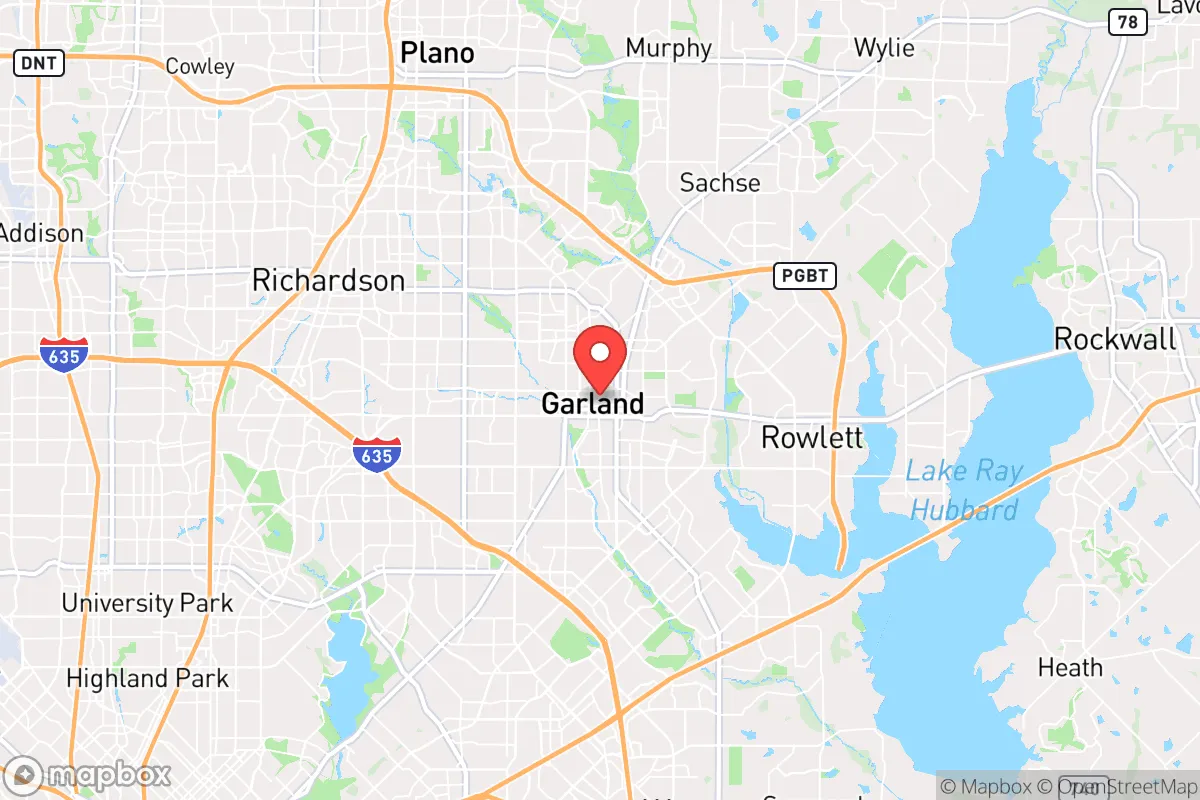
The 1965 Hart-Celler Act fundamentally reshaped Garland’s population. The first major non-European wave was Hispanic, beginning in the 1970s as Mexican and Central American immigrants arrived for construction, service, and light industrial jobs. They concentrated in the South Garland neighborhoods south of Interstate 30, particularly around the Buckingham Road corridor, where Spanish-language businesses and Catholic parishes like St. Elizabeth Ann Seton anchored the community. By the 1990s, Garland’s Hispanic share had risen sharply, and today it is the largest single ethnic group. A second post-1965 wave brought East and Southeast Asian immigrants—primarily Vietnamese and Korean—who settled in the Firewheel area near the intersection of President George Bush Turnpike and State Highway 78. This corridor now features Asian grocery stores, restaurants, and Buddhist temples, and the Asian share (9.2%) is concentrated here. The Black population grew more gradually, with African American families moving from Dallas in the 1980s and 1990s into neighborhoods like Spring Creek and Ridgewood, drawn by affordable housing and proximity to jobs. The Indian-subcontinent community (1.9%) is smaller and more dispersed, with no single dominant enclave, though clusters appear near the North Garland area around Walnut Street. The White share has declined steadily from over 80% in 1980 to 24.5% today, driven by both out-migration to farther suburbs and the city’s increasing diversity.
The future
Garland’s population is heading toward further diversification, but not toward homogenization. The Hispanic share is projected to grow to near 50% by 2035, driven by both immigration and higher birth rates, while the White share will continue to decline slowly. The East/Southeast Asian community appears stable, with some second-generation families moving to Plano or Frisco but new immigrants replenishing the Firewheel enclave. The Black population is plateauing, as younger families often choose Rowlett or Forney for newer housing. The Indian-subcontinent community is small but growing, attracted by Garland’s lower home prices compared to Richardson or Plano. The city is not tribalizing into hostile enclaves, but distinct neighborhoods retain strong ethnic identities: South Garland remains heavily Hispanic, Firewheel is Asian-majority, and the older subdivisions north of I-30 are still predominantly White and older. The foreign-born share (18.9%) is high for a suburb of this size, suggesting continued immigration will be a demographic driver.
For someone moving in now, Garland is a solid, affordable, and genuinely diverse suburb where ethnic change has been gradual rather than disruptive. It is not a homogenizing melting pot but a city of distinct neighborhoods, each with its own character. New residents should expect a working-class, family-oriented environment with good access to Dallas jobs, but should also be aware that the city’s schools and services are stretched by a large immigrant population with lower median incomes. Garland is becoming more Hispanic and more Asian, while its White and Black shares stabilize—a trajectory that mirrors many inner-ring Sun Belt suburbs.

* Values derived from national, state, county, city and local statistics and may differ in a specific area. Last updated: 2026-05-03T20:32:46.000Z
Narrative content on this page is AI-generated and may contain mistakes. Verify any details that matter before acting on them.
ReloMaps may earn a commission from affiliate links at no extra cost to you.

