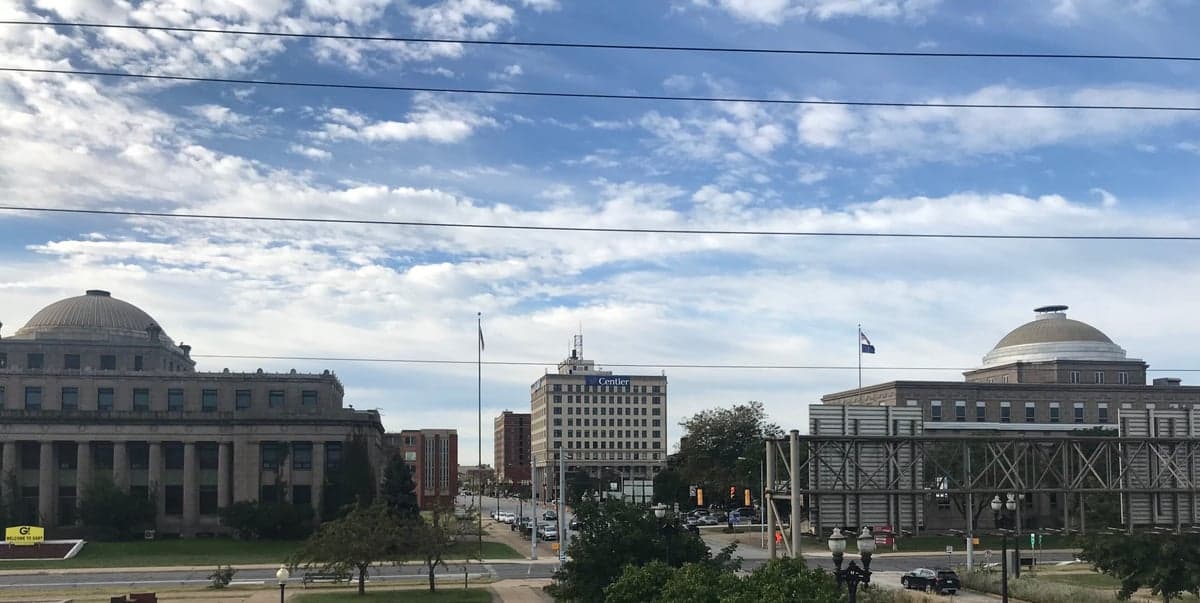
Photo: Wikipedia
Demographics of Gary, IN
Affluence Level in Gary, IN
A low-income area with significant economic hardship. Household wealth and educational attainment are well below national averages.
People of Gary, IN
The people of Gary, Indiana today form a predominantly Black city of 68,604 residents, characterized by a deep-rooted working-class identity, a high poverty rate, and a population that has shrunk by over 60% since its 1960 peak. The city is 76.0% Black, 10.3% White, and 9.8% Hispanic, with a very low foreign-born share of just 1.4% and a college attainment rate of 14.3%. Distinctive markers include a strong legacy of union labor, a resilient but struggling downtown, and a sense of community forged through decades of industrial boom and subsequent decline.
How the city was settled and grew
Gary was founded in 1906 by the United States Steel Corporation as a planned company town, built from scratch on the southern shore of Lake Michigan to house workers for its massive new steel mill. The original population was overwhelmingly European immigrant labor—Poles, Slovaks, Serbs, Croats, Italians, and Greeks—who settled in dense, ethnic neighborhoods near the mills. The Glen Park neighborhood, on the city’s west side, became a hub for second-generation European families seeking better housing away from the industrial core. The Central District, around Broadway and 5th Avenue, was the commercial and civic heart, built by and for these immigrant communities. By 1930, Gary’s population had exploded to over 100,000, fueled by continuous steel demand. The Great Migration brought a second massive wave: Black families from the rural South, especially Mississippi and Alabama, who arrived between 1910 and 1960 seeking industrial jobs. They were largely confined to the Midtown and Emerson neighborhoods, east of Broadway, due to strict racial covenants and de facto segregation. By 1960, Gary’s population peaked at 178,320, with Black residents making up about 40% of the total.
Modern era (post-1965)
The post-1965 era brought dramatic demographic transformation. The 1965 Hart-Cellar Act ended national-origin quotas, but its impact on Gary was minimal—the city’s foreign-born share today is just 1.4%, reflecting the fact that post-1965 immigration largely bypassed the industrial Midwest. Instead, the dominant shift was domestic: white flight accelerated sharply after the 1967 election of Richard Hatcher, the city’s first Black mayor, and the 1968 riots that followed Martin Luther King Jr.’s assassination. White residents, who had been concentrated in Glen Park and the Miller Beach lakefront neighborhood, moved en masse to suburban Lake County communities like Merrillville, Crown Point, and Hobart. By 1980, Gary was over 70% Black. The Miller Beach neighborhood, once a white ethnic stronghold, became a stable, middle-class Black enclave, while Glen Park transitioned to a predominantly Black and increasingly poor area. The Hispanic population, now 9.8%, grew slowly from the 1970s onward, primarily Mexican-American families settling in the Downtown and Central District areas, often working in remaining industrial or service jobs. The Asian population (East/Southeast Asian) is negligible at 0.3%, and the Indian-subcontinent population is 0.0%.
The future
Gary’s population is projected to continue declining, likely falling below 60,000 by 2035, as the city struggles with deindustrialization, high crime, and a shrinking tax base. The population is homogenizing into a predominantly Black, low-income city, with the White share (10.3%) concentrated in the Miller Beach neighborhood and a few pockets of Glen Park. The Hispanic share (9.8%) is stable but not growing rapidly, as the city lacks the immigrant-attracting industries or housing stock seen in nearby Chicago suburbs. There is no significant growth in Asian or Indian communities. The city is not tribalizing into distinct ethnic enclaves—rather, it is becoming more uniformly Black and poor, with the middle class of all races continuing to exit. The Downtown area, once a bustling commercial district, is now largely vacant, with only a few remaining businesses and government offices. The Emerson neighborhood, historically Black, has seen severe population loss and widespread abandonment.
For someone moving in now, Gary is a city of deep historical significance but limited economic opportunity. The population is overwhelmingly Black, native-born, and low-income, with a strong sense of community but few job prospects outside of remaining industrial, healthcare, and government positions. The city’s future depends on whether it can attract new investment and stabilize its population, but current trends point toward continued shrinkage and demographic consolidation. New residents should expect a tight-knit, resilient community with significant challenges in public safety, schools, and infrastructure.

* Values derived from national, state, county, city and local statistics and may differ in a specific area. Last updated: 2026-04-22T09:25:23.000Z
Narrative content on this page is AI-generated and may contain mistakes. Verify any details that matter before acting on them.
ReloMaps may earn a commission from affiliate links at no extra cost to you.

