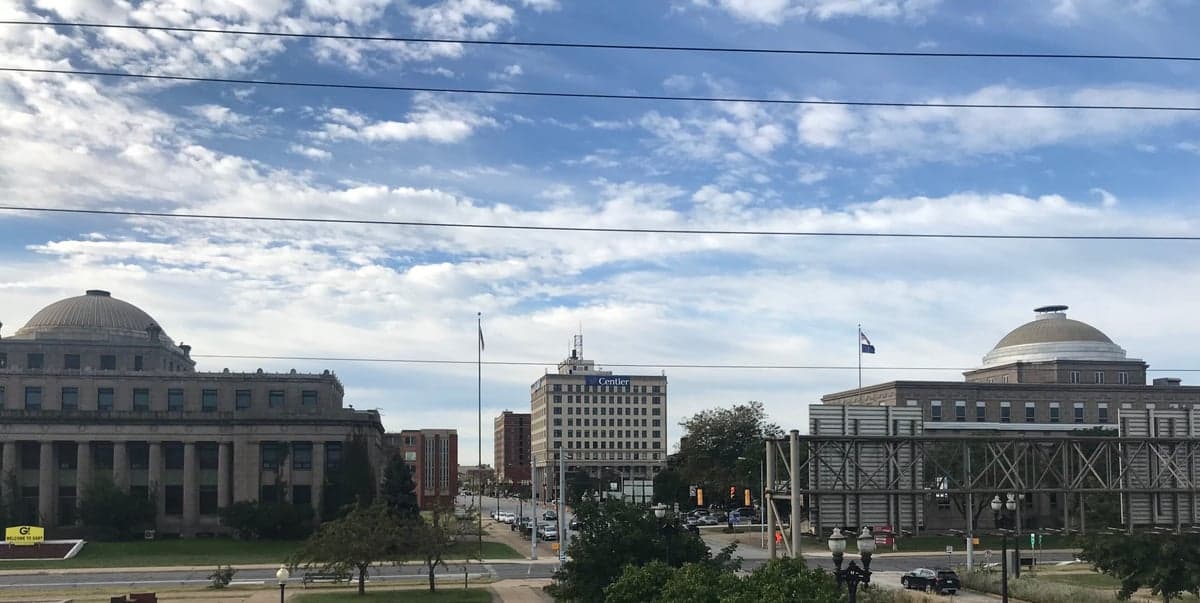
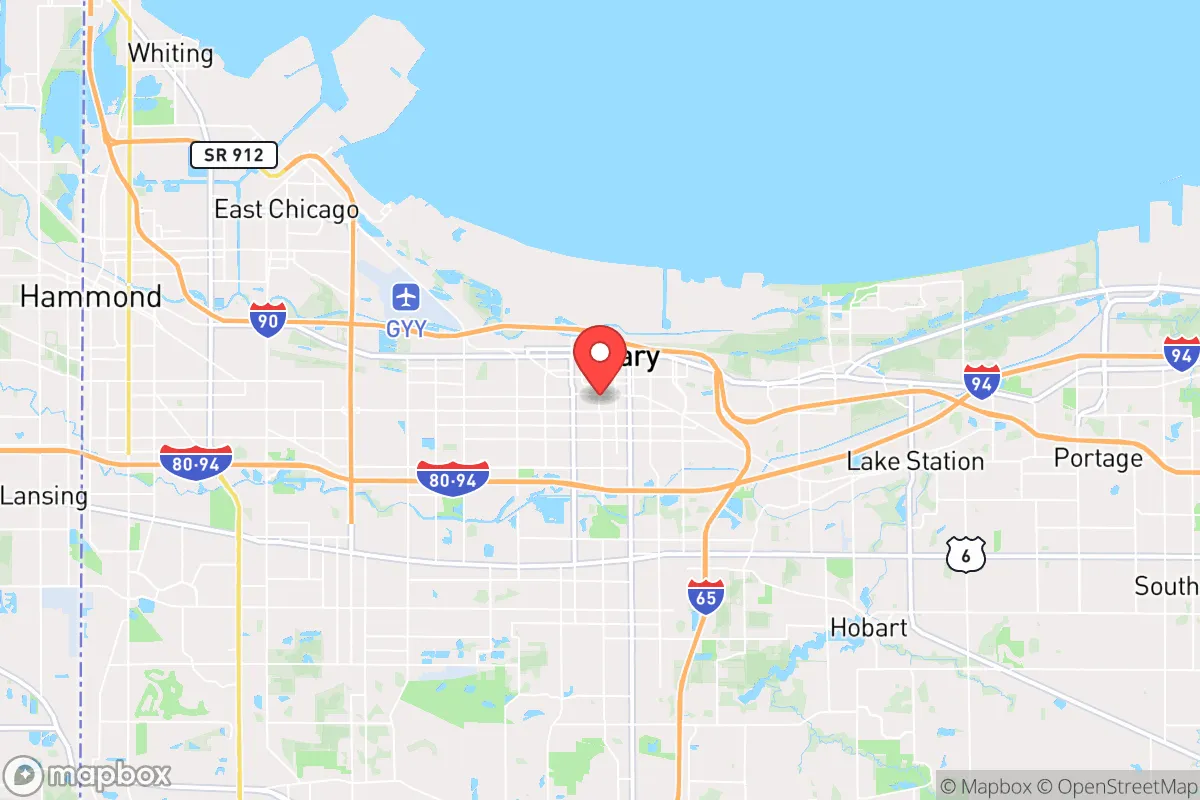
Photo: Wikipedia
Strategic Assessment of Gary, IN
Multiple tactical vulnerabilities. Population density, target proximity, or disaster risk are likely compounding. A retreat property and exit planning is required.
What does the Strategic Assessment tell us?
Our Strategic Assessment grades tactical survivability of an area. Major population centers, military targets, fallout zones, natural disasters, and border exposure all drive risk — lower exposure means a more defensible position in a crisis.
This is heavily inspired by Joel Skousen's Strategic Relocation book. Highly recommended you checkout the book ($)What does this tell us?
Our Strategic Assessment grades tactical survivability of an area. Major population centers, military targets, fallout zones, natural disasters, and border exposure all drive risk — lower exposure means a more defensible position in a crisis.
This is heavily inspired by Joel Skousen's Strategic Relocation book. Highly recommended you checkout the book ($)Strategic Pillars

Key Distances
Regional Safe Places
Below is our recommended "safe zones" in Indiana and the surrounding area based on our strategic heuristics. For most people, it's unrealistic to live in a “safe zone” full-time due to work, family or other personal reasons. They tend to be more rural. However, many of these areas are perfect for second homes and retreat properties that double as a vacation home or even a short-term rental.

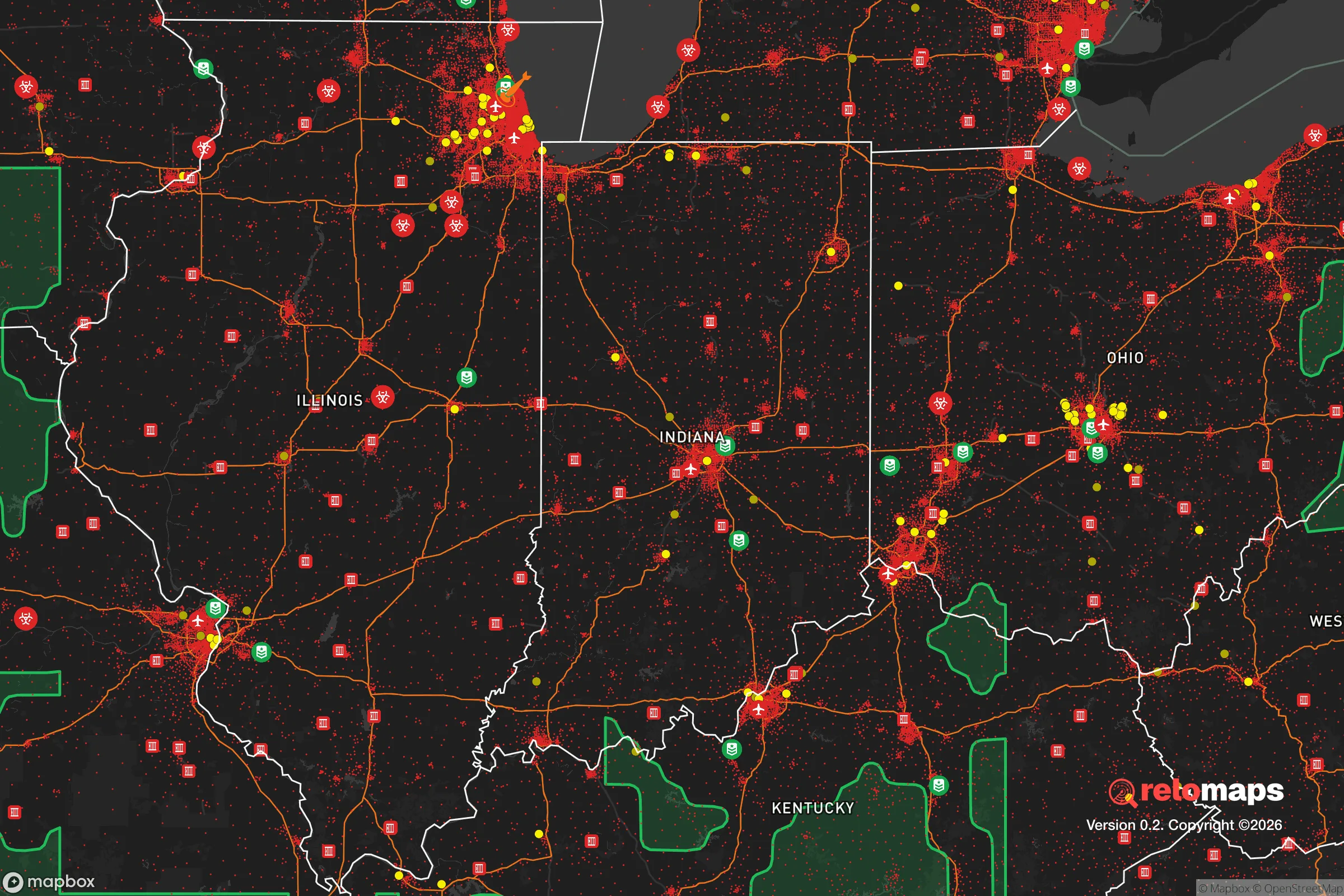


Important Note: For informational purposes only. This does not mean nothing bad ever happens in the green zones. Please use common sense. This is based on public data and modeled with AI. We tried to take a conservative approach but mistakes happen. We update this regularly as new information becomes available.
Solar Generator Recommendations
Backup power matters more here than in safer locations. We've picked three solar generators across budgets and capacity tiers — start with the budget unit if you only need a few essentials, or step up if you want to run a fridge and HVAC for days at a time.

Jackery Portable Power Station Explorer 300
Budget OptionPower on the Go: Weighing only 11 lbs, it's convenient to set up and store with book-sized foldable solar panels

BLUETTI Portable Power Station AC180
Designed for both indoor and outdoor scenarios, AC180 is highly capable as it has a robost capacity and continuous output power.

EF ECOFLOW DELTA Pro Ultra Power Station
Upgraded PickEcoFlow DELTA Pro Ultra is a whole-home energy system designed to grow with your family. Integrated with the Smart Home Panel 2, it scales to meet your evolving energy needs — keeping your home powered, intelligent, and secure through every stage of life.
We earn a commission, at no additional cost to you.
Strategic Assessment Analysis
Gary, Indiana, presents a deeply contradictory picture for the strategic relocator. On one hand, its location on the southern shore of Lake Michigan offers a unique set of natural advantages and logistical choke points that a prepared individual can leverage. On the other, the city itself is a textbook case of post-industrial collapse, with a hollowed-out core, a reputation for violent crime, and proximity to some of the most high-value, high-risk infrastructure in the Midwest. For the conservative prepper or survivalist, Gary is not a destination for comfortable living—it is a potential staging ground, a buffer zone, or a hard no-go, depending entirely on your specific threat model and tolerance for risk.
Geographic position and natural advantages for a strategic buffer
Gary’s primary asset is its geography. Sitting at the far southern tip of Lake Michigan, it commands a narrow corridor between the lake and the sprawling industrial complex of Northwest Indiana. This is a natural funnel point for any movement along the I-80/94 and I-65 corridors, which connect Chicago to the rest of the Midwest. For someone thinking in terms of regional denial or observation, this is a key chokepoint. The lake itself provides a massive, defensible water source—not just for drinking after treatment, but for potential aquaculture and a natural barrier to the north. The Indiana Dunes National Park, just east of Gary, offers miles of undeveloped shoreline, dune forests, and wetlands that could serve as a low-signature retreat or a difficult-to-traverse buffer zone. The area’s flat, sandy soil is poor for traditional farming but could support raised-bed or hydroponic systems if you bring in your own soil and amendments. The prevailing westerly winds off the lake also mean that any airborne fallout from a Chicago event would likely be pushed east, not directly into Gary, though this is a marginal advantage at best.
Risks, exposures, and proximity to high-value fallout landmarks
This is where the analysis turns grim. Gary sits directly in the shadow of the Chicago metropolitan area, roughly 25 miles from the Loop. In any scenario involving civil unrest, a mass casualty event, or a coordinated attack, Chicago is a primary target. The city’s own infrastructure—the BP Whiting Refinery just east, the steel mills, and the rail yards—are themselves high-value industrial targets. A conventional or EMP strike on the refinery would create a toxic plume that could blanket Gary and the surrounding area for days. Furthermore, Gary’s own population dynamics are a liability. The city has lost over half its population since 1960, leaving behind a landscape of abandoned homes, vacant lots, and a severely strained municipal government. In a crisis, this means limited local law enforcement, a degraded emergency response system, and a population that is already economically desperate. The risk of looting, armed gangs, and territorial violence in a grid-down scenario is extremely high. The city’s proximity to the Indiana Toll Road and major rail lines also means it would be a natural route for displaced populations fleeing Chicago, turning Gary into a potential chokepoint for human traffic—and all the disease, conflict, and resource competition that comes with it.
Practical resilience for a relocator: food, water, energy, and defensibility
For the individual or family considering a move here, the practical challenges are immense. Water is abundant but requires serious treatment. Lake Michigan is a massive freshwater source, but drawing from it requires a pump, filtration, and chemical treatment. The city’s municipal water system is aging and prone to boil orders; in a long-term scenario, you would need a private well or a lake intake with a robust purification setup. Food production is limited by poor soil and a short growing season (Zone 5b/6a). You would need to rely heavily on greenhouses, hydroponics, or stockpiling. Local grocery options are sparse and low-quality; most residents drive to Merrillville or Schererville for supplies. Energy is a mixed bag. The area is served by NIPSCO, which relies on a mix of coal, natural gas, and renewables. Grid reliability is average, but in a crisis, the industrial load from the mills and refineries could cause rolling blackouts. Solar is viable but less efficient in the cloudy lake-effect winters. A generator with a large fuel cache is non-negotiable. Defensibility is the hardest factor. Gary’s urban grid is open and porous. A single-family home on a standard lot offers little in the way of standoff distance. The best option for a prepper would be to secure a property on the eastern edge, near the Dunes, or in the far western suburbs like Miller Beach, which has a more insulated, lakefront community feel. Even then, you are surrounded by a high-crime city with a police force that is underfunded and often slow to respond. Your best defense is obscurity and a low profile. Do not advertise your supplies. Do not engage with local politics. Build a network of trusted neighbors, not a community of strangers.
The overall strategic picture for a conservative relocator
Gary, Indiana, is not a place for the faint of heart or the unprepared. It is a high-risk, high-reward location for a very specific type of strategic thinker. If your plan is to be a lone wolf in a remote cabin, look elsewhere. If your plan is to be a node in a regional network, with the ability to observe, deny, and survive in a corridor that will be critical in any Midwest crisis, then Gary deserves a hard look. The key is to treat it as a base of operations, not a home. You are not moving here to raise a family in a safe suburban enclave—you are moving here to be positioned near a major water source, a transportation chokepoint, and a buffer zone between a failing city and a potential collapse zone. The risks are real: violent crime, industrial hazards, and the constant threat of being overrun by a displaced population. But for the prepared individual who can maintain a low profile, secure a defensible property, and build a small, trusted network, Gary offers a strategic foothold that few other locations in the Midwest can match. Just know what you are signing up for. This is not a retreat. This is a forward operating base.

* Values derived from national, state, county, city and local statistics and may differ in a specific area. Last updated: 2026-04-22T09:25:23.000Z
Narrative content on this page is AI-generated and may contain mistakes. Verify any details that matter before acting on them.
ReloMaps may earn a commission from affiliate links at no extra cost to you.

