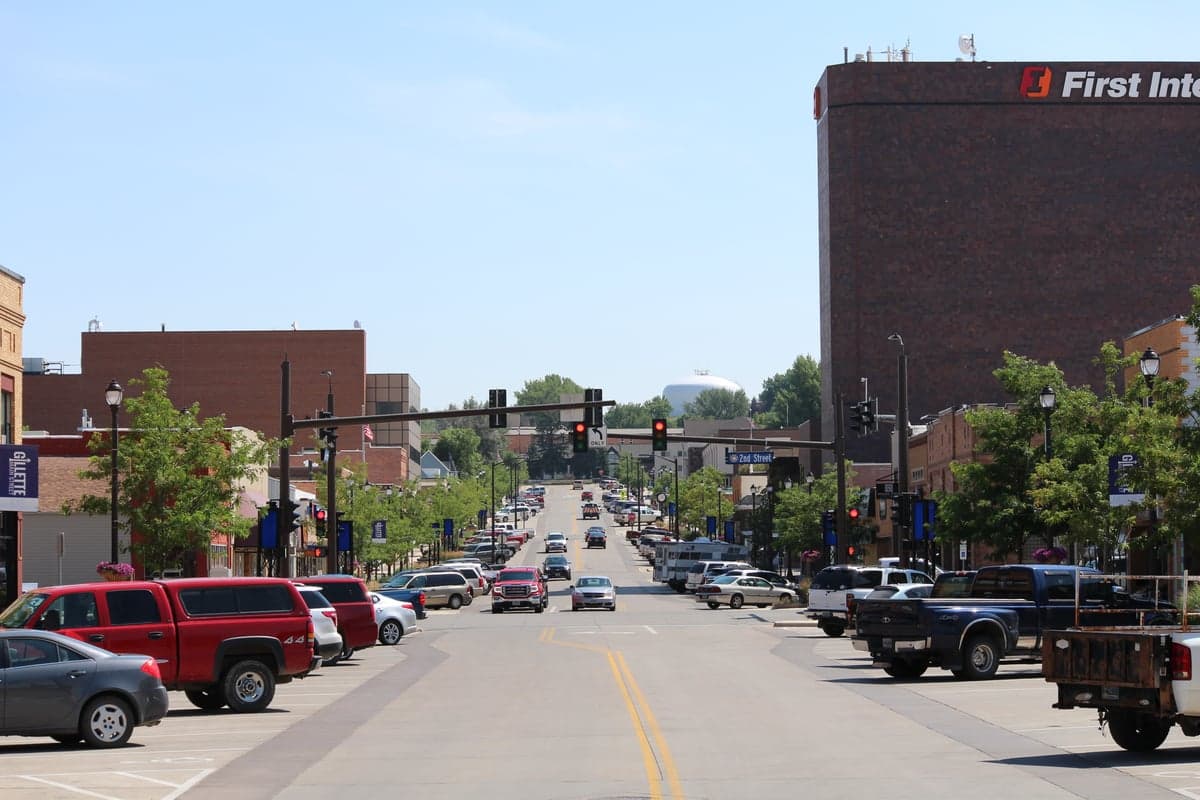
Photo: Wikipedia
Quality of Life in Gillette, WY
Above-average quality of iife. The area offers a reasonable cost of living, decent mobility, and a mix of neighborhood amenities.
What does Quality of Life tell us?
Quality of Life blends cost of living, nearby amenities, socioeconomic signals, and neighborhood character. City-level scores represent the whole municipality; individual neighborhoods can differ.
What does this tell us?
Quality of Life blends cost of living, nearby amenities, socioeconomic signals, and neighborhood character. City-level scores represent the whole municipality; individual neighborhoods can differ.
Cost of Living
16% below national average
The Real Cost of Living in Gillette, WY for 2026
| Tier | Individual | Family (4) |
|---|---|---|
| Survival | $15k | $28k |
| Comfortable | $50k | $73k |
| Luxury | $120k+ | $186k+ |
| Elite (Top 5%) | $141k+ | $219k+ |
123%
The Area Signal
A metric tracking the socioeconomic signals of the area.
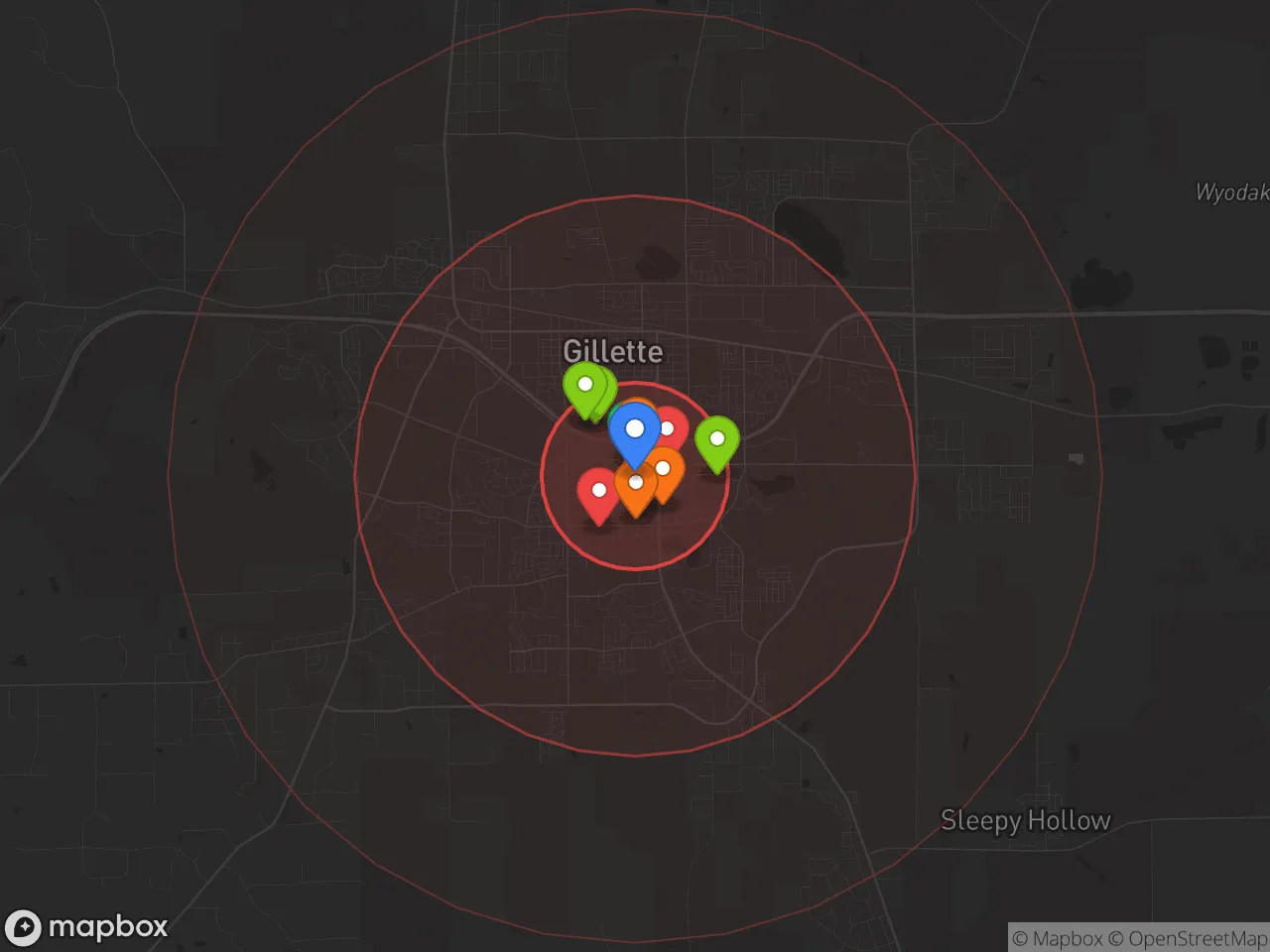
Hobbies
Explore the areaGroceries
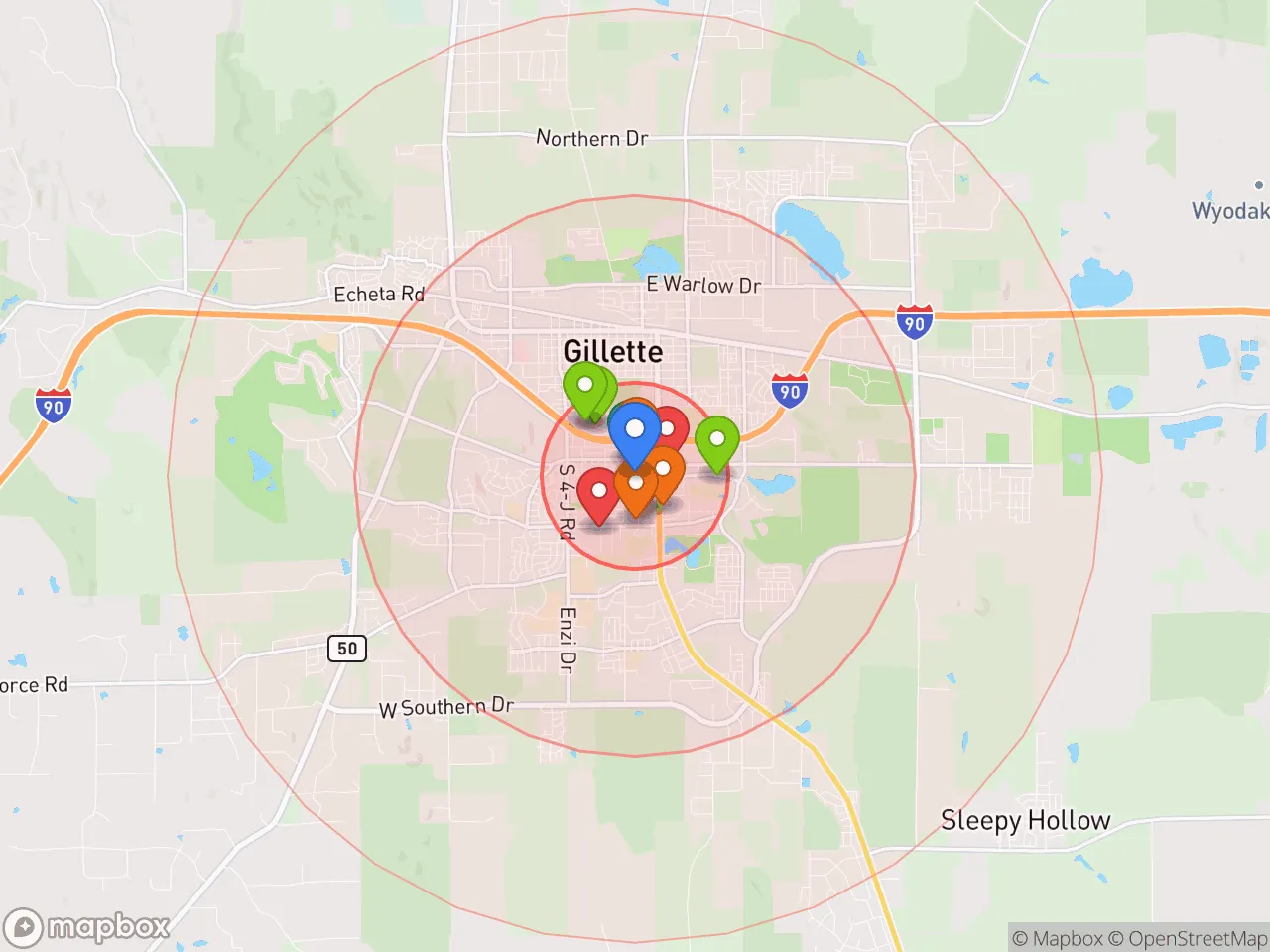
2 within 10 miles
Gas
20 within 10 miles
Hospital
1 within 20 miles
Airport
DEN — Denver International
Post Office
USPS — Gillette, WY
Critical Amenities
Quality-of-Life Analysis
Gillette, Wyoming, presents a distinctive quality-of-life profile shaped by its energy-industry economy and remote High Plains location. With a cost of living index of 84—16 percent below the national average—the city attracts a workforce of miners, oilfield technicians, and tradespeople who earn above-median wages while spending less on housing and daily expenses than most Americans. The population skews younger and more blue-collar than the state average, creating a pragmatic, hardworking community culture where outdoor recreation and family life balance long shifts in the coal and uranium mines surrounding the town.
Cost of living and housing affordability compared to nearby towns
Gillette’s affordability stands out sharply against Wyoming’s more expensive resort towns and even against the state’s largest city, Cheyenne. The median home value of $257,200 is roughly 30 percent lower than the national median, while the median rent of $922 undercuts the U.S. average by nearly 40 percent. Compared to Sheridan, 75 miles west, home values in Gillette are about 20 percent cheaper; versus Jackson Hole, they are less than a third of the price. The average commute of 20.4 minutes is shorter than the national average of 26 minutes, reflecting a compact layout where most neighborhoods sit within a 15-minute drive of the downtown core and the major employment hubs along Highway 59. Utility costs run slightly above the national average due to heating demands in harsh winters, but overall monthly housing expenses for a three-bedroom home typically fall between $1,400 and $1,800 including utilities—well within reach for a dual-income household in the energy sector.
What daily life is like for families and outdoor enthusiasts
Daily life in Gillette revolves around a modest but functional set of amenities. The Campbell County School District serves roughly 8,000 students across 14 schools, with Sage Valley Junior High and Thunder Basin High School consistently ranking among the top in the state for academic performance and extracurricular offerings. For recreation, the city maintains over 20 parks, an indoor aquatic center, and the 18-hole Gillette Golf Club. The nearby Thunder Basin National Grassland provides 572,000 acres of public land for hiking, hunting, and off-road vehicle use, while the Bighorn Mountains are a 90-minute drive west for skiing and alpine hiking. Retail and dining options are concentrated along the Douglas Highway corridor, anchored by a Walmart Supercenter and a handful of regional chains; residents typically drive to Rapid City, South Dakota (two hours east) for major shopping or specialty medical care. The social rhythm is quiet and family-oriented, with high school football games, rodeo events at the Cam-Plex Multi-Event Center, and church activities forming the backbone of community life.
Gillette is best suited for people who prioritize financial stability and outdoor access over urban amenities and cultural diversity. Energy-sector workers and tradespeople will find the strongest job market and the most affordable housing in the region, while remote workers or retirees on fixed incomes benefit from the low cost of living. Families with school-aged children will appreciate the strong public schools and safe neighborhoods—the city’s violent crime rate is roughly half the national average—but should be prepared for long, cold winters with average January highs near 30°F. Those seeking nightlife, fine dining, or a walkable downtown will likely find Gillette limiting; the city’s strength lies in its straightforward, low-stress daily life and the financial breathing room its affordability provides.

Crime in Gillette, WY
Generally safer than 64% of comparable U.S. locations.
Violent CrimeViolent Crime Analysis
Property CrimeProperty Crime Analysis
Crime Analysis
Gillette, Wyoming, presents a mixed safety profile that demands careful consideration from potential residents. The city's violent crime rate of 221 incidents per 100,000 people is notably below the national average, but its property crime rate of 1,379.1 per 100,000 is significantly elevated, placing it among the higher-risk communities in the state for theft and burglary. This combination means that while the risk of a violent encounter is relatively low, the likelihood of experiencing a property-related crime is a tangible concern for daily life in Gillette.
Crime in context
When compared to broader benchmarks, Gillette's violent crime rate is approximately 37% lower than the national average, a figure that aligns with Wyoming's overall reputation as a relatively safe state. However, the property crime rate tells a different story, sitting roughly 25% higher than the national average and exceeding the state average for Wyoming. This disparity is often linked to the city's economic cycles tied to the energy industry; periods of boom can attract transient populations and increase opportunities for theft, while downturns can lead to property crimes of economic desperation. It is important to note that Campbell County, where Gillette is located, does not have the liberal or progressive prosecutorial policies seen in some large metro areas, meaning the local justice system generally does not contribute to the "catch-and-release" dynamics that can inflate crime in other regions.
What residents experience
For those living in Gillette, the most common safety concerns revolve around property. Larceny-theft is the most frequent offense, followed by burglary and motor vehicle theft. Residents often report that securing vehicles, homes, and outbuildings is a necessary precaution, particularly in areas near major highways or less densely populated neighborhoods. Violent crime, while less common, is not absent; it is often concentrated in specific contexts, such as domestic disputes or incidents tied to alcohol use, rather than random stranger-on-stranger attacks. The city's police department maintains a visible presence and has community policing initiatives, but the sheer volume of property crime calls can strain resources.
Neighborhood-level variation
Safety in Gillette is not uniform across the city. Older, established neighborhoods closer to the city center, such as those around the historic downtown, tend to have lower reported crime rates due to tighter-knit communities and more active neighborhood watch groups. In contrast, areas with a high concentration of rental properties, particularly those near the industrial zones on the outskirts, can experience higher rates of theft and vandalism. Newer subdivisions on the west side of town, like those near the Powder Basin, generally report fewer incidents. Prospective residents are advised to consult local crime mapping tools and speak with neighbors to get a granular view of specific blocks, as conditions can vary significantly from one street to the next.
* Values derived from national, state, county, city and local statistics and may differ in a specific area. Last updated: 2026-04-21T11:15:05.000Z
Narrative content on this page is AI-generated and may contain mistakes. Verify any details that matter before acting on them.
ReloMaps may earn a commission from affiliate links at no extra cost to you.

