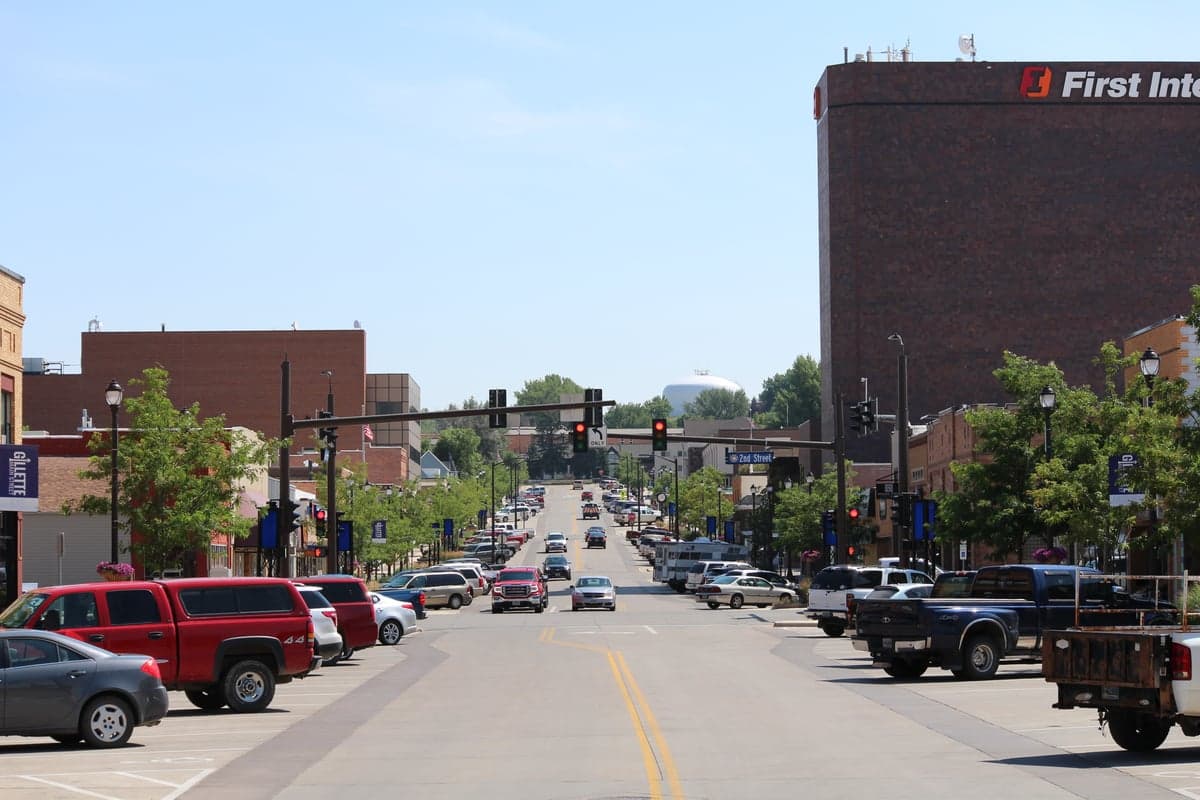
Photo: Wikipedia
Strategic Assessment of Gillette, WY
Workable tactical position. Some exposure to population density or targets, but generally defensible in a crisis.
What does the Strategic Assessment tell us?
Our Strategic Assessment grades tactical survivability of an area. Major population centers, military targets, fallout zones, natural disasters, and border exposure all drive risk — lower exposure means a more defensible position in a crisis.
This is heavily inspired by Joel Skousen's Strategic Relocation book. Highly recommended you checkout the book ($)What does this tell us?
Our Strategic Assessment grades tactical survivability of an area. Major population centers, military targets, fallout zones, natural disasters, and border exposure all drive risk — lower exposure means a more defensible position in a crisis.
This is heavily inspired by Joel Skousen's Strategic Relocation book. Highly recommended you checkout the book ($)Strategic Pillars

Key Distances
Regional Safe Places
Below is our recommended "safe zones" in Wyoming and the surrounding area based on our strategic heuristics. For most people, it's unrealistic to live in a “safe zone” full-time due to work, family or other personal reasons. They tend to be more rural. However, many of these areas are perfect for second homes and retreat properties that double as a vacation home or even a short-term rental.
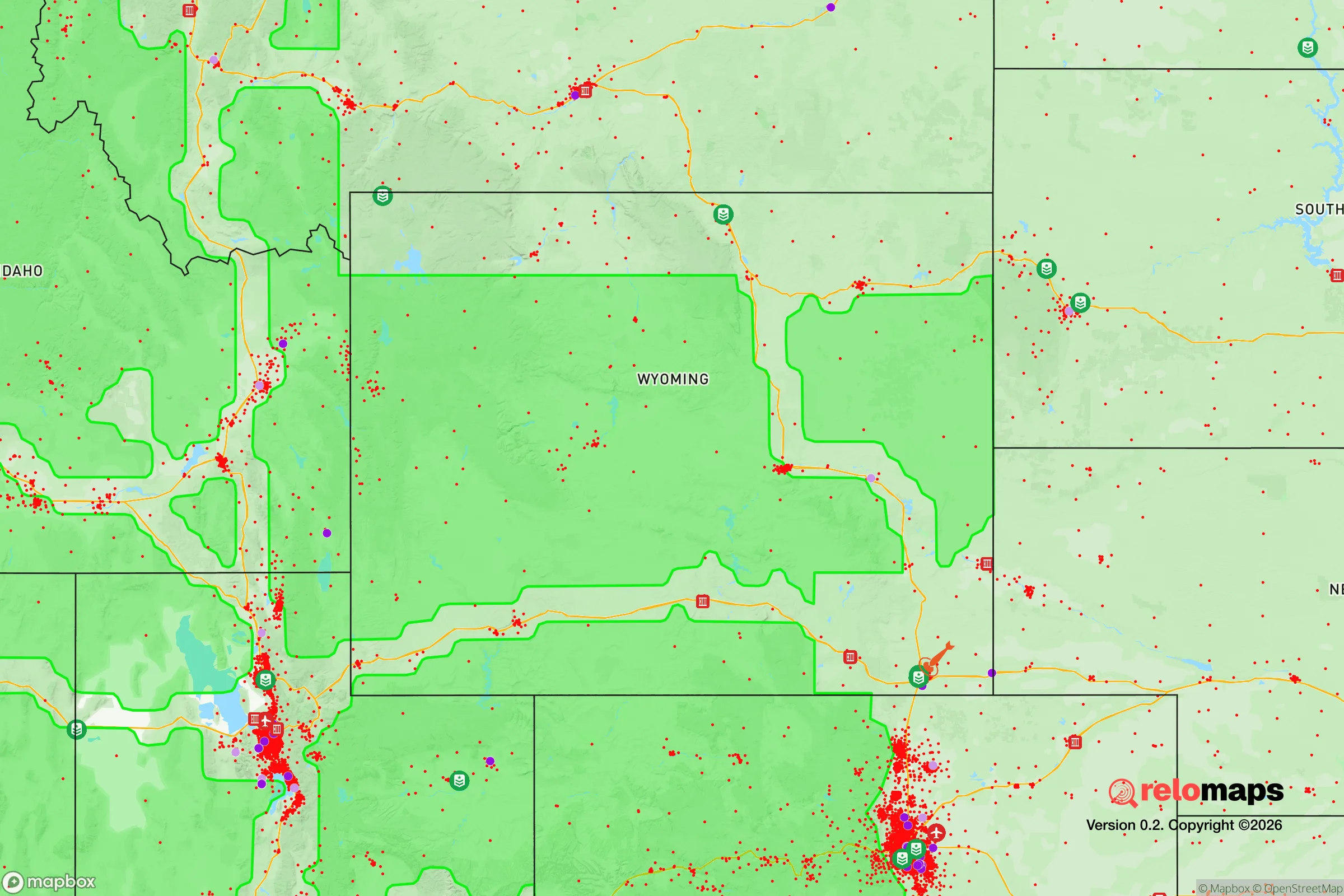
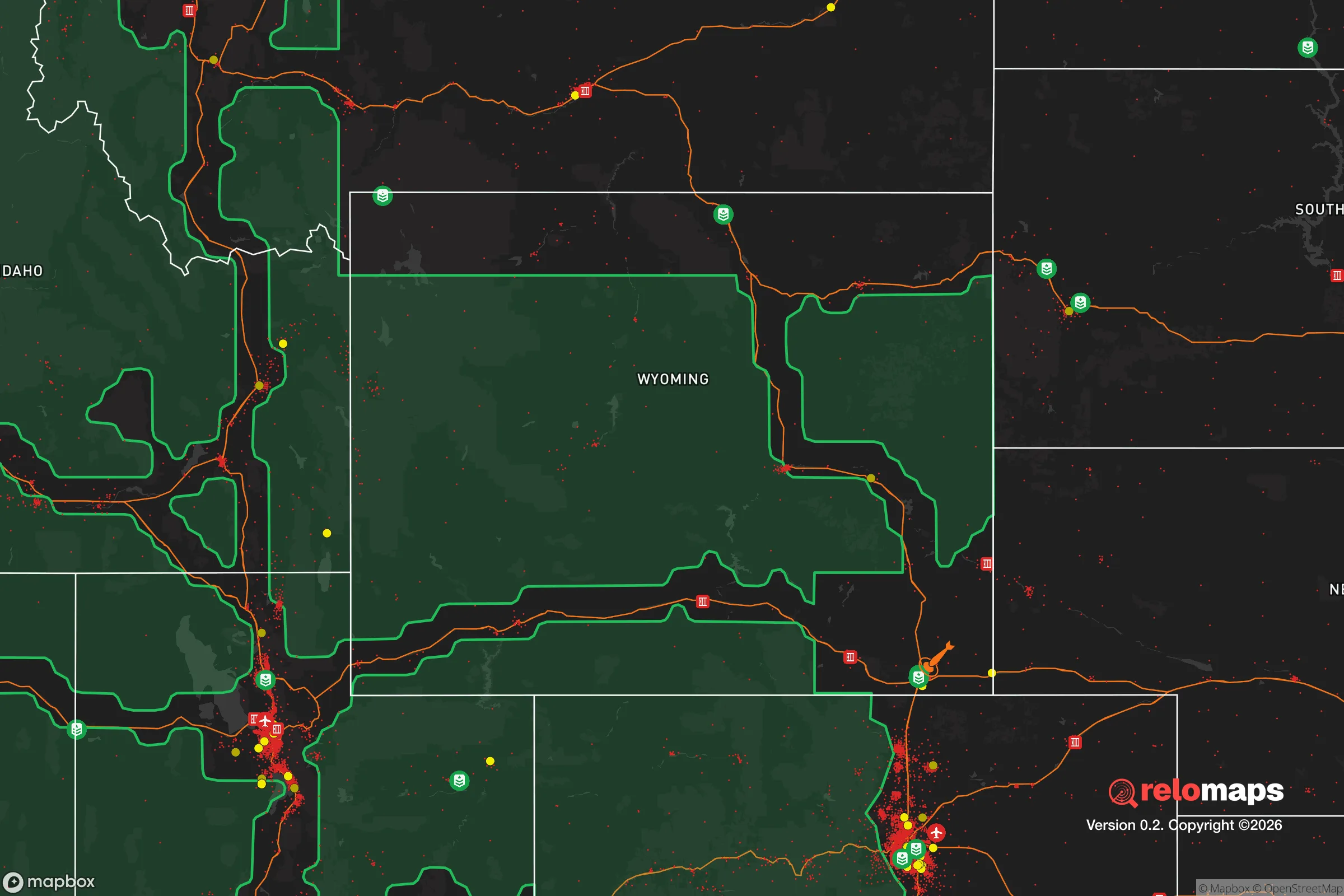


Important Note: For informational purposes only. This does not mean nothing bad ever happens in the green zones. Please use common sense. This is based on public data and modeled with AI. We tried to take a conservative approach but mistakes happen. We update this regularly as new information becomes available.
Solar Generator Recommendations
Backup power matters more here than in safer locations. We've picked three solar generators across budgets and capacity tiers — start with the budget unit if you only need a few essentials, or step up if you want to run a fridge and HVAC for days at a time.

Jackery Portable Power Station Explorer 300
Budget OptionPower on the Go: Weighing only 11 lbs, it's convenient to set up and store with book-sized foldable solar panels

BLUETTI Portable Power Station AC180
Designed for both indoor and outdoor scenarios, AC180 is highly capable as it has a robost capacity and continuous output power.

EF ECOFLOW DELTA Pro Ultra Power Station
Upgraded PickEcoFlow DELTA Pro Ultra is a whole-home energy system designed to grow with your family. Integrated with the Smart Home Panel 2, it scales to meet your evolving energy needs — keeping your home powered, intelligent, and secure through every stage of life.
We earn a commission, at no additional cost to you.
Strategic Assessment Analysis
Gillette, Wyoming, sits in a strategic sweet spot that few relocators fully appreciate: it’s far enough from the coastal chaos and major population centers to offer genuine buffer, yet close enough to critical infrastructure and energy resources to matter when things go sideways. The city’s economy has historically been anchored by coal, oil, and natural gas, which means the local workforce already thinks in terms of extraction, logistics, and self-reliance—not Silicon Valley buzzwords. For someone looking to plant roots in a place that can weather supply chain disruptions, civil unrest, or a grid-down scenario, Gillette offers a combination of geographic isolation, resource abundance, and a population that still remembers how to fix things with their hands.
Geographic position and natural advantages for long-term security
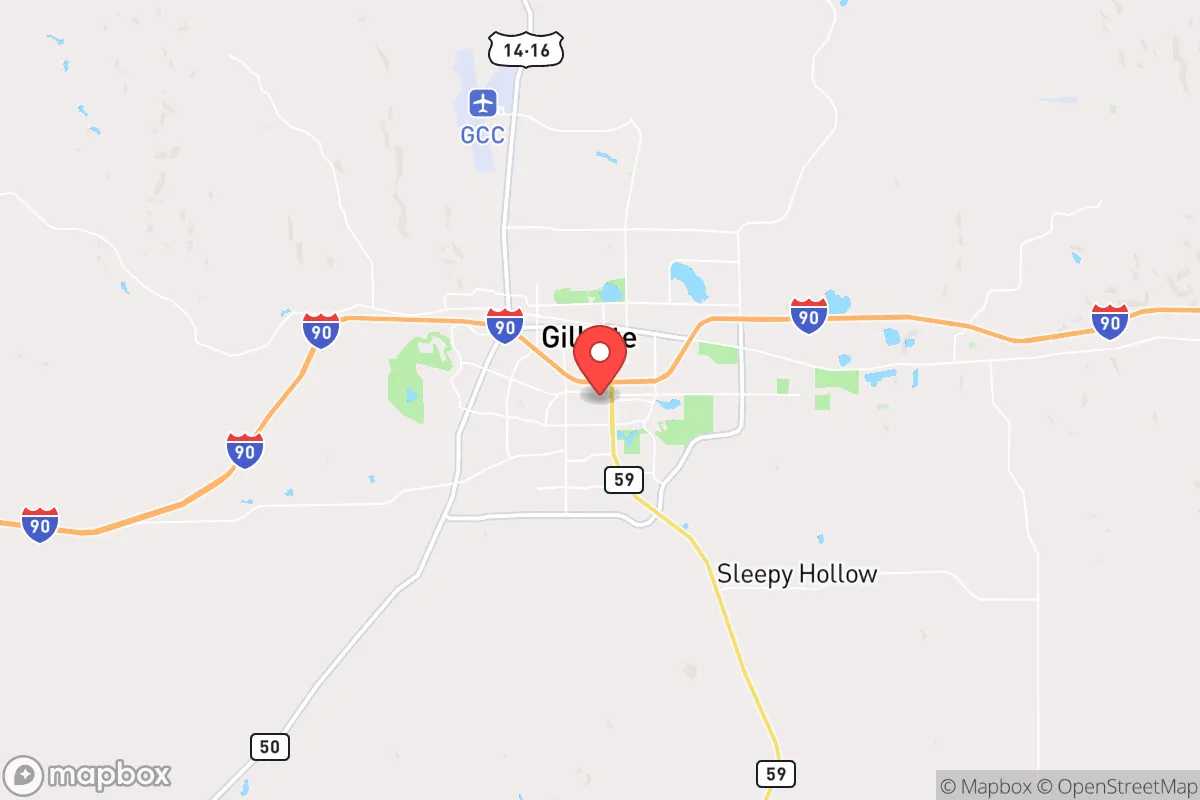
Gillette sits in the Powder River Basin, roughly 70 miles south of the Montana border and 120 miles east of the Bighorn Mountains. That location puts it over 250 miles from Denver, 200 miles from Billings, and more than 300 miles from Salt Lake City—meaning you’re not going to get caught in the spillover of a major city’s collapse. The surrounding terrain is high plains and rolling hills, with the Black Hills to the east and the Bighorns to the west. That gives you multiple escape corridors if needed, but also natural chokepoints for anyone trying to approach from the south or east. The area’s elevation—around 4,500 feet—means cooler summers and serious winters, which is a double-edged sword: it discourages transient populations but demands you be prepared for cold-weather survival. Water access is decent for the region, with the Belle Fourche River and Keyhole Reservoir nearby, plus the Powder River drainage to the north. The real strategic advantage, though, is energy: Gillette sits on top of the largest coal deposits in the United States, and the surrounding basin produces significant natural gas and oil. In a world where energy equals leverage, that’s not nothing.
Risks, exposures, and proximity to fallout-relevant landmarks
No place is a fortress, and Gillette has its exposures. The biggest one is that the city’s economy is tied to extractive industries that could become targets in a major conflict or economic collapse. The coal mines and power plants—like the Dry Fork Station and the Wyodak plant—are visible infrastructure that could attract attention from bad actors or become chokepoints if supply chains fracture. That said, the risk of direct military or terrorist action in Gillette is extremely low compared to coastal ports, nuclear facilities, or major transit hubs. The nearest nuclear power plant is over 400 miles away, and the closest major military installation is F.E. Warren Air Force Base in Cheyenne, about 200 miles south. Fallout from a nuclear event on the West Coast or in the Midwest would likely pass well north or south of the Powder River Basin, given prevailing wind patterns. The bigger concern is economic: if coal and oil take a permanent hit, Gillette could see a population exodus, which would crater property values and local services. For a prepper, that means buying land and supplies now, while the local economy is still humming, and being prepared to ride out a downturn without relying on a job at the mine. Also worth noting: Gillette is about 90 miles from the Montana border, which could become a jurisdictional headache if federal or state governments start imposing movement restrictions.
Practical resilience for a relocator: food, water, energy, and defensibility
For someone serious about self-sufficiency, Gillette checks a lot of boxes. Water is the first concern in any arid region, and while Campbell County averages only about 14 inches of precipitation per year, the Belle Fourche River and Keyhole Reservoir provide reliable surface water. Drilling a well is feasible in many areas, and the water table is generally good for domestic use. Food production is tougher—the growing season is short (about 110 frost-free days) and the soil is alkaline, so you’re looking at raised beds, greenhouses, or hydroponics if you want to produce significant calories. But the flip side is that Wyoming has some of the most lenient land-use laws in the country, meaning you can build a greenhouse, keep livestock, or store supplies without a zoning board breathing down your neck. Energy is where Gillette shines: you can tap into natural gas from the basin, install solar panels with good winter sun exposure, or even set up a small wind turbine. The local grid is reliable by rural standards, but if it goes down, you’re not far from fuel supplies for generators. Defensibility is a mixed bag. The open plains offer long sightlines but limited cover, so a rural property with a good perimeter and a well-placed berm is worth the investment. The population of about 33,000 is small enough that you can know your neighbors, but large enough that you’re not completely isolated. Campbell County has a strong sheriff’s office and a culture of firearm ownership, which matters if law enforcement becomes stretched thin during a crisis.
Overall, Gillette presents a solid strategic option for someone who values resource independence, geographic buffer, and a community that doesn’t panic easily. It’s not a bug-out location for the weekend warrior—it’s a place to build a life that can absorb shocks. The winters will test your grit, the economy will test your patience, and the isolation will test your social ties. But if you’re looking for a base that sits on top of energy, water, and a population that still knows how to work, Gillette is worth a serious look. Just don’t expect it to stay a secret forever.

* Values derived from national, state, county, city and local statistics and may differ in a specific area. Last updated: 2026-04-21T11:15:05.000Z
Narrative content on this page is AI-generated and may contain mistakes. Verify any details that matter before acting on them.
ReloMaps may earn a commission from affiliate links at no extra cost to you.

