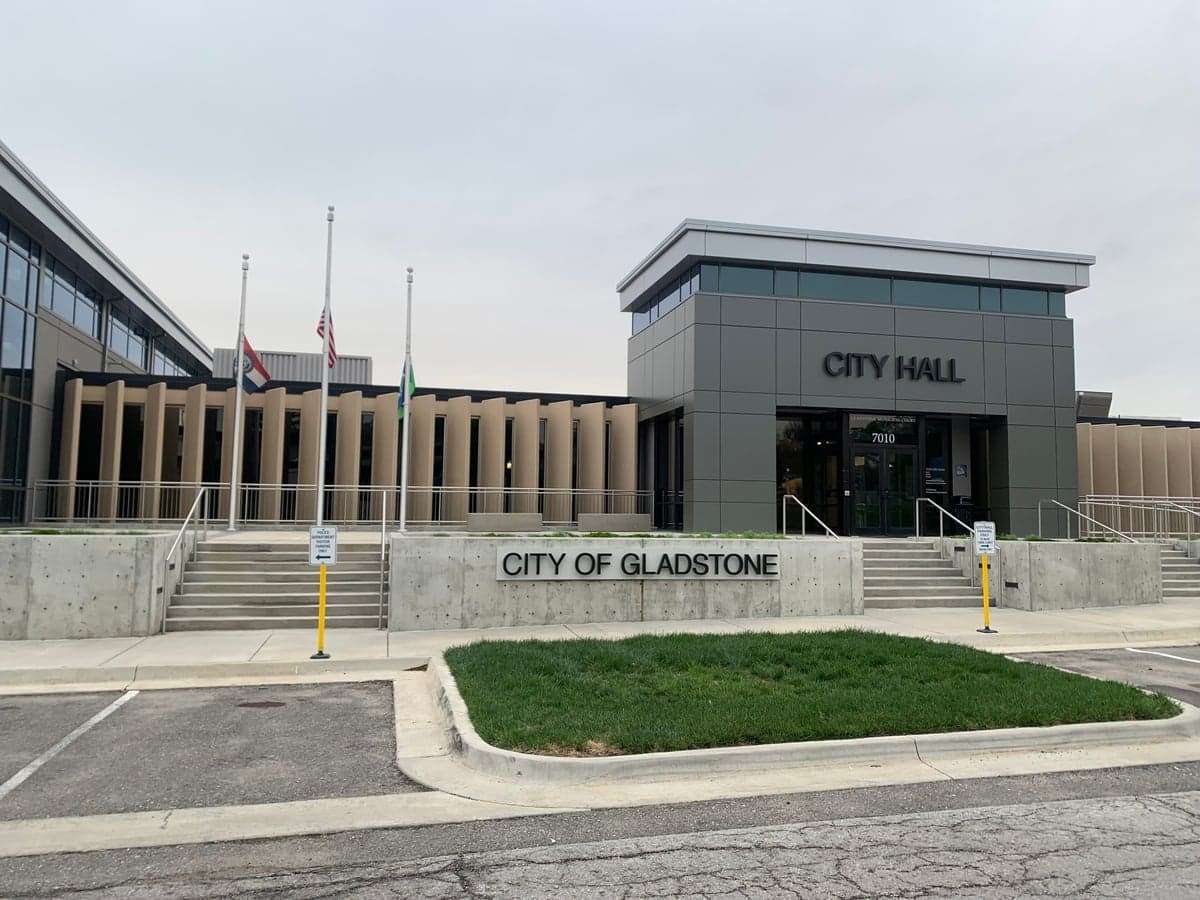
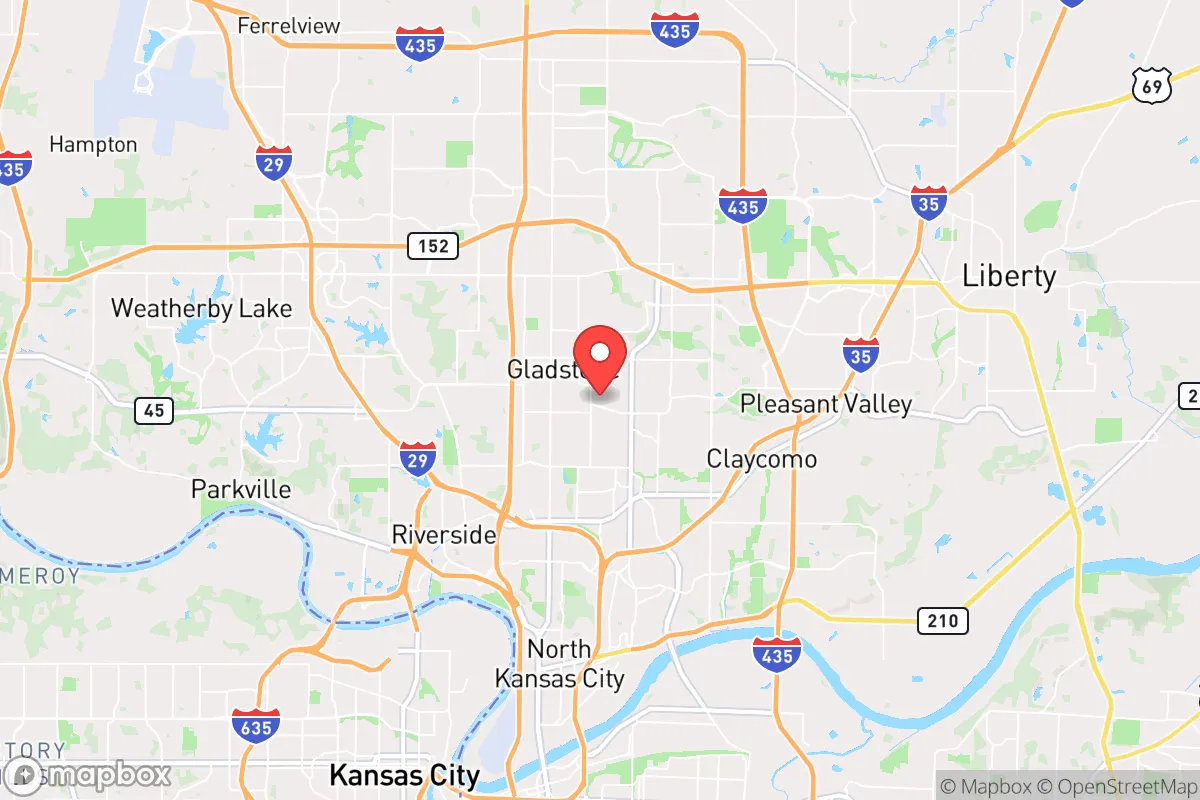
Photo: Wikipedia
Demographics of Gladstone, MO
Affluence Level in Gladstone, MO
A middle-class area roughly in line with national averages across income, home values, education, and employment.
People of Gladstone, MO
The people of Gladstone, Missouri, today form a predominantly white, middle-class suburban community of 27,069 residents, characterized by a notably low foreign-born population of just 2.9% and a growing Hispanic minority of 9.1%. The city’s identity is shaped by its post-war suburban roots, with a population density that feels comfortably spread out, and a demographic profile that leans older and more settled than the national average. Distinctive markers include a strong sense of local pride centered on the city’s parks and schools, and a population that is 73.4% white, 6.9% Black, 1.2% East/Southeast Asian, and 0.5% Indian (subcontinent).
How the city was settled and grew
Gladstone’s human history is not one of pioneer settlement but of deliberate mid-20th-century suburban expansion. The area was originally part of unincorporated Clay County, with sparse farming families and a few scattered homesteads. The city was officially incorporated in 1952, driven by a post-World War II housing boom that drew white, middle-class families from Kansas City seeking affordable homes and larger lots. The first major wave of residents settled in the Oak Grove Manor and Green Hills neighborhoods, which were developed in the 1950s and 1960s with ranch-style houses aimed at returning veterans and their young families. These early residents were overwhelmingly white, Protestant, and employed in blue-collar and lower-management jobs in Kansas City’s manufacturing and transportation sectors. The city’s growth was further fueled by the construction of Interstate 29 in the 1960s, which made Gladstone a convenient bedroom community for commuters. No significant immigrant or minority populations arrived during this period; the city’s founding character was one of homogeneous, aspirational suburbia.
Modern era (post-1965)
The post-1965 era brought gradual, but not dramatic, demographic shifts to Gladstone. Unlike many inner-ring suburbs that experienced rapid racial turnover, Gladstone’s population remained predominantly white through the 1970s and 1980s. The first notable change came in the 1990s, when a modest influx of Black families began moving into the Shady Lane and Riss Lake neighborhoods, drawn by affordable housing and the reputation of the North Kansas City School District. Today, Black residents make up 6.9% of the population, a share that has stabilized rather than grown rapidly. The Hispanic population, now 9.1%, began increasing in the 2000s, with many families settling in the Briarcliff East area and the apartments along North Oak Trafficway, often working in construction, landscaping, and service industries. The East/Southeast Asian community (1.2%) is small but visible, with a cluster of families in the Meadowbrook subdivision, many employed in healthcare and tech. The Indian subcontinent population (0.5%) is even smaller, with no single neighborhood concentration. The foreign-born share of 2.9% is well below the national average, reflecting Gladstone’s continued status as a primarily native-born, English-speaking community. The city’s college-educated rate of 31.3% is slightly below the national average, consistent with its blue-collar and middle-management heritage.
The future
Gladstone’s population is heading toward modest diversification, but the pace is slow. The white share has declined from over 85% in 2000 to 73.4% today, a trend that will likely continue as older white residents age in place and younger, more diverse families move in. The Hispanic population is the fastest-growing segment, projected to reach 12-14% by 2035, driven by both natural increase and continued migration from the Kansas City metro area. The Black population appears to be plateauing, with no major new enclaves forming. The East/Southeast Asian and Indian communities are likely to remain small, as Gladstone lacks the professional job base or ethnic institutions that attract larger immigrant populations. The city is not tribalizing into distinct ethnic enclaves; instead, it is slowly homogenizing into a more diverse but still majority-white suburb, with most new residents settling in the newer developments along the city’s northern edge, such as the Woodneath Farms area. The next 10-20 years will likely see Gladstone become slightly younger and more Hispanic, but it will remain a predominantly white, middle-class community with a stable, family-oriented character.
For someone moving in now, Gladstone is becoming a quietly diversifying suburb that retains its mid-century, family-focused identity. The city offers a safe, affordable environment with good schools and ample parks, but it is not a hub for immigrant communities or rapid demographic change. New residents, particularly those from more diverse urban areas, should expect a community that is welcoming but still largely homogeneous, with a population that values stability and local institutions over rapid transformation.

* Values derived from national, state, county, city and local statistics and may differ in a specific area. Last updated: 2026-04-30T12:46:26.000Z
Narrative content on this page is AI-generated and may contain mistakes. Verify any details that matter before acting on them.
ReloMaps may earn a commission from affiliate links at no extra cost to you.

