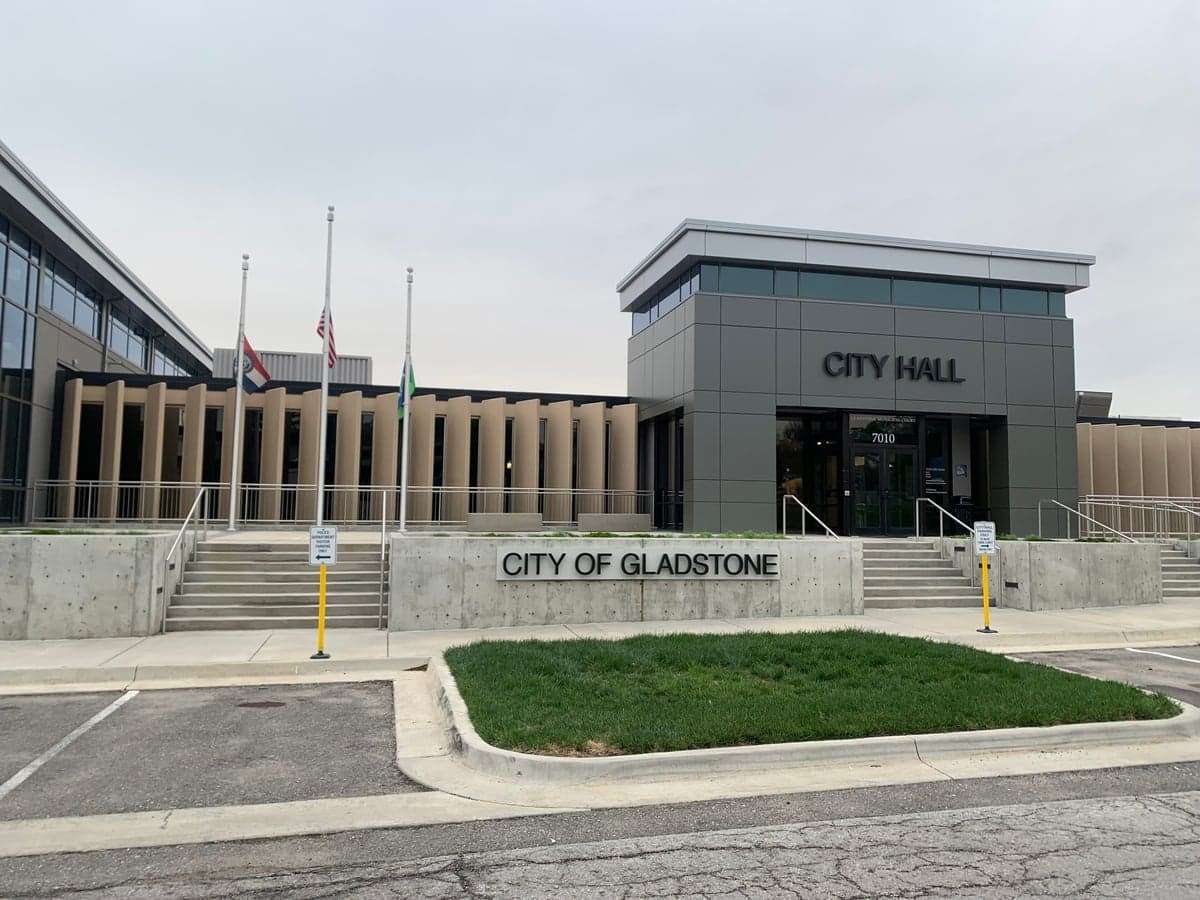

Photo: Wikipedia
Political ClimatePolitical Climate in Gladstone, MO
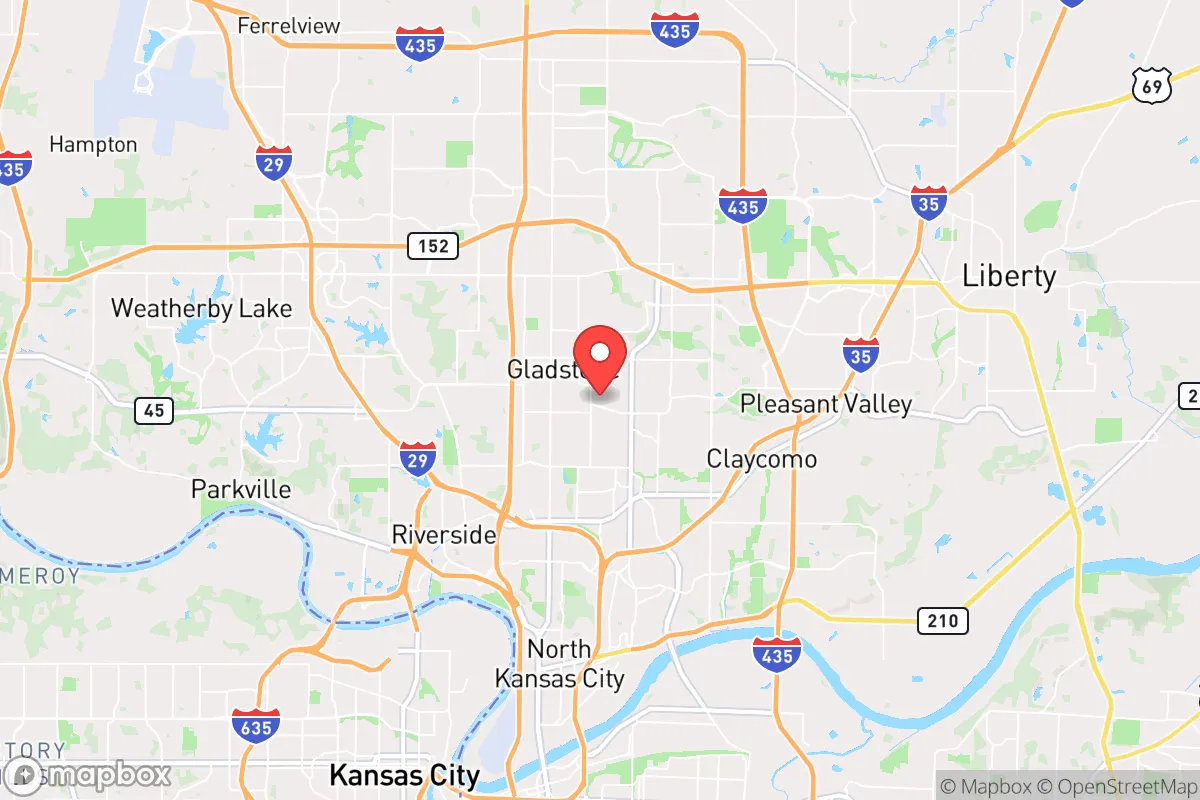
District shown is the primary district for this city’s centroid. Cities may span multiple districts.
Local Political AnalysisPolitical Analysis of Gladstone, MO
Gladstone, Missouri, sits in a political bubble that’s become increasingly detached from the surrounding Northland. With a Cook PVI of D+12, this Clay County suburb leans hard left, and it’s been trending that way for a while. If you’ve lived here as long as I have, you remember when local elections were more about potholes and parks than national culture wars. Now, it feels like every city council meeting is a referendum on progressive priorities, and the voting patterns reflect a community that’s shifting further from the traditional, common-sense values that used to define this part of the state.
How it compares
Drive ten minutes in almost any direction, and you’ll see a completely different political landscape. Head north to Liberty or Kearney, and you’re in solidly red territory—those towns vote like the rest of Clay County used to, with a focus on fiscal restraint and individual liberty. Go west to Platte County, and you’ll find a more balanced mix, but still a healthy skepticism of the kind of one-party rule you see in Gladstone. Even Kansas City, just south of us, is a mixed bag depending on the ward. Gladstone, though, stands out as an outlier. It’s not just the D+12 rating; it’s the way local policy seems to chase the latest progressive trend—whether it’s zoning changes that prioritize density over property rights, or symbolic resolutions that do nothing but signal allegiance to a national agenda. The contrast is stark, and it’s why a lot of folks I know have started looking at homes in Smithville or Excelsior Springs.
What this means for residents
For the average family or retiree who just wants to be left alone, Gladstone’s political climate creates a subtle but real pressure. You see it in the tax levies that keep creeping up for “community initiatives” that sound good on paper but rarely deliver. You see it in the school board races, where candidates backed by national progressive groups are winning seats and pushing curriculum changes that prioritize ideology over academics. And you see it in the local enforcement of state-level COVID mandates—Gladstone was quicker than its neighbors to embrace restrictions that shut down small businesses and limited personal choice. If you value your Second Amendment rights, you’ll notice the city’s ordinances are a bit more restrictive than in surrounding towns. If you run a small business, you’ll feel the weight of regulations that seem designed for a big-city bureaucracy, not a suburb of 27,000 people. The long-term trajectory is concerning: as the D+12 lean solidifies, there’s less incentive for local leaders to listen to conservative voices, and more incentive to double down on policies that erode personal freedoms.
Culturally, Gladstone still has its charms—good parks, decent schools, and a sense of community in the older neighborhoods. But the political drift is real, and it’s accelerating. The city’s embrace of “equity” initiatives and climate action plans feels out of step with a region that values practical solutions over ideological statements. If you’re considering a move here, I’d recommend spending a weekend driving around, grabbing coffee at a local spot, and talking to folks at the hardware store. You’ll get a feel for whether this place still fits what you’re looking for. For now, I’d say it’s a community in transition, and not necessarily in a direction that respects the rights and freedoms that made this area great in the first place.

State Political ClimatePolitical Climate in Missouri
State Political AnalysisPolitical Environment in the State
Missouri has long been a bellwether state, but over the past two decades it has shifted from a classic purple battleground to a solidly red stronghold, with Republicans now holding supermajorities in both legislative chambers and every statewide office except the governorship (which flipped back to Republican in 2024). The state’s overall partisan lean is roughly R+12 to R+15 in federal elections, driven by a powerful coalition of rural conservatives, suburban exurbanites, and a growing number of transplants from blue states seeking lower taxes and more personal freedom. The trajectory has been unmistakable: in 2008, Missouri voted for John McCain by a razor-thin margin; by 2024, Donald Trump carried the state by nearly 20 points, a shift that mirrors the broader realignment of the American heartland.
Urban vs. rural divide
The political map of Missouri is a stark study in contrasts. The two major metro areas—St. Louis and Kansas City—are deep blue islands in a sea of red. St. Louis City and County, along with Jackson County (Kansas City), consistently deliver 60-70% of their votes to Democrats, driven by union legacy, urban demographics, and a growing progressive activist class. But the real story is the massive red wave that dominates the rest of the state. The I-44 corridor from Springfield to Joplin is among the most conservative regions in the country, with counties like Christian, Greene, and Jasper routinely voting 75-80% Republican. The Bootheel region in the southeast, once a Democratic stronghold, has flipped hard red over the past decade, driven by cultural conservatism and opposition to federal gun and energy policies. Suburban counties like St. Charles (west of St. Louis) and Cass (south of Kansas City) have become reliably red, while Boone County (Columbia) remains a blue-leaning outlier due to the University of Missouri. The rural-urban divide is so pronounced that you can drive 20 minutes from downtown St. Louis into Jefferson County and feel like you’ve entered a different political universe—one where “Missouri values” still mean gun rights, low taxes, and a healthy skepticism of federal authority.
Policy environment
Missouri’s policy environment is a conservative’s dream, especially for those fleeing high-tax, high-regulation states. The state has a flat income tax rate of 4.5% (down from 6% in 202 inertia), with a path to 3.5% by 2028, and no estate or inheritance tax. Property taxes are among the lowest in the nation, averaging about 0.8% of assessed value. The regulatory posture is aggressively pro-business: Missouri is a right-to-work state (though the law was repealed by ballot initiative in 2018, the legislature has since passed a new version), and occupational licensing requirements have been steadily rolled back. Education policy is a mixed bag: the state has a robust school choice program, including charter schools in St. Louis and Kansas City, and a growing homeschool community that faces minimal state oversight. However, the state’s public school system ranks near the bottom nationally in funding per pupil, and the Missouri Department of Elementary and Secondary Education has been criticized by conservatives for pushing DEI and CRT initiatives in some districts. Healthcare policy is largely hands-off: Missouri did not expand Medicaid until 2021 (via ballot initiative), and the state has some of the loosest telemedicine and direct-primary-care laws in the country. Election laws have been tightened significantly: voter ID is required, absentee ballot drop boxes are limited, and the state purges voter rolls regularly. The 2022 election integrity law (SB 775) banned private funding of election administration and shortened the absentee ballot window, moves that have drawn praise from conservatives and lawsuits from the left.
Trajectory & freedom
On the freedom front, Missouri is moving in a decidedly libertarian-conservative direction, though not without some concerning backsliding. The biggest win for personal liberty in recent years was the Second Amendment Preservation Act (SAPA) of 2021, which declares federal gun laws that infringe on the right to keep and bear arms as “null and void” in Missouri. This law has been challenged in federal court, but it remains on the books and has made Missouri a de facto sanctuary state for gun owners. On parental rights, the Missouri Parents’ Bill of Rights (HB 2415, 2024) requires schools to notify parents of any changes to a child’s mental, emotional, or physical health, and prohibits instruction on sexual orientation or gender identity in grades K-3. This law has been a flashpoint, but it’s exactly what many conservative families moving from blue states want to hear. On medical freedom, Missouri passed SB 51 in 2023, which prohibits COVID-19 vaccine mandates by private employers and government entities, and bans mask mandates in schools. Property rights have been strengthened by the 2023 “Takings” law, which requires the state to compensate landowners for any regulatory action that reduces property value by more than 50%. The concerning trend is the slow creep of government overreach in the name of “public health” or “safety”—the state’s 2024 “Safe Schools” law requires armed security in every public school, which some see as an unfunded mandate that could lead to higher local taxes. Overall, though, Missouri is one of the few states where the legislature is actively trying to shrink government, not grow it.
Civil unrest & political movements
Missouri has a history of civil unrest that is impossible to ignore. The Ferguson protests of 2014, following the shooting of Michael Brown, were a national flashpoint that exposed deep racial tensions in the St. Louis region and led to the rise of the Black Lives Matter movement. While the protests have largely subsided, the political aftershocks are still felt: St. Louis County has seen a wave of progressive prosecutors and school board members elected, while the state legislature has responded with a series of “law and order” bills that increase penalties for rioting and blocking highways. On the right, the Missouri Freedom Caucus has become a powerful force in the statehouse, pushing for even more aggressive nullification of federal laws, including a 2024 bill that would ban enforcement of any federal gun or immigration law in the state. Immigration politics are relatively quiet compared to border states, but Springfield has become a flashpoint due to a surge of Haitian immigrants in recent years, leading to local tensions and a 2024 state law that requires all employers to use E-Verify. Election integrity remains a hot-button issue: the 2020 election saw no major scandals, but the 2022 law banning private funding of elections was a direct response to concerns about Zuckerberg-style “grants” influencing local election offices. There is also a small but vocal “Show-Me State” secession movement that advocates for Missouri to leave the Union, though it remains a fringe idea with no serious political traction.
Projection
Over the next 5-10 years, Missouri is likely to become even more conservative, driven by two powerful forces: in-migration from blue states and the continued exodus of young, liberal-leaning residents from St. Louis and Kansas City to coastal cities. The state’s population is growing fastest in the Springfield-Branson corridor and the Lake of the Ozarks region, both of which are deeply red. The St. Louis metro is projected to continue its slow population decline, which will further reduce the Democratic vote share in statewide elections. The state legislature will likely push for a flat income tax of 3% or lower, further constitutional protections for gun rights, and a complete ban on abortion (the current 8-week ban is likely to be tightened to a near-total ban if the courts allow it). The wildcard is the 2028 gubernatorial election: if a moderate Republican wins, the state could see a slight moderation on issues like Medicaid expansion and education funding. But if the Freedom Caucus continues to gain power, expect more nullification bills, a push for a state constitutional convention, and a full-throated embrace of “constitutional carry” (already in place) and school choice vouchers. For someone moving in now, the Missouri of 2035 will likely look a lot like the Missouri of today, only more so: lower taxes, fewer regulations, and a political culture that is unapologetically conservative.
For a conservative family or individual looking to relocate, Missouri offers a rare combination of low taxes, strong gun rights, parental control over education, and a political culture that is actively pushing back against federal overreach. The trade-offs are real: the public schools in rural areas are underfunded, the healthcare system is fragmented, and the urban crime rates in St. Louis and Kansas City are among the highest in the nation. But if you’re willing to live in the suburbs or exurbs—places like St. Charles, Lee’s Summit, or Nixa—you can enjoy a high quality of life with a government that largely leaves you alone. Just be prepared for the summers: they’re humid, the mosquitoes are relentless, and the political debates at the local diner can get heated. But that’s Missouri—a place where freedom still means something, and where the people are friendly, even when they disagree.
* Values derived from national, state, county, city and local statistics and may differ in a specific area. Last updated: 2026-04-30T12:46:26.000Z
Narrative content on this page is AI-generated and may contain mistakes. Verify any details that matter before acting on them.
ReloMaps may earn a commission from affiliate links at no extra cost to you.

