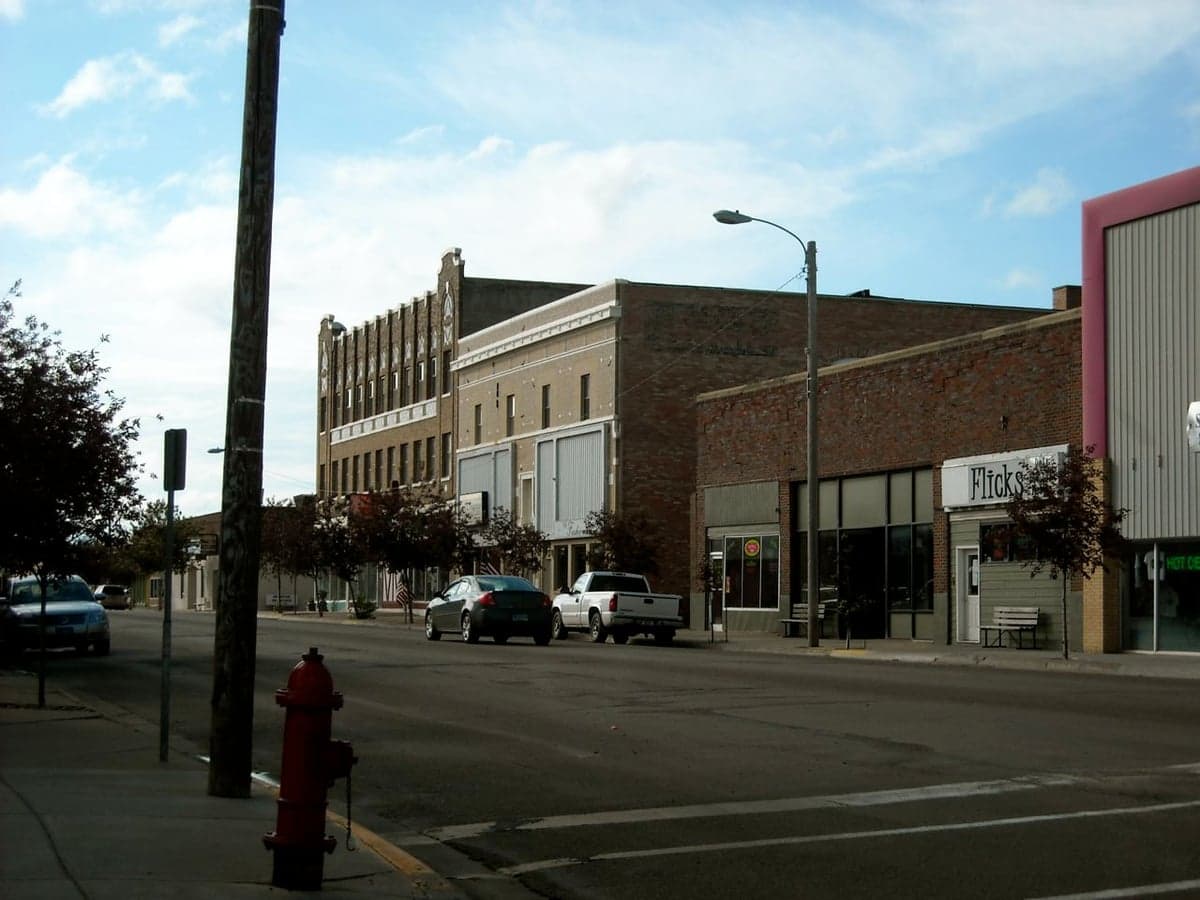
Photo: Wikipedia
Strategic Assessment of Glasgow, MT
Workable tactical position. Some exposure to population density or targets, but generally defensible in a crisis.
What does the Strategic Assessment tell us?
Our Strategic Assessment grades tactical survivability of an area. Major population centers, military targets, fallout zones, natural disasters, and border exposure all drive risk — lower exposure means a more defensible position in a crisis.
This is heavily inspired by Joel Skousen's Strategic Relocation book. Highly recommended you checkout the book ($)What does this tell us?
Our Strategic Assessment grades tactical survivability of an area. Major population centers, military targets, fallout zones, natural disasters, and border exposure all drive risk — lower exposure means a more defensible position in a crisis.
This is heavily inspired by Joel Skousen's Strategic Relocation book. Highly recommended you checkout the book ($)Strategic Pillars

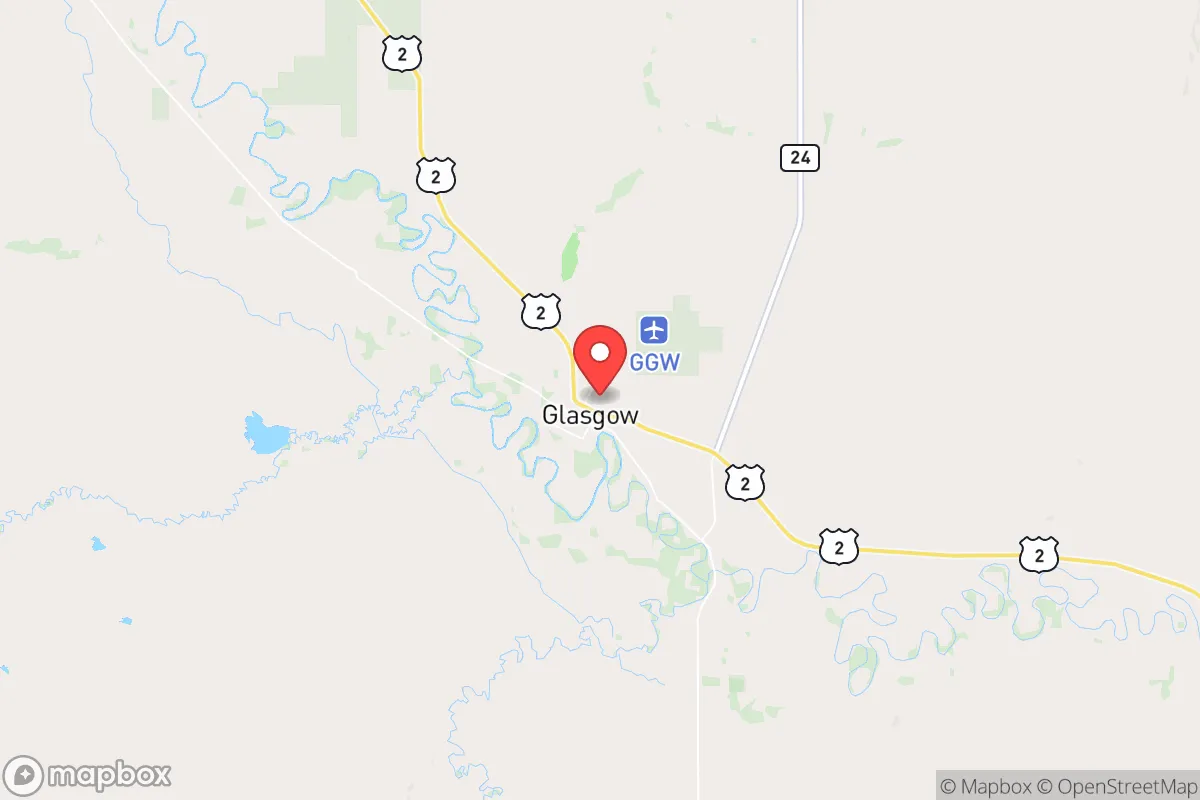
Key Distances
Regional Safe Places
Below is our recommended "safe zones" in Montana and the surrounding area based on our strategic heuristics. For most people, it's unrealistic to live in a “safe zone” full-time due to work, family or other personal reasons. They tend to be more rural. However, many of these areas are perfect for second homes and retreat properties that double as a vacation home or even a short-term rental.
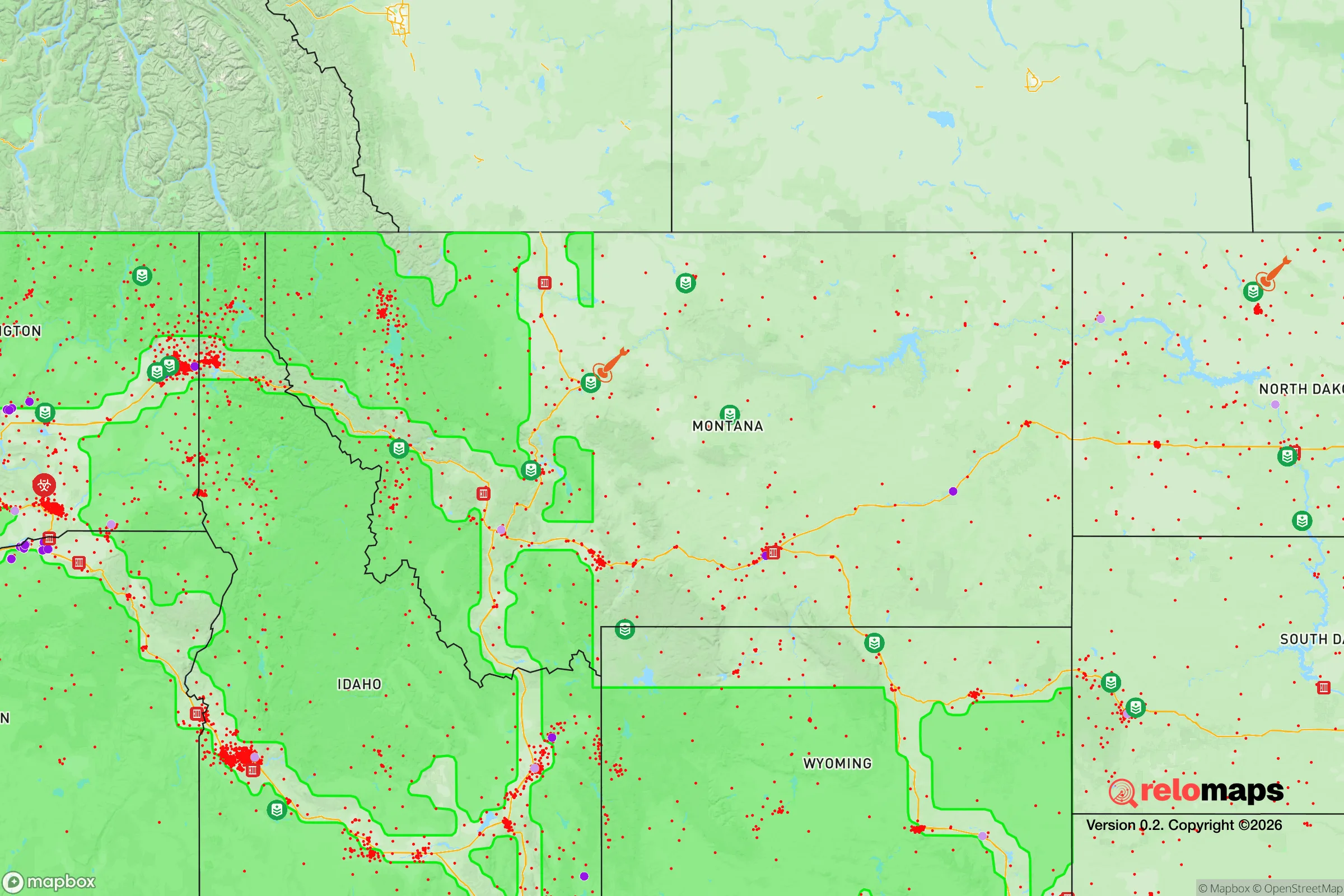


Important Note: For informational purposes only. This does not mean nothing bad ever happens in the green zones. Please use common sense. This is based on public data and modeled with AI. We tried to take a conservative approach but mistakes happen. We update this regularly as new information becomes available.
Solar Generator Recommendations
Backup power matters more here than in safer locations. We've picked three solar generators across budgets and capacity tiers — start with the budget unit if you only need a few essentials, or step up if you want to run a fridge and HVAC for days at a time.

Jackery Portable Power Station Explorer 300
Budget OptionPower on the Go: Weighing only 11 lbs, it's convenient to set up and store with book-sized foldable solar panels

BLUETTI Portable Power Station AC180
Designed for both indoor and outdoor scenarios, AC180 is highly capable as it has a robost capacity and continuous output power.

EF ECOFLOW DELTA Pro Ultra Power Station
Upgraded PickEcoFlow DELTA Pro Ultra is a whole-home energy system designed to grow with your family. Integrated with the Smart Home Panel 2, it scales to meet your evolving energy needs — keeping your home powered, intelligent, and secure through every stage of life.
We earn a commission, at no additional cost to you.
Strategic Assessment Analysis
Glasgow, Montana, offers a strategic relocation option for those prioritizing physical distance from major population centers and critical infrastructure targets. Situated in the northeastern corner of the state, this town of roughly 3,200 people sits at the intersection of U.S. Highway 2 and Montana Highway 24, placing it over 250 miles from the nearest major city—Billings—and over 400 miles from the Minneapolis-St. Paul metro area. This isolation is the core of its resilience value: it is far enough from the interstates, rail hubs, and military installations that would be primary targets in a major conflict or civil disruption, yet still connected enough for resupply and communication. The area’s low population density—Valley County has about 7.5 people per square mile—means that in a crisis, competition for local resources would be minimal compared to suburban or exurban zones.
Geographic position and natural advantages for long-term security
Glasgow’s location along the Missouri River provides a reliable freshwater source, a critical asset for any long-term survival scenario. The river is not a narrow creek but a substantial waterway, fed by the Fort Peck Dam just 20 miles upstream. This dam, one of the largest earth-filled dams in the world, creates Fort Peck Lake—a reservoir with over 1,500 miles of shoreline and a capacity of 18 million acre-feet. For a relocator, this means water security is not dependent on municipal infrastructure; a simple hand pump or gravity-fed system could draw from the river or lake indefinitely. The surrounding terrain is flat to gently rolling prairie, offering long sightlines that aid in situational awareness—a tactical advantage over wooded or mountainous regions where threats can approach unseen. Winters are harsh, with average January highs around 20°F and frequent wind chills below zero, but this climate also acts as a natural deterrent to transient populations and unprepared travelers. The growing season is short—roughly 120 days—but the fertile glacial till soils can support dryland wheat, barley, and alfalfa, making small-scale agriculture feasible for those willing to learn.
Risks, exposures, and proximity to fallout-relevant landmarks
The primary risk in Glasgow is its proximity to the Fort Peck Dam itself. While the dam provides water and hydroelectric power, it also represents a single point of failure. A catastrophic breach—whether from sabotage, earthquake, or structural failure—would inundate the Missouri River valley downstream, including Glasgow. The dam is regularly inspected and considered stable, but in a prepper’s calculus, living within the inundation zone of a major dam is a calculated risk. Beyond that, Glasgow’s isolation works in its favor regarding fallout exposure. The nearest significant military target is Malmstrom Air Force Base near Great Falls, roughly 250 miles southwest, which houses Minuteman III ICBM silos. The nearest nuclear power plant is the now-decommissioned Fort St. Vrain in Colorado, over 600 miles away. No major rail yards, oil refineries, or chemical plants exist within a 100-mile radius. The closest interstate highway (I-94) is 90 miles south, meaning that in a mass evacuation scenario, Glasgow would not be on any primary escape route. This reduces the risk of encountering desperate, armed refugees or military checkpoints. The primary natural hazard is severe winter storms and occasional tornadoes (EF2 or less historically), but these are manageable with proper shelter and supplies.
Practical resilience for a relocator: food, water, energy, and defensibility
For a single individual or family looking to establish a resilient homestead, Glasgow offers several concrete advantages. Water: As noted, the Missouri River and Fort Peck Lake provide abundant surface water. Groundwater is also accessible via shallow wells (typically 30-80 feet deep in the valley), with good quality but moderate hardness. A well with a hand pump or solar-powered submersible pump would provide indefinite water independence. Food: The local economy is agricultural—wheat, barley, and cattle are the mainstays. The Glasgow Farmers Market operates seasonally, and local ranchers often sell beef directly. For long-term storage, the dry climate (average annual precipitation under 14 inches) reduces spoilage risks for grains and dehydrated foods. Hunting is viable: mule deer, white-tailed deer, and pronghorn antelope are abundant, and the Missouri River offers catfish and walleye. Energy: Glasgow is served by the Fort Peck Dam’s hydroelectric plant, which provides reliable grid power. However, for off-grid resilience, the area averages 200+ sunny days per year, making solar photovoltaic systems viable. Wind is also a resource—average wind speeds are 12-15 mph—but small wind turbines require more maintenance. Propane is widely available for heating and cooking, and firewood can be sourced from cottonwood stands along the river, though it burns quickly. Defensibility: The town itself is compact, with a grid layout that allows for easy observation of approaching vehicles. Rural properties outside town offer even greater security: a house set back a quarter-mile from the road, with a clear view of the approach, is common. The local sheriff’s office has 8 deputies for the entire county, so law enforcement response times in a crisis would be measured in hours, not minutes. This means self-reliance in security is not optional—it’s expected. The local gun culture is strong, with the Glasgow Rod and Gun Club offering ranges and training. There is no state-level magazine capacity restriction or assault weapons ban in Montana, and the county sheriff is generally supportive of Second Amendment rights.
The overall strategic picture for Glasgow is one of trade-offs. You gain extreme isolation, abundant water, and a low-probability target profile, but you trade away proximity to specialized medical care (the nearest hospital with a trauma center is in Billings, 4 hours away), diverse employment options, and the social infrastructure of a larger community. For a relocator whose primary concern is surviving a major societal disruption—whether from economic collapse, civil unrest, or a large-scale conflict—Glasgow offers a defensible, resource-rich location that is unlikely to be a primary or secondary target. The harsh winters and remote location will filter out those who are not serious about preparationtas. If you can handle the isolation and the cold, and you have the skills to draw water, grow food, and defend your property, Glasgow is one of the better options in the lower 48 for long-term strategic relocation. It is not a place for those seeking comfort or convenience—it is a place for those who understand that security often comes at the cost of convenience.

* Values derived from national, state, county, city and local statistics and may differ in a specific area. Last updated: 2026-04-30T01:05:10.000Z
Narrative content on this page is AI-generated and may contain mistakes. Verify any details that matter before acting on them.
ReloMaps may earn a commission from affiliate links at no extra cost to you.

