Demographics of Glen Dale, WV
Affluence Level in Glen Dale, WV
A middle-class area roughly in line with national averages across income, home values, education, and employment.
People of Glen Dale, WV
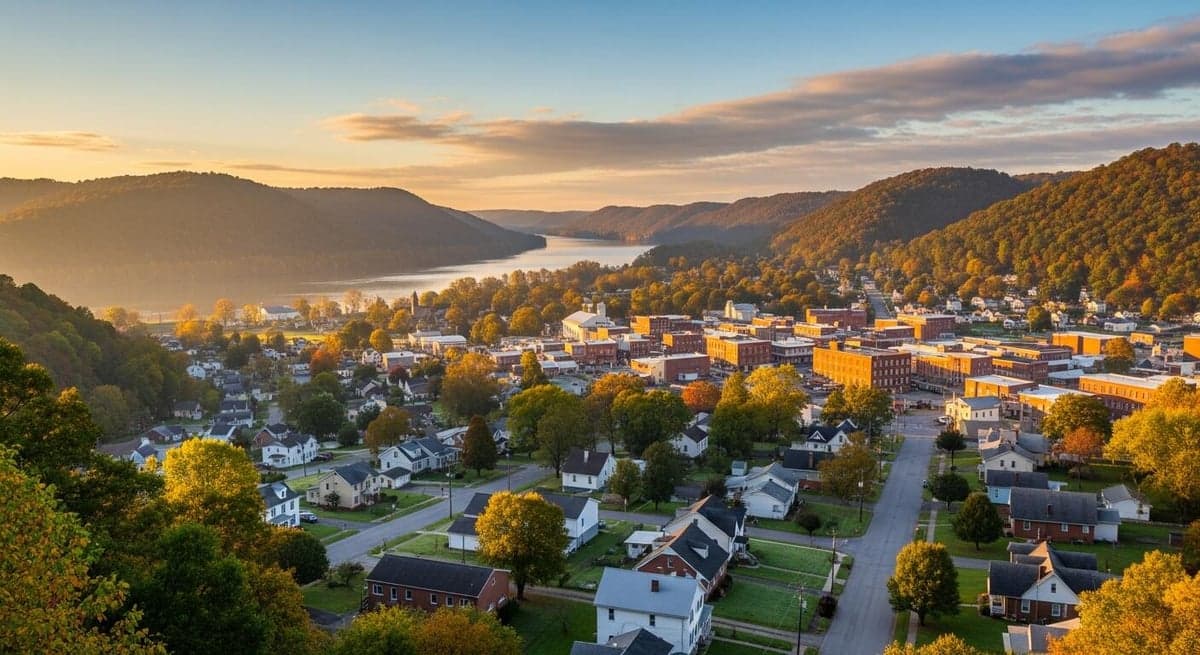
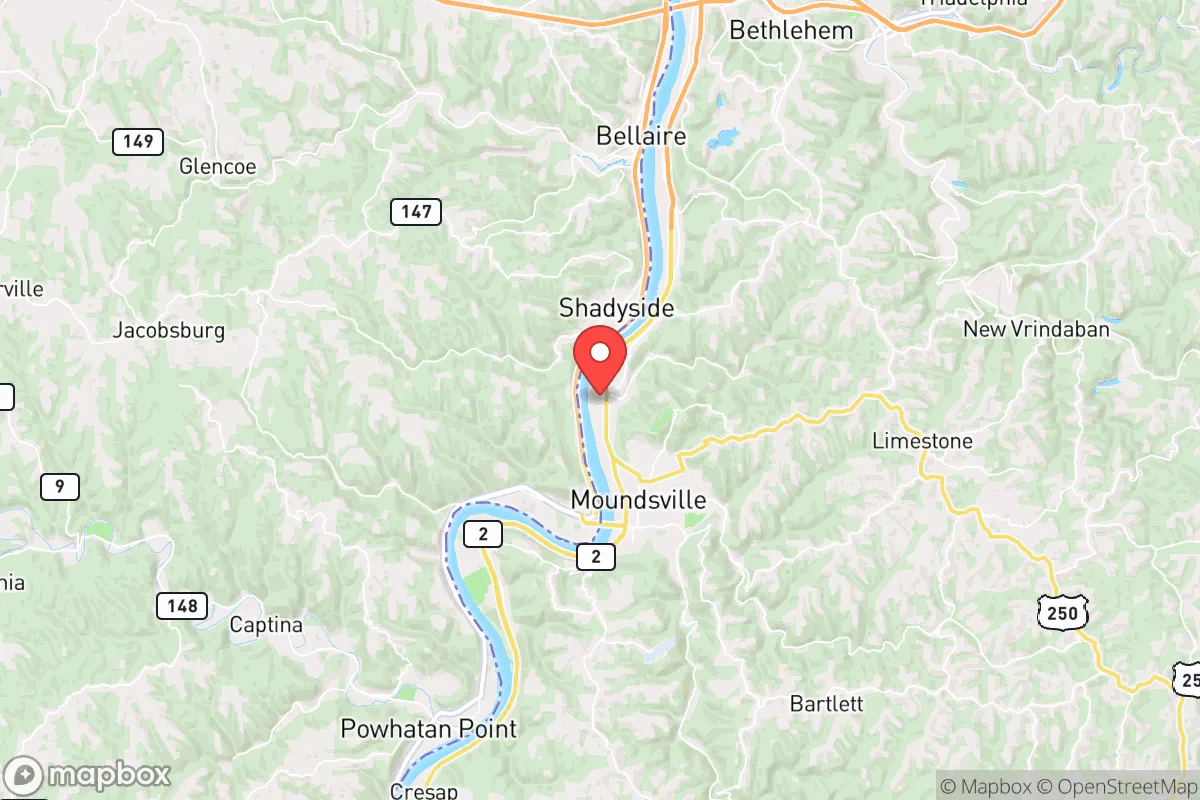
The people of Glen Dale, West Virginia, today number 1,517, forming a predominantly white, older, and settled community where 95.1% of residents identify as White alone. The city is characterized by a quiet, small-town density along the Ohio River, with a distinctive identity rooted in its industrial past and family-oriented present. Nearly 40% of adults hold a college degree, a figure that outpaces many neighboring towns, reflecting a population that values education and stability. Glen Dale is not a transient or growing hub; it is a place where generations have stayed, and newcomers are drawn by affordability and a slower pace of life.
How the city was settled and grew
Glen Dale’s population history begins with the arrival of European-American settlers in the late 18th and early 19th centuries, drawn by land grants along the Ohio River. The city’s original core, known as Glen Dale Station, grew around the Baltimore and Ohio Railroad depot, which connected the area to broader markets. By the late 1800s, the discovery of natural gas and the establishment of glass and pottery factories—most notably the Hazel-Atlas Glass Company—triggered the first major population wave. Workers from German and Irish immigrant families settled in the South End and along Maple Avenue, building modest frame houses near the factories. A second wave came in the early 1900s as the glass industry expanded, drawing Italian and Eastern European laborers who formed a tight-knit enclave in the North Glen Dale neighborhood, near the riverfront. By 1950, the population peaked near 2,500, with the city’s character defined by blue-collar stability and ethnic Catholic parishes.
Modern era (post-1965)
After the 1965 Immigration and Nationality Act, Glen Dale saw virtually no new foreign-born settlement—the city’s foreign-born population today stands at just 0.1%. Instead, the post-1965 era was defined by domestic out-migration and suburbanization. The decline of the glass industry in the 1970s and 1980s led many younger families to leave for larger cities, while those who remained were largely the descendants of the original European immigrant waves. The Hillcrest and Valley View neighborhoods, developed in the 1960s and 1970s, absorbed the small number of white-collar professionals who commuted to nearby Wheeling or Moundsville. The city’s racial composition remained overwhelmingly White, with Black residents (0.7%) concentrated in a few scattered households rather than any distinct neighborhood. Hispanic residents (1.7%) and East/Southeast Asian residents (0.1%) are recent, tiny additions, mostly living in the Downtown Glen Dale area near newer apartment complexes. No Indian-subcontinent population is recorded. The city effectively homogenized during this period, with no significant enclave formation among any non-White group.
The future
Glen Dale’s population is heading toward further homogenization and gradual decline. The city lost roughly 40% of its peak population between 1950 and 2020, and projections suggest continued slow shrinkage as the remaining older residents age out and younger adults leave for job markets in Pittsburgh or Columbus. The small Hispanic and East/Southeast Asian populations are not growing—they are plateauing at negligible levels, with no signs of chain migration or community formation. The city is not tribalizing into distinct enclaves; rather, it is becoming more uniformly White and older. The Riverside Drive corridor, once a mix of working-class families, now sees homes occupied by retirees and second-home buyers. The next 10–20 years will likely see Glen Dale become a bedroom community for a handful of remote workers and retirees, with its demographic profile remaining static unless a major employer relocates to the area—an unlikely scenario given regional economic trends.
For someone moving in now, Glen Dale offers a stable, low-diversity, and low-growth environment where the population is overwhelmingly White, older, and locally rooted. It is not a place of demographic change or new immigrant communities; it is a city that has largely finished its demographic story. New residents will find a quiet, affordable town where the people are friendly but the population is not expanding, and where the future looks much like the present—small, settled, and slow-moving.

* Values derived from national, state, county, city and local statistics and may differ in a specific area. Last updated: 2026-04-23T06:09:35.000Z
Narrative content on this page is AI-generated and may contain mistakes. Verify any details that matter before acting on them.
ReloMaps may earn a commission from affiliate links at no extra cost to you.

