Political ClimatePolitical Climate in Glen Dale, WV
District shown is the primary district for this city’s centroid. Cities may span multiple districts.
Local Political AnalysisPolitical Analysis of Glen Dale, WV
Glen Dale, West Virginia, sits squarely in deep-red territory, with a Cook PVI of R+20 that reflects a community where conservative values aren't just a preference—they're the default. This isn't a place that's drifted left over the years; if anything, the area has held its ground while the rest of the country has gotten more unpredictable. You'll find a strong, consistent Republican lean in local elections, and that's been the case for as long as most folks around here can remember. The political climate here is stable, rooted in a belief in limited government and personal responsibility, and there's a healthy skepticism of any policy that feels like it's coming from outside the region.
How it compares
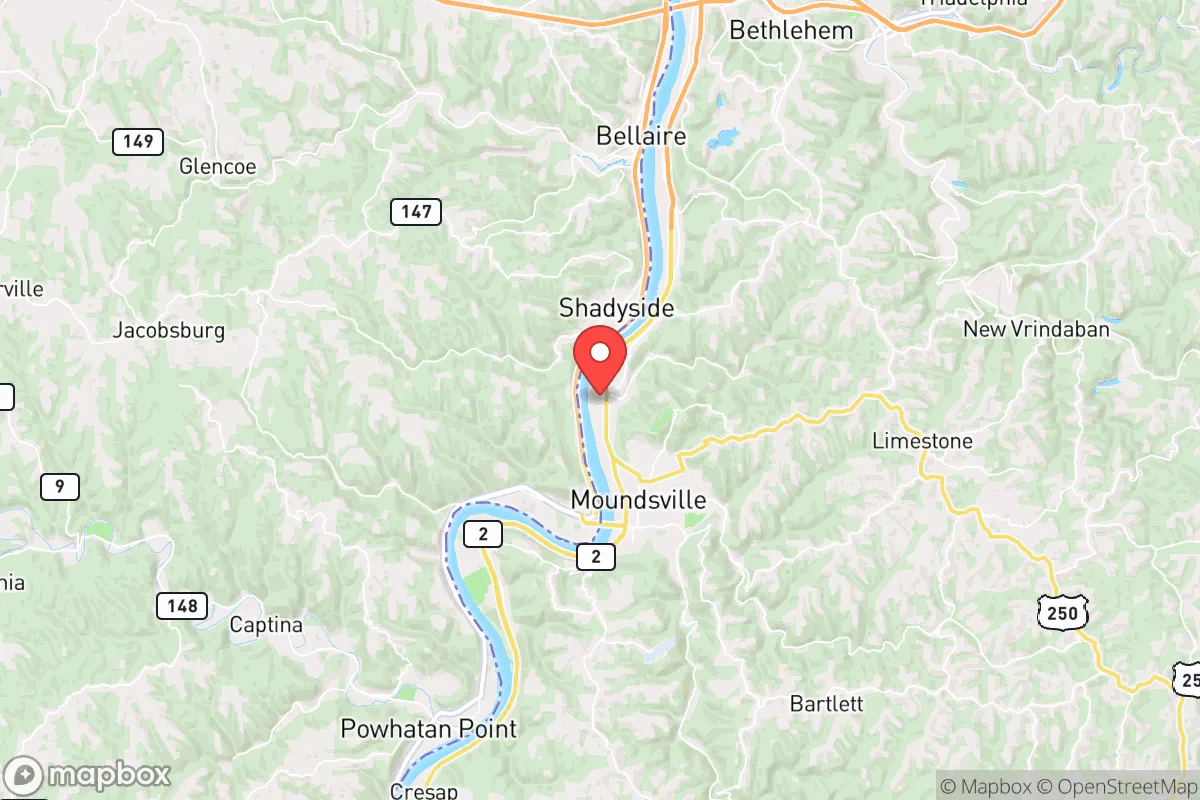
Drive twenty minutes south to Moundsville, and you'll see a similar political landscape—both towns are in Marshall County, which reliably votes red. But head east toward Wheeling, and you start to feel a shift. Wheeling, with its larger population and university influence, has a more mixed political scene, with pockets of progressive activism that would feel out of place in Glen Dale. The contrast is sharp: in Glen Dale, you're unlikely to hear much talk about defunding the police or radical environmental regulations, while in Wheeling, those conversations are becoming more common. The surrounding rural areas, like those around Benwood and McMechen, lean even more conservative, with a focus on gun rights and local control that makes Glen Dale feel like the moderate center of a very conservative region.
What this means for residents
For the people who live here, the political climate means a few practical things. First, there's a general trust in local law enforcement and a low tolerance for any talk of reducing their authority—most residents see the police as neighbors, not an occupying force. Second, taxes stay relatively low, and there's little appetite for new government programs that would require more revenue. The school board and city council tend to focus on basics: roads, utilities, and keeping the town safe, rather than social experiments. You won't see a lot of divisive cultural battles here because the community largely agrees on the fundamentals. That said, there's a growing concern about state-level mandates from Charleston, especially around energy policy and land use, which some see as a creeping overreach into how locals live and work.
One cultural distinction worth noting is the area's strong sense of self-reliance. People here don't look to the government to solve their problems—they handle things through churches, family networks, and volunteer fire departments. There's a quiet but firm resistance to any policy that feels like it's telling people how to live their lives, whether that's mask mandates, vaccine passports, or zoning restrictions that limit what you can do on your own property. The long-term trajectory looks stable: Glen Dale will likely stay conservative as long as the economy remains tied to traditional industries like natural gas and manufacturing. But if outside influences—like remote workers moving in from blue states or federal pressure on energy—start to change the local economy, you might see a slow shift. For now, though, this is a place where the old values hold, and that's not changing anytime soon.

State Political ClimatePolitical Climate in West Virginia
State Political AnalysisPolitical Environment in the State
West Virginia has long been one of the most reliably Republican states in the nation, but that wasn’t always the case. As recently as the 1990s, it was a Democratic stronghold at the state and local level, with registered Democrats outnumbering Republicans by a 2-to-1 margin. The shift began in earnest around 2000, accelerated by the national Democratic Party’s move left on cultural issues like gun rights, energy policy, and religious liberty. By 2024, Donald Trump carried the state by nearly 40 points, and Republicans now hold supermajorities in both chambers of the legislature, the governor’s office, and all three U.S. House seats. The state’s political DNA is now deeply conservative, but the transformation wasn’t uniform — it played out differently in the state’s few urban pockets versus its vast rural expanse.
Urban vs. rural divide
The political map of West Virginia is a study in contrasts. The state’s two largest metros — Charleston and Huntington — are the only areas where Democrats still have a pulse. Kanawha County (Charleston) voted for Trump by a relatively modest 12 points in 2024, while Cabell County (Huntington) went +18 for Trump. Compare that to the state’s rural strongholds: Mingo County voted +58 for Trump, McDowell County +56, and Wetzel County +52. The Eastern Panhandle, anchored by Martinsburg and Charles Town, has become a fascinating political battleground. This region, once reliably Democratic due to unionized manufacturing and railroad workers, has flipped hard red as new residents from the D.C. suburbs (many fleeing high taxes and crime) have moved in. Berkeley County, the state’s fastest-growing county, went +36 for Trump in 2024. The Morgantown area (Monongalia County) is the state’s most politically divided metro — home to West Virginia University, it has a sizable progressive student population, but the surrounding rural precincts keep it red (+12 for Trump). The Wheeling and Weirton areas in the Northern Panhandle remain conservative but with a working-class, union-influenced flavor that occasionally produces primary challenges to establishment Republicans.
Policy environment
West Virginia’s policy environment is among the most conservative in the nation, and it’s been getting more so. The state has no personal income tax on Social Security benefits, and in 2023, the legislature passed a phased elimination of the state’s personal income tax — currently at 3.99% — with a goal of full repeal by 2030. Property taxes are among the lowest in the country, capped by the state constitution at 1.5% of assessed value. The regulatory posture is aggressively pro-business: West Virginia is a right-to-work state, has no state-level minimum wage above the federal $7.25, and has a “one-stop” permitting process for new businesses. On education, the state passed a robust school choice law in 2021 (HB 2013) that created Education Savings Accounts (ESAs) worth roughly $4,600 per student, usable for private school tuition, homeschooling materials, or tutoring. The law survived a court challenge in 2023. Healthcare is a mixed bag: the state expanded Medicaid under the Affordable Care Act in 2014, but the legislature has resisted further expansion of government-run programs. Election laws are among the most secure in the nation — West Virginia requires photo ID to vote, has no same-day registration, and conducts post-election audits. The state has not implemented no-excuse absentee voting or universal mail-in ballots.
Trajectory & freedom
West Virginia is trending more free, not less, across nearly every metric of personal liberty. The 2024 legislative session was a landmark for gun rights: the state passed constitutional carry (permitless carry) in 2022, and in 2024, it passed a law prohibiting state and local law enforcement from enforcing any future federal gun bans or red-flag laws (HB 4354). On parental rights, the state passed the “Parental Bill of Rights” (HB 4010) in 2023, requiring schools to notify parents of any changes to a child’s mental, emotional, or physical health — effectively banning secret gender-transition policies. The state also passed a law in 2023 banning transgender athletes from female sports (HB 3293) and a law prohibiting gender-affirming care for minors (SB 157). On medical autonomy, West Virginia has no vaccine mandate for adults, and the legislature passed a law in 2023 prohibiting employers from requiring COVID-19 vaccines as a condition of employment. Property rights are strong: the state has no statewide zoning, and the “Right to Farm” law protects agricultural operations from nuisance lawsuits. The only area where freedom has arguably contracted is in the realm of abortion: the state passed a near-total ban in 2022 (HB 302), with exceptions only for rape, incest, and medical emergencies. For conservative-leaning residents, this is a feature, not a bug.
Civil unrest & political movements
West Virginia has a history of labor militancy, but modern political activism is dominated by the right. The 2018 teachers’ strike, which shut down schools across the state for nine days, was a rare moment of left-wing mobilization — but it was driven by pay and benefits, not cultural issues. Since then, the most visible political movements have been on the right: the “Second Amendment Sanctuary” movement swept the state in 2020, with 48 of 55 counties passing resolutions declaring themselves sanctuaries from any future federal gun restrictions. The “Moms for Liberty” chapter in Berkeley County has been particularly active, successfully pushing for book removals and curriculum transparency in local schools. Immigration politics are largely a non-issue — West Virginia has one of the smallest foreign-born populations in the country (roughly 1.5%), and there are no sanctuary cities. The state has a law (SB 10) requiring law enforcement to cooperate with federal immigration authorities. Election integrity controversies have been minimal; the state’s voter ID law and paper ballot system have produced no major disputes. The most visible flashpoint for a new resident would likely be the ongoing debate over energy transition — the state’s coal industry has been in decline for decades, and there is a palpable tension between the old economy and the new, with some communities embracing natural gas and others fighting renewable energy projects.
Projection
Over the next 5-10 years, West Virginia is likely to become more conservative, not less. The demographic trends are clear: the state is losing population overall (down 3.2% since 2020), but the people leaving are disproportionately younger and more liberal-leaning, while the people moving in — particularly to the Eastern Panhandle — are often conservative refugees from high-tax, high-crime states like Maryland, Virginia, and New York. The state’s median age is 42.8, among the highest in the nation, and the population is overwhelmingly white (93%). There is no significant in-migration of progressive-leaning groups that would shift the political balance. The income tax elimination, if fully implemented by 2030, will likely accelerate in-migration of remote workers and retirees who value low taxes and personal freedom. The only wild card is the energy transition: if the federal government aggressively pushes green energy mandates, West Virginia’s coal-dependent communities could face economic devastation, potentially fueling populist backlash against both parties. But for now, the trajectory is clear: West Virginia is solidifying as one of the most reliably conservative states in the union, with a policy environment that increasingly prioritizes individual liberty, limited government, and cultural traditionalism.
For a conservative-leaning individual or family considering relocation, West Virginia offers a rare combination: low taxes, strong gun rights, school choice, parental control over education, and a political culture that actively resists federal overreach. The trade-offs are real — the economy is weaker than the national average, healthcare access is limited in rural areas, and the state’s infrastructure (roads, broadband) is uneven. But if your priority is living in a place where the government largely leaves you alone, where your children’s education is under your control, and where your Second Amendment rights are not up for debate, West Virginia is one of the few states that can deliver on that promise. The key is choosing the right location: the Eastern Panhandle for proximity to D.C. jobs and amenities, the Morgantown area for a college-town vibe with conservative politics, or the small towns of the southern coalfields for the most affordable land and the deepest cultural conservatism. Just know that the state’s political direction is set — and it’s heading further right.
* Values derived from national, state, county, city and local statistics and may differ in a specific area. Last updated: 2026-04-23T06:09:35.000Z
Narrative content on this page is AI-generated and may contain mistakes. Verify any details that matter before acting on them.
ReloMaps may earn a commission from affiliate links at no extra cost to you.

