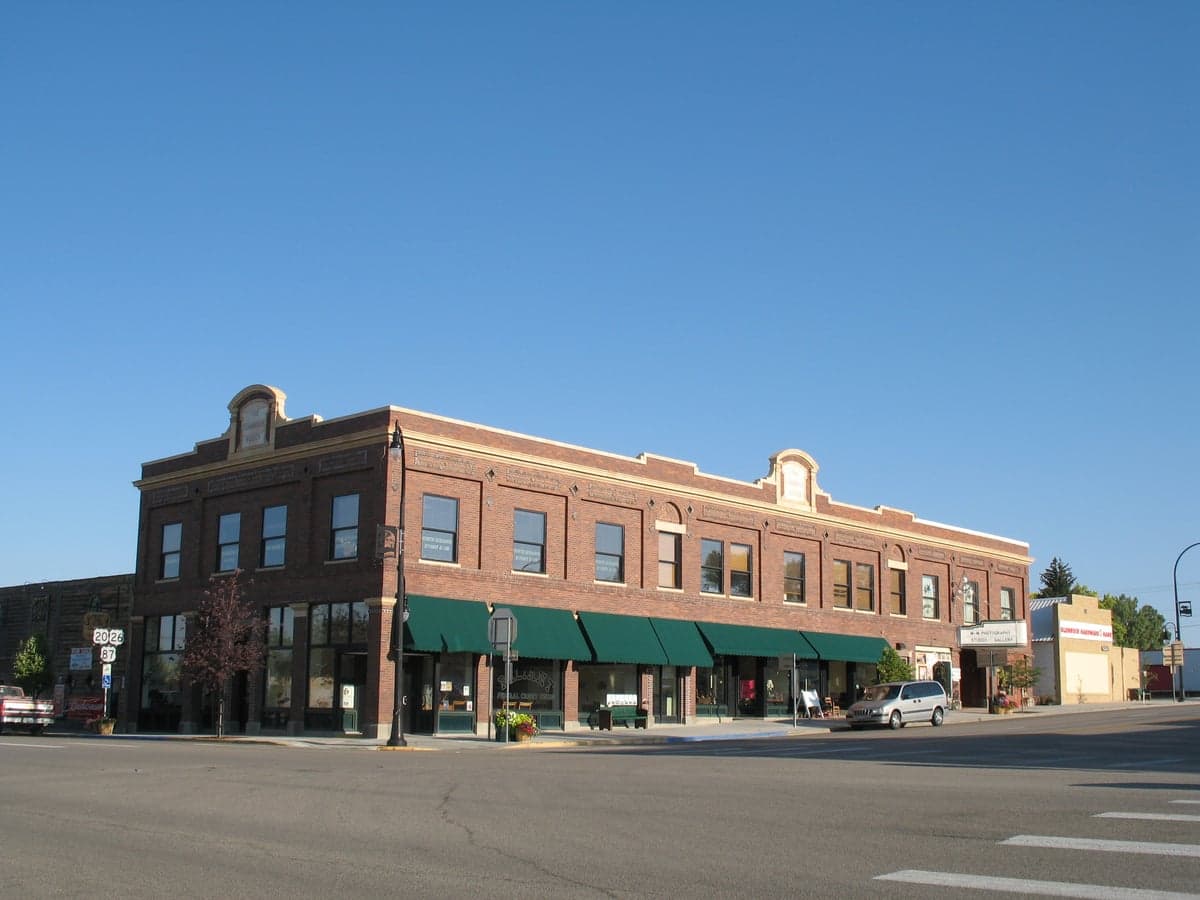
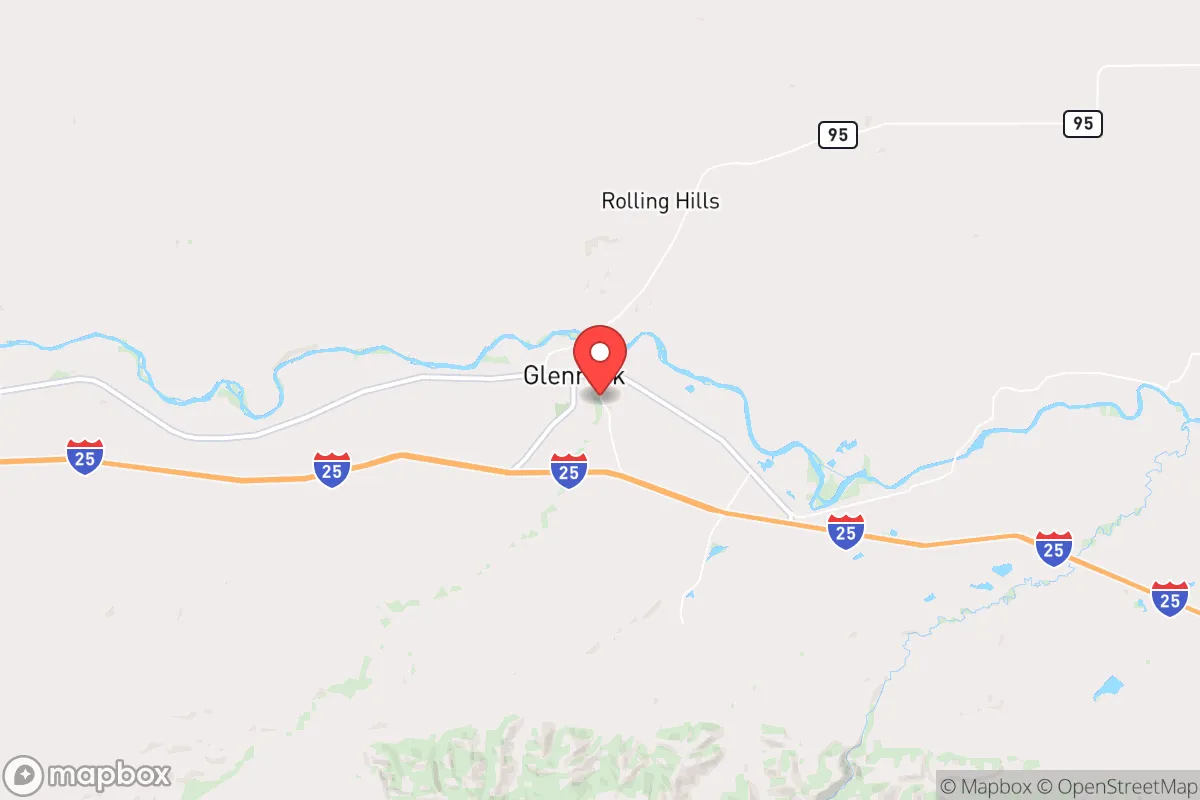
Photo: Wikipedia
Political ClimatePolitical Climate in Glenrock, WY
District shown is the primary district for this city’s centroid. Cities may span multiple districts.
Inherited from parent state — no local data available.
Local Political AnalysisPolitical Analysis of Glenrock, WY
Glenrock, Wyoming, is about as solidly conservative as it gets, with a Cook PVI of R+23 that tells you everything you need to know about the local political DNA. This isn't a place that's drifted left over the years—it's held its ground, and if anything, the community has only gotten more vocal about protecting personal freedoms and pushing back against government overreach. The trajectory here is steady: folks in Glenrock want less interference from Cheyenne or Washington, not more, and that sentiment has only hardened as progressive policies have crept into other parts of the country.
How it compares
Drive 30 minutes east to Douglas, and you'll find a similar conservative vibe, though it's a bit more tied to state government jobs and the energy sector. Head west to Casper, and the political picture gets muddier—Casper has a small but vocal progressive minority, especially around the college and some of the newer tech transplants. Glenrock, by contrast, is a ranching and energy town at heart. The local economy runs on oil, gas, and agriculture, and the politics reflect that: low taxes, minimal regulations, and a deep skepticism of any new mandates. The contrast is starkest when you look at Teton County, way out west near Jackson Hole, where the politics are practically a different country. Glenrock residents see that as a cautionary tale of what happens when outside money and progressive ideology take root.
What this means for residents
For the people who live here, the conservative lean means a daily life that's largely free from the kind of bureaucratic hassles you hear about in blue states. Property taxes stay low, there's no income tax in Wyoming, and the local government generally stays out of your business. The school board, the county commission, and the town council all lean heavily Republican, so there's little appetite for things like DEI programs, critical race theory, or mask mandates. That said, there's a growing concern among long-time residents about the direction of the state as a whole. The influx of remote workers and retirees from places like California and Colorado has started to shift the political winds in some parts of Wyoming, and while Glenrock has been insulated so far, there's a quiet worry that the same forces that turned places like Bozeman or Bend could eventually reach here. The key is staying vigilant and keeping local elections focused on core conservative values: limited government, personal responsibility, and the Second Amendment.
Culturally, Glenrock is a place where people still wave at each other on the street and leave their doors unlocked. The biggest policy distinction is the town's fierce independence—there's a strong "we'll handle it ourselves" attitude that shows up in everything from volunteer fire departments to local land-use decisions. The state's preemption laws on firearms and property rights are taken seriously here, and any hint of federal overreach on public lands or energy development is met with organized pushback. If you're looking for a place where your personal freedoms aren't up for debate, and where the political climate matches the wide-open spaces, Glenrock is about as close as it gets. Just keep an eye on those county commission races—that's where the real battles are fought, and where the future of this town will be decided.

State Political ClimatePolitical Climate in Wyoming
State Political AnalysisPolitical Environment in the State
Wyoming is, and has long been, one of the most reliably conservative states in the Union, with a Republican Party registration advantage that hovers around 3-to-1 and a voting record that hasn’t backed a Democrat for president since 1964. Over the last 10-20 years, the state has actually hardened its conservative tilt, driven by an exodus of transient energy workers and a growing population of retirees and remote workers who moved here specifically for the freedom. The dominant coalition is a mix of ranchers, energy-sector workers, and Second Amendment absolutists, with a growing contingent of liberty-minded transplants from California and Colorado who found their home states too restrictive. The trajectory is clear: Wyoming is becoming more Republican, not less, and the internal debate is now between traditional chamber-of-commerce conservatives and a more assertive, liberty-focused wing.
Urban vs. rural divide
The political map of Wyoming is not a simple urban-versus-rural split because even the "cities" are small by national standards. Cheyenne, the capital and largest city (pop. ~65,000), is the most moderate area in the state, with Laramie County occasionally electing a few Democrats to the legislature and voting slightly less Republican than the rest of the state. Casper (Natrona County) is reliably red but has a pragmatic, energy-industry flavor. The real conservative engine is the rural expanse: Sublette County (Pinedale) and Lincoln County (Kemmerer, Afton) routinely deliver 80-85% of the vote to Republican candidates. Teton County (Jackson Hole) is the glaring exception—it’s the only county that consistently votes blue, driven by wealthy second-home owners and ski-resort employees. But Teton County’s influence is limited to local zoning battles and a few statehouse seats; it cannot swing statewide elections. The divide is less "city vs. country" and more "energy corridor vs. tourism corridor," with the former dominating every statewide race.
Policy environment
Wyoming’s policy environment is a dream for those fleeing high-tax, high-regulation states. There is no state income tax, and the sales tax is a low 4% (local options can push it to 6%). Property taxes are among the lowest in the nation, with a residential rate of about 0.6% of assessed value. The regulatory posture is aggressively pro-business and pro-energy: the state has fought federal overreach on coal, oil, and gas leasing for decades. Education policy is a mixed bag—the state spends generously per pupil (thanks to mineral revenues), but the curriculum leans traditional, and school choice is limited to charter schools and a small but growing homeschool community. Healthcare is a weak point: the state did not expand Medicaid until 2024 (a late, reluctant move), and rural hospital closures are a real concern. Election laws are solid: voter ID is required, same-day registration is not allowed, and the state uses paper ballots with post-election audits. There is no widespread mail-in voting unless requested. For a conservative, the policy environment is largely excellent, though the education and healthcare systems could use more market-based reforms.
Trajectory & freedom
Wyoming is on a trajectory of expanding personal freedom, not contracting it. In 2021, the legislature passed a near-total abortion ban (trigger law) that took effect after Dobbs, with no exceptions for rape or incest—only to save the mother’s life. In 2023, Governor Mark Gordon signed a law banning gender-affirming care for minors, making Wyoming one of the first states to do so. Gun rights are as strong as anywhere: permitless carry has been law since 2011, and there are no magazine capacity limits, no "red flag" laws, and no state-level background checks beyond federal requirements. The 2024 session saw the passage of the Wyoming Freedom Act, which prohibits state enforcement of certain federal gun laws—a direct nullification-style move. Property rights are strong, with no statewide zoning and very limited eminent domain abuse. The only area where freedom has arguably contracted is in the realm of COVID-era mandates: the state never imposed a mask mandate or lockdown, but some local health orders in Teton County caused friction. Overall, the trend is toward more liberty, not less, and the legislature is actively looking for ways to push back against federal overreach.
Civil unrest & political movements
Wyoming is not a place of frequent civil unrest. The most visible political movements are on the right: the Wyoming Freedom Caucus has grown from a fringe group to a powerful bloc in the state legislature, often clashing with the more moderate Republican leadership over budget priorities and federal overreach. There have been no major left-wing protests outside of Jackson Hole, where climate activists occasionally target energy infrastructure. Immigration politics are relatively quiet because the state has a very small foreign-born population (about 3%), but the legislature has passed laws requiring local cooperation with ICE and banning sanctuary city policies. Election integrity controversies have been minimal—the state’s voting system is considered secure, and there were no significant disputes after 2020. The most heated local flashpoint is often federal land management: fights over grazing rights, oil and gas leasing, and the use of public lands for recreation versus extraction can get intense, but they rarely spill into the streets. A new resident would notice a general sense of political stability and a culture of self-reliance, not protest.
Projection
Over the next 5-10 years, Wyoming will likely become even more conservative, but with a sharper edge. The in-migration of remote workers and retirees from blue states (especially Colorado and California) is accelerating, and while some of these newcomers are moderate, many are specifically fleeing progressive policies and will reinforce the liberty wing of the GOP. The energy transition away from coal will hurt some communities—Gillette and Rock Springs face economic headwinds—but the state is diversifying into crypto mining, data centers, and tourism. The demographic trend is slow growth (about 0.5% annually), meaning the political culture won’t be diluted quickly. Expect more nullification-style laws, continued resistance to federal environmental regulations, and a push for school choice expansion. The biggest wildcard is whether the state can attract enough young families to offset the aging population. If you move here now, you will find a state that is politically stable, increasingly assertive in its liberty, and unlikely to shift left in any meaningful way for at least a decade.
Bottom line for a new resident: Wyoming offers one of the most freedom-respecting policy environments in the country, with low taxes, strong gun rights, and a culture that values self-reliance. The political climate is deeply conservative and getting more so, with a growing emphasis on pushing back against federal overreach. If you are looking for a place where government stays out of your life and your business, and where your neighbors share your values, Wyoming is a strong bet. Just be prepared for long winters, limited amenities, and a healthcare system that requires travel for specialist care. The trade-off is worth it for those who prioritize liberty above convenience.
* Values derived from national, state, county, city and local statistics and may differ in a specific area. Last updated: 2026-04-21T11:37:05.000Z
Narrative content on this page is AI-generated and may contain mistakes. Verify any details that matter before acting on them.
ReloMaps may earn a commission from affiliate links at no extra cost to you.

