Demographics of Golden Beach, FL
Affluence Level in Golden Beach, FL
An elite concentration of wealth — high incomes, strong home values, advanced degrees, and minimal poverty signal a top-tier socioeconomic profile.
Census doesn't track above $250K
People of Golden Beach, FL
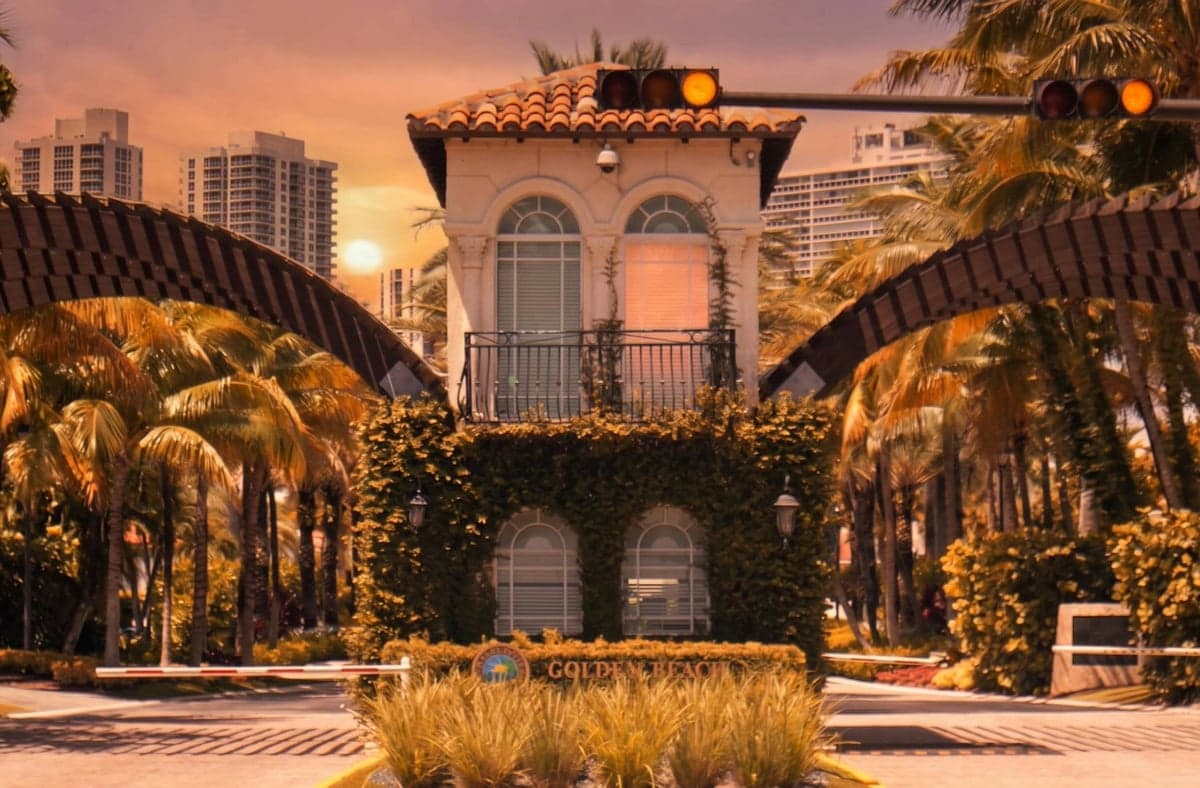
The 614 residents of Golden Beach, Florida form one of the most affluent and educationally elite enclaves in South Florida, with a striking 76.5% holding a college degree and a median household income far exceeding state averages. The population is overwhelmingly White (59.6%) and Hispanic (39.1%), with virtually no Black or Asian representation, creating a distinctive demographic profile of a wealthy, largely bicultural community. This tiny oceanfront city is characterized by its extreme density of single-family luxury homes, a gated-town atmosphere, and a population that is simultaneously highly local in its civic identity and globally connected in its professional and cultural ties.
How the city was settled and grew
Golden Beach was not a product of pioneer homesteading or agricultural settlement. It was a planned, exclusive beachfront development carved out of coastal scrubland in the 1920s, during Florida’s first great land boom. The original population was drawn not by industry or farming, but by the promise of a private, oceanfront retreat for wealthy families from the Northeast and Midwest. The city was incorporated in 1929, and its early residents were almost entirely non-Hispanic White Protestants and Jews who built large winter homes along the Atlantic. The original core of the community, the Oceanfront Estates section along Atlantic Boulevard, was where these first families erected their Mediterranean-revival mansions. A secondary cluster, the Bayfront area along the Intracoastal Waterway, attracted a slightly later wave of wealthy snowbirds who wanted deep-water dockage for their yachts. The Great Depression and World War II slowed growth, but the post-war boom saw the infill of the Central Residential District (the blocks between the ocean and the bay) with permanent, year-round homes for the children of the original settlers and a new wave of corporate executives relocating to Miami.
Modern era (post-1965)
The passage of the 1965 Hart-Cellar Act, which dramatically reshaped Miami-Dade County, had a unique effect on Golden Beach. Unlike nearby cities such as Hialeah or Miami itself, Golden Beach did not absorb large numbers of Cuban exiles or later waves of Central and South American immigrants into its existing housing stock. Instead, the city’s transformation was one of replacement at the top. Beginning in the 1970s and accelerating through the 1990s, wealthy Hispanic families—primarily Cuban-American and Venezuelan-American professionals and business owners—began purchasing the aging oceanfront estates from the original non-Hispanic White families. This was not a story of neighborhood succession in the traditional sense, but of a wealthy, educated Hispanic elite buying into an already exclusive enclave. The Oceanfront Estates saw the most dramatic turnover, with many of the original mansions being demolished and replaced with larger, modern homes. The Bayfront area retained a higher proportion of non-Hispanic White families, particularly those with deep generational ties to the city. The Central Residential District became the most mixed, with a blend of long-term White residents and newer Hispanic families. The 2020 Census data—59.6% White and 39.1% Hispanic, with 0% Black—reflects this precise, class-filtered demographic shift: the Hispanic population is not a working-class influx but a parallel elite that has assimilated into the city’s existing power structure.
The future
Golden Beach is likely to continue its trajectory of elite homogenization, with the Hispanic share of the population slowly rising as older non-Hispanic White homeowners sell to younger, wealthy Hispanic buyers. The city’s extremely high property values and lack of rental housing mean that only the top income brackets can enter, regardless of ethnicity. The foreign-born share (17.8%) is lower than in most of Miami-Dade, suggesting that the Hispanic population is increasingly second- and third-generation, highly assimilated, and English-dominant. There is no evidence of tribalization into distinct ethnic enclaves within the city’s small footprint; instead, the trend is toward a single, wealthy, bicultural identity. The Oceanfront Estates will likely become majority Hispanic within a decade, while the Bayfront and Central Residential District will remain more mixed but still overwhelmingly affluent. The city will not grow in population—its buildable land is fully developed—but its demographic character will continue to shift toward a Hispanic-majority, English-speaking, college-educated elite.
For a conservative-leaning individual or family considering a move to Golden Beach, the bottom line is this: you are moving into a stable, hyper-affluent, low-crime community where the primary social divide is not ethnicity but wealth and lifestyle. The population is becoming more Hispanic, but this is a culturally conservative, family-oriented, and property-rights-focused Hispanic elite that shares the values of the city’s traditional non-Hispanic White residents. The city is not diversifying in the conventional sense; it is consolidating as a single, wealthy, bicultural enclave where the main question is not who you are, but whether you can afford to be there.

* Values derived from national, state, county, city and local statistics and may differ in a specific area. Last updated: 2026-05-14T02:09:02.000Z
Narrative content on this page is AI-generated and may contain mistakes. Verify any details that matter before acting on them.
ReloMaps may earn a commission from affiliate links at no extra cost to you.

