 Popular
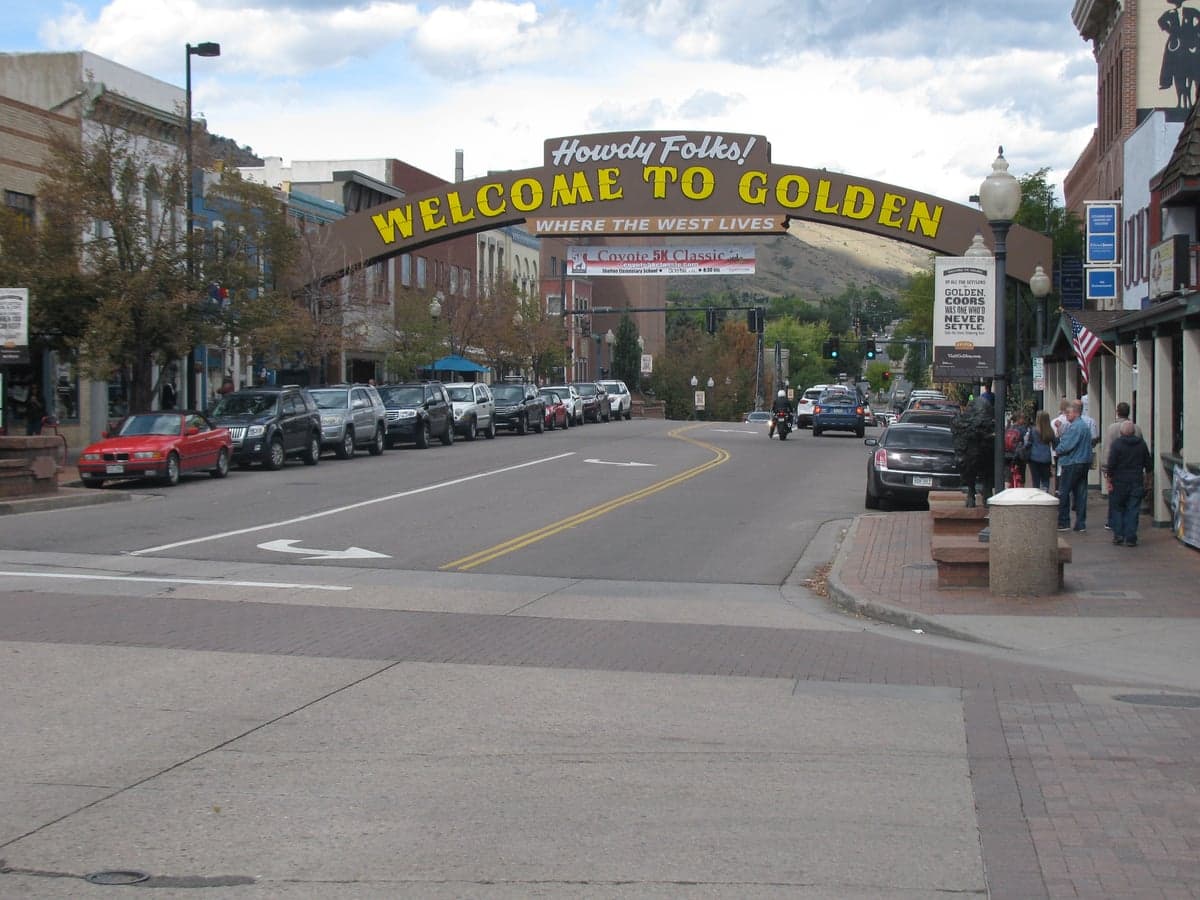
Photo: Wikipedia
Demographics of Golden, CO
Affluence Level in Golden, CO
An upper-middle-class area. Household wealth, education levels, and homeownership run ahead of national benchmarks.
People of Golden, CO
Golden, Colorado, is a compact city of 20,467 residents with a distinctly educated and stable character: 59.0% of adults hold a college degree, and the population is 82.4% White, non-Hispanic. The city’s foreign-born share is a low 2.7%, and its largest minority group is the Hispanic community at 7.3%, followed by East and Southeast Asian residents at 3.8%. Golden feels less like a typical Denver suburb and more like an independent mountain-town enclave, shaped by its history as a mining and industrial hub and now by its identity as home to the Colorado School of Mines.
How the city was settled and grew
Golden’s population story begins with the 1859 Colorado Gold Rush, when prospectors and fortune-seekers flooded the Clear Creek valley. The city was founded that same year as a supply and government center, briefly serving as the territorial capital. The original white settlers were a mix of Anglo-American migrants from the Midwest and East Coast, along with a smaller number of European immigrants—Cornish miners, German craftsmen, and Irish laborers—who built the early infrastructure. These groups concentrated in the downtown historic district along Washington Avenue and in the working-class North Golden neighborhood near the Coors Brewery, which opened in 1873 and became the city’s dominant employer for generations. By the early 20th century, Golden’s population was overwhelmingly white and native-born, with a small Hispanic presence tied to railroad and agricultural work in the surrounding Jefferson County area. The Colorado School of Mines, founded in 1874, drew a steady stream of engineering students and faculty, cementing the city’s educated, technically oriented character.
Modern era (post-1965)
After the 1965 Hart-Cellar Act, Golden saw only modest immigration changes due to its small size and limited industrial base. The city’s foreign-born population remains low at 2.7%, and the East and Southeast Asian community (3.8%) is largely composed of graduate students and faculty at the School of Mines, many of whom settle in the South Golden area near campus or in the Heritage Dells subdivision, a mid-century neighborhood with larger lots. The Indian subcontinent population (0.4%) is similarly tied to the university and high-tech sectors. The Hispanic community (7.3%) has grown steadily since the 1970s, driven by domestic migration from the Southwest and by families working in construction, hospitality, and landscaping; they are most concentrated in the West Golden area along 19th Street and in the older, more affordable Applewood Village neighborhood near the city’s western edge. The Black population (1.5%) is small and dispersed, with no single enclave. The dominant trend since 1980 has been the in-migration of affluent, college-educated white professionals from the Denver metro area and other states, drawn by Golden’s mountain views, outdoor recreation, and high-performing schools. This wave has concentrated in newer developments like Lookout Mountain Estates and in the renovated historic homes of downtown Golden, pushing up home prices and reinforcing the city’s white-collar, family-oriented character.
The future
Golden’s population is likely to continue its slow, steady growth, but it is not homogenizing into a single demographic bloc. The city is instead tribalizing into distinct enclaves: the university-adjacent areas remain a mix of students and faculty from diverse backgrounds, while the western and northern neighborhoods are increasingly dominated by wealthy white families who can afford the rising home values. The Hispanic community is stable but not expanding rapidly, as affordability pressures push younger families to more affordable suburbs like Arvada or Wheat Ridge. The East and Southeast Asian population is expected to grow modestly, tied to the School of Mines’ international recruitment, but will remain a small share. The Indian subcontinent community is likely to plateau at its current tiny fraction. Over the next 10–20 years, Golden will become more expensive and more white-collar, with the college-educated share potentially rising above 65%. The city will not become significantly more diverse; its character will remain that of a prosperous, educated, outdoor-oriented enclave with a small, stable minority presence.
For a conservative-leaning individual or family moving in now, Golden offers a safe, highly educated, and politically moderate-to-conservative environment (Jefferson County leans Republican in local races) with excellent schools and low crime. The trade-off is high housing costs and limited ethnic diversity. This is a place where stability and tradition are valued, and where the population is becoming more affluent and more homogenous over time.

* Values derived from national, state, county, city and local statistics and may differ in a specific area. Last updated: 2026-05-01T18:41:36.000Z
Narrative content on this page is AI-generated and may contain mistakes. Verify any details that matter before acting on them.
ReloMaps may earn a commission from affiliate links at no extra cost to you.

