 Popular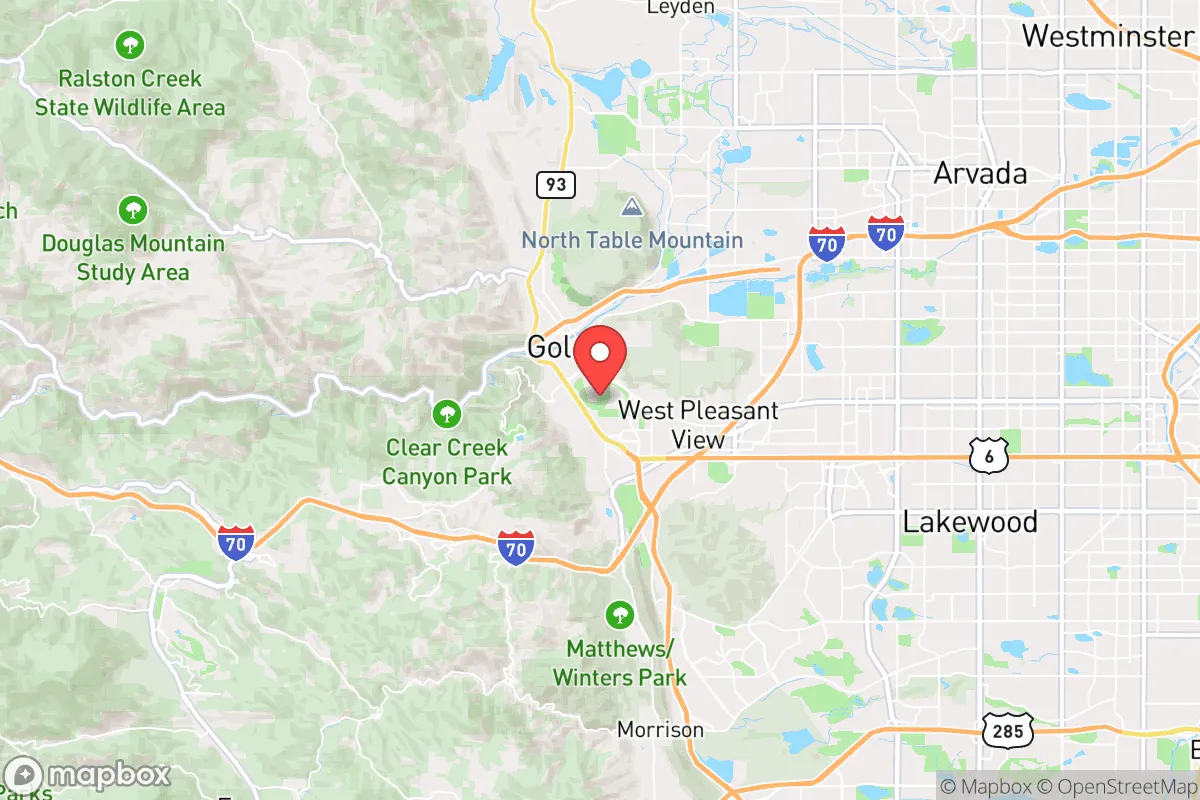
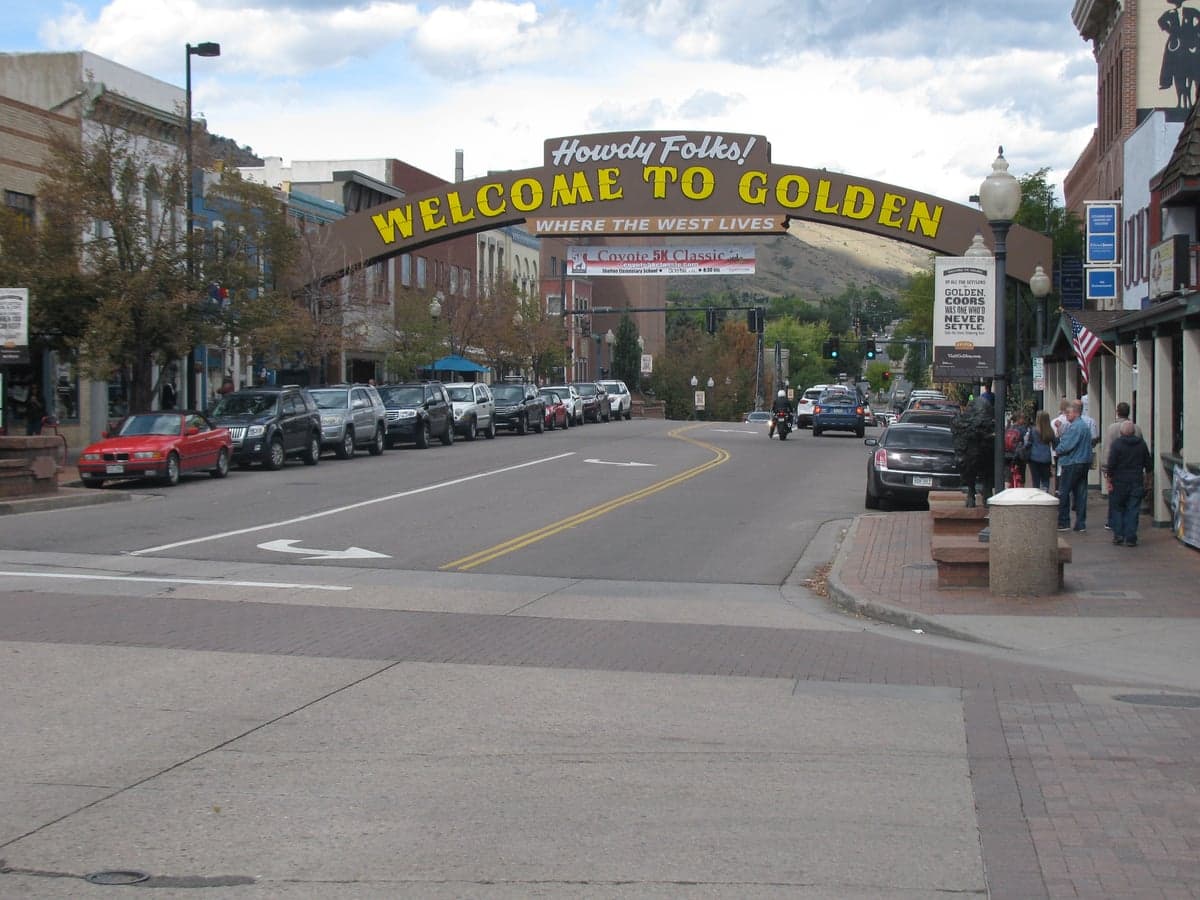
Photo: Wikipedia
Strategic Assessment of Golden, CO
Multiple tactical vulnerabilities. Population density, target proximity, or disaster risk are likely compounding. A retreat property and exit planning is required.
What does the Strategic Assessment tell us?
Our Strategic Assessment grades tactical survivability of an area. Major population centers, military targets, fallout zones, natural disasters, and border exposure all drive risk — lower exposure means a more defensible position in a crisis.
This is heavily inspired by Joel Skousen's Strategic Relocation book. Highly recommended you checkout the book ($)What does this tell us?
Our Strategic Assessment grades tactical survivability of an area. Major population centers, military targets, fallout zones, natural disasters, and border exposure all drive risk — lower exposure means a more defensible position in a crisis.
This is heavily inspired by Joel Skousen's Strategic Relocation book. Highly recommended you checkout the book ($)Strategic Pillars

Key Distances
Regional Safe Places
Below is our recommended "safe zones" in Colorado and the surrounding area based on our strategic heuristics. For most people, it's unrealistic to live in a “safe zone” full-time due to work, family or other personal reasons. They tend to be more rural. However, many of these areas are perfect for second homes and retreat properties that double as a vacation home or even a short-term rental.
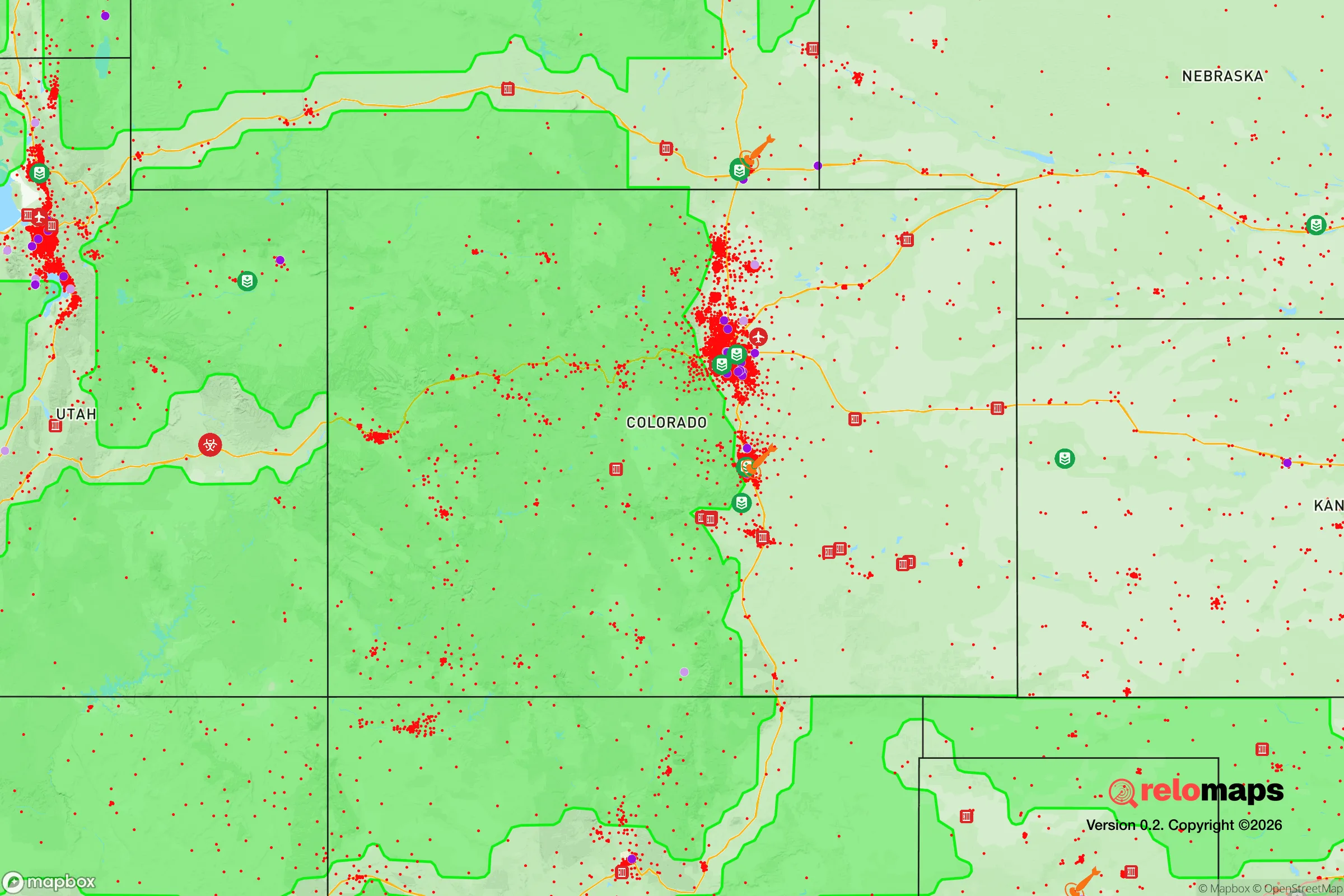
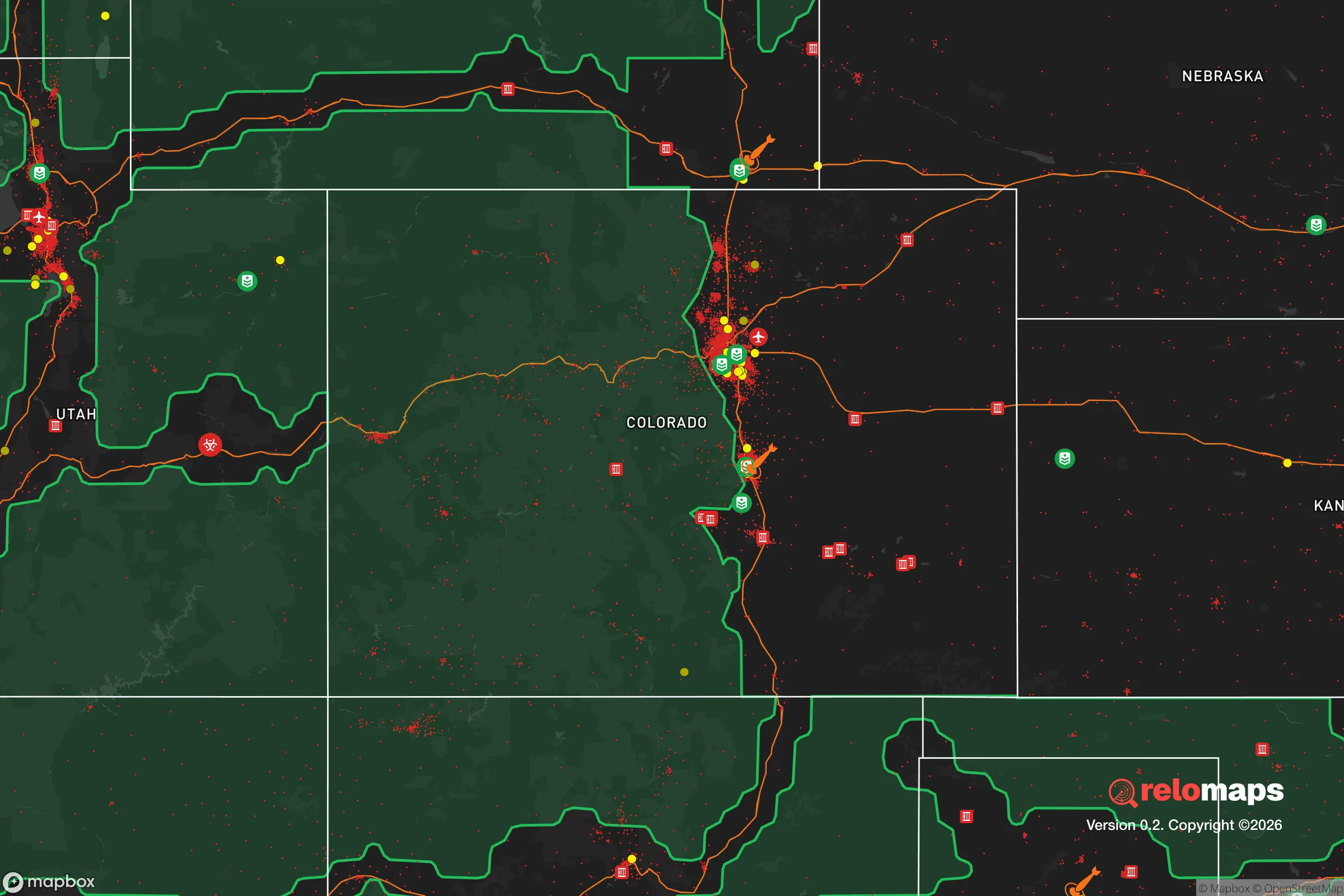


Important Note: For informational purposes only. This does not mean nothing bad ever happens in the green zones. Please use common sense. This is based on public data and modeled with AI. We tried to take a conservative approach but mistakes happen. We update this regularly as new information becomes available.
Solar Generator Recommendations
Backup power matters more here than in safer locations. We've picked three solar generators across budgets and capacity tiers — start with the budget unit if you only need a few essentials, or step up if you want to run a fridge and HVAC for days at a time.

Jackery Portable Power Station Explorer 300
Budget OptionPower on the Go: Weighing only 11 lbs, it's convenient to set up and store with book-sized foldable solar panels

BLUETTI Portable Power Station AC180
Designed for both indoor and outdoor scenarios, AC180 is highly capable as it has a robost capacity and continuous output power.

EF ECOFLOW DELTA Pro Ultra Power Station
Upgraded PickEcoFlow DELTA Pro Ultra is a whole-home energy system designed to grow with your family. Integrated with the Smart Home Panel 2, it scales to meet your evolving energy needs — keeping your home powered, intelligent, and secure through every stage of life.
We earn a commission, at no additional cost to you.
Strategic Assessment Analysis
Golden, Colorado offers a compelling mix of natural barriers and proximity to critical infrastructure that makes it a serious candidate for a strategic relocation, particularly for those thinking in terms of long-term resilience and self-sufficiency. Nestled at the base of the Front Range, this town of roughly 20,000 sits in a defensible valley with the Rocky Mountains to the west and the Denver metro sprawl to the east, giving it a unique buffer zone that many other Colorado towns lack. For a conservative-leaning individual or family focused on preparedness, Golden’s geography provides a rare combination of access to mountain resources and the ability to monitor or avoid urban chaos, all while maintaining a low-profile, small-town feel that doesn’t scream “prepper enclave.”
Geographic position and natural advantages for long-term security
Golden’s location is its strongest asset for anyone prioritizing strategic depth. The town sits at the confluence of Clear Creek and the South Platte River, which means reliable surface water is immediately available—a critical factor for any long-term survival scenario where municipal supplies might fail. The surrounding foothills and hogbacks, including North and South Table Mountains, create natural chokepoints that limit vehicle access from the east, while the steep terrain to the west forces any movement into predictable corridors like U.S. Highway 6 and Colorado 93. This makes Golden inherently defensible against large-scale civil unrest originating from Denver, which is only about 15 miles east. The elevation—roughly 5,700 feet—also provides a natural health filter: lower oxygen levels and colder winters discourage unprepared transients or refugees from settling in, while a prepared family with proper gear and acclimatization can thrive. The proximity to the Arapaho and Roosevelt National Forests means hunting, foraging, and timber resources are within a day’s hike, and the area’s mining history has left a network of old roads and trails that offer multiple escape routes into the high country if Golden itself becomes compromised.
Risks, exposures, and proximity to fallout-relevant landmarks
No strategic analysis is complete without a hard look at vulnerabilities, and Golden has several that demand attention. The most obvious is its proximity to the Denver metropolitan area, which houses over 2.9 million people. In a mass casualty event—whether from a bioweapon, a dirty bomb, or a cascading grid failure—that population could become a desperate, mobile threat. Golden sits directly in the path of anyone fleeing Denver west toward the mountains, and the town’s main arteries (I-70, U.S. 6, and CO 93) would become clogged evacuation routes or invasion corridors. Additionally, Golden is home to the Colorado School of Mines, a major engineering and research university that, while economically beneficial, could be a target for state-level adversaries or domestic terror groups seeking to disrupt technical expertise. The school’s nuclear research reactor, though low-power, is a psychological and practical concern for fallout-aware relocators. Further west, the Rocky Flats National Wildlife Refuge—site of the former plutonium trigger plant—still has residual contamination issues, and any major seismic event or fire could re-suspend hazardous materials. Wildfire risk is high, especially in the foothills west of town, and the 2021 Marshall Fire (though east of Golden) demonstrated how quickly suburban sprawl can ignite. For the prepper mindset, Golden’s position is a double-edged sword: close enough to Denver to monitor threats, but close enough to be overrun if the city collapses.
Practical resilience for a relocator: food, water, energy, and defensibility
For a family or individual serious about self-reliance, Golden offers a mix of built-in advantages and gaps that require planning. Water is the strongest suit: Clear Creek runs year-round, and the city’s water treatment plant draws from it directly, but a prepared relocator should have a backup well or rainwater catchment system, as municipal supply could be cut in a grid-down scenario. The soil in the valley is decent for small-scale agriculture, with a growing season of about 150 days, but the clay-heavy composition means raised beds or imported topsoil are advisable. Local food production is feasible but not abundant; the Golden Farmers Market and nearby farms in Jefferson County offer some redundancy, but a serious prepper should plan to supplement with hunting (deer and elk are common in the foothills) and fishing (Clear Creek has trout). Energy resilience is mixed: Golden is served by Xcel Energy, which has a history of wildfire-related shutoffs, but solar potential is excellent due to over 300 days of sunshine per year, and many homes already have rooftop panels. Natural gas is widely available, but a backup propane tank or wood-burning stove is wise for winter heating. Defensibility is where Golden shines: the town’s layout, with its narrow canyon entrances and limited bridge crossings over Clear Creek, means a small group could effectively control access points. Neighborhoods like the historic district and the hillside areas west of 19th Street offer natural elevation advantages and good sightlines. However, the town’s popularity as a tourist destination (Coors Brewery, hiking trails) means it draws outsiders year-round, so a low-profile approach—avoiding visible prepper gear, keeping vehicles nondescript—is essential to avoid drawing attention during a crisis.
Overall, Golden presents a strong strategic option for the conservative relocator who values natural barriers, water access, and a community that, while leaning left politically (Jefferson County voted +6 for Biden in 2020), still retains a Western independence streak and a practical, outdoorsy culture that respects self-sufficiency. The key trade-off is proximity to Denver: you get the benefits of monitoring urban collapse from a defensible position, but you also inherit the risk of being a first-wave destination for refugees. For a single individual or a family with a solid plan—including a bug-out location deeper in the mountains, a year’s worth of supplies, and a network of like-minded neighbors—Golden can serve as a resilient base camp. But it’s not a remote bunker; it’s a forward operating position that requires constant situational awareness and a willingness to adapt. If you’re looking for a place that balances access to resources with a realistic chance of holding ground during a crisis, Golden deserves a serious look—just don’t expect it to be a secret for long.

* Values derived from national, state, county, city and local statistics and may differ in a specific area. Last updated: 2026-05-01T18:41:36.000Z
Narrative content on this page is AI-generated and may contain mistakes. Verify any details that matter before acting on them.
ReloMaps may earn a commission from affiliate links at no extra cost to you.

