 Popular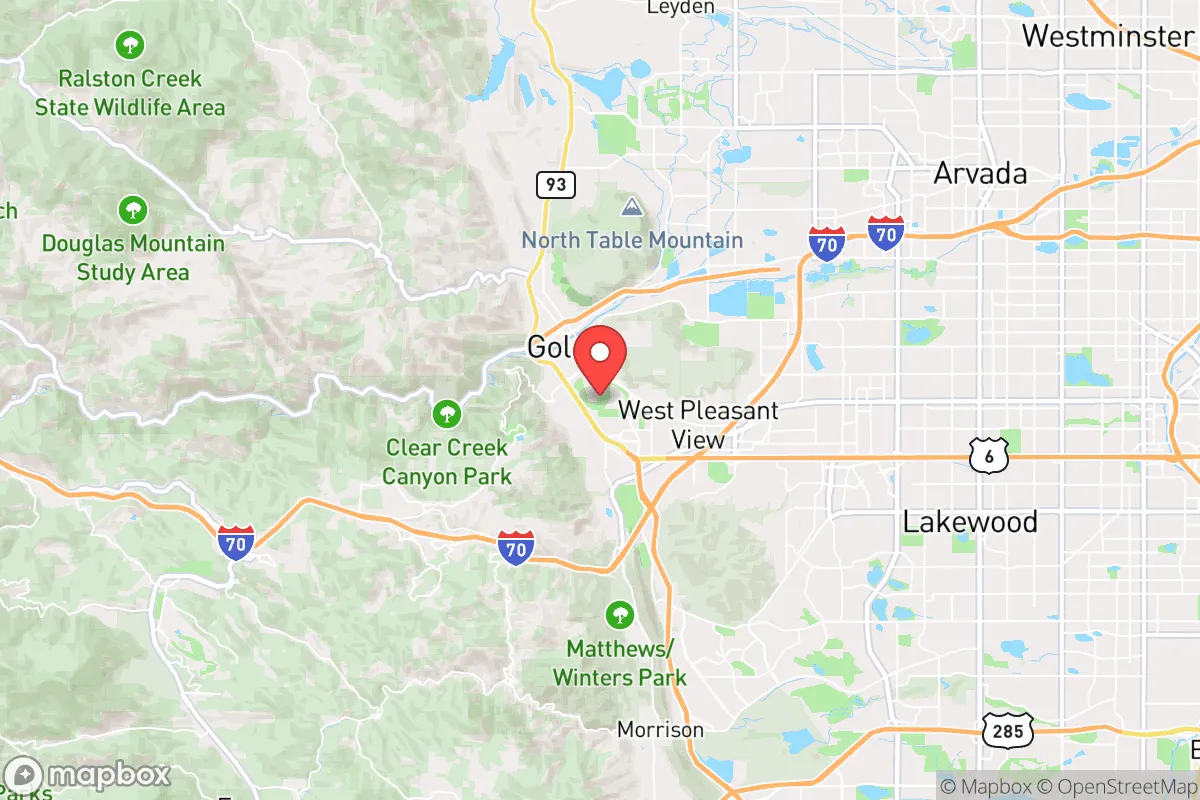
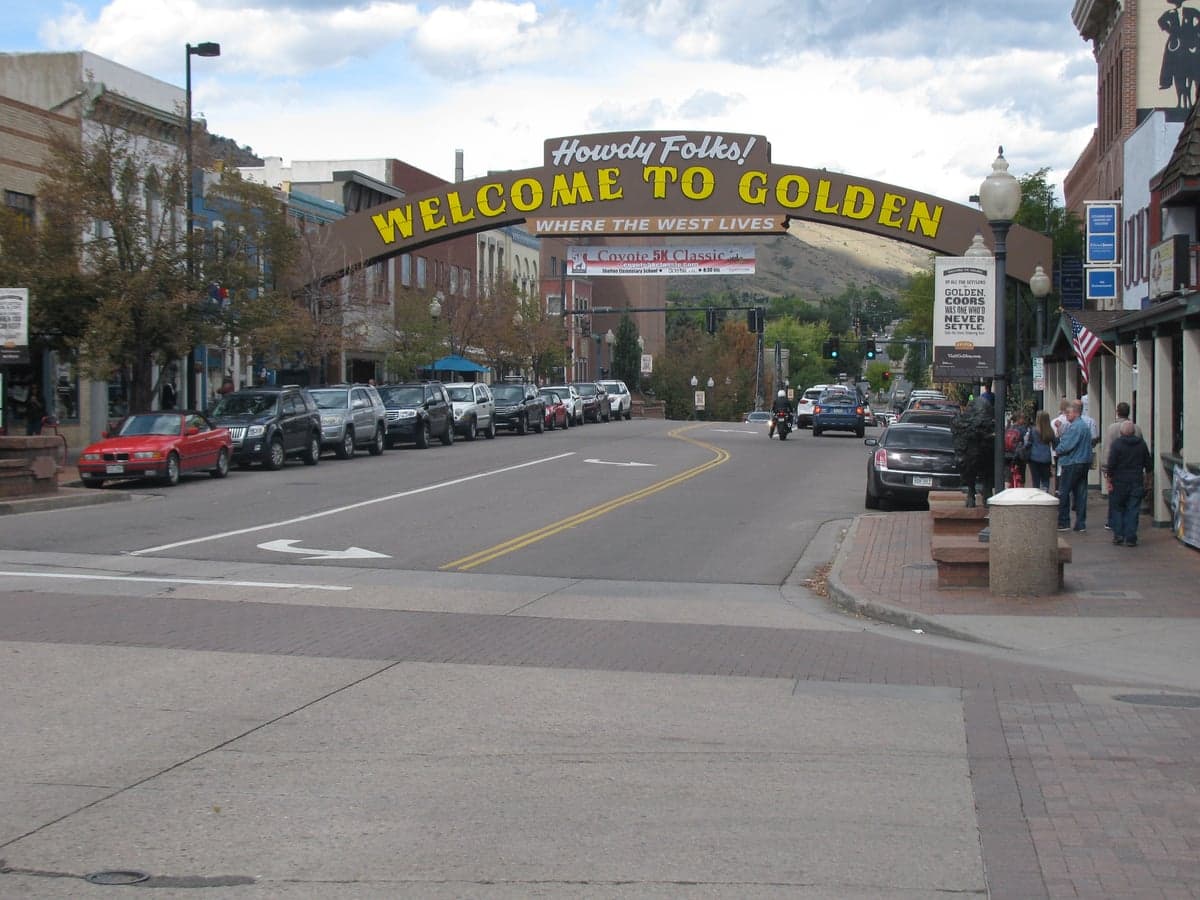
Photo: Wikipedia
Political ClimatePolitical Climate in Golden, CO
District shown is the primary district for this city’s centroid. Cities may span multiple districts.
Local Political AnalysisPolitical Analysis of Golden, CO
Golden, Colorado, has shifted noticeably to the left over the past decade, and if you’ve lived here as long as I have, you’ve felt it. The Cook Political Report gives the area a Partisan Voter Index of D+8, meaning it votes about eight points more Democratic than the national average. That’s a far cry from the more balanced, live-and-let-live community I remember from the 1990s and early 2000s. Today, the city council and county commissions are dominated by progressive voices, and the local political conversation often feels less about practical solutions and more about ideological signaling. For someone who values personal freedoms and limited government, the trajectory is frankly concerning.
How it compares
Golden sits in Jefferson County, which used to be a reliable swing county. Now, it’s solidly blue, especially in the city proper. Drive just 15 minutes north to Arvada or 20 minutes west to Evergreen, and you’ll find a more mixed political landscape—Arvada still has a strong conservative base, and Evergreen leans libertarian-leaning conservative. But Golden itself? It’s become a hub for transplants from California and the East Coast, many of whom bring a “we know better” attitude about how you should live your life. The contrast is stark: while neighboring towns still debate property rights and school choice, Golden’s leadership is pushing zoning changes that limit single-family homes and mandating electric vehicle charging stations in new developments. It feels like the city is trying to engineer a certain kind of community, rather than letting residents shape it organically.
What this means for residents
For a long-time resident like me, the biggest red flag is the steady creep of government overreach into everyday decisions. Want to build a deck or add a shed on your property? The permitting process has gotten more invasive, with new environmental impact reviews and “neighborhood character” assessments that give city staff veto power over your own land. There’s also a growing push for “equity” policies in local hiring and contracting, which sounds nice in theory but often means quotas and paperwork that small businesses can’t afford. And let’s talk about taxes: Jefferson County’s property tax rate has climbed, and Golden’s sales tax is now among the highest in the metro area, funding things like bike lanes and public art that not everyone asked for. If you’re a family trying to keep more of what you earn, or a retiree on a fixed income, these trends hit hard.
Cultural and policy distinctions
One thing that still sets Golden apart is its strong sense of place—the foothills, Clear Creek, the Coors Brewery. But even that’s changing. The city has embraced a “climate action plan” that includes banning natural gas in new construction, which will drive up energy costs for homeowners. There’s also a vocal movement to “decolonize” local history, which has led to debates over renaming streets and removing statues. It’s not the Golden I grew up in, where the focus was on opportunity and personal responsibility. Looking ahead, I worry the city will keep tightening regulations on everything from short-term rentals to lawn watering, all in the name of sustainability or equity. If you’re considering moving here, just know that the political climate leans heavily progressive, and that comes with a price—both in your wallet and your freedom to live as you see fit.

State Political ClimatePolitical Climate in Colorado
State Political AnalysisPolitical Environment in the State
Colorado has shifted from a classic purple swing state to a reliably blue state over the past two decades, with Democrats now controlling the governorship, both chambers of the legislature, and all statewide elected offices. The state voted for Hillary Clinton by 5 points in 2016, Joe Biden by 13 points in 2020, and Kamala Harris by roughly 11 points in 2024, reflecting a steady leftward drift driven largely by explosive growth in the Denver metro and Front Range corridor. For a conservative considering relocation, the state’s political trajectory is unmistakable: what was once a libertarian-leaning Western state with a strong independent streak has become a laboratory for progressive policy, with significant implications for taxes, regulations, and personal freedoms.
Urban vs. rural divide
The political map of Colorado is a story of two states. The urban Front Range—Denver, Boulder, Colorado Springs, and the sprawling suburbs of Aurora, Lakewood, and Westminster—drives the state’s blue lean, with Denver County routinely delivering 75-80% of its vote to Democrats. Boulder County is even more progressive, often exceeding 80% Democratic margins. The Denver metro area alone accounts for over half the state’s population, making rural votes almost irrelevant in statewide elections. Meanwhile, the Eastern Plains, Western Slope, and mountain counties remain deeply red. El Paso County (Colorado Springs) is the largest reliably Republican county, voting +15 R in 2024, while Weld County (Greeley) and Mesa County (Grand Junction) are GOP strongholds. Arapahoe and Jefferson counties, once swing suburbs, have moved decisively blue since 2016. The divide is stark: drive 30 minutes east of Denver and you’re in Trump country; drive 30 minutes west and you’re in a progressive enclave.
Policy environment
Colorado’s policy environment has become aggressively progressive under unified Democratic control. The state income tax rate was cut from 4.63% to 4.40% in 2020 via Proposition 116, but the Taxpayer’s Bill of Rights (TABOR) has been repeatedly weakened by lawmakers who have found ways to retain surplus revenue. Property taxes are relatively low compared to Texas, but recent legislation (SB 24-233) increased property tax rates for commercial and multi-family properties to fund education. The state has a flat income tax, but no sales tax on groceries—a mixed bag for families. On education, Colorado adopted the controversial “READ Act” and expanded school choice, but Denver Public Schools remains a bureaucratic mess with declining enrollment. Healthcare is heavily regulated: the state operates its own insurance exchange (Connect for Health Colorado) and has implemented a public option for health insurance (HB 21-1232), which has driven up costs for private plans. Election laws have been loosened significantly: Colorado was one of the first states to adopt universal mail-in voting (2013), same-day voter registration, and automatic voter registration—all of which have been criticized by conservatives for reducing election integrity. The state also has a “red flag” law (HB 19-1177) allowing temporary firearm seizure without due process, and in 2024 passed a ban on “assault weapons” (SB 24-003), which is currently tied up in litigation.
Trajectory & freedom
Colorado is becoming less free by any conservative measure. The state’s trajectory on gun rights is the clearest example: after the 2012 Aurora theater shooting, Democrats passed magazine capacity limits (15 rounds) and universal background checks, and in 2024 added the assault weapons ban. The “red flag” law has been used over 3,000 times since 2020, often against individuals who never committed a crime. On parental rights, Colorado passed a law in 2023 (HB 23-1039) that allows minors to access reproductive healthcare without parental consent, and in 2024 expanded gender-affirming care protections for minors, overriding parental authority in some cases. Medical autonomy took a hit with the passage of a vaccine mandate for healthcare workers (2021) and a law requiring COVID-19 vaccines for school attendance (SB 21-163), though the latter was later repealed. Property rights are under pressure from the state’s “land use” reform (SB 24-174), which preempts local zoning to force higher-density housing near transit, overriding local control. The state also passed a “conversion therapy” ban for minors (2019) and a law requiring public schools to adopt LGBTQ-inclusive curricula (HB 19-1032). On the positive side for conservatives, Colorado has no state-level rent control (preempted by state law) and no state income tax on military pensions. But the overall trend is clear: the state is moving further left every session.
Civil unrest & political movements
Colorado has seen significant civil unrest and political activism in recent years. The 2020 George Floyd protests in Denver turned violent, with property damage and clashes between protesters and police, and the city later faced a federal consent decree over police practices. The state has a strong “sanctuary” posture: the “Colorado Immigrant Rights Act” (SB 19-211) limits local law enforcement cooperation with ICE, and Denver has been a “welcoming city” since 2017. In 2023, Denver saw a surge in migrant arrivals from the southern border, straining city resources and sparking backlash from residents. On the right, the “Colorado Republican Party” has fractured between establishment and MAGA factions, with the state party chair being ousted in 2024 after controversial statements. The “Three Percent” militia movement has a presence in rural areas, and the “Colorado Springs” area saw a 2022 shooting at an LGBTQ club that reignited gun control debates. Election integrity remains a flashpoint: the 2020 election saw allegations of ballot harvesting in Denver and Boulder, and the state’s universal mail-in system has been criticized for allowing ballots to be sent to inactive voters. A 2024 audit of Denver’s election found over 14,000 ballots with signature discrepancies that were not properly investigated. The “Colorado Secretary of State” office, now run by a Democrat, has defended the system, but trust remains low among conservatives.
Projection
Over the next 5-10 years, Colorado will likely continue its leftward drift, driven by in-migration from blue states like California and New York. The Denver metro area is projected to add another 500,000 residents by 2035, most of whom will vote Democratic. The rural-urban divide will widen, with rural counties becoming even more Republican but losing political relevance. Expect more gun control, including a possible “assault weapons” ban that survives court challenges, and further erosion of parental rights. The state’s housing crisis will likely lead to more state preemption of local zoning, reducing property rights. Tax increases are probable: a progressive income tax bracket (currently flat) is being discussed, and property taxes will rise as the state struggles to fund schools and transportation. The “Colorado Health Insurance Option” public option will likely expand, driving up costs for private plans. On the positive side, the state’s strong economy and outdoor amenities will continue to attract people, but the political climate will become increasingly hostile to conservative values. A new resident moving in now should expect to live in a state where their vote for president is effectively meaningless, where their gun rights are steadily eroded, and where their children’s education is shaped by progressive curricula. The state’s libertarian roots are a distant memory.
For a conservative family or individual considering Colorado, the bottom line is this: the state offers stunning natural beauty, a strong job market, and a relatively low tax burden compared to coastal states, but the political trajectory is unmistakably leftward. If you value gun rights, parental authority, local control, and election integrity, you will find yourself increasingly at odds with state policy. The Front Range is the engine of this change, and unless you’re willing to live in a rural county like Weld or Mesa, your vote and your values will be marginalized. Colorado is a great place to visit, but for a conservative looking to put down roots, it’s a state in decline—politically, at least.
* Values derived from national, state, county, city and local statistics and may differ in a specific area. Last updated: 2026-05-01T18:41:36.000Z
Narrative content on this page is AI-generated and may contain mistakes. Verify any details that matter before acting on them.
ReloMaps may earn a commission from affiliate links at no extra cost to you.

