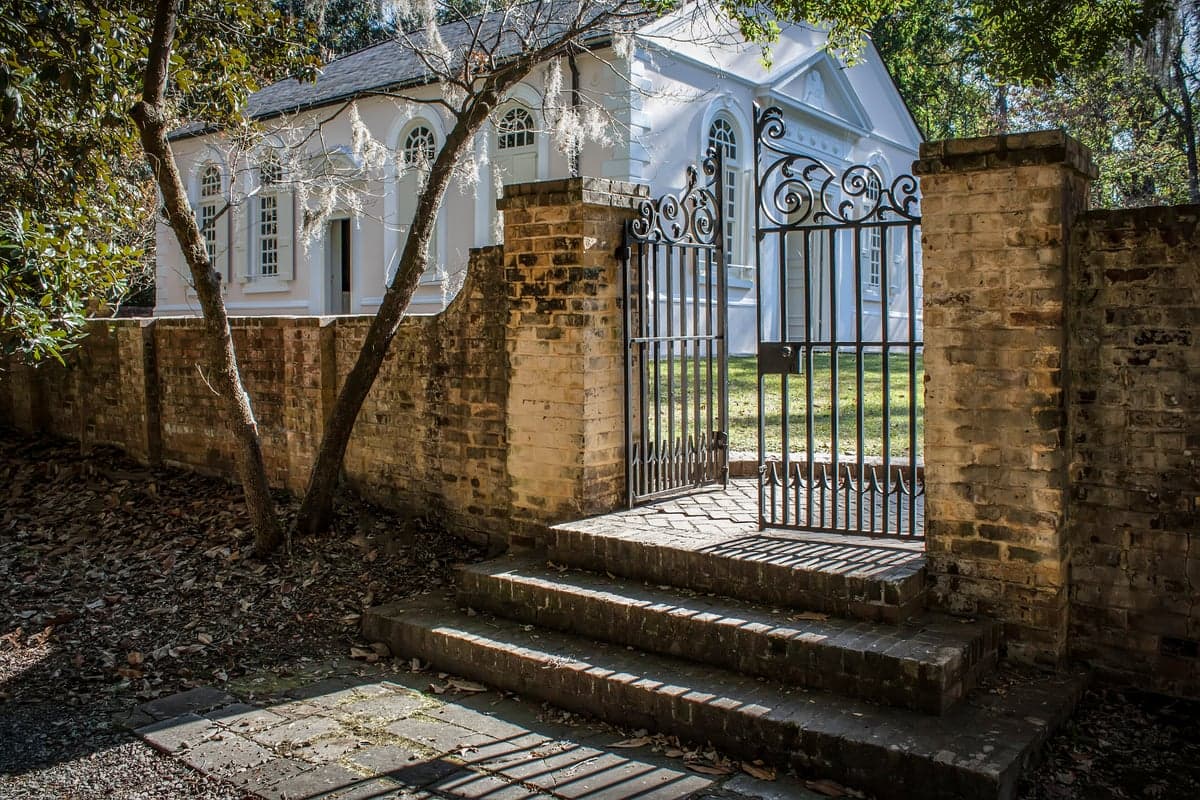
Photo: Wikipedia
Personal Sovereignty in Goose Creek, SC
Viable for self-reliance. Generally workable, though some barriers may limit total independence.
What does Personal Sovereignty tell us?
Personal Sovereignty measures your capacity for self-reliance and independence with minimal government friction. Higher scores mean fewer barriers between you and the way you want to live... but it assumes you have the space you need and good neighbors.
What does this tell us?
Personal Sovereignty measures your capacity for self-reliance and independence with minimal government friction. Higher scores mean fewer barriers between you and the way you want to live... but it assumes you have the space you need and good neighbors.
State Policy
Energy independence: Importer (25% of energy produced in-state)
Personal Liberty
Homesteading

Personal Liberty Analysis
Goose Creek, South Carolina, offers a personal sovereignty environment that is markedly stronger than what you’ll find in most coastal or Northeastern states, but it still operates within the constraints of a growing suburban municipality. For the survivalist or prepper mindset, the key trade-off is clear: you get a state-level legal framework that respects gun rights, keeps taxes low, and limits government overreach, but you are living in a town that is increasingly subject to HOA covenants, zoning codes, and the creeping influence of Charleston’s metropolitan sprawl. The real question isn’t whether Goose Creek is a libertarian paradise—it isn’t—but whether its combination of state-level protections and local practicalities gives you enough breathing room to live on your own terms.
Tax burden and regulatory posture: how much the state and local government takes
South Carolina’s tax posture is one of the strongest selling points for anyone looking to minimize government extraction from their income and property. There is no state income tax on Social Security benefits, and the state’s top marginal income tax rate is being phased down to 6.2% by 2026, with further cuts likely. Property taxes in Berkeley County, where Goose Creek sits, are among the lowest in the region—the effective property tax rate hovers around 0.55% of assessed value, roughly half of what you’d pay in neighboring North Carolina or a third of the rate in many Northeastern states. The state’s regulatory climate is generally business-friendly, with a right-to-work law on the books and no state-level OSHA plan, meaning federal OSHA standards apply but enforcement is lighter. However, local zoning in Goose Creek is where the rubber meets the road. The city has standard suburban development codes that restrict things like vehicle storage, livestock, and home-based businesses in residential zones. If you want to run a small fabrication shop from your garage or keep a few chickens for eggs, you’ll need to check the specific zoning of your lot—many newer subdivisions have HOAs that are far more restrictive than the city code itself. The regulatory posture at the state level is hands-off; at the local level, it’s typical suburban oversight.
Self-defense and gun law specifics: what you can carry, where, and without a permit
South Carolina is a “constitutional carry” state as of 2024, meaning any law-abiding adult 18 or older can carry a concealed firearm without a permit. This is a non-negotiable baseline for personal sovereignty, and Goose Creek sits in a county where sheriff’s office policy is generally supportive of the Second Amendment. There is no state-level registry, no waiting period for long guns, and no “may issue” nonsense—the permitless carry law is straightforward. However, there are still traps for the unwary. South Carolina has a “no guns allowed” sign law that gives force to posted signage at businesses, and carrying into a place that serves alcohol for on-site consumption is a misdemeanor unless you have a Concealed Weapon Permit (CWP) and the establishment doesn’t post a sign. The CWP itself is still worth getting for reciprocity—it’s recognized in 35+ states—and the training requirement is a one-day course. For home defense, the state’s Castle Doctrine is strong: there is no duty to retreat inside your home or vehicle, and the “stand your ground” law extends to any place you have a legal right to be. The practical reality in Goose Creek is that you can carry daily without hassle, but you need to be mindful of federal gun-free school zones (which cover most of the town) and the fact that Charleston’s more restrictive attitudes don’t apply here. The local gun culture is live-and-let-live, with multiple gun shops and ranges within a 15-minute drive.
Self-reliance and homesteading viability: lot sizes, zoning, and off-grid feasibility
This is where Goose Creek’s suburban character becomes a limiting factor for serious self-reliance. The typical residential lot in the city limits is between 0.2 and 0.5 acres, which is fine for a large garden but not for keeping livestock or establishing any meaningful degree of food independence. Zoning codes prohibit horses, cattle, and swine on lots under two acres, and even chickens are often restricted to a small number of hens with no roosters in many subdivisions. If you want to go off-grid—solar panels, rainwater collection, composting toilets—you’ll hit a wall with city building codes and HOA covenants. The city requires connection to municipal water and sewer where available, and many HOAs have aesthetic rules that ban visible solar panels or clotheslines. The workaround is to look just outside the city limits, in unincorporated Berkeley County, where zoning is much looser and lot sizes can be 1-5 acres for a reasonable price. Areas around Moncks Corner or the rural stretches of Highway 176 offer the ability to have a well, septic, chickens, and a workshop without asking permission. Within Goose Creek proper, you can still have a robust vegetable garden, a root cellar, and a well-stocked pantry, but you’re not going to be self-sufficient on a quarter-acre lot. The trade-off is proximity to resources: you’re 20 minutes from Charleston’s medical infrastructure and 10 minutes from big-box stores, which matters if you’re stockpiling supplies or need to bug out to a more rural location.
Personal liberties: parental rights, medical autonomy, speech, and property
South Carolina has a strong track record on parental rights, with a 2023 law that requires school districts to notify parents of any changes in a student’s “mental, emotional, or physical health” and prohibits schools from withholding information about a child’s well-being. This is a concrete legal protection that matters to parents who are concerned about government or school overreach into family matters. Medical autonomy is more mixed. The state has no vaccine mandate for adults, and COVID-era restrictions were lifted early compared to blue states, but there is no broad “right to refuse medical treatment” statute beyond standard informed consent laws. The state did pass a law in 2023 prohibiting medical gender transition procedures for minors, which aligns with the conservative position on bodily autonomy for children. Free speech is protected under the First Amendment, and South Carolina has no state-level “hate speech” law that would criminalize political or religious expression. Property rights are generally strong, with the state having a “private property protection act” that requires government to compensate landowners for regulatory takings that reduce property value by more than 50%. However, eminent domain has been used for economic development projects in the Charleston region, so it’s not a perfect shield. The biggest practical liberty issue in Goose Creek is the prevalence of HOAs—roughly 60% of homes in the city are in some form of covenant-controlled community. These HOAs can restrict everything from paint colors to parking to political signs, and they are private contracts that you agree to when you buy. If you want maximum personal sovereignty, you need to buy in an area without an HOA or in unincorporated county land.
Overall, Goose Creek offers a solid baseline of personal sovereignty that is significantly better than what you’d find in California, New York, or even parts of the Pacific Northwest, but it is not a freehold for the hardcore prepper. The state-level protections on guns, taxes, and parental rights are real and durable, and the local culture is generally respectful of individual choice. The main compromises come from the suburban development model—HOAs, zoning, and small lots—which constrain the kind of self-reliance that requires land and freedom from covenants. If you are a single individual or a family looking for a low-tax, gun-friendly, parent-rights-respecting place to live with good access to infrastructure, Goose Creek is a strong contender. If you want to live completely off-grid with livestock, a private well, and no HOA telling you what to do, you need to look 20-30 minutes further inland, where the land is cheaper and the rules are fewer. The sovereignty here is real, but it comes with a suburban asterisk.

* Values derived from national, state, county, city and local statistics and may differ in a specific area. Last updated: 2026-04-30T00:46:48.000Z
Narrative content on this page is AI-generated and may contain mistakes. Verify any details that matter before acting on them.
ReloMaps may earn a commission from affiliate links at no extra cost to you.

