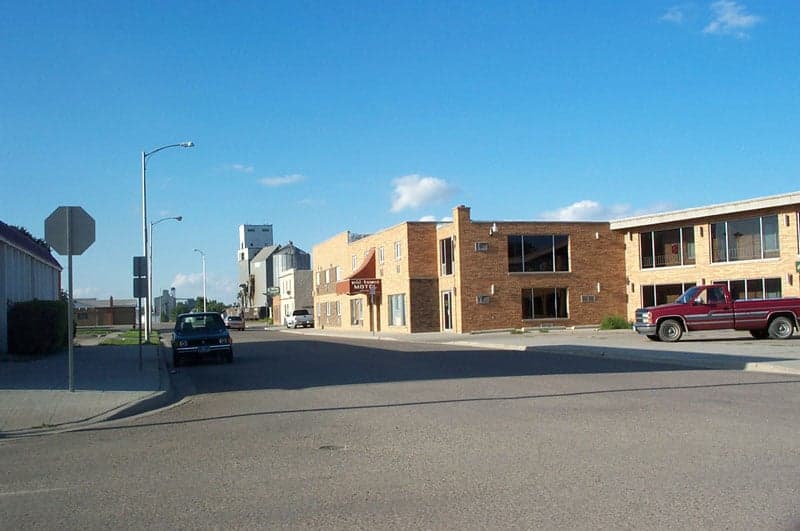
Photo: Wikipedia
Quality of Life in Grafton, ND
A livable area that tracks near national norms for affordability, walkability, and neighborhood health.
What does Quality of Life tell us?
Quality of Life blends cost of living, nearby amenities, socioeconomic signals, and neighborhood character. City-level scores represent the whole municipality; individual neighborhoods can differ.
What does this tell us?
Quality of Life blends cost of living, nearby amenities, socioeconomic signals, and neighborhood character. City-level scores represent the whole municipality; individual neighborhoods can differ.
Cost of Living
41% below national average
The Real Cost of Living in Grafton, ND for 2026
| Tier | Individual | Family (4) |
|---|---|---|
| Survival | $11k | $21k |
| Comfortable | $30k | $44k |
| Luxury | $105k+ | $163k+ |
| Elite (Top 5%) | $124k+ | $191k+ |
137%
The Area Signal
A metric tracking the socioeconomic signals of the area.


Limited data for this area
Limited data for this area
Hobbies
Explore the areaGroceries
2 within 10 miles
Gas
0 within 10 miles
Hospital
3 within 20 miles
Airport
JFK — John F. Kennedy Memorial
Post Office
USPS — Grafton, ND
Critical Amenities
Quality-of-Life Analysis
Grafton, North Dakota, is a small, tight-knit community where the cost of living is dramatically lower than the national average, attracting a mix of agricultural workers, healthcare professionals, and retirees seeking a quiet, affordable lifestyle. With a cost of living index of just 59 (compared to the U.S. average of 100), the area offers a level of financial breathing room that is increasingly rare in larger cities. The population skews older and family-oriented, with a strong sense of local pride and a slower pace of life that prioritizes community connection over urban convenience.
How housing costs and everyday expenses compare to Grand Forks and other nearby towns
The most striking feature of Grafton’s quality of life is its extreme affordability, particularly in housing. The median home value sits at $153,800, which is roughly half the national median and significantly less than in Grand Forks (about 45 minutes south), where comparable homes often exceed $250,000. Renters also benefit, with a median monthly rent of $715, making it possible to live comfortably on a single moderate income. Everyday expenses like groceries, utilities, and transportation also run well below the national average, meaning a dollar stretches further here than in almost any other part of the state. The average commute time of just 14.7 minutes is a major quality-of-life bonus—residents spend far less time in traffic and more time at home or on local recreation, a sharp contrast to the 25+ minute commutes common in larger regional hubs like Fargo or Grand Forks.
What daily life is like for families: schools, amenities, and local rhythm
Daily life in Grafton revolves around a handful of reliable anchors. The Grafton Public School District serves the community with a single elementary, middle, and high school, offering small class sizes and a high level of parent involvement. For healthcare, the Unity Medical Center provides emergency care, primary care, and specialty clinics, eliminating the need to drive to Grand Forks for routine needs. Grocery shopping is handled by Hugo’s Family Marketplace, and the town’s main street features a mix of locally owned shops, a hardware store, and a few casual dining spots. Recreation centers on the Grafton City Park, which hosts summer concerts and a farmers market, and the nearby Homme Dam Recreation Area for fishing, hiking, and camping. The pace is unhurried—most businesses close by 6 p.m., and weekends are quiet, with community events like the Walsh County Fair providing the main social calendar. For families, the trade-off is clear: less entertainment variety but far more safety, space, and time together.
Grafton is best suited for people who value financial stability, low stress, and a strong sense of belonging over urban amenities and career diversity. Retirees on fixed incomes will find their money goes far here, while young families can afford a home and a yard without being house-poor. Remote workers with stable internet will also appreciate the low cost of living and short commute. However, those seeking nightlife, diverse dining, or rapid career growth in specialized fields will likely find Grafton too limited. For the right person—someone who prefers a quiet, predictable, and affordable life—Grafton offers a rare combination of economic ease and community warmth that is hard to match elsewhere in the Upper Midwest.

Crime in Grafton, ND
Lower crime rates than 82% of comparable U.S. locations.
Violent CrimeViolent Crime Analysis
Property CrimeProperty Crime Analysis
Crime Analysis
Grafton, North Dakota, presents a mixed safety profile for potential residents. With a violent crime rate of 200.3 per 100,000 residents and a property crime rate of 650.8 per 100,000, the city experiences crime at levels that demand careful consideration, particularly for those relocating from safer rural areas. These figures place Grafton in a position where crime is a tangible concern, though not at the crisis levels seen in larger, more troubled jurisdictions.
Crime in context
When compared to national averages, Grafton’s violent crime rate is slightly below the U.S. median, which hovers around 230 per 100,000. However, its property crime rate is notably higher than the national average of approximately 1,950 per 100,000, indicating a community where theft and burglary are more common than in many other parts of the country. Within North Dakota, Grafton’s rates are elevated relative to the state’s overall low crime profile—the state’s violent crime rate is roughly 240 per 100,000, while property crime sits near 1,600 per 100,000. This means Grafton is safer than the state average for violent offenses but riskier for property crimes, a pattern often seen in smaller communities that serve as regional hubs.
What residents experience
For those living in Grafton, the day-to-day reality is shaped more by property crime than by violent incidents. Theft from vehicles, burglaries of unoccupied homes, and occasional vandalism are the most frequently reported issues. Violent crime, while present, is less common and typically involves individuals known to one another, rather than random attacks on strangers. Residents often report feeling safe walking during the day, but caution is advised after dark, particularly in less-trafficked areas. The local police department maintains a visible presence, and community watch programs are active, which helps mitigate some concerns. However, the property crime rate suggests that basic precautions—like locking doors and securing valuables—are essential.
Neighborhood-level variation
Grafton does not have sharply defined high-crime neighborhoods, but some variation exists. Areas near the downtown core and along major thoroughfares like Hill Avenue tend to see more property crime, likely due to higher foot traffic and commercial activity. Residential streets on the outskirts, particularly those with newer construction, report fewer incidents. The city’s small size—roughly 4,200 residents—means that crime is relatively evenly distributed, and no single area is considered dangerous by national standards. Prospective residents should drive through potential neighborhoods at different times of day and speak with local law enforcement for the most current block-level data.
* Values derived from national, state, county, city and local statistics and may differ in a specific area. Last updated: 2026-04-19T06:43:43.000Z
Narrative content on this page is AI-generated and may contain mistakes. Verify any details that matter before acting on them.
ReloMaps may earn a commission from affiliate links at no extra cost to you.

