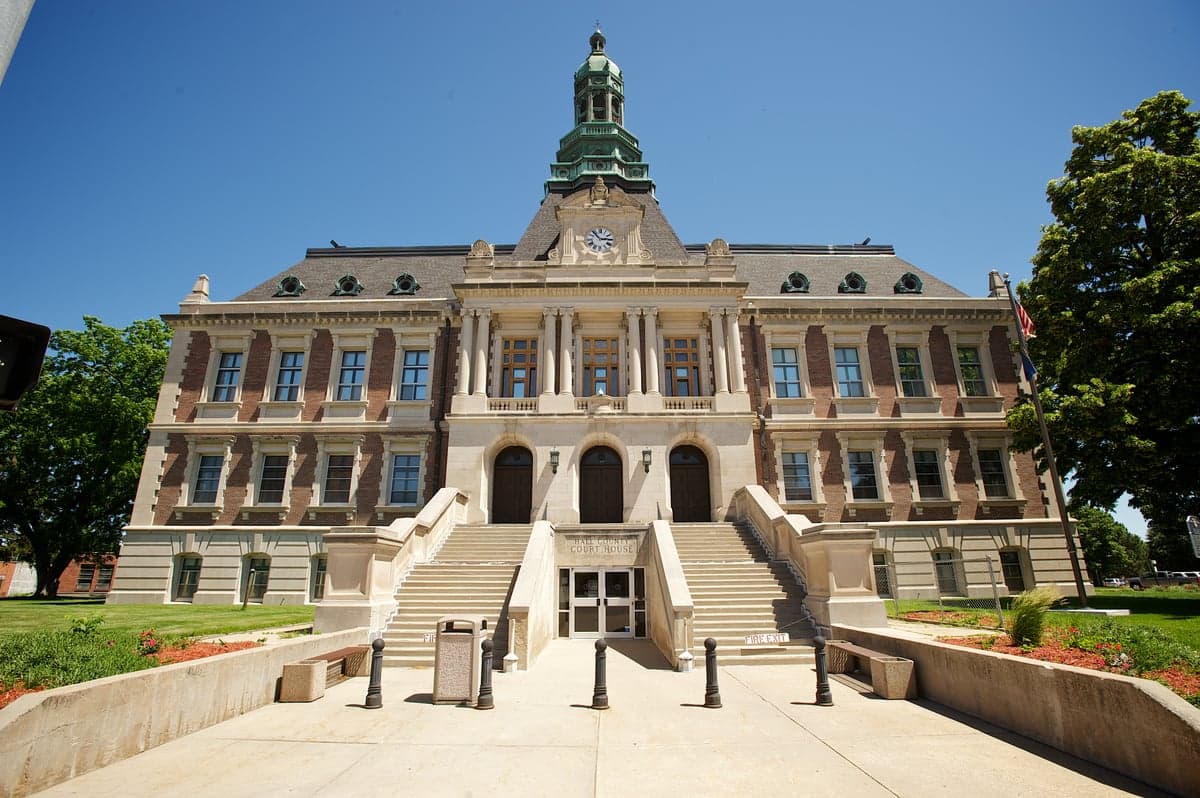
Photo: Wikipedia
Political ClimatePolitical Climate in Grand Island, NE
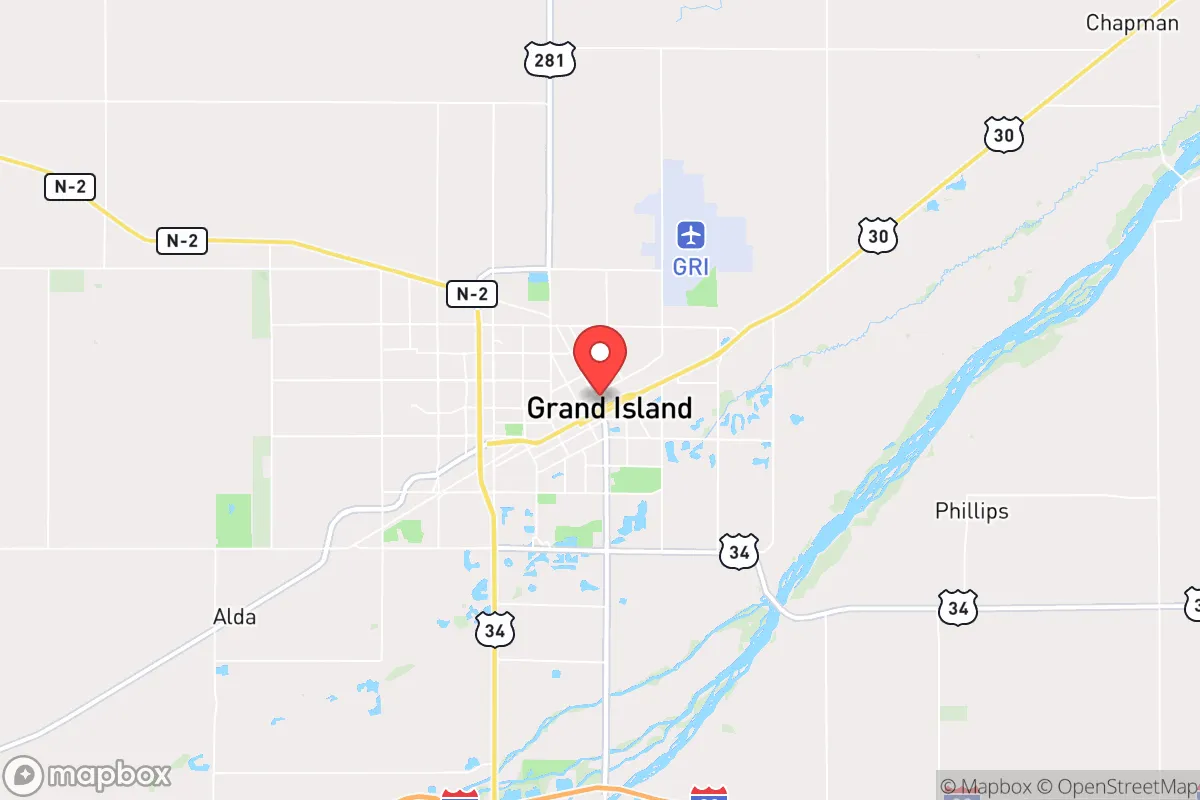
District shown is the primary district for this city’s centroid. Cities may span multiple districts.
Local Political AnalysisPolitical Analysis of Grand Island, NE
Grand Island, Nebraska, has long been a rock-solid conservative stronghold, and the numbers back it up with a Cook PVI of R+27. That means the area votes about 27 points more Republican than the national average, and it’s not just a fluke—this has been the trend for decades. The city itself leans reliably red, though you’ll find a mix of old-school farming families, newer Hispanic residents, and a growing number of young professionals who still largely vote for smaller government and personal responsibility. The trajectory here is steady: while some neighboring towns like Lincoln or Omaha have drifted leftward, Grand Island has held its ground, with local elections often decided in GOP primaries rather than general contests.
How it compares
If you drive 90 miles east to Lincoln, you’ll hit a blue bubble—home to the University of Nebraska and a more progressive city council that’s pushed things like mask mandates and diversity initiatives. Head west to Kearney, and you’re back in deep-red territory, but Grand Island sits in a sweet spot: it’s conservative but not extreme, with a pragmatic streak. Surrounding Hall County votes similarly, but the city itself has a slightly more moderate edge due to its agricultural and manufacturing base. Compared to Omaha, which has seen a surge in progressive activism and higher taxes, Grand Island feels like a place where the government still stays out of your business. The contrast is stark: here, you won’t see the same push for zoning overhauls or “equity” programs that have stirred up controversy in bigger cities.
What this means for residents
For folks living here, the political climate means lower taxes, fewer regulations, and a general sense that your personal freedoms—whether it’s homeschooling your kids, running a small business, or carrying a firearm—aren’t under constant threat from local government. The city council and county board have resisted the kind of overreach you see in blue states, like strict COVID-19 lockdowns or mask mandates that shut down churches and small shops. That said, there’s been a slow creep of progressive ideas, especially in the school board, where some members have pushed for diversity, equity, and inclusion (DEI) training that feels more like indoctrination than education. Longtime residents are keeping a close eye on this, because once that foot is in the door, it’s hard to kick it out. The local economy—anchored by employers like Chief Industries and the regional medical center—benefits from a business-friendly environment, but there’s a quiet worry that if the city starts chasing federal grants with strings attached, those freedoms could erode.
Culturally, Grand Island still feels like the heartland: church attendance is high, the Fourth of July parade is a big deal, and most folks wave at neighbors. But there’s a growing divide between the older, established families and younger transplants who’ve moved in from more liberal areas. You’ll hear grumbling about “woke” policies at the library or the local college, but so far, the city has avoided the worst of it. The real test will come in the next few years, as the state legislature in Lincoln considers bills on property taxes, school choice, and Second Amendment rights. If Grand Island stays true to its roots, it’ll remain a place where government is a servant, not a master. But if the progressive wave that’s hit Lincoln and Omaha starts lapping at our shores, we could see a shift that’ll make you think twice about sticking around.

State Political ClimatePolitical Climate in Nebraska
State Political AnalysisPolitical Environment in the State
Nebraska has long been a reliably conservative state, but it’s not the monolith outsiders often assume. The state’s overall partisan lean is solidly Republican, with Donald Trump winning the state by 19 points in 2024, but that headline masks a deep and growing urban-rural split. Over the past 20 years, the state has shifted rightward in its rural and suburban areas while its two major cities—Omaha and Lincoln—have become increasingly Democratic strongholds, creating a political landscape that feels like two different states under one capitol dome.
Urban vs. rural divide
The political map of Nebraska is a textbook case of the urban-rural chasm. The eastern third of the state, anchored by Omaha (Douglas County) and Lincoln (Lancaster County), drives the state’s Democratic vote. Omaha’s 2nd Congressional District has become a perennial battleground, flipping between parties and giving Democrats a single electoral vote in presidential elections since 2008. Lincoln, home to the University of Nebraska, has trended blue faster than Omaha, with Lancaster County voting for Joe Biden in 2020 and Kamala Harris in 2024. Meanwhile, the rest of the state—from the Sandhills to the Panhandle—is deeply red. Scottsbluff in the west and Norfolk in the northeast are conservative strongholds, while Grand Island and Kearney in the central Platte River valley have held steady Republican but show subtle signs of suburban moderation. The rural counties along the Kansas border, like Red Willow County (McCook), routinely vote 80%+ Republican. The divide isn’t just about population density—it’s cultural. Omaha’s tech and insurance sectors and Lincoln’s university environment pull left, while the agricultural and ranching communities of the west and central regions remain fiercely independent and skeptical of government overreach.
Policy environment
Nebraska’s policy environment is a mixed bag for conservatives. On the positive side, the state has no income tax on Social Security benefits and a flat state income tax rate of 5.84% (as of 2025), with a path to further reductions. Property taxes, however, are a persistent pain point—among the highest in the region relative to home values—and have been a major legislative battleground. The state’s regulatory posture is generally business-friendly, with a right-to-work law and no state-level minimum wage above the federal floor (though a 2022 ballot measure raised it to $15 by 2026). On education, Nebraska has a robust school choice movement, with the Nebraska Opportunity Scholarship Act (LB 753) passed in 2023, providing tax credits for private school scholarships. The state also passed a Parental Bill of Rights (LB 1084) in 2024, requiring schools to notify parents of curriculum changes and medical services. Healthcare policy is more mixed: Nebraska expanded Medicaid under the Affordable Care Act in 2020 via a ballot initiative, a move many conservatives opposed, but the state has resisted further expansion of government-run options. Election laws are solidly conservative—voter ID is required (passed in 2023), and Nebraska has no same-day registration. The state’s unique unicameral, nonpartisan legislature can produce unpredictable outcomes, as seen when a conservative filibuster killed a permitless carry bill in 2023, only for it to pass in 2024.
Trajectory & freedom
On balance, Nebraska is trending more free in several key areas, but with some concerning exceptions. The biggest win for personal liberty in recent years was the passage of LB 77 in 2024, which established permitless (constitutional) carry of firearms for anyone 21 or older. This was a major victory for gun rights advocates after years of legislative battles. On parental rights, LB 1084 (2024) requires school districts to adopt policies that notify parents of any curriculum involving sexuality or gender identity, and it prohibits instruction on these topics in grades K-5—a clear expansion of parental authority. Property rights saw a boost with LB 116 (2023), which limited the use of eminent domain for carbon pipeline projects, a direct response to the controversial Summit Carbon Solutions pipeline that had pitted landowners against corporate interests. However, the state’s tax burden remains a concern. While income tax rates are being cut, property taxes continue to rise, and the state’s reliance on local levies for school funding means many residents feel squeezed. On medical freedom, Nebraska has not followed some states in banning vaccine mandates outright, but it did pass LB 906 (2022), which prohibits employers from requiring COVID-19 vaccination as a condition of employment. The trajectory is generally positive for conservatives, but the property tax issue and the lingering influence of Omaha’s progressive city council (which passed a non-discrimination ordinance for public accommodations in 2023) are ongoing flashpoints.
Civil unrest & political movements
Nebraska is not a hotbed of civil unrest, but it has seen its share of organized political movements. The most visible in recent years has been the farmers and ranchers’ opposition to carbon pipelines, particularly the Summit Carbon Solutions project. Landowners in counties like Burt and Stanton organized public protests and legal challenges, arguing the pipeline’s use of eminent domain violated property rights. This movement has been a rare coalition of rural conservatives and environmental activists, and it remains active. On the left, Omaha saw significant Black Lives Matter protests in 2020, with some property damage and clashes with police, but the movement has since subsided into more conventional advocacy. Immigration politics are less volatile than in border states, but South Sioux City and Grand Island have seen tensions over meatpacking plant labor forces. Nebraska is not a sanctuary state—in fact, a 2023 executive order by Governor Jim Pillen directed state agencies to cooperate with federal immigration enforcement. Election integrity has been a minor issue: the 2020 election was secure, but the state passed voter ID in 2023 largely in response to public concern. The most notable political movement is the ongoing effort to abolish the state’s unique electoral college system (which awards one electoral vote per congressional district), a push led by Republicans who argue it dilutes the state’s conservative voice. So far, it has failed to gain traction.
Projection
Looking ahead 5-10 years, Nebraska is likely to remain a reliably red state, but the urban-rural divide will deepen. The Omaha metro area is growing faster than the rest of the state, driven by tech and insurance jobs, and its 2nd District will remain competitive. Lincoln’s blue trend will continue, potentially flipping Lancaster County permanently. Meanwhile, rural counties will continue to depopulate, concentrating conservative power in fewer, more reliable hands. The state’s in-migration is modest—mostly from neighboring states like Iowa and South Dakota—and tends to be conservative-leaning, which should offset some urban growth. The biggest wildcard is property tax reform: if the legislature fails to deliver meaningful relief, it could fuel a populist backlash against incumbents, potentially opening the door to more libertarian or even third-party candidates. On cultural issues, expect continued battles over school curriculum, transgender rights, and local control vs. state preemption. The unicameral legislature’s nonpartisan structure will continue to produce unpredictable outcomes, but the overall trajectory is toward more conservative policy, especially on guns, parental rights, and tax cuts.
Bottom line for a new resident: If you’re moving to Nebraska, you’ll find a state that generally respects personal freedom, especially outside of Omaha and Lincoln. Property taxes are the biggest practical headache, but the cost of living is low, the schools are solid (especially in smaller towns), and the political climate is stable. You’ll want to live in a county that matches your values—Dawson County (Lexington) or Buffalo County (Kearney) are safe bets for conservatives, while Douglas County is increasingly progressive. The state is not trending toward the chaos of coastal blue states, but the urban centers are a reminder that no place is immune to the culture wars. If you value low regulation, gun rights, and local control, Nebraska is a solid choice—just keep an eye on the property tax situation and the Omaha city council.
* Values derived from national, state, county, city and local statistics and may differ in a specific area. Last updated: 2026-04-19T12:33:05.000Z
Narrative content on this page is AI-generated and may contain mistakes. Verify any details that matter before acting on them.
ReloMaps may earn a commission from affiliate links at no extra cost to you.

