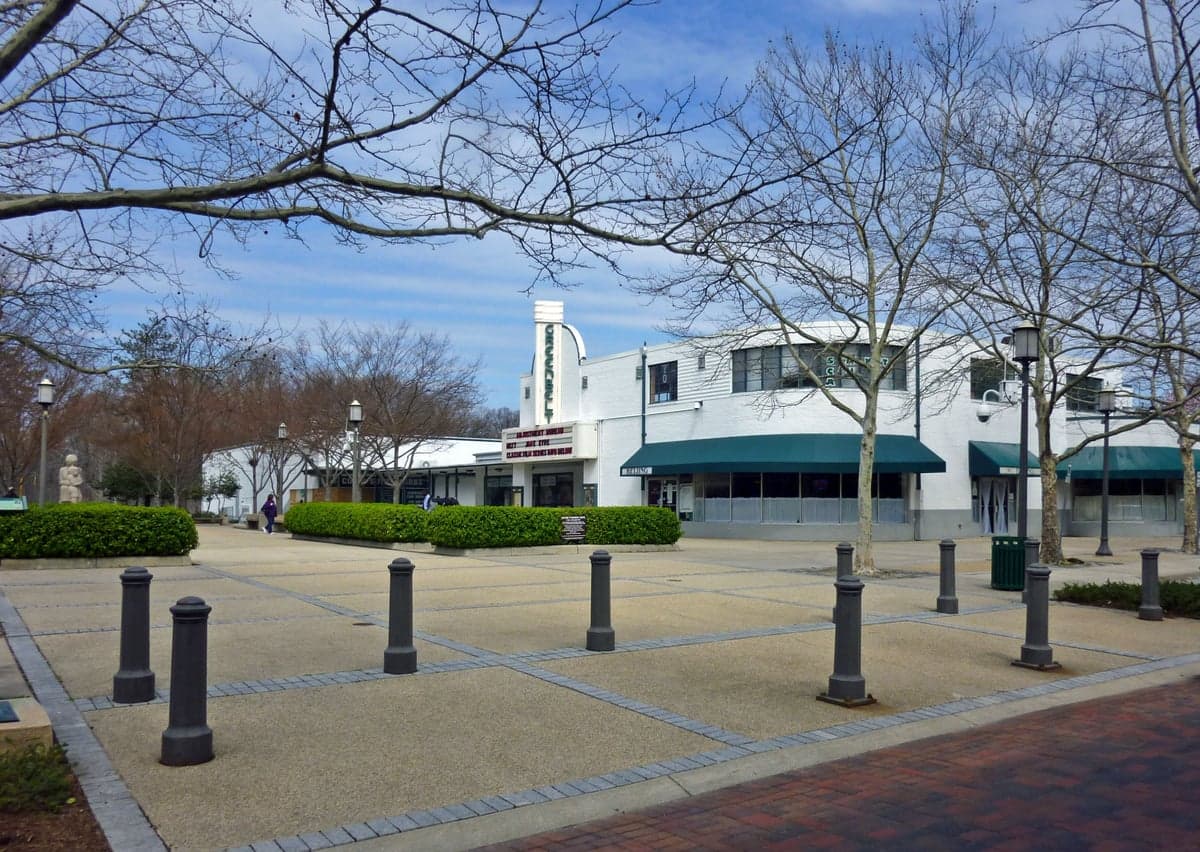
Photo: Wikipedia
Political ClimatePolitical Climate in Greenbelt, MD
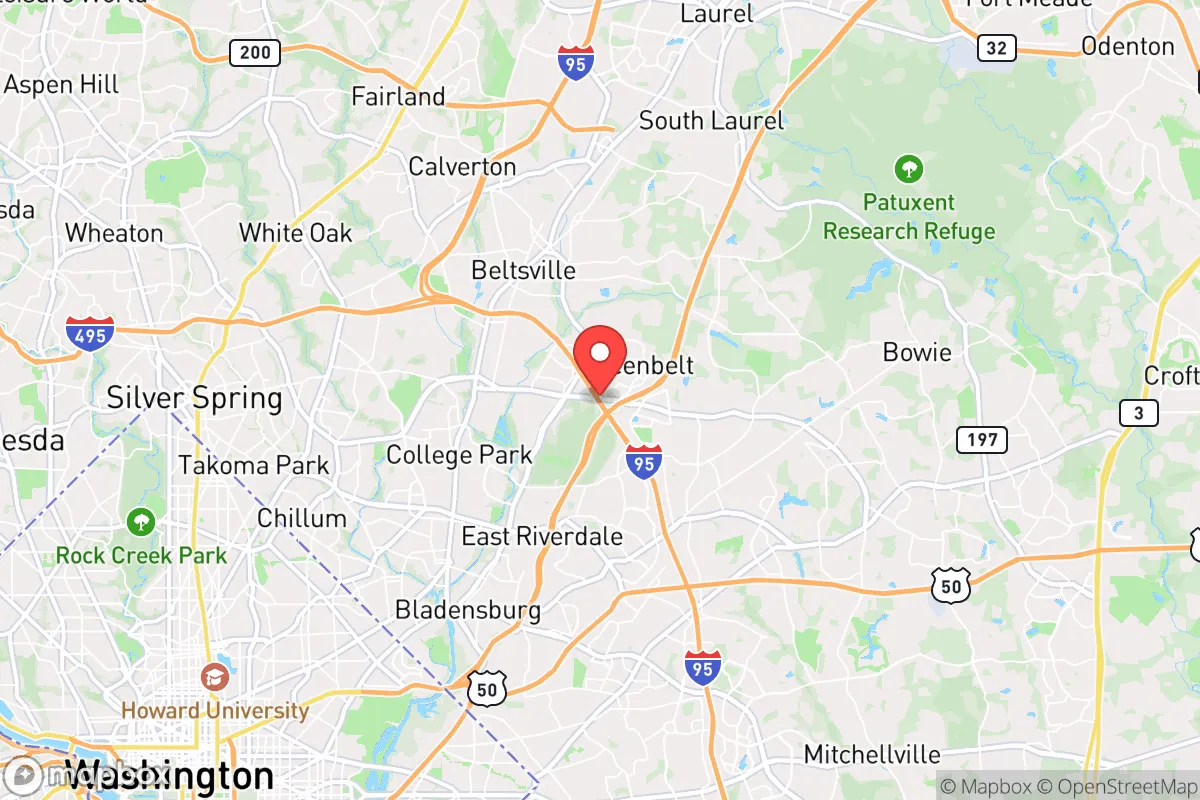
District shown is the primary district for this city’s centroid. Cities may span multiple districts.
Local Political AnalysisPolitical Analysis of Greenbelt, MD
Greenbelt, Maryland, is about as deep blue as it gets in the D.C. suburbs, with a Cook PVI of D+39 — meaning it votes nearly 40 points more Democratic than the national average. That’s not just a statistic; it’s the reality of living here. If you’re looking for a place where local government keeps its nose out of your business, this isn’t it. The political trajectory has been steadily leftward for decades, and the last few years have accelerated that shift, with city council and county officials pushing policies that feel less like community guidance and more like top-down mandates.
How it compares
To understand Greenbelt, you have to look at its neighbors. Drive 15 minutes west to Bowie, and you’ll find a more moderate, family-oriented suburb that still leans Democratic but with a healthy dose of pragmatism — people there care about schools and property values first. Head north to Laurel, and you get a mix of blue-collar and professional voters who aren’t shy about pushing back on tax hikes. But Greenbelt? It’s surrounded by Prince George’s County’s most progressive enclaves, like College Park and Hyattsville. Those towns share the same D+39 DNA, but Greenbelt takes it a step further with a city-run cooperative housing system and a council that’s quick to adopt statewide progressive priorities — think strict rent control, expansive sanctuary policies, and zoning changes that prioritize density over single-family home neighborhoods. It’s a world away from the more conservative pockets of Anne Arundel County just east, where folks still wave the Gadsden flag and expect local government to stay out of their garage renovations.
What this means for residents
For a long-time resident like me, the biggest change has been the slow creep of government into daily life. It used to be that Greenbelt was a quiet, affordable place to raise a family — you paid your taxes, you kept your yard tidy, and the city left you alone. Now, you’ve got mandatory stormwater fees, strict limits on what you can plant in your own front yard, and a growing list of business regulations that make it harder for a mom-and-pop shop to survive. The city council has been pushing for more “equity” initiatives, which sounds nice until you realize it means higher property taxes to fund programs you didn’t vote for. And with the county’s recent push to eliminate single-family zoning, you can bet your bottom dollar that your neighborhood’s character is going to change — whether you like it or not. The long-term trend is clear: more regulations, less personal freedom, and a government that sees itself as your partner in every decision, from your energy bill to your child’s school curriculum.
Culturally, Greenbelt has always had a strong sense of community — the old co-op housing and the annual festivals are genuine. But the policy distinctions are what stand out now. The city was one of the first in Maryland to adopt a “Green New Deal” resolution, which sounds ambitious until you see the cost: higher energy standards for home renovations, mandatory electric vehicle charging stations in new developments, and a push to phase out natural gas. If you value the right to choose how you heat your home or what car you drive, that’s a red flag. In the near future, I expect more of the same — tighter controls on housing, more taxes for “climate resilience,” and a local government that’s less interested in listening to the old-timers and more focused on national progressive trends. It’s a great place if you’re on board with that vision. If you’re not, you might want to look at Bowie or even farther out toward Anne Arundel, where the air is a little freer.

State Political ClimatePolitical Climate in Maryland
State Political AnalysisPolitical Environment in the State
Maryland has long been a solidly blue state, but its political landscape is far more nuanced than the statewide numbers suggest. Democrats hold a supermajority in the legislature and have won every presidential election here since 1992, but the margin has tightened in recent cycles — Joe Biden won by 33 points in 2020, down from Hillary Clinton’s 26-point win in 2016. The real story is a widening urban-rural chasm, with the Baltimore-Washington corridor driving the state’s progressive tilt while the Eastern Shore, Western Maryland, and southern counties push back hard. For a conservative considering relocation, the key question isn’t whether Maryland is red — it isn’t — but whether you can find a pocket where your values and lifestyle aren’t under constant assault.
Urban vs. rural divide
The political map of Maryland is essentially two states. The urban core — Baltimore City, Montgomery County, and Prince George’s County — produces roughly 40% of the state’s vote and is overwhelmingly Democratic. Montgomery County alone, with its wealthy, highly educated suburbs of Washington D.C., votes about 80% Democratic. Prince George’s, the wealthiest majority-Black county in the nation, is even more lopsided. These areas drive the state’s progressive agenda on taxes, education, and social policy. Meanwhile, the rest of the state pushes back. Garrett County in the far west voted 70% for Trump in 2020. Carroll County, just northwest of Baltimore, is a reliable red stronghold where Republicans hold every county commission seat. The Eastern Shore counties — Worcester, Talbot, and Queen Anne’s — are conservative bastions, though they’re seeing slow demographic change from D.C. expats. The real battleground is the suburban ring around D.C. and Baltimore: Howard County and Anne Arundel County have trended blue but still have competitive races. Frederick County is the most interesting — it flipped from red to purple over the past decade and now elects a mix of Republicans and Democrats, making it a bellwether for the state’s future.
Policy environment
Maryland’s policy environment is aggressively progressive, and it’s not subtle. The state has a progressive income tax structure with rates up to 5.75%, plus local county taxes that can push the combined rate above 8%. Property taxes are high, especially in the D.C. suburbs. The regulatory climate is dense: Maryland has some of the strictest environmental regulations in the country, a gasoline tax that’s among the top 10 nationally, and a business climate that ranks poorly for startups and manufacturing. Education policy is dominated by the Blueprint for Maryland’s Future, a massive funding plan that pours billions into K-12 but has drawn criticism for top-down mandates and lack of accountability. School choice is limited — charter schools are few and tightly controlled. On healthcare, Maryland operates an all-payer hospital rate-setting system that keeps costs relatively stable but limits competition. Election laws are among the most liberal: no-excuse mail-in voting, same-day registration, and automatic voter registration are all in place. For conservatives, the policy environment feels like a constant headwind — higher taxes, more regulation, and less local control.
Trajectory & freedom
Maryland is becoming less free by almost any measure, and recent legislation confirms the trend. On gun rights, the state already had some of the strictest laws in the nation — a handgun permit system, an assault weapons ban, and a magazine capacity limit — and in 2023 it passed a concealed carry “sensitive places” law that effectively bans firearms in most public spaces, including parks, hospitals, and public transit. That law is being challenged in court, but it signals the legislature’s intent. On parental rights, the state passed the Transgender Health Equity Act in 2023, which prohibits courts from considering a parent’s refusal to consent to gender-affirming care in custody decisions — a direct blow to parental authority. Medical freedom took a hit with strict COVID-19 vaccine mandates for healthcare workers and school staff, which remain in place. Property rights are constrained by county-level growth management laws that limit development, especially in rural areas. The tax burden continues to rise: in 2024, the legislature passed a digital advertising tax that targets large tech companies but will inevitably be passed down to consumers. The overall trajectory is toward more government control, not less.
Civil unrest & political movements
Maryland has a history of visible political activism, mostly on the left. Baltimore City saw significant protests after the death of Freddie Gray in 2015, including riots that led to a state of emergency and National Guard deployment. More recently, the Black Lives Matter movement has a strong presence in Baltimore and the D.C. suburbs. On the right, the Maryland Shall Issue gun rights group is active and well-organized, and the Maryland Republican Party has seen a grassroots resurgence in rural counties. Immigration politics are a flashpoint: Maryland is a sanctuary state under a 2023 law that limits cooperation between local law enforcement and federal immigration authorities. This has created tension in counties like Harford and Carroll, where sheriffs have publicly resisted. Election integrity remains a concern for conservatives: the state’s mail-in voting system was expanded permanently after 2020, and there have been allegations of ballot harvesting in Prince George’s County. The most visible flashpoint for a new resident would be the constant presence of political signage and activism — you’ll see “Defund the Police” signs in Baltimore and “Don’t Tread on Me” flags on the Eastern Shore, often within an hour’s drive.
Projection
Over the next 5-10 years, Maryland will likely become more progressive, not less. The D.C. suburbs are growing faster than the rest of the state, driven by federal jobs and high-income professionals who lean left. The rural counties are losing population, especially in Western Maryland and on the Eastern Shore. The state’s in-migration is overwhelmingly from other blue states, particularly Virginia and California, which reinforces the political tilt. The Republican Party is increasingly confined to a few rural strongholds and has little chance of winning statewide office without a major shift in demographics or a national realignment. For a conservative moving in now, the realistic expectation is that you’ll be living in a state where your vote for president or Senate is essentially irrelevant, but where local elections in your county or town can still matter. The key is to choose your county carefully — Carroll, Garrett, or Queen Anne’s will feel much different than Montgomery or Prince George’s.
Bottom line for a new resident: If you’re a conservative looking for a state that aligns with your values, Maryland is a tough sell. You’ll pay high taxes, deal with heavy regulation, and live under laws that often feel hostile to your beliefs. But if you’re willing to pick your county wisely and focus on local politics, you can find a community that feels like home — just know that the state government will always be working against you. The trade-off is access to one of the strongest economies on the East Coast, excellent schools in some areas, and proximity to D.C. and Baltimore. It’s a choice between freedom and opportunity, and you’ll have to decide which matters more.
* Values derived from national, state, county, city and local statistics and may differ in a specific area. Last updated: 2026-04-22T01:16:10.000Z
Narrative content on this page is AI-generated and may contain mistakes. Verify any details that matter before acting on them.
ReloMaps may earn a commission from affiliate links at no extra cost to you.

