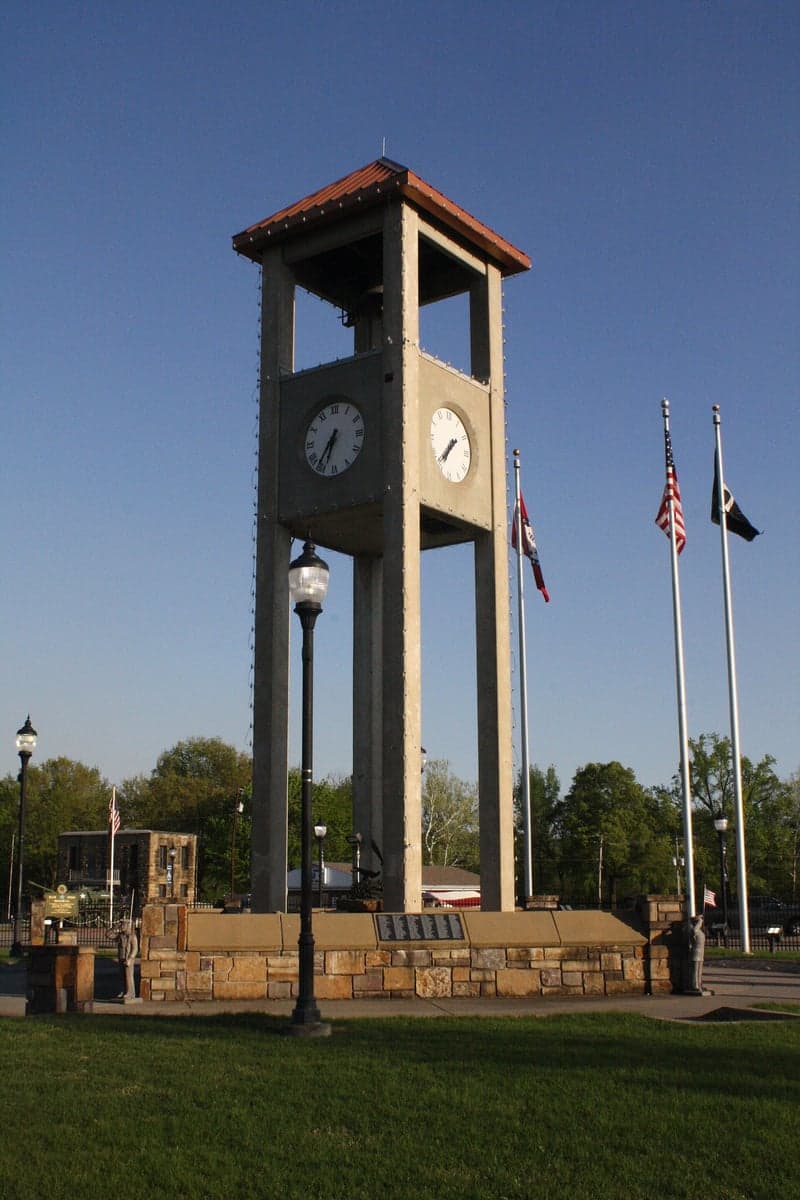
Photo: Wikipedia
Strategic Assessment of Greenwood, AR
Workable tactical position. Some exposure to population density or targets, but generally defensible in a crisis.
What does the Strategic Assessment tell us?
Our Strategic Assessment grades tactical survivability of an area. Major population centers, military targets, fallout zones, natural disasters, and border exposure all drive risk — lower exposure means a more defensible position in a crisis.
This is heavily inspired by Joel Skousen's Strategic Relocation book. Highly recommended you checkout the book ($)What does this tell us?
Our Strategic Assessment grades tactical survivability of an area. Major population centers, military targets, fallout zones, natural disasters, and border exposure all drive risk — lower exposure means a more defensible position in a crisis.
This is heavily inspired by Joel Skousen's Strategic Relocation book. Highly recommended you checkout the book ($)Strategic Pillars

Key Distances
Regional Safe Places
Below is our recommended "safe zones" in Arkansas and the surrounding area based on our strategic heuristics. For most people, it's unrealistic to live in a “safe zone” full-time due to work, family or other personal reasons. They tend to be more rural. However, many of these areas are perfect for second homes and retreat properties that double as a vacation home or even a short-term rental.
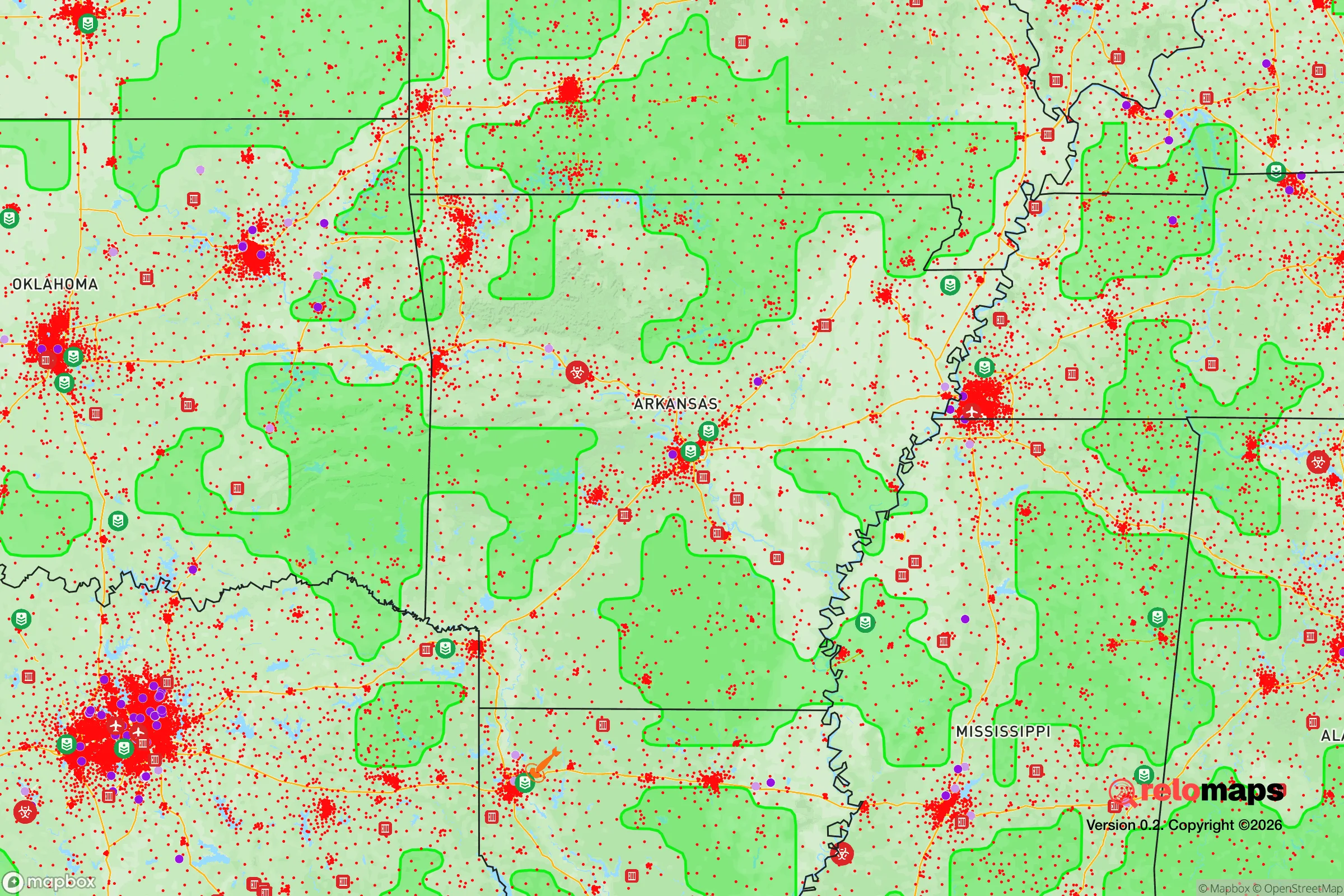
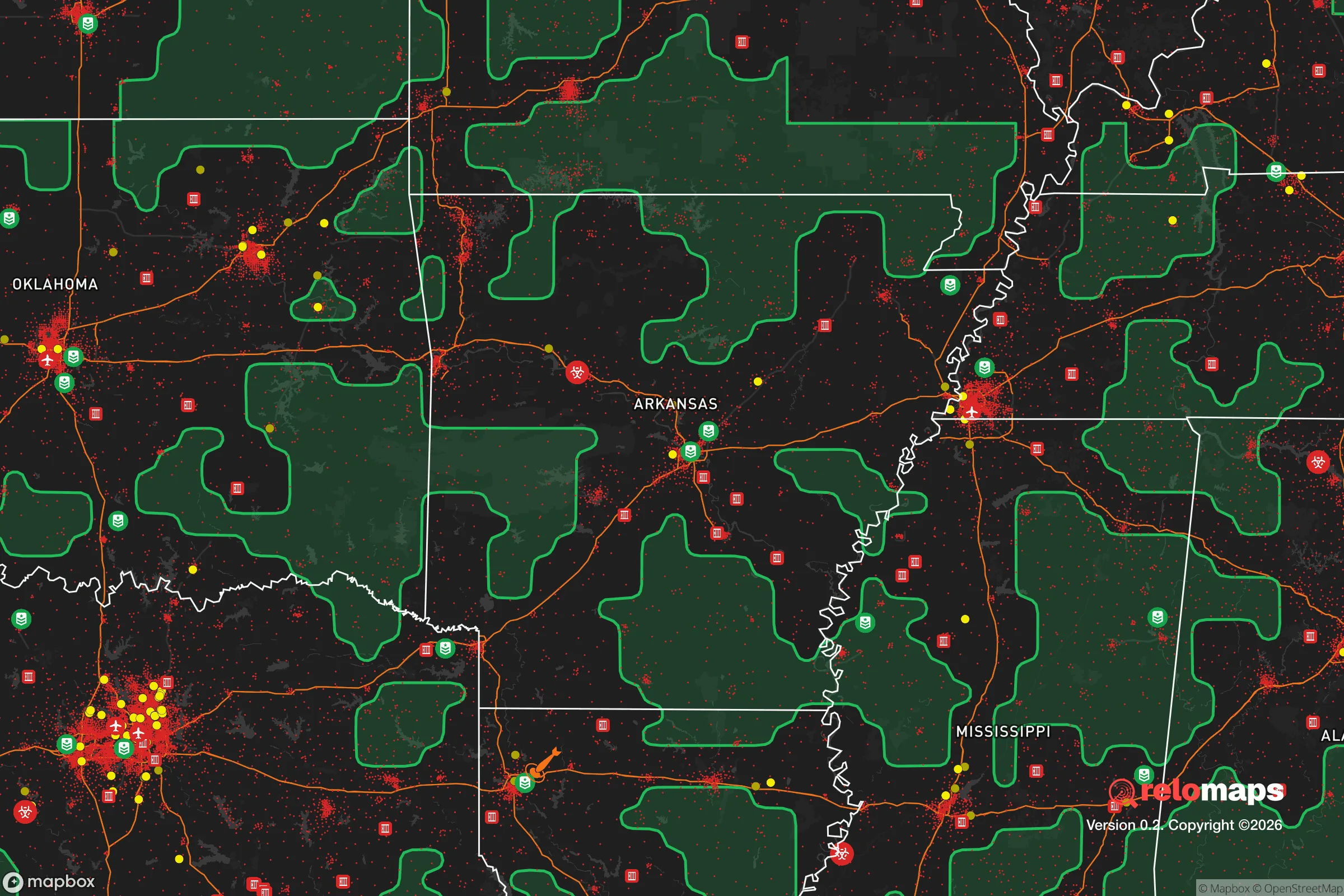


Important Note: For informational purposes only. This does not mean nothing bad ever happens in the green zones. Please use common sense. This is based on public data and modeled with AI. We tried to take a conservative approach but mistakes happen. We update this regularly as new information becomes available.
Solar Generator Recommendations
Backup power matters more here than in safer locations. We've picked three solar generators across budgets and capacity tiers — start with the budget unit if you only need a few essentials, or step up if you want to run a fridge and HVAC for days at a time.

Jackery Portable Power Station Explorer 300
Budget OptionPower on the Go: Weighing only 11 lbs, it's convenient to set up and store with book-sized foldable solar panels

BLUETTI Portable Power Station AC180
Designed for both indoor and outdoor scenarios, AC180 is highly capable as it has a robost capacity and continuous output power.

EF ECOFLOW DELTA Pro Ultra Power Station
Upgraded PickEcoFlow DELTA Pro Ultra is a whole-home energy system designed to grow with your family. Integrated with the Smart Home Panel 2, it scales to meet your evolving energy needs — keeping your home powered, intelligent, and secure through every stage of life.
We earn a commission, at no additional cost to you.
Strategic Assessment Analysis
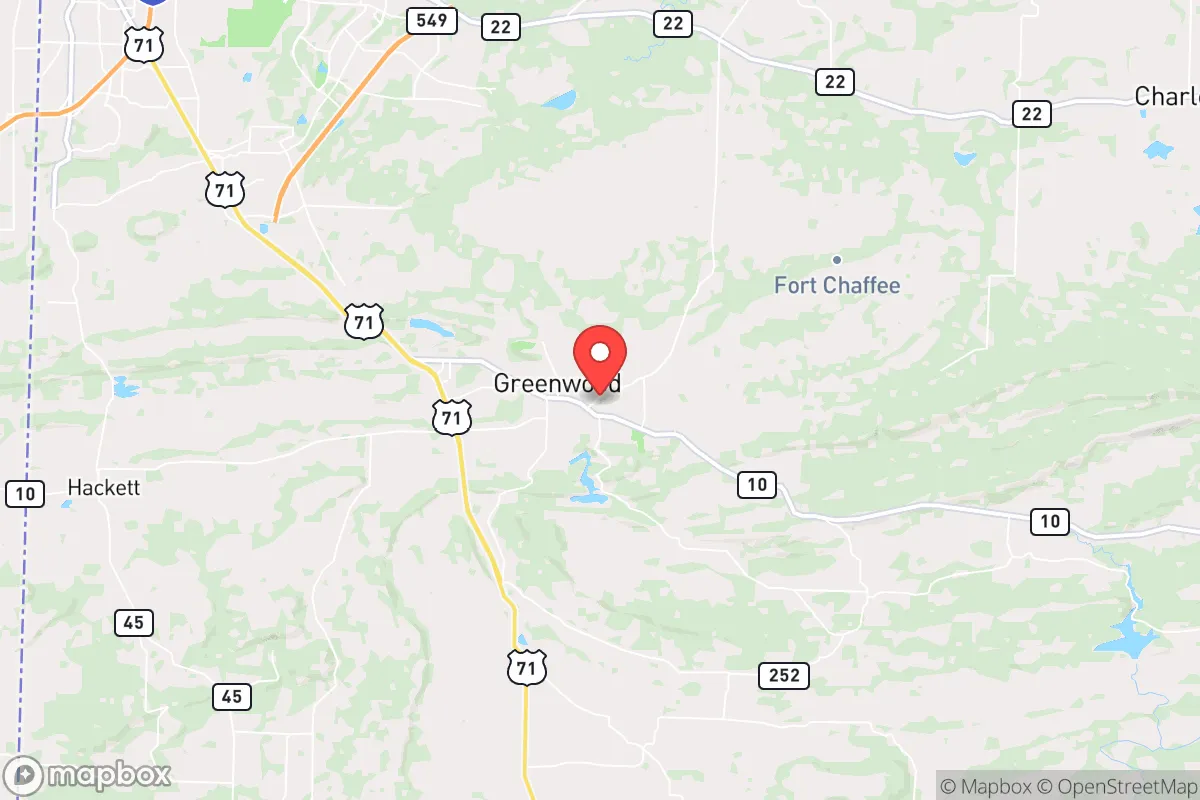
Greenwood, Arkansas, sits in a sweet spot that few relocators fully appreciate until they map out the concentric rings of risk around America’s major population centers. Tucked into the western edge of Sebastian County, roughly 15 miles south of Fort Smith and 60 miles east of the Oklahoma City metro’s sprawl, this town of about 9,500 offers a blend of rural buffer and practical infrastructure that makes it a serious candidate for anyone thinking long-term about resilience. The key advantage here isn’t just the low population density—it’s the fact that Greenwood sits outside the blast radius and immediate fallout zones of any major strategic target, while still being close enough to access medical and supply chains if things hold together. For a conservative-leaning individual or family weighing the odds of civic unrest, supply chain disruptions, or larger-scale disasters, Greenwood presents a compelling case as a base that doesn’t require you to go completely off-grid to be prepared.
Geographic position and natural advantages for long-term security
Greenwood’s location in the Arkansas River Valley gives it a few natural perks that matter when you’re thinking about self-sufficiency. The terrain is a mix of rolling hills and flat bottomland, with the Arkansas River about 10 miles north—a reliable water source that doesn’t require drilling a well in rocky ground. The Ozark National Forest and Ouachita National Forest are both within an hour’s drive, offering public land for hunting, foraging, and timber if things go sideways. The climate is temperate, with four distinct seasons but no extreme weather patterns that would force evacuation; tornadoes are a real threat in this part of the state, but Greenwood sits in a zone where the frequency is lower than in the heart of Tornado Alley further west. Annual rainfall averages around 45 inches, which means rain catchment systems are viable, and the growing season runs from April to October—long enough to put in a serious garden. The area’s elevation, roughly 500 feet above sea level, keeps it out of flood zones along the river, and the underlying geology is stable, with no significant seismic activity to worry about. For a relocator focused on long-term security, these factors add up to a location that can sustain a household without constant external inputs.
Risks, exposures, and proximity to fallout-relevant landmarks
No location is a fortress, and Greenwood has its share of vulnerabilities that a strategic relocator needs to weigh. The most obvious risk is its proximity to Fort Smith, which sits about 15 miles north and is home to a major U.S. Army depot and a regional airport that could become a staging area during a national emergency. While Fort Smith itself isn’t a high-priority nuclear target—it’s not a major command center or missile field—it does have industrial infrastructure, including a large steel mill and rail yards, that could attract secondary strikes or become a focal point for civil unrest if supply chains collapse. The interstate highway I-40 runs just north of Greenwood, connecting Oklahoma City to Little Rock; in a crisis, that corridor could become a chokepoint for refugees fleeing the larger metros, and Greenwood sits close enough to feel the ripple effects. There are no nuclear power plants within 100 miles—the nearest is the Arkansas Nuclear One plant near Russellville, about 90 miles east—so that specific fallout risk is low. However, the town is within 200 miles of both the Fort Chaffee training area and the Pine Bluff Arsenal, both of which have military significance. For a prepper mindset, the calculus is that Greenwood is far enough from major targets to avoid direct blast effects, but close enough to a regional hub that you’ll need a plan for filtering out transient populations if things get bad.
Practical resilience for a relocator: food, water, energy, and defensibility
When you start looking at the nuts and bolts of daily survival in Greenwood, the picture gets more encouraging. The town has its own municipal water system drawing from the Arkansas River via the Fort Smith water treatment plant, but that’s a single point of failure. Most homes in the surrounding rural areas rely on private wells, and the water table here is generally good—drilling depths of 100 to 300 feet are common, with decent yields. If you’re buying property, a well and a backup hand pump should be non-negotiable. The soil in the valley is loamy and productive; with proper management, a quarter-acre garden can produce enough vegetables for a family of four through the growing season, and local farmers markets in Greenwood and nearby Hackett offer access to seeds, livestock, and bulk grains. The energy grid is served by the Arkansas Electric Cooperative, which has a decent reliability record, but solar is a smart hedge—the area gets about 210 sunny days per year, which is average for the region but enough to offset a grid-down scenario with a modest panel array. Natural gas is available in town, but rural properties rely on propane, so plan accordingly. Defensibility is where Greenwood shines: the town is laid out on a grid with multiple egress routes, but the surrounding countryside is a patchwork of farms, wooded ridges, and narrow county roads that create natural chokepoints. A property with a good line of sight and a single access road is achievable within 10 minutes of town. The local law enforcement presence is small—Sebastian County has about 80 deputies for the entire county—so in a prolonged crisis, you’re largely on your own. That’s not a bug; it’s a feature for anyone who values self-reliance.
The overall strategic picture for Greenwood is one of calculated trade-offs. It’s not a remote bunker in the Idaho wilderness, and it’s not a suburban survivalist compound in the middle of nowhere. What it offers is a realistic middle ground: a town with enough infrastructure to support a normal life—schools, grocery stores, a hardware store, a small hospital—while being positioned far enough from the major flashpoints that you’re not living in the blast zone. The conservative values of the area are a practical match for the mindset of preparedness; the local culture is one of hunting, gardening, and neighborly mutual aid, not dependence on government services. For a single individual or a family looking to relocate with an eye on the long game, Greenwood deserves a serious look. The key is to buy with water and defensibility in mind, build your supplies before the next crisis hits, and understand that no location is perfect—but this one tilts the odds in your favor.

* Values derived from national, state, county, city and local statistics and may differ in a specific area. Last updated: 2026-04-29T21:42:37.000Z
Narrative content on this page is AI-generated and may contain mistakes. Verify any details that matter before acting on them.
ReloMaps may earn a commission from affiliate links at no extra cost to you.

