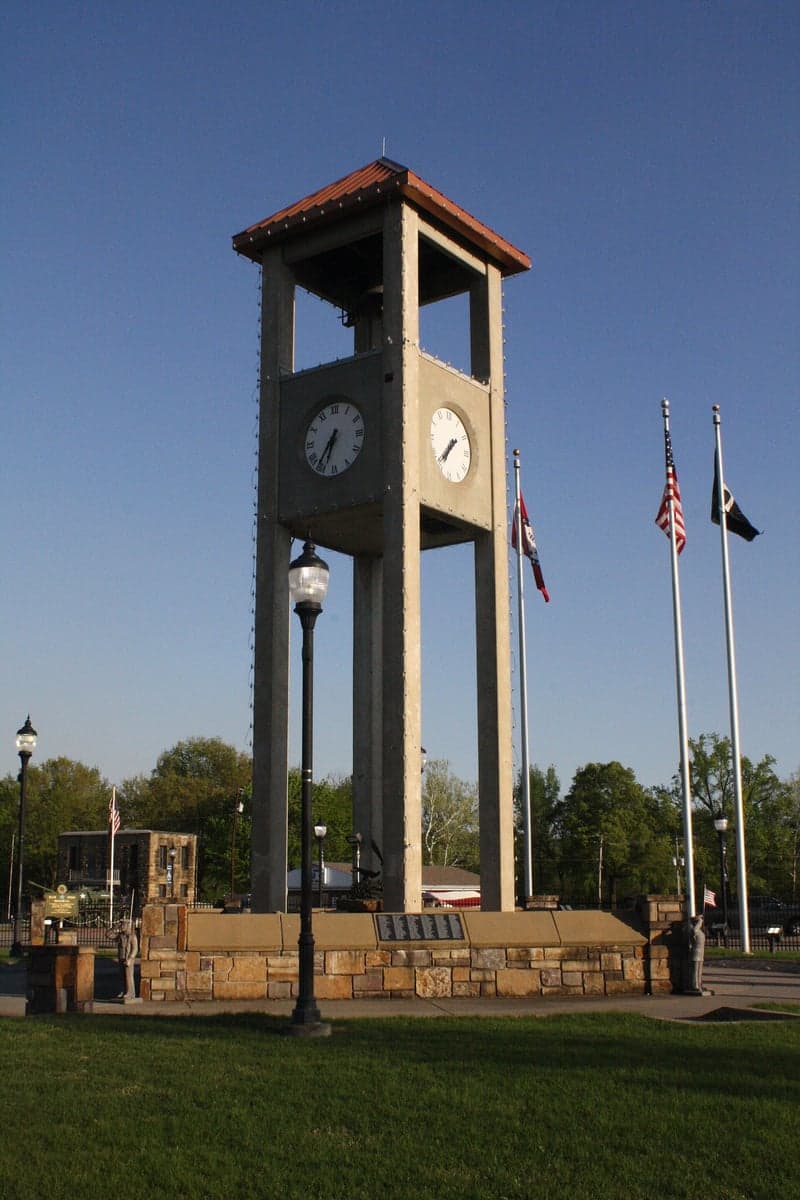
Photo: Wikipedia
Political ClimatePolitical Climate in Greenwood, AR
District shown is the primary district for this city’s centroid. Cities may span multiple districts.
Local Political AnalysisPolitical Analysis of Greenwood, AR
Greenwood, Arkansas, is about as solidly conservative as it gets, and it’s been that way for as long as anyone can remember. The Cook PVI rating of R+13 tells you the math, but it doesn’t capture the feel—this is a place where folks still wave the flag, go to church on Sunday, and expect the government to stay out of their business. The political lean here isn’t just a voting pattern; it’s a way of life that’s held steady even as some nearby towns have started to drift. If you’re looking for a community that values personal freedom and local control over the latest progressive trends, Greenwood is a breath of fresh air.
How it compares
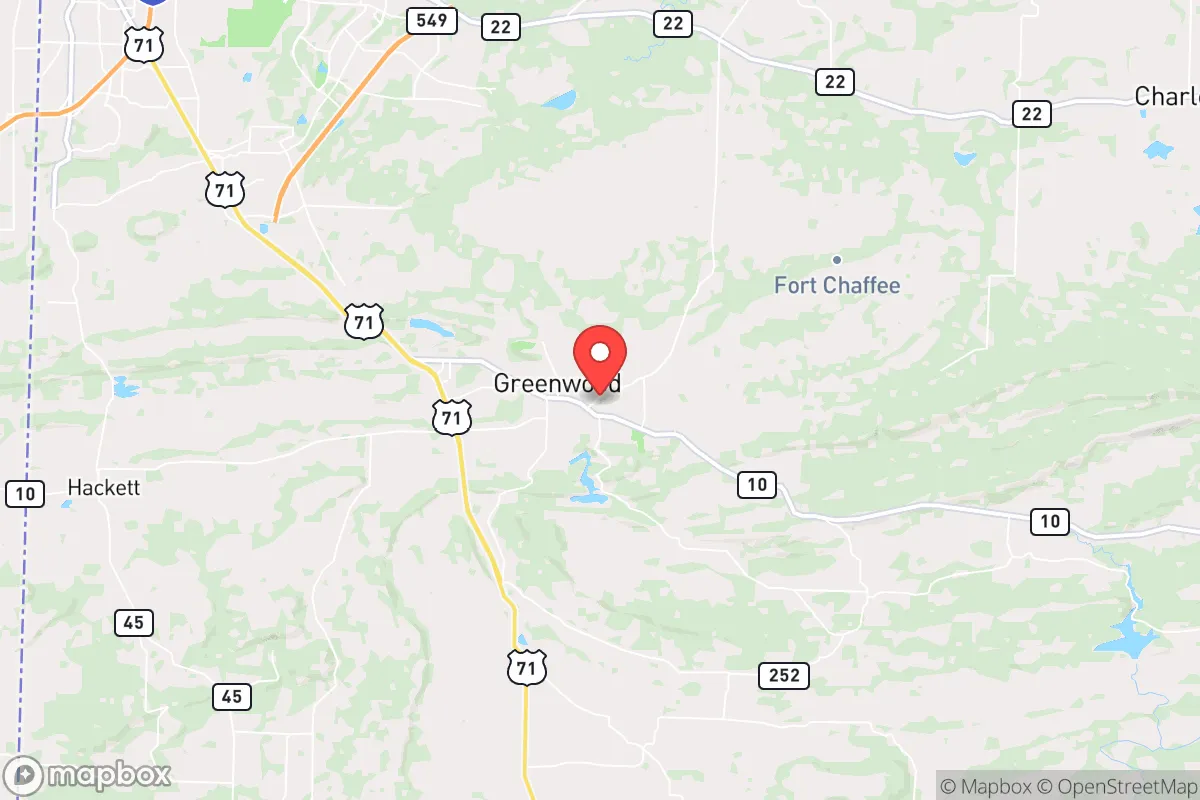
Drive 15 minutes east to Fort Smith, and you’ll notice a different energy—more urban, more diverse, and with a political tilt that’s still conservative but noticeably softer, especially in the city limits where younger voters and transplants have nudged things toward the center. Greenwood, by contrast, has stayed the course. It’s not just the R+13 rating; it’s the way local elections here rarely see a serious challenge from the left. Compare that to Fayetteville, an hour north, which is practically a different country politically—a blue island in a red state where progressive policies on taxes, zoning, and even school curriculum have taken hold. Greenwood residents look at that and see a cautionary tale about what happens when government overreach creeps in. The surrounding rural areas of Sebastian County lean heavily red, but Greenwood is the anchor, the place where conservative values haven’t been watered down by outside influence.
What this means for residents
For the people living here, the political climate translates into a daily life that feels free from a lot of the nonsense you see elsewhere. Property taxes stay reasonable because local leaders aren’t chasing every new spending program. The schools in the Greenwood School District still focus on the basics—reading, math, and respect—without pushing ideological agendas that make parents uncomfortable. You won’t find mask mandates or vaccine passports being debated at city council meetings here; that kind of government overreach got shut down fast. The downside? If you’re hoping for rapid change or big-city amenities, you might get bored. But for most residents, that’s the point. The political stability means you can plan for the long term without worrying that a new mayor or county commissioner will flip the script and start imposing policies that infringe on your rights. It’s a place where the Second Amendment is respected, where small businesses aren’t buried in red tape, and where your vote actually counts for something.
One thing that sets Greenwood apart culturally is its quiet resistance to the progressive shift you see in places like Little Rock or even parts of Bentonville. There’s a strong sense here that the federal government should keep its hands off local decisions—whether that’s land use, school board choices, or how you raise your kids. The local paper and community forums still reflect that old-school Arkansas independence. Looking ahead, the concern is that as the state grows and more people move in from blue states, they might bring their politics with them. So far, Greenwood has held the line, but it’s something to keep an eye on. If you value personal freedom and a community that doesn’t bow to every new trend, this is still one of the safest bets in the region.

State Political ClimatePolitical Climate in Arkansas
State Political AnalysisPolitical Environment in the State
Arkansas has been a reliably red state for decades, with a strong Republican lean that has only deepened since the early 2000s. The state voted for Donald Trump by a 27-point margin in 2024, and every statewide office is held by a Republican. The shift from a historically Democratic-leaning but culturally conservative state to a solidly GOP stronghold happened in the 2010s, driven by a combination of national party realignment and local backlash against progressive policies. Today, the dominant coalition is a mix of rural conservatives, evangelical Christians, and suburban families who prioritize low taxes, gun rights, and limited government.
Urban vs. rural divide
The political map of Arkansas is a textbook example of the urban-rural split. The state’s two major metro areas—Little Rock and Fayetteville-Springdale-Rogers (Northwest Arkansas)—are the only blue-ish pockets. Pulaski County (Little Rock) has trended Democratic since the 1990s, with Hillary Clinton winning it in 2016 and Joe Biden in 2020, though margins are shrinking. Washington County (Fayetteville) is more of a purple battleground, with the University of Arkansas and a growing tech sector pulling it left, but it still voted for Trump in 2024 by a slim 4-point margin. Meanwhile, the rest of the state is deeply red. Rural counties like Baxter (Mountain Home), Faulkner (Conway), and Saline (Benton) routinely vote 70-80% Republican. The Arkansas Delta, once a Democratic stronghold due to African American voters, has seen turnout drop and GOP gains, though Phillips County and Lee County remain reliably blue. The real story is in the exurbs: counties like Lonoke and White have flipped from blue to deep red since 2010, driven by retirees and families fleeing Little Rock’s rising crime and taxes.
Policy environment
Arkansas’s policy environment is aggressively conservative. The state has a flat income tax of 4.4% (down from 7% in 2015), no estate tax, and a sales tax cap of 6.5% (local add-ons push it to 9% in some cities). Property taxes are low, with a median effective rate of 0.6%. Education policy is a mixed bag: the state has a school choice program (the Succeed Scholarship) for special needs and low-income students, but it’s limited compared to Florida or Arizona. In 2023, Governor Sarah Huckabee Sanders signed the LEARNS Act, which expanded school vouchers, banned critical race theory in classrooms, and raised teacher salaries to $50,000. Healthcare is a flashpoint: Arkansas expanded Medicaid under the private option in 2013, but the state has since imposed work requirements (currently tied up in court). Abortion is banned with no exceptions for rape or incest, following the 2022 trigger law. Election laws are strict: voter ID is required, early voting is limited to 15 days, and absentee ballots require a notary or two witnesses. The state also passed a 2021 law banning ballot drop boxes. For a conservative, this is a policy paradise—low taxes, school choice, and election integrity—but the Medicaid expansion and lingering Obamacare subsidies are a sore spot for libertarians.
Trajectory & freedom
Arkansas is becoming more free in several key areas, but not without caveats. The 2021 “Second Amendment Preservation Act” prohibits state enforcement of federal gun laws that violate the Second Amendment, effectively nullifying any future federal gun bans. In 2023, the state passed a permitless carry law, allowing any adult 18+ to carry a concealed firearm without a license. Parental rights got a boost with the 2023 “Parental Bill of Rights,” which requires schools to notify parents of any medical or mental health services offered to their child and bans transgender procedures for minors. Medical freedom is a mixed bag: the state banned COVID-19 vaccine mandates for government employees and contractors in 2021, but it hasn’t touched occupational licensing reform or medical marijuana (legal since 2016, but with a restrictive program). Property rights are strong, with no statewide zoning and a “right to farm” law protecting agricultural operations from nuisance lawsuits. The biggest red flag for freedom is the state’s tax burden: while income tax is falling, sales taxes are high, and the state has a regressive tax structure that hits low-income families hardest. Also, the state’s “Arkansas Data Privacy Act” (2023) is weak, doing little to protect personal data from corporate collection. Overall, the trajectory is positive for conservatives, but the state still has room to cut taxes and roll back regulations.
Civil unrest & political movements
Arkansas has seen relatively little civil unrest compared to blue states, but there have been flashpoints. In 2020, Black Lives Matter protests in Little Rock turned violent, with property damage and arrests, but they were small compared to Portland or Seattle. The state’s response was swift: Governor Asa Hutchinson deployed the National Guard and the legislature passed a 2021 law increasing penalties for rioting and blocking highways. Immigration politics are muted, as Arkansas has a small foreign-born population (5%), but the state passed a 2023 law requiring all businesses to use E-Verify and banning sanctuary cities. There’s no serious secession or nullification movement, though the “Arkansas Sovereignty Act” (2021) asserts the state’s right to ignore federal mandates it deems unconstitutional. Election integrity controversies flared in 2020 when Trump supporters protested outside the state capitol, but no major fraud was found. The most visible political movement is the rise of the “Arkansas Freedom Caucus,” a group of hardline state legislators who have pushed for further tax cuts, school choice, and anti-abortion laws. They’ve clashed with more moderate Republicans over budget priorities, but they’ve been effective. A new resident would notice the strong presence of evangelical churches in politics—pastors are openly political, and the state’s “Pastor Protection Act” (2015) shields clergy from performing same-sex marriages. The left is weak but organized in Fayetteville and Little Rock, with groups like Indivisible Arkansas and the Arkansas Public Policy Panel pushing for Medicaid expansion and environmental regulations.
Projection
Over the next 5-10 years, Arkansas will likely become even more conservative, driven by in-migration from blue states and natural population growth in the northwest. The state’s population is projected to grow 5% by 2030, with most of that in Benton and Washington counties, where Californians and Illinoisans are moving for lower taxes and housing costs. This will shift the political center of gravity further right, as these newcomers are often conservative or libertarian. The Arkansas Freedom Caucus will continue to push for a flat income tax of 3% or lower, school choice expansion, and a repeal of the Medicaid expansion (though that’s politically difficult). The biggest wild card is the state’s education system: if the LEARNS Act succeeds in raising test scores and expanding choice, Arkansas could become a model for school reform. If it fails, the state may see a backlash from rural districts. Demographically, the state is aging (median age 38) and white (72%), but the Hispanic population is growing fast (8% and rising), which could shift politics in the long term—though Hispanic voters in Arkansas are more conservative than nationally. The biggest threat to freedom is the state’s reliance on sales taxes and federal funds; if the economy slows, the state may face budget pressure that forces tax hikes or spending cuts. For a new resident, expect a state that is stable, safe, and increasingly aligned with conservative values, but with a few lingering progressive holdouts in the cities.
Bottom line for a new resident: Arkansas offers a low-tax, high-freedom environment for conservatives, with strong gun rights, school choice, and a culture that respects traditional values. The urban areas (Little Rock, Fayetteville) are more liberal, but the state government and most communities are deeply red. If you’re moving here, you’ll find a place where your vote counts, your taxes are low, and your family’s rights are protected—but you’ll need to accept the trade-offs of a rural state with limited amenities and a hot, humid climate. For a conservative parent or single person looking to escape blue-state overreach, Arkansas is a solid bet.
* Values derived from national, state, county, city and local statistics and may differ in a specific area. Last updated: 2026-04-29T21:42:37.000Z
Narrative content on this page is AI-generated and may contain mistakes. Verify any details that matter before acting on them.
ReloMaps may earn a commission from affiliate links at no extra cost to you.

