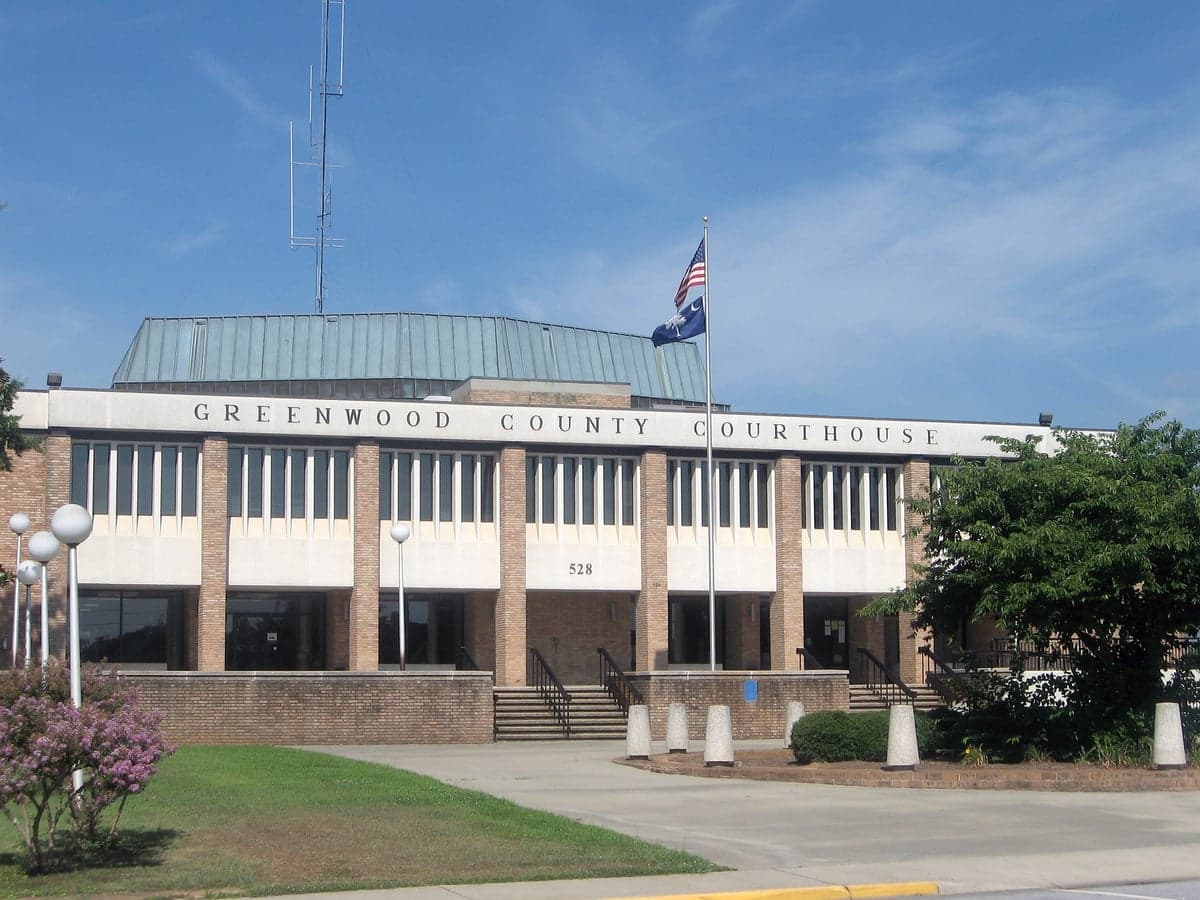
Photo: Wikipedia
Personal Sovereignty in Greenwood, SC
Viable for self-reliance. Generally workable, though some barriers may limit total independence.
What does Personal Sovereignty tell us?
Personal Sovereignty measures your capacity for self-reliance and independence with minimal government friction. Higher scores mean fewer barriers between you and the way you want to live... but it assumes you have the space you need and good neighbors.
What does this tell us?
Personal Sovereignty measures your capacity for self-reliance and independence with minimal government friction. Higher scores mean fewer barriers between you and the way you want to live... but it assumes you have the space you need and good neighbors.
State Policy
Energy independence: Importer (25% of energy produced in-state)
Personal Liberty
Homesteading

Personal Liberty Analysis
Greenwood, South Carolina, offers a notably high degree of personal sovereignty compared to much of the coastal and urbanized United States, largely because the state government has deliberately limited its own reach into daily life. For a conservative-leaning individual or family concerned with government overreach, this area presents a workable balance of low regulatory friction, strong self-defense protections, and a legal environment that still respects parental and property rights. While no place is a libertarian utopia, Greenwood’s autonomy environment is built on a foundation of state-level preemption laws, a light tax burden, and a cultural expectation that the government stays out of your business unless absolutely necessary.
Tax burden and regulatory posture: How South Carolina’s fiscal and legal framework protects your wallet and choices
South Carolina’s tax structure is deliberately designed to leave more money in your pocket and fewer decisions in the hands of bureaucrats. The state’s income tax is a flat 3% on most earned income as of 2026, with no local income tax layered on top, meaning Greenwood residents keep 97% of their earnings before federal taxes. Property taxes are among the lowest in the Southeast, with the effective rate on owner-occupied homes hovering around 0.55% of assessed value — roughly half the national average. Greenwood County’s millage rates are moderate, but the state’s 4% assessment cap on owner-occupied residential property prevents the kind of runaway tax hikes that push people out of their homes in places like California or New York. On the regulatory side, South Carolina is a right-to-work state with no state-level occupational licensing for dozens of common trades, and the state legislature has actively preempted local governments from enacting their own gun control, plastic bag bans, or rental ordinances. This means Greenwood City Council cannot unilaterally impose restrictions that would infringe on your ability to run a business, carry a firearm, or manage your property. The regulatory posture is best described as “hands-off unless there’s a clear public safety risk,” which aligns well with a survivalist or prepper mindset that values the ability to make your own arrangements without seeking permission.
Self-defense and gun law specifics: Stand your ground, constitutional carry, and what it means for daily life
South Carolina is a strong Second Amendment state, and Greenwood’s legal environment reflects that. The state has had constitutional carry (permitless carry) since 2024, meaning any law-abiding adult 18 or older can carry a concealed firearm without a permit, background check, or training requirement. For those who want reciprocity when traveling, a standard CWP (Concealed Weapon Permit) is still available and recognized by over 30 states. South Carolina also has a stand your ground law with no duty to retreat in any place you have a legal right to be, which covers your home, vehicle, and workplace. The castle doctrine is explicitly codified, and the law presumes that someone unlawfully entering your home intends to cause harm, giving you a legal presumption of reasonable fear. Greenwood County’s sheriff’s office has a reputation for being supportive of gun rights, and local ranges like the Greenwood Gun Club offer practical training space. For preppers, the legal framework allows you to keep firearms for defense without worrying about magazine capacity bans, “assault weapon” registries, or waiting periods — none of which exist at the state level. The only notable restriction is that you cannot carry into a federal building, a school (without a CWP and permission), or a place that serves alcohol for on-site consumption, but those are standard limitations nationwide.
Self-reliance and homesteading viability: Lot sizes, zoning, and off-grid feasibility in Greenwood
Greenwood’s rural character and county-level zoning make it one of the more feasible places in the Southeast for a self-reliant lifestyle. Within the city limits, standard residential lots are typically one-quarter to one-half acre, but unincorporated Greenwood County has no county-wide zoning, meaning you can buy a 2- to 10-acre parcel and keep chickens, goats, or a small garden without needing a special permit. The city itself has zoning, but it’s relatively permissive: you can have backyard chickens in most residential zones as long as you follow setback rules, and there’s no ban on beekeeping or rainwater collection. For off-grid living, South Carolina law explicitly protects the right to collect rainwater from your roof, and there are no state-level prohibitions on composting toilets or solar panels. The main practical hurdle is that the county requires a septic system permit for any dwelling, and the health department will inspect for proper waste treatment, but that’s a reasonable public health measure rather than a sovereignty violation. Greenwood’s climate — with a 220-day growing season and 48 inches of annual rainfall — supports year-round food production, and the local extension office at Clemson University offers free soil testing and canning classes. For preppers looking to build a bug-out location or a permanent homestead, the area’s combination of cheap land (rural parcels often go for $3,000–$8,000 per acre), lax regulation, and agricultural support infrastructure makes it a solid choice.
Personal liberties: Parental rights, medical autonomy, free speech, and property protections
South Carolina has taken a clear stance on several key personal liberty issues that matter to conservative families. Parental rights are explicitly protected in state law, with a 2023 statute affirming that parents have the fundamental right to direct the upbringing, education, and medical care of their children. This means no school district in Greenwood can hide a child’s gender transition or mental health treatment from parents, and parents can opt their children out of any curriculum they find objectionable without needing a reason. On medical autonomy, South Carolina does not have a state-level vaccine mandate for adults, and while schools require standard childhood immunizations for enrollment, religious and medical exemptions are available and generally honored. The state also has a broad health care conscience clause that allows medical professionals and patients to refuse treatments they find morally objectionable. Free speech protections are robust: South Carolina has no hate speech laws that criminalize political or religious expression, and the state’s public universities (including Lander University in Greenwood) are required by law to maintain a “marketplace of ideas” policy that prohibits viewpoint discrimination. Property rights are further strengthened by the state’s private property protection act, which requires the government to prove a “compelling public interest” before using eminent domain, and to pay 125% of fair market value if the taking is for private economic development. For someone worried about government overreach, these protections create a legal buffer that makes it harder for the state to intrude into your family, your body, your speech, or your land.
Overall, Greenwood’s personal sovereignty profile places it in the top tier of South Carolina locations for those who prioritize autonomy. Compared to the Upstate’s more developed areas like Greenville, Greenwood has less regulatory creep and cheaper land; compared to the coast, it avoids the tourism-driven restrictions and higher property taxes. The main trade-off is that you’re trading away some convenience and economic opportunity for that freedom — Greenwood’s job market is smaller and more manufacturing-focused than the booming tech hubs. But for a single individual or family who values the ability to live as they see fit, keep their earnings, defend themselves, and raise their children without government interference, Greenwood offers a legal and cultural environment that respects those choices. It’s not a prepper paradise — you still have to pay taxes and follow building codes — but it’s a place where the government is more of a background presence than a daily obstacle.

* Values derived from national, state, county, city and local statistics and may differ in a specific area. Last updated: 2026-04-30T01:37:18.000Z
Narrative content on this page is AI-generated and may contain mistakes. Verify any details that matter before acting on them.
ReloMaps may earn a commission from affiliate links at no extra cost to you.

