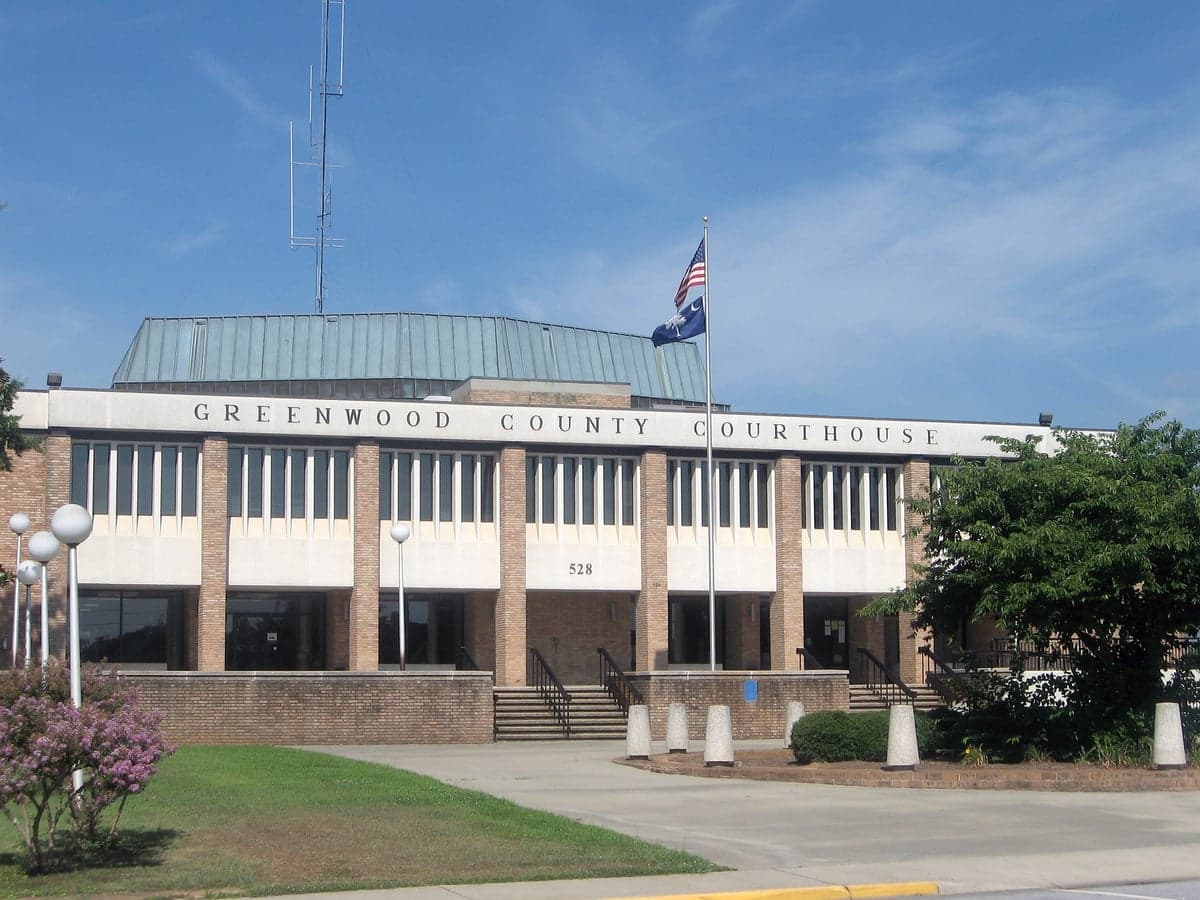
Photo: Wikipedia
Strategic Assessment of Greenwood, SC
Meaningful friction. Expect exposure to either population pressure, blast zones, or natural disaster risk. Consider buying a retreat property.
What does the Strategic Assessment tell us?
Our Strategic Assessment grades tactical survivability of an area. Major population centers, military targets, fallout zones, natural disasters, and border exposure all drive risk — lower exposure means a more defensible position in a crisis.
This is heavily inspired by Joel Skousen's Strategic Relocation book. Highly recommended you checkout the book ($)What does this tell us?
Our Strategic Assessment grades tactical survivability of an area. Major population centers, military targets, fallout zones, natural disasters, and border exposure all drive risk — lower exposure means a more defensible position in a crisis.
This is heavily inspired by Joel Skousen's Strategic Relocation book. Highly recommended you checkout the book ($)Strategic Pillars

Key Distances
Regional Safe Places
Below is our recommended "safe zones" in South Carolina and the surrounding area based on our strategic heuristics. For most people, it's unrealistic to live in a “safe zone” full-time due to work, family or other personal reasons. They tend to be more rural. However, many of these areas are perfect for second homes and retreat properties that double as a vacation home or even a short-term rental.
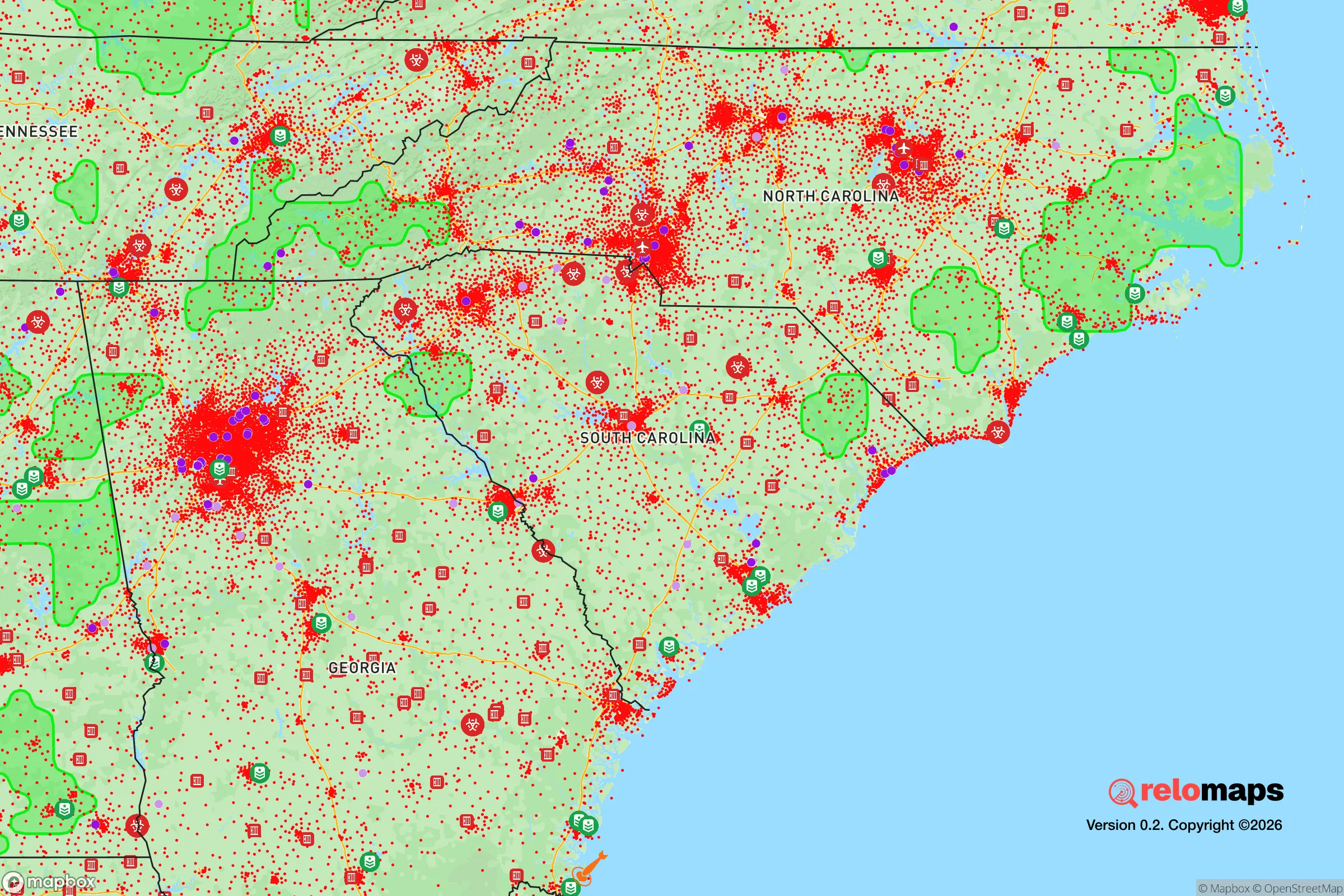
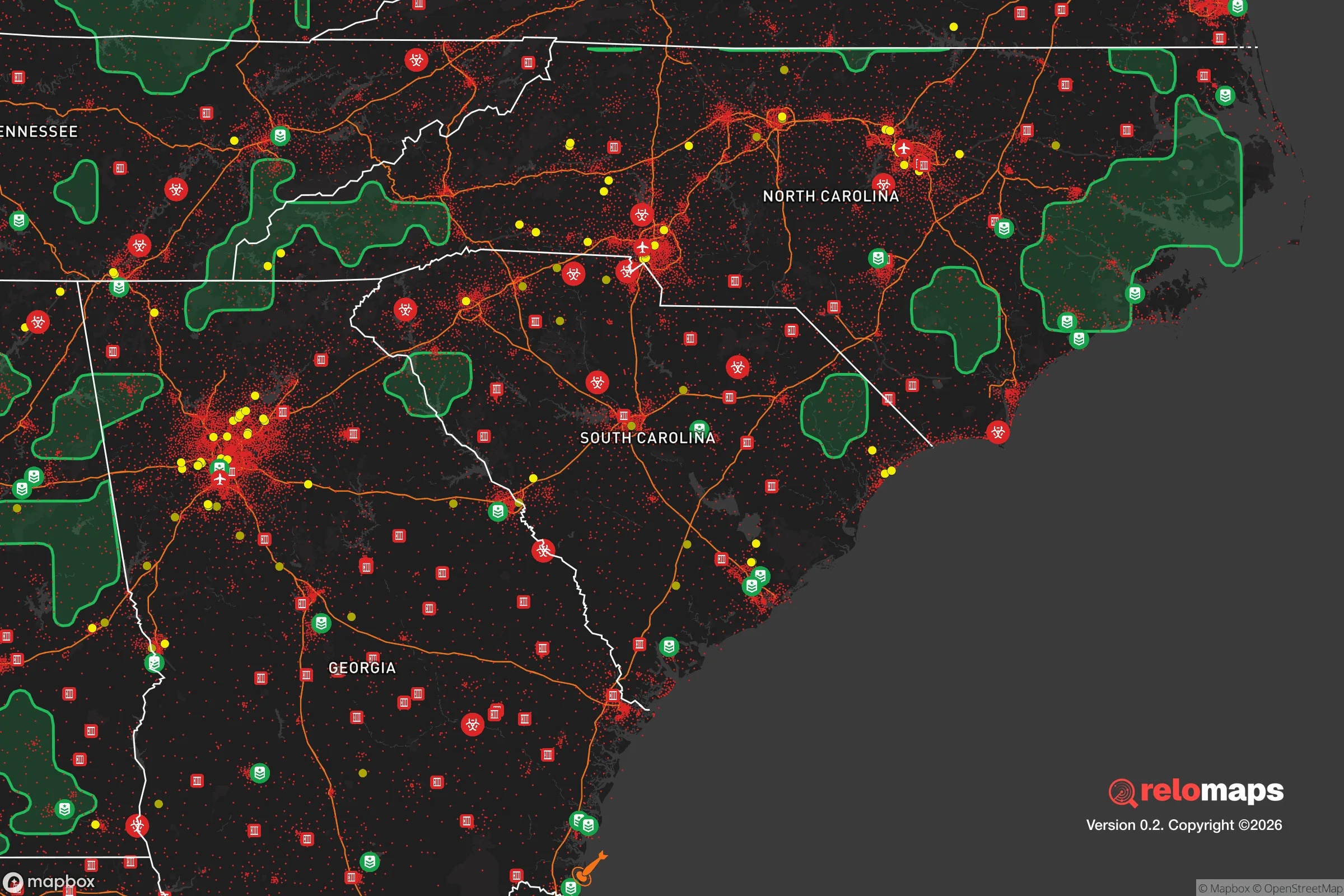


Important Note: For informational purposes only. This does not mean nothing bad ever happens in the green zones. Please use common sense. This is based on public data and modeled with AI. We tried to take a conservative approach but mistakes happen. We update this regularly as new information becomes available.
Solar Generator Recommendations
Backup power matters more here than in safer locations. We've picked three solar generators across budgets and capacity tiers — start with the budget unit if you only need a few essentials, or step up if you want to run a fridge and HVAC for days at a time.

Jackery Portable Power Station Explorer 300
Budget OptionPower on the Go: Weighing only 11 lbs, it's convenient to set up and store with book-sized foldable solar panels

BLUETTI Portable Power Station AC180
Designed for both indoor and outdoor scenarios, AC180 is highly capable as it has a robost capacity and continuous output power.

EF ECOFLOW DELTA Pro Ultra Power Station
Upgraded PickEcoFlow DELTA Pro Ultra is a whole-home energy system designed to grow with your family. Integrated with the Smart Home Panel 2, it scales to meet your evolving energy needs — keeping your home powered, intelligent, and secure through every stage of life.
We earn a commission, at no additional cost to you.
Strategic Assessment Analysis
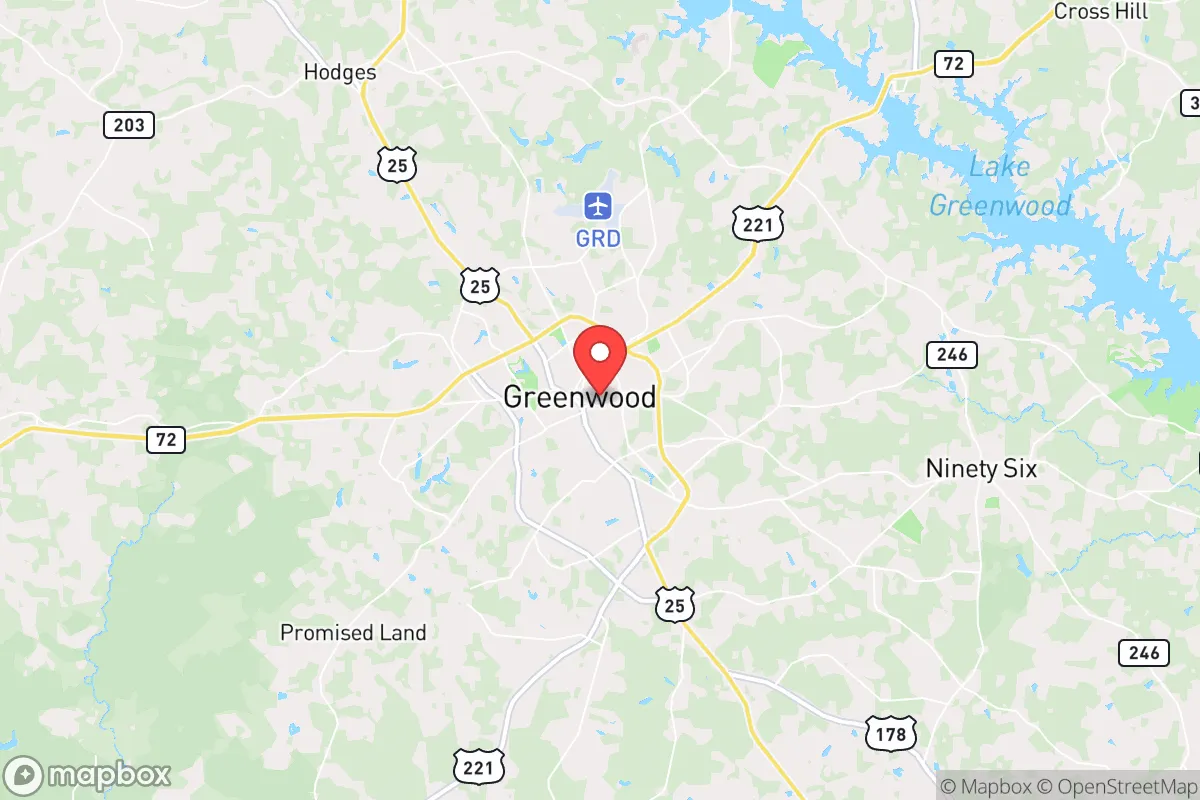
Greenwood, South Carolina, offers a strategic relocation option for those prioritizing resilience, offering a blend of geographic isolation and practical self-sufficiency that is increasingly rare in the modern Southeast. Positioned roughly 90 miles west of Columbia and 50 miles south of Greenville, the city sits in a sweet spot—close enough to regional resources but far enough from the immediate blast radius of major metropolitan targets. Its location in the Piedmont region, away from the coast and major interstates, provides a natural buffer against both hurricane storm surge and the chaos of urban evacuation routes, making it a defensible base for those planning for civic unrest or large-scale disruptions.
Geographic position and natural advantages for long-term security
Greenwood’s geography is its first line of defense. The city lies in the rolling hills of the Piedmont, an area with elevations ranging from 600 to 800 feet, which offers natural drainage and reduces flood risk compared to coastal or river-bottom communities. The surrounding landscape is a mix of hardwood forests and farmland, providing ample cover and resources for those who know how to use them. Lake Greenwood, a 11,400-acre reservoir created by the Buzzard's Roost Dam, is the area’s crown jewel for water security—a reliable, year-round freshwater source that can support both drinking needs and small-scale irrigation. The lake’s 212 miles of shoreline also offer numerous secluded access points for off-grid living or bug-out locations. The region’s moderate climate, with average highs in the 80s in summer and lows in the 30s in winter, reduces the strain on heating and cooling systems, a practical advantage for extended power outages. The absence of major military bases, nuclear power plants, or critical infrastructure within a 30-mile radius means Greenwood is unlikely to be a primary target in a conflict scenario, a key consideration for those concerned with fallout dangers.
Risks, exposures, and proximity to fallout-relevant landmarks
No location is without vulnerabilities, and Greenwood has its share. The most significant risk is its proximity to Interstate 26, a major east-west corridor that connects Charleston to the Tennessee border. In a mass evacuation event, I-26 could become a chokepoint, with refugees from the coast funneling through the Upstate. Greenwood sits about 20 miles south of I-26, which is close enough to hear the roar of fleeing traffic but far enough to avoid being overrun if you have a plan. The Buzzard's Roost Dam on Lake Greenwood is a double-edged sword: it provides water and hydroelectric power, but a failure—whether from sabotage, earthquake, or neglect—could flood downstream areas along the Saluda River. The dam is inspected regularly, but in a collapse scenario, the risk is real for properties within a mile of the river. For those worried about nuclear fallout, the nearest significant target is the Savannah River Site (a nuclear facility) about 70 miles south, and the Oconee Nuclear Station near Seneca is roughly 40 miles northwest. While not in the immediate blast zone, prevailing winds from the southwest could carry fallout from Savannah River Site toward Greenwood in a worst-case event. The city’s low population density—around 23,000 residents—means that a localized disaster would not trigger the kind of cascading chaos seen in metro areas, but it also means emergency services are thinner. The Greenwood County Sheriff’s Office and local fire departments are capable but not over-resourced; response times in rural areas can exceed 20 minutes, so self-reliance is non-negotiable.
Practical resilience for a relocator: food, water, energy, and defensibility
For the individual or family serious about preparedness, Greenwood offers a foundation that can be built upon. Water is the strongest asset: Lake Greenwood is a public reservoir, and with a simple filtration system (like a Berkey or Sawyer), you can draw unlimited water year-round. The city’s municipal water comes from the lake and is treated, but in a grid-down scenario, the lake itself is your backup. The area has a growing number of private wells in rural subdivisions, which are preferable for off-grid living—just ensure the well is at least 100 feet deep and tested for radon, which is common in Piedmont granite. Food security is achievable: the surrounding county has active farmland producing soybeans, corn, and poultry, and the Greenwood Farmers Market operates seasonally, but for long-term resilience, you’ll want to establish your own garden. The soil is clay-heavy but amendable, and the growing season runs from April to October, allowing for two crop cycles. Deer and turkey are abundant in the Sumter National Forest, which borders the county to the west, providing a protein source for those with hunting skills. Energy is a mixed bag. Duke Energy provides grid power, but outages from ice storms or summer thunderstorms are common—plan for at least 3-5 days without electricity per year. Solar is viable, with the region averaging 215 sunny days annually, but you’ll need battery storage to handle the overcast winter months. Defensibility is where Greenwood shines. The terrain is hilly and wooded, with narrow two-lane roads that can be easily monitored or blocked. Properties with a long driveway, a creek or pond, and a view of the approach are available for under $200,000, a fraction of what you’d pay in Colorado or Texas. The local gun culture is strong, with multiple ranges and gun shops, and South Carolina is a constitutional carry state, meaning no permit is needed to carry a concealed weapon. This is a community where neighbors look out for each other, but they also expect you to handle your own business.
The overall strategic picture for Greenwood is one of cautious optimism for the prepared relocator. It is not a fortress—no place is—but it offers a rare combination of water security, low target risk, and affordable land that makes it a viable base for weathering the storms ahead. The city’s conservative leanings and self-reliant culture align with a prepper mindset, and the local economy, anchored by manufacturing and healthcare, provides enough stability to build a life without drawing unwanted attention. The key is to act before the next crisis: secure a property with a well and a defensible position, stockpile supplies for 90 days, and build relationships with like-minded neighbors. Greenwood won’t save you from a direct hit, but it gives you a fighting chance when the rest of the country is scrambling. For those willing to put in the work, this is a solid bet.

* Values derived from national, state, county, city and local statistics and may differ in a specific area. Last updated: 2026-04-30T01:37:18.000Z
Narrative content on this page is AI-generated and may contain mistakes. Verify any details that matter before acting on them.
ReloMaps may earn a commission from affiliate links at no extra cost to you.

