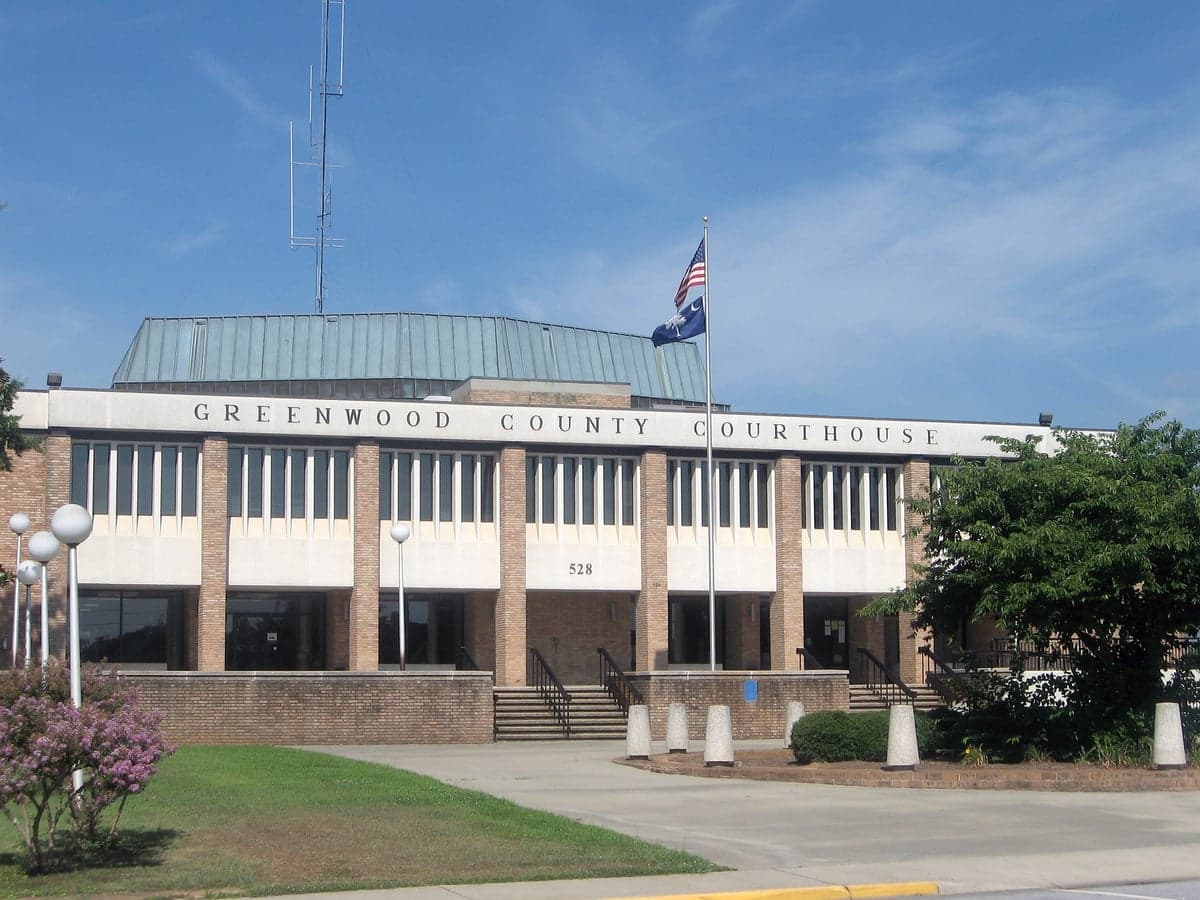
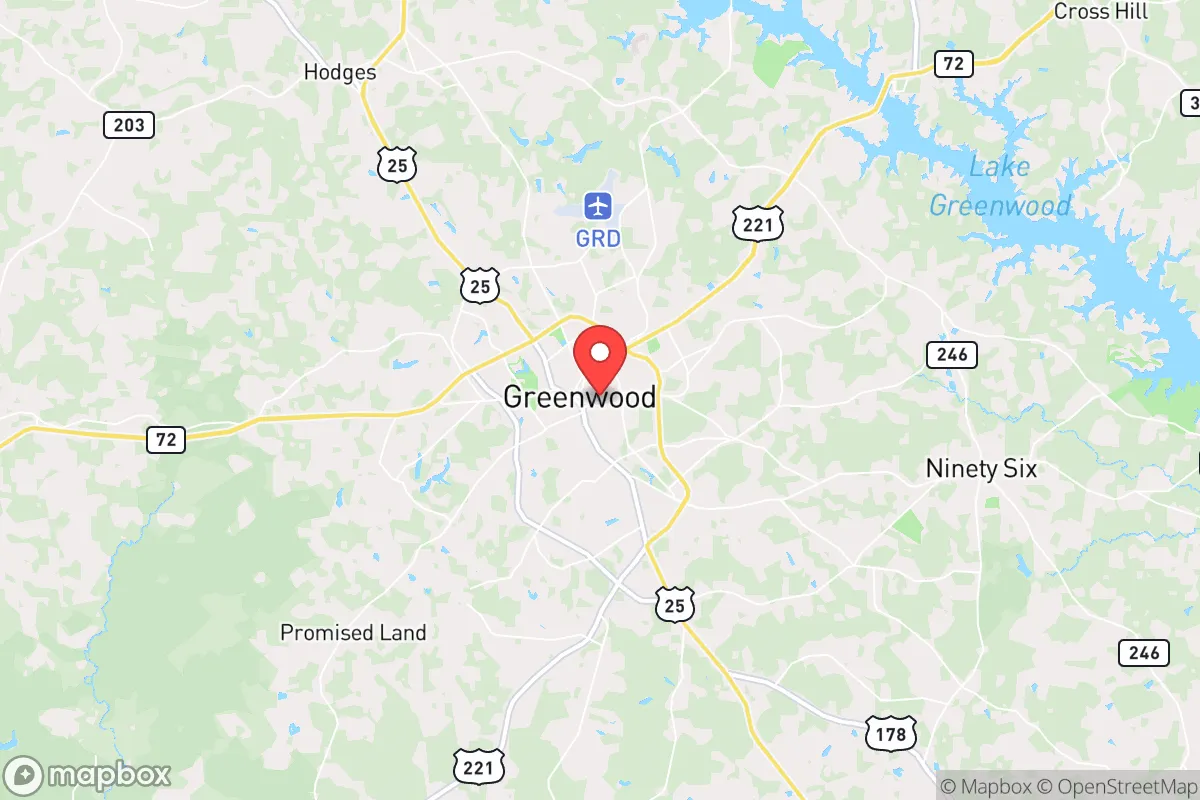
Photo: Wikipedia
Demographics of Greenwood, SC
Affluence Level in Greenwood, SC
A low-income area with significant economic hardship. Household wealth and educational attainment are well below national averages.
People of Greenwood, SC
The people of Greenwood, South Carolina, today form a majority-Black city of 22,527 residents with a distinctive small-manufacturing and healthcare character, where nearly half the population identifies as Black (49.4%) and a significant white minority (38.6%) is concentrated in specific historic neighborhoods. The city is notably less diverse than the national average, with a foreign-born share of just 3.3% — roughly one-third the U.S. rate — and a Hispanic population of 8.9% that has grown steadily since 2000. Greenwood’s identity is rooted in its textile and industrial past, and its population remains relatively stable, with modest growth driven by regional healthcare expansion and retirement migration from the surrounding Lakelands region.
How the city was settled and grew
Greenwood was founded in the 1820s as a small trading post at the intersection of the Charleston and Edgefield roads, but its population boom came after the Civil War, when the Charleston and Western Carolina Railway arrived in 1852. The city’s first major wave of settlers were white yeoman farmers and merchants from the South Carolina upcountry, who established cotton plantations and later textile mills along the Saluda River. By the 1890s, Greenwood became a textile manufacturing hub, drawing a second wave of rural white workers from the surrounding counties into mill villages such as Matthews Mill Village and Panola Mill Village, where company-owned housing and company stores defined daily life. A third wave — Black families from the rural Deep South — arrived between 1910 and 1940, seeking work in the mills and in domestic service; they settled in the West End and North Greenwood neighborhoods, which remain predominantly Black today. The city’s population peaked at around 25,000 in the 1960s, then declined slightly as textile jobs moved offshore.
Modern era (post-1965)
After the 1965 Immigration and Nationality Act, Greenwood saw only a trickle of foreign-born residents — far less than coastal South Carolina cities. The city’s Black population share rose from roughly 35% in 1970 to 49.4% today, driven by natural increase and by white flight to unincorporated areas like Ninety Six and Hodges. The Hispanic population, now 8.9%, began growing in the 1990s as poultry processing plants (notably the nearby Pilgrim’s Pride plant) and construction jobs attracted Mexican and Central American workers; they have concentrated in the East Side and along the U.S. 25 corridor. East and Southeast Asian residents (1.0%) are a small but visible presence, largely professionals in healthcare and academia at Self Regional Healthcare and Piedmont Technical College, living in the Springfield area near the hospital. Indian-subcontinent residents (0.5%) are almost entirely physicians and engineers, clustered in the same hospital-adjacent neighborhoods. The white population, now 38.6%, is older and more suburban, with many families having moved to Lake Greenwood developments or to the Kirksey area south of town.
The future
Greenwood’s population is slowly aging and slightly shrinking — the city lost about 3% of its residents between 2010 and 2020 — but the metro area is growing as retirees and remote workers buy lakefront property. The Black-white divide is likely to persist, with Black residents concentrated in the urban core and white residents in the outer ring, though the Uptown Greenwood revitalization is attracting some young professionals of all races. The Hispanic population is growing but remains small; it is expected to plateau at around 12-14% as second-generation families assimilate and move to larger cities. Foreign-born growth will likely remain minimal, as Greenwood lacks the job diversity and immigrant networks of Greenville or Spartanburg. The city is not tribalizing into distinct ethnic enclaves so much as maintaining a stable Black-majority core with white and Hispanic rings — a pattern common in smaller Southern industrial towns.
For someone moving in now, Greenwood offers a low-cost, low-crime environment with a strong sense of place, but the population is not diversifying rapidly. The city is becoming a quieter, older version of itself — a place where newcomers are most likely to find community through churches, the hospital, or the lake, rather than through ethnic or immigrant networks. The demographic future is one of gradual homogenization, not fragmentation.

* Values derived from national, state, county, city and local statistics and may differ in a specific area. Last updated: 2026-04-30T01:37:18.000Z
Narrative content on this page is AI-generated and may contain mistakes. Verify any details that matter before acting on them.
ReloMaps may earn a commission from affiliate links at no extra cost to you.

