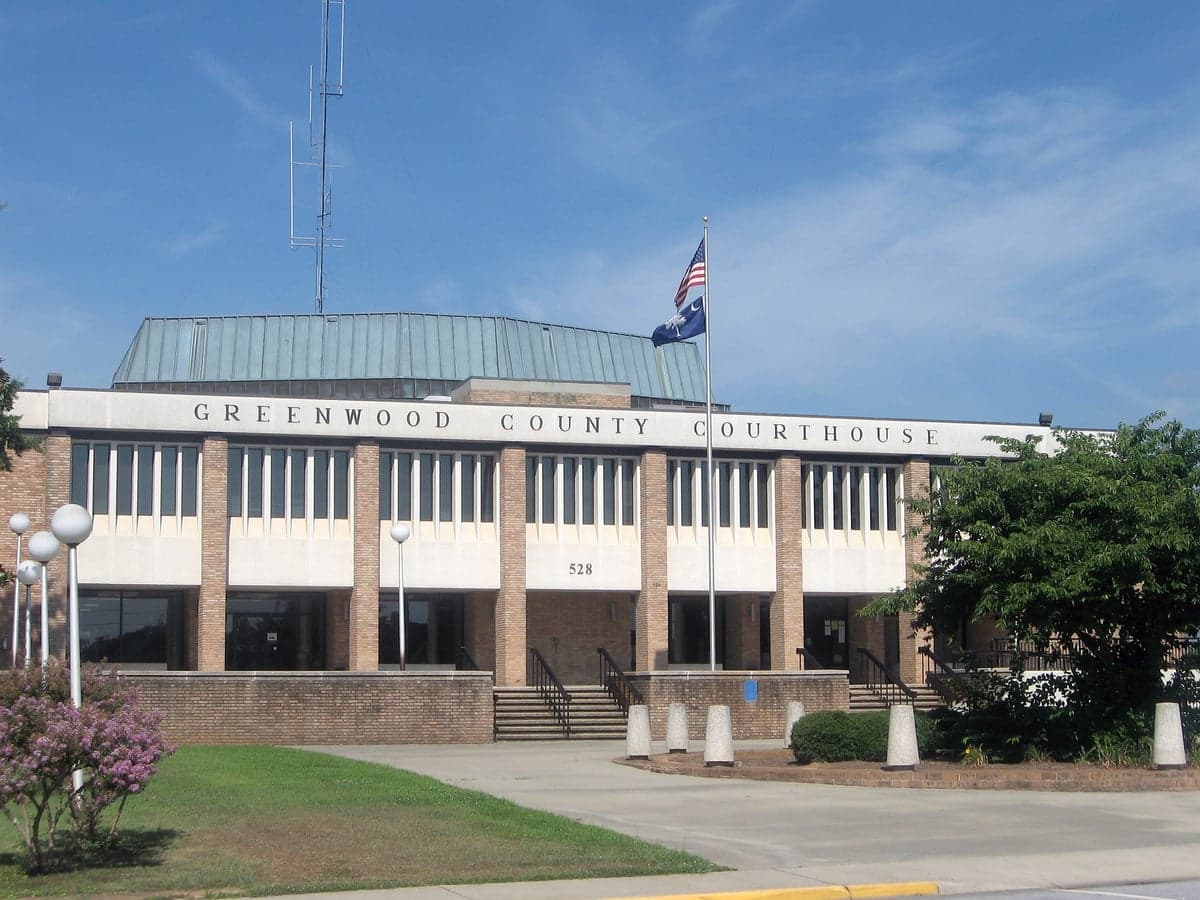
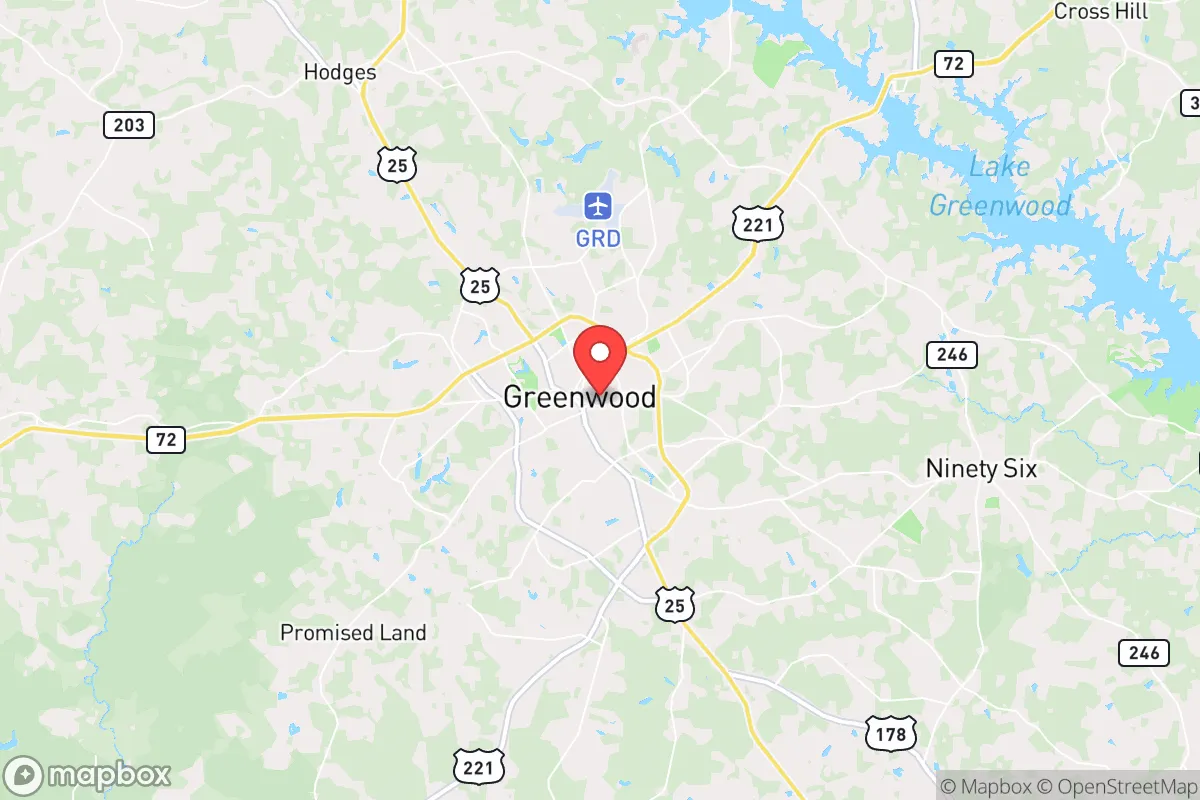
Photo: Wikipedia
Political ClimatePolitical Climate in Greenwood, SC
District shown is the primary district for this city’s centroid. Cities may span multiple districts.
Local Political AnalysisPolitical Analysis of Greenwood, SC
Greenwood, South Carolina, has long been a solidly conservative stronghold, and that hasn't changed much. The Cook PVI rating of R+21 tells you everything you need to know about the baseline politics here—this area leans heavily Republican, and it's been that way for as long as I can remember. You don't see the kind of wild swings you get in some other parts of the state; it's pretty steady, with most folks voting for smaller government, lower taxes, and a respect for the Second Amendment. That said, like everywhere else, you can feel the pressure from the outside world creeping in, especially from the bigger cities nearby.
How it compares
If you drive an hour east to Columbia, you're in a completely different world—politically, culturally, everything. That's where you see the state government and the university crowd pushing a more progressive agenda, and it's a real contrast to what we have here. Same goes for Greenville, which is about 45 minutes north; it's gotten a lot more diverse and, frankly, a lot more liberal in the last decade, especially with all the transplants moving in for the tech and manufacturing jobs. Down here in Greenwood, we're still closer to the rural, small-town values you find in places like Abbeville or McCormick. The local county council and school board elections are where the real fights happen, and they're usually about keeping taxes low and making sure the government doesn't get too big for its britches. It's a good reminder that not everyone in South Carolina wants to follow the lead of the big cities.
What this means for residents
For the people who live here, the political climate means a lot of things are left up to you, not the government. You won't find a lot of overreach when it comes to personal freedoms—things like how you run your business, what you teach your kids, or whether you want to carry a firearm. The local leadership generally understands that the best government is the one that stays out of your way. That's a big deal for families and small business owners who just want to be left alone to live their lives. The downside is that you have to stay vigilant. Every few years, you'll see a push from some group trying to bring in the kind of policies you see in Columbia or Greenville—like zoning restrictions that hurt property rights or school curriculum changes that don't align with local values. It's a constant battle, but so far, the community has held the line pretty well.
One thing that sets Greenwood apart is the strong sense of local control. The city council and county commission are made up of people you know, not career politicians from somewhere else. They're the ones you see at the grocery store or at the high school football game. That keeps things grounded. But I'll be honest—there's a growing concern about the long-term trend. As the state gets more populated and the influence from places like Charleston and Greenville spreads, you can feel the pressure to adopt more progressive policies. It's not here yet, but you have to keep an eye on it. If you're looking for a place where your voice still matters and the government isn't trying to run your life, Greenwood is still a good bet. Just don't get complacent—because the fight to keep it that way is never really over.

State Political ClimatePolitical Climate in South Carolina
State Political AnalysisPolitical Environment in the State
South Carolina has long been a reliably red state, with a Republican lean that has only deepened over the past two decades. The GOP holds supermajorities in both chambers of the state legislature, and the state has voted for the Republican presidential candidate in every election since 1980, with margins widening from about 6 points in 2000 to over 17 points in 2024. The dominant coalition is a mix of traditional conservatives, evangelical Christians, and a growing number of transplants from the Northeast and Midwest who are drawn by low taxes and a slower pace of life. However, the state is not monolithic—the coastal Lowcountry and the Midlands are seeing demographic shifts that are slowly chipping away at the GOP's dominance, particularly in suburban areas around Charleston and Columbia.
Urban vs. rural divide
The political map of South Carolina is a textbook case of the urban-rural split. The state's most populous county, Greenville County in the Upstate, is a Republican stronghold that delivered over 60% of its vote to Donald Trump in 2024. The entire I-85 corridor from Greenville to Spartanburg is deeply red, fueled by a booming manufacturing and logistics economy and a strong evangelical presence. In contrast, Charleston County is the state's most competitive major metro, with a Democratic lean driven by the city of Charleston itself, the growing tech and tourism workforce, and a significant African American population. The county voted for Joe Biden in 2020 and Kamala Harris in 2024, but the surrounding suburbs like Mount Pleasant and Summerville are more purple, with many fiscally conservative but socially moderate transplants. Richland County, home to Columbia, is reliably Democratic thanks to the state capital's government workforce and the University of South Carolina, while neighboring Lexington County is one of the most Republican suburban counties in the nation. The rural Pee Dee region, including Florence and Myrtle Beach, votes heavily Republican, though the Grand Strand's retiree influx has introduced some libertarian-leaning independents. The key takeaway: if you want deep red, head to the Upstate or the rural Lowcountry; if you want a more mixed environment, the coastal suburbs are where the political tension lives.
Policy environment
South Carolina's policy environment is broadly conservative, with a few notable exceptions. The state has a flat income tax rate of 6.2% (phasing down to 6% by 2026), and no state-level property tax on vehicles or business inventory. Sales tax is 6% statewide, with local options pushing it to 9% in some areas like Charleston. The regulatory posture is business-friendly, with a right-to-work law and a tort reform system that caps non-economic damages in medical malpractice cases. Education policy is a mixed bag: the state has a robust school choice program through the Education Scholarship Trust Fund, which provides vouchers for private school tuition, but public school funding remains below the national average and teacher pay is among the lowest in the Southeast. Healthcare is a flashpoint—South Carolina did not expand Medicaid under the Affordable Care Act, leaving roughly 200,000 low-income adults in the coverage gap. Election laws are strict: voter ID is required, early voting was expanded to two weeks in 2022, but absentee voting requires an excuse. The state also passed a six-week abortion ban in 2023, which is currently being litigated. For a conservative, the policy environment is largely favorable, but the lack of Medicaid expansion and the ongoing fight over abortion access create friction points that could shift with future court rulings or legislative changes.
Trajectory & freedom
South Carolina is trending toward more personal freedom in several key areas, but with some concerning backsliding. On the positive side, the state passed constitutional carry (permitless concealed carry) in 2024, making it the 29th state to do so. Gun rights are broadly protected, with no red flag law, no universal background checks, and a strong castle doctrine. Parental rights were strengthened in 2023 with the "Parents' Bill of Rights," which requires schools to notify parents of curriculum changes and medical services offered. On the negative side, the state's medical marijuana bill has stalled repeatedly, and recreational marijuana remains illegal with no decriminalization in sight. Property rights are generally strong, but the state's use of eminent domain for economic development projects—like the Boeing plant in North Charleston—has raised concerns among libertarians. The biggest freedom concern is the state's COVID-era emergency powers, which were not significantly rolled back after the pandemic; the governor still has broad authority to issue executive orders without legislative approval. For a conservative moving in, the trajectory is mostly positive, but the lack of medical freedom and the lingering emergency powers are red flags worth watching.
Civil unrest & political movements
South Carolina has seen relatively low levels of civil unrest compared to other states, but there are active political movements on both sides. The most visible flashpoint in recent years was the Confederate flag removal from the Statehouse grounds in 2015, which was a deeply divisive issue that galvanized both progressive activists and traditionalist conservatives. The state has a strong Second Amendment sanctuary movement, with over 30 counties passing resolutions opposing any future federal gun restrictions. Immigration politics are less heated than in border states, but there is a vocal minority pushing for stricter enforcement, particularly in the Upstate where the ICE detention center in Lancaster County has been a target of protests. Election integrity controversies flared after 2020, with the state GOP pushing for stricter voter ID laws and purging inactive voters from rolls, but no major fraud was ever proven. The most visible political movement is the Moms for Liberty chapter in Lexington County, which has been active in school board meetings over critical race theory and LGBTQ+ curriculum. For a new resident, the political climate is generally calm, but you'll notice the culture war playing out in school board elections and local zoning debates, particularly in the fast-growing suburbs.
Projection
Over the next 5-10 years, South Carolina will likely remain a solidly red state, but the margins will narrow in the coastal counties. The biggest demographic shift is the influx of retirees and remote workers from the Northeast and California, who are drawn to the Lowcountry's beaches and the Upstate's mountains. These transplants tend to be fiscally conservative but socially moderate, which could push the state toward a more libertarian-leaning Republicanism rather than the current evangelical-dominated model. The Charleston metro area is the epicenter of this change, with its growing tech sector and high cost of living attracting a younger, more diverse population. The state's rural areas will continue to hemorrhage population, deepening the urban-rural divide. On policy, expect continued fights over school choice expansion, Medicaid reform, and abortion access. The biggest wildcard is the state's rapid population growth—South Carolina was the fastest-growing state in the nation in 2023—which will strain infrastructure and housing, potentially leading to more government intervention in zoning and development. For a conservative moving in now, expect the state to stay red but become more culturally diverse and economically dynamic, with the political battles shifting from culture war issues to growth management and tax policy.
For a conservative individual or family considering relocation, South Carolina offers a strong foundation of low taxes, gun rights, and parental control in education. The key is choosing the right location: the Upstate (Greenville, Spartanburg) offers the most reliably conservative environment, while the coastal suburbs (Mount Pleasant, Summerville) provide a more moderate but still Republican-leaning option. Avoid the urban cores of Charleston and Columbia if you want to escape progressive politics. The state's trajectory is generally positive, but keep an eye on the influx of out-of-state transplants and the ongoing fight over emergency powers—these are the two factors that could shift the political climate in the next decade. Bottom line: South Carolina is a safe bet for conservatives, but it's not immune to the demographic and cultural changes reshaping the Sun Belt.
* Values derived from national, state, county, city and local statistics and may differ in a specific area. Last updated: 2026-04-30T01:37:18.000Z
Narrative content on this page is AI-generated and may contain mistakes. Verify any details that matter before acting on them.
ReloMaps may earn a commission from affiliate links at no extra cost to you.

