Photo: Wikipedia
Quality of Life in Greer, SC
Above-average quality of iife. The area offers a reasonable cost of living, decent mobility, and a mix of neighborhood amenities.
What does Quality of Life tell us?
Quality of Life blends cost of living, nearby amenities, socioeconomic signals, and neighborhood character. City-level scores represent the whole municipality; individual neighborhoods can differ.
What does this tell us?
Quality of Life blends cost of living, nearby amenities, socioeconomic signals, and neighborhood character. City-level scores represent the whole municipality; individual neighborhoods can differ.
Cost of Living
3% below national average
The Real Cost of Living in Greer, SC for 2026
| Tier | Individual | Family (4) |
|---|---|---|
| Survival | $18k | $34k |
| Comfortable | $51k | $75k |
| Luxury | $133k+ | $207k+ |
| Elite (Top 5%) | $157k+ | $243k+ |
106%
The Area Signal
A metric tracking the socioeconomic signals of the area.
Hobbies
Explore the areaGroceries
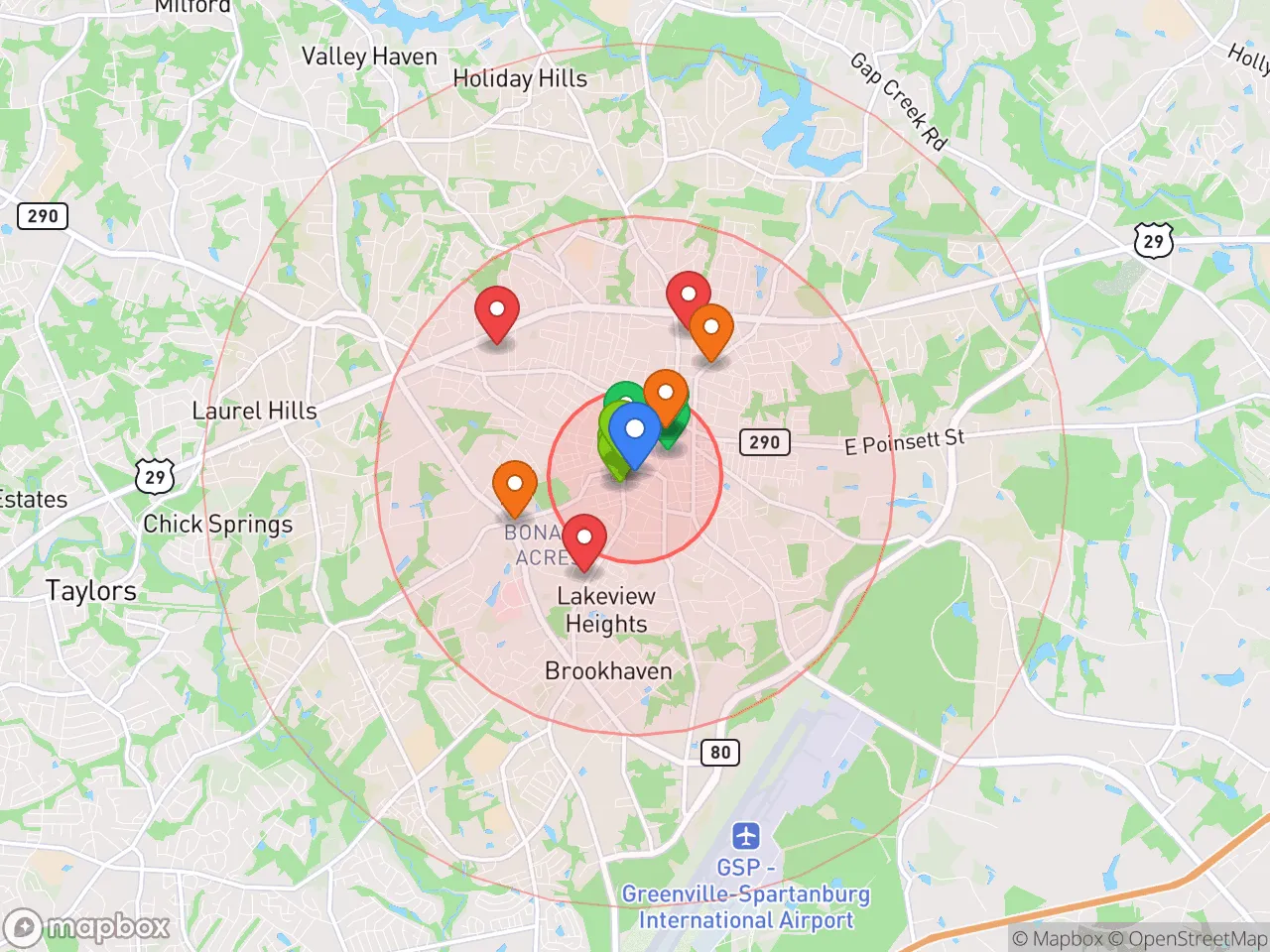
7 within 10 miles
Gas
20 within 10 miles
Hospital
12 within 20 miles
Airport
CLT — Charlotte Douglas International
Post Office
USPS — Greer, SC
Critical Amenities
Quality-of-Life Analysis
Greer, South Carolina, has evolved from a quiet mill town into one of the Upstate’s most desirable suburbs, attracting a mix of BMW and Michelin executives, remote tech workers, and families seeking a lower cost of living without sacrificing access to a major metro. With a cost-of-living index of 97 (3% below the U.S. average) and a median home value of $264,300, Greer offers a tangible affordability advantage over nearby Greenville (index ~103) and Spartanburg (index ~95), while delivering higher median household incomes than either city. The result is a community where professionals and tradespeople alike can afford a single-family home with a yard, a reality increasingly rare in the Southeast’s booming hubs.
Cost of living and housing affordability compared to Greenville and Spartanburg
Greer’s housing market sits in a sweet spot: median home values are roughly $35,000 less than Greenville’s but only $10,000 more than Spartanburg’s, yet the city’s school ratings and commute times often beat both. The median rent of $1,144 is about $150 lower than Greenville’s average, making it a strong option for renters who want proximity to the Prisma Health system or the BMW plant without paying a premium. Property taxes in Greenville County (which covers most of Greer) run about 0.55% of assessed value, well below the national average of 1.1%, keeping monthly carrying costs manageable. The average commute of 24.3 minutes is shorter than the national average (26.4 min) and significantly better than Greenville’s 27-minute average, largely because many residents work at the nearby BMW Manufacturing Co. campus or along the I-85 corridor. Utility costs in Greer are roughly 8% below the national average, and groceries run about 5% lower, further stretching household budgets.
What daily life is like for families: schools, parks, and local amenities
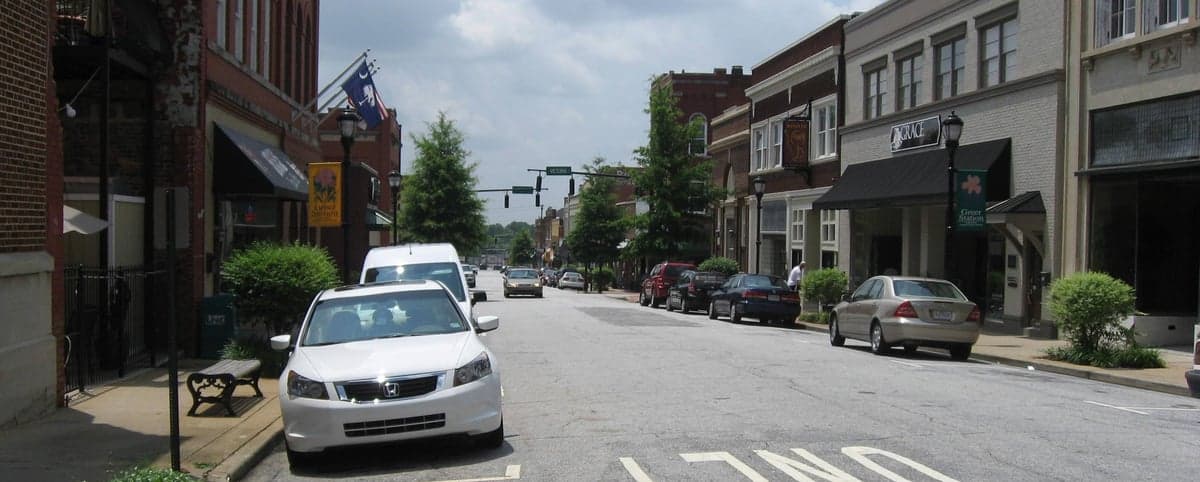
Daily life in Greer revolves around a walkable downtown core that has added breweries, farm-to-table restaurants, and a Saturday morning farmers market in recent years, while still retaining its small-town feel. The city’s public schools—particularly Greer High School (rated 8/10 on GreatSchools) and Riverside High School (rated 9/10)—draw families from across the county, and the Greenville County School District consistently ranks among South Carolina’s top five. For recreation, the Greer City Park offers a splash pad, tennis courts, and a 1.5-mile walking loop, while the nearby Swamp Rabbit Trail provides a 22-mile paved path connecting Greer to Greenville and Travelers Rest. The city’s median age of 36.5 skews younger than the state average (39.2), reflecting an influx of families and early-career professionals. Crime rates in Greer are roughly 25% below the national average for property crime and 40% below for violent crime, according to 2025 FBI data, making it one of the safer mid-sized cities in the Upstate. Weekend rhythms often include a hike at Paris Mountain State Park (15 minutes away) or a drive to the Blue Ridge Mountains (45 minutes), giving residents outdoor access without the congestion of Asheville or Charlotte.
Greer is best suited for professionals and families who want a lower cost of living than Greenville or Charlotte, combined with strong schools and short commutes to major employers like BMW, Michelin, and GE Gas Power. Remote workers will appreciate the fiber-optic broadband coverage (available in 92% of the city) and the ability to buy a home for under $300,000 within 25 minutes of a major airport (GSP). Retirees on fixed incomes may find Spartanburg’s even lower COL more appealing, but for anyone prioritizing school quality, job access, and a walkable downtown, Greer offers a rare balance of affordability and upward mobility in the booming I-85 corridor.

Crime in Greer, SC
Generally safer than 62% of comparable U.S. locations.
Violent CrimeViolent Crime Analysis
Property CrimeProperty Crime Analysis
Crime Analysis
Greer, South Carolina, presents a mixed safety profile that reflects its rapid growth as a Greenville-Spartanburg suburb. With a violent crime rate of 255.1 incidents per 100,000 residents and a property crime rate of 1,091.2 per 100,000, the city sits notably above national averages for both categories. The overall picture is one of a community where property crime is a more pressing day-to-day concern than violent offenses, though neither metric is negligible for those considering relocation.
Crime in context
Greer’s violent crime rate is roughly 27% higher than the national average of approximately 200 per 100,000, while its property crime rate exceeds the U.S. norm by about 35%. Compared to South Carolina’s statewide violent crime rate of roughly 490 per 100,000, Greer appears safer—but the property crime rate is nearly identical to the state average. This places Greer in a middle tier: safer than many larger cities in the Upstate region but riskier than the most affluent, low-crime suburbs. A key concern for residents is the influence of the broader Greenville County judicial system, which has seen progressive district attorneys prioritize diversion programs and reduced sentencing for non-violent offenders. While intended to reduce incarceration, such policies can result in repeat property offenders cycling back onto the streets, directly impacting neighborhood safety and victim restitution.
What residents experience
For those living in Greer, property crime is the dominant issue. Theft from vehicles, package theft, and burglaries are the most commonly reported incidents, particularly in areas near major retail corridors like Wade Hampton Boulevard and the I-85 interchange. Violent crime, while less frequent, is not absent—assaults and robberies tend to cluster in specific apartment complexes and commercial zones rather than spreading evenly across the city. Residents often report feeling safe in their immediate neighborhoods during the day but express caution after dark, especially in areas with high rental turnover. The presence of a progressive prosecutorial philosophy in the 13th Judicial Circuit means that even when arrests are made, plea deals and reduced charges are common, which can erode public confidence in the justice system’s ability to deter repeat offending.
Neighborhood-level variation is significant. Established, owner-occupied subdivisions like those in the 29650 and 29651 zip codes near the city’s historic downtown generally report lower crime rates than newer, higher-density developments along the Highway 14 corridor. Gated communities and HOAs with active neighborhood watch programs see markedly fewer incidents. Prospective residents should examine block-level crime maps and consider that the city’s rapid annexation of new housing developments may introduce transient populations that correlate with higher property crime. Overall, Greer demands a proactive approach to home security and awareness of local judicial trends, but it is not a high-danger environment for those who choose their specific street carefully.
* Values derived from national, state, county, city and local statistics and may differ in a specific area. Last updated: 2026-04-29T19:26:42.000Z
Narrative content on this page is AI-generated and may contain mistakes. Verify any details that matter before acting on them.
ReloMaps may earn a commission from affiliate links at no extra cost to you.

