Demographics of Gretna, NE
Affluence Level in Gretna, NE
An upper-middle-class area. Household wealth, education levels, and homeownership run ahead of national benchmarks.
People of Gretna, NE
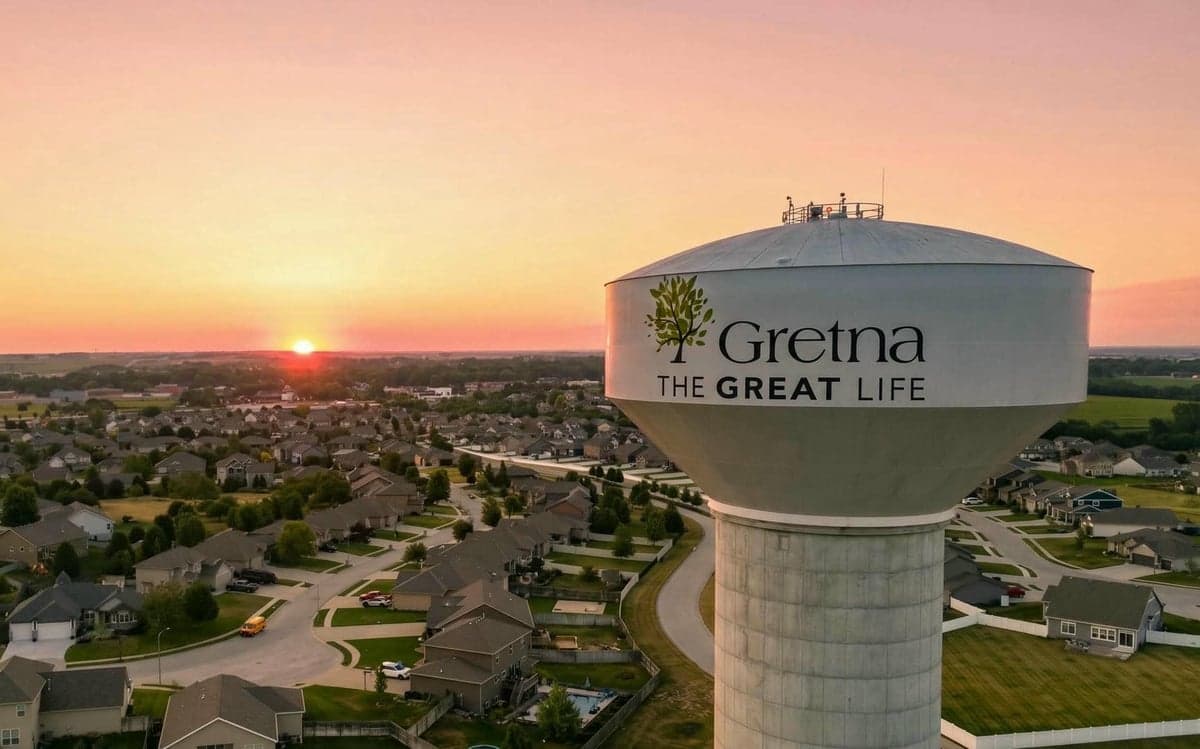
Gretna, Nebraska, is a rapidly growing suburban city of 9,117 residents that remains overwhelmingly white (90.6%) and native-born, with a foreign-born population of just 0.2%. Its character is defined by a blend of agricultural roots and new master-planned subdivisions, attracting families and individuals seeking larger homes, good schools, and a conservative-leaning community within commuting distance of Omaha. The city’s population has more than doubled since 2010, driven almost entirely by domestic in-migration of white, college-educated professionals (53.1% hold a bachelor’s degree or higher).
How the city was settled and grew
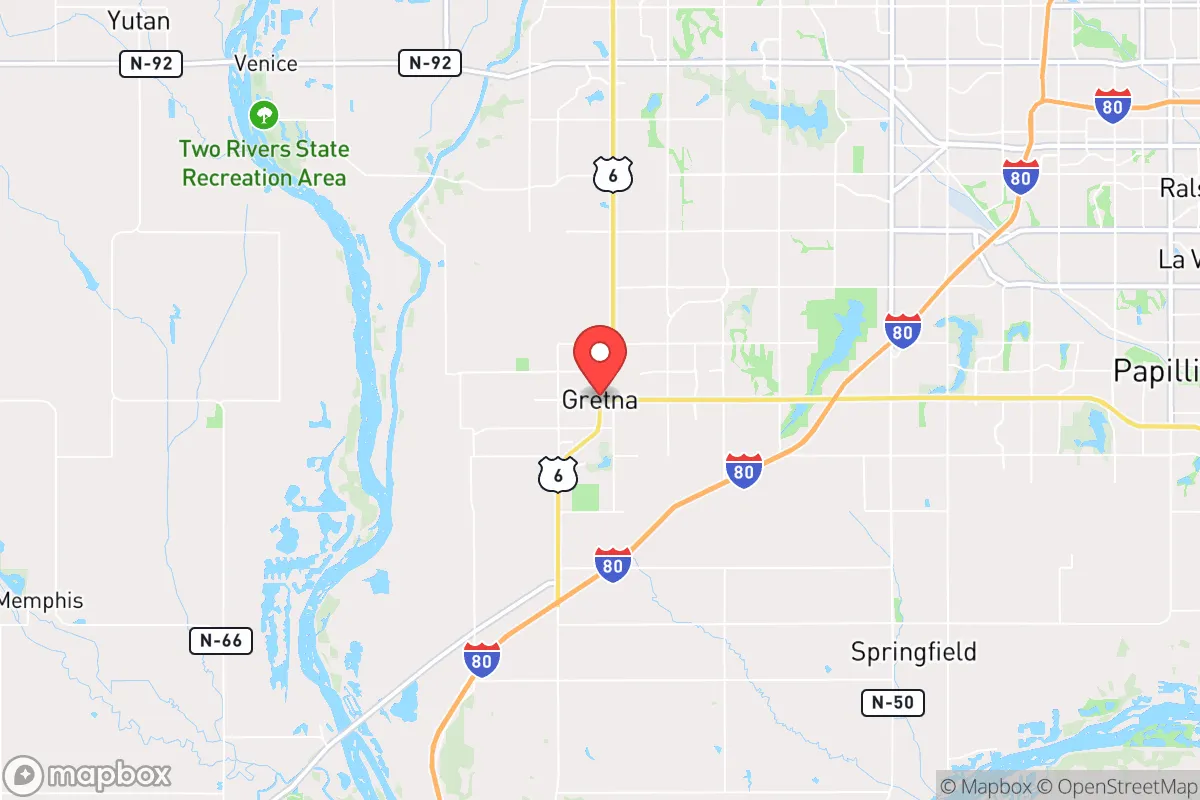
Gretna’s original population was drawn by the promise of fertile farmland and the arrival of the Union Pacific Railroad in the 1860s. The first settlers were predominantly German and Czech immigrants, who established small farms and a tight-knit village centered around the railroad depot. The historic Olde Towne Gretna district, with its brick storefronts and early 20th-century homes, was the original settlement core, built by these families. A second wave of growth came in the 1950s and 1960s, when the completion of Interstate 80 made Gretna a viable bedroom community for Omaha. This period saw the development of the Gretna Hills neighborhood, a collection of ranch-style homes that attracted white-collar workers from the city. The population remained small—under 1,000—through the 1980s, with the community’s identity firmly rooted in its rural, predominantly white, and Protestant heritage.
Modern era (post-1965)
The post-1965 immigration reforms had virtually no impact on Gretna, as the city’s foreign-born population remains negligible at 0.2%. Instead, the modern era has been defined by explosive domestic suburbanization. The 1990s and 2000s saw the construction of large, master-planned subdivisions like South Ridge and Stone Creek, which attracted families from Omaha and western Douglas County seeking newer, larger homes on bigger lots. These neighborhoods are overwhelmingly white and affluent, with median household incomes well above the state average. The Hispanic population, now 4.6%, is the largest minority group, concentrated in a few older rental properties near the Gretna Crossing commercial district and in mobile home parks along Highway 6/31. The East/Southeast Asian community (0.3%) and Black population (0.2%) are tiny and scattered, with no distinct ethnic enclaves. The Indian subcontinent population is essentially zero (0.0%). The city’s growth has been almost entirely white, native-born, and college-educated, reinforcing its homogeneous character.
The future
Gretna’s population is heading toward further homogenization, not tribalization into distinct enclaves. The city’s zoning policies favor large-lot, single-family homes, which effectively price out lower-income and immigrant households. The Gretna Crossing area, a mixed-use development anchored by a new high school and retail, is attracting more of the same demographic: white, married couples with children. The Hispanic population is growing slowly, from 3.1% in 2010 to 4.6% today, but remains a small share. The foreign-born population is not expected to rise significantly, as the city lacks the rental housing stock, public transit, and entry-level jobs that attract new immigrants. Over the next 10-20 years, Gretna will likely continue to grow to 15,000-20,000 residents, driven by annexation of adjacent farmland and new subdivisions like Westridge and Prairie Fields. The population will remain overwhelmingly white, conservative, and family-oriented, with a strong emphasis on the local school system and low crime rates.
For someone moving in now, Gretna offers a predictable, stable, and homogeneous suburban environment. It is a place where the population is becoming more affluent and more educated, but not more diverse. The city’s future is one of continued growth by replication—attracting more of the same kind of people who already live there—rather than transformation through immigration or demographic change.

* Values derived from national, state, county, city and local statistics and may differ in a specific area. Last updated: 2026-05-03T20:29:47.000Z
Narrative content on this page is AI-generated and may contain mistakes. Verify any details that matter before acting on them.
ReloMaps may earn a commission from affiliate links at no extra cost to you.

