
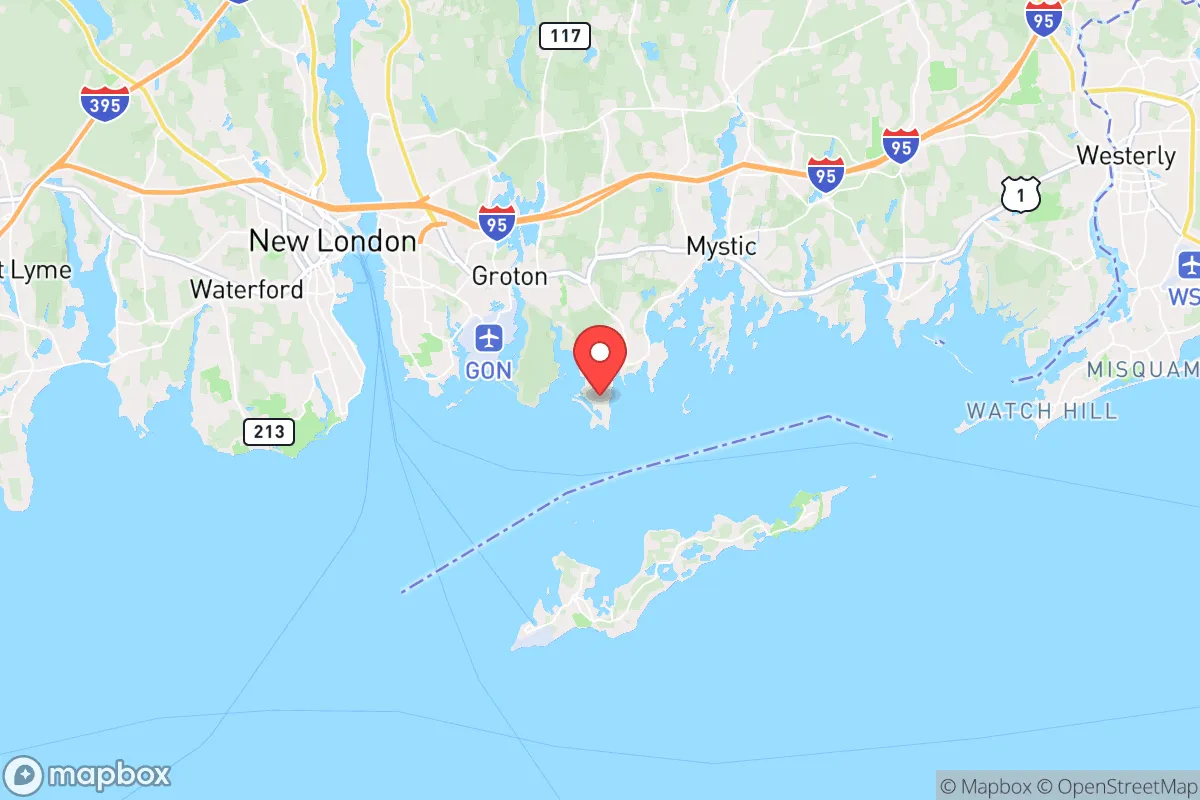
Personal Sovereignty in Groton Long Point, CT
Viable for self-reliance. Generally workable, though some barriers may limit total independence.
What does Personal Sovereignty tell us?
Personal Sovereignty measures your capacity for self-reliance and independence with minimal government friction. Higher scores mean fewer barriers between you and the way you want to live... but it assumes you have the space you need and good neighbors.
What does this tell us?
Personal Sovereignty measures your capacity for self-reliance and independence with minimal government friction. Higher scores mean fewer barriers between you and the way you want to live... but it assumes you have the space you need and good neighbors.
State Policy
Energy independence: Importer (5% of energy produced in-state)
Personal Liberty
Homesteading

Personal Liberty Analysis
Groton Long Point, Connecticut, presents a complex sovereignty picture for the conservative-leaning individual or family. While the borough’s small size and coastal New England character offer a degree of physical isolation, the autonomy environment is heavily constrained by state-level policies that rank among the most restrictive in the nation. For a prepper or survivalist mindset, the immediate takeaway is that personal sovereignty here is a defensive posture—you must actively navigate and mitigate state overreach rather than relying on local governance to protect your freedoms.
Tax burden and regulatory posture in Groton Long Point
Connecticut’s tax burden is the second-highest in the United States, and Groton Long Point residents feel this acutely. The state imposes a progressive income tax with rates up to 6.99%, a sales tax of 6.35% (with no local option to reduce it), and some of the highest property taxes in the country. In Groton Long Point, property tax rates hover around 2.5% of assessed value, meaning a modest $400,000 home carries an annual tax bill of roughly $10,000. This is a direct drain on resources that could otherwise fund self-reliance projects—food storage, solar panels, or land improvements. The regulatory posture is equally burdensome. Connecticut’s state building codes are among the strictest in New England, requiring permits for even minor structural changes, and the Department of Energy and Environmental Protection (DEEP) enforces rigorous coastal management rules that limit what you can do with shoreline property. For a prepper, this means any off-grid or defensive infrastructure—like a generator shed, a root cellar, or reinforced fencing—will likely require permits and inspections, creating a paper trail that invites government scrutiny. The borough itself has some local zoning control, but it operates under state mandates that prioritize environmental review over property rights, so expect delays and costs if you plan to modify your home for resilience.
Self-defense and gun law specifics in Connecticut
Connecticut’s gun laws are among the most restrictive in the country, and Groton Long Point offers no local exemption. The state requires a permit to purchase any firearm, a background check for all sales (including private transfers), and a separate permit to carry a handgun concealed or openly. The carry permit process involves an 8-hour safety course, fingerprinting, and a background check that can take weeks. Magazine capacity is capped at 10 rounds for rifles and handguns, and the state maintains an assault weapons ban that covers many popular AR-15 platforms and their variants. For a survivalist, this is a critical limitation: you cannot legally stockpile standard-capacity magazines or acquire certain defensive rifles without navigating a complex registration system. Self-defense law is also restrictive. Connecticut has a duty to retreat in public spaces before using deadly force, except inside your home (the Castle Doctrine applies, but with a narrow interpretation). Stand-your-ground protections do not exist. This means that if you defend your property or family outside your dwelling—say, on your front lawn or in your driveway—you may face legal jeopardy. The borough’s small police force (part-time, with state police backup) means response times could be slow in a crisis, but the legal environment discourages proactive self-defense. For a prepper, the practical advice is to invest heavily in non-lethal options (pepper spray, security lighting, reinforced doors) and to consult a firearms attorney before making any defensive purchases.
Self-reliance and homesteading viability in Groton Long Point
Groton Long Point is a densely developed coastal borough with lot sizes averaging 0.1 to 0.25 acres. This makes traditional homesteading—raising livestock, growing substantial food crops, or installing large-scale off-grid systems—nearly impossible. Zoning regulations prohibit farm animals (chickens are allowed only with a special permit, and larger livestock are outright banned), and the borough’s water and sewer systems are municipally managed, so you cannot drill a private well or install a septic tank without extensive variance requests. Off-grid feasibility is low. The borough is connected to the regional power grid (Eversource), and while solar panels are permitted, they must meet state net-metering rules and cannot be used to disconnect from the grid entirely. Battery storage is allowed but subject to fire code inspections. Rainwater collection is legal but limited to 100 gallons per property under state water rights law. For a prepper, the realistic path to self-reliance here is not land-based homesteading but rather urban survivalism: stockpiling supplies in a small home, investing in a portable generator (with fuel storage limits of 25 gallons indoors), and building relationships with local fishermen and farmers for barter. The nearby Thames River and Long Island Sound offer fishing and crabbing opportunities, but access is regulated by state licenses and seasonal limits. If you want acreage for a full homestead, you’ll need to look inland—say, in North Stonington or Voluntown—where lot sizes are larger and zoning is more permissive.
Personal liberties in Groton Long Point: parental rights, medical autonomy, speech, and property
Parental rights in Connecticut are under increasing pressure. The state mandates comprehensive sex education in public schools, and parents cannot opt their children out of specific lessons—only the entire curriculum. Medical autonomy for children is also limited: the state allows minors to consent to certain treatments (including mental health care and substance abuse counseling) without parental notification. For a conservative parent, this means you must be vigilant about what your child is exposed to at school and what medical decisions they might make independently. Medical freedom for adults is similarly constrained. Connecticut has some of the strictest vaccine mandates in the country, including requirements for healthcare workers and school attendance, with narrow religious exemptions that are frequently challenged in court. Telehealth and alternative medicine are legal but heavily regulated by the state Department of Public Health. Free speech is protected under the First Amendment, but Connecticut has enacted laws that restrict certain forms of political speech, including campaign finance limits and anti-mask laws that could affect protest or anonymity. Property rights are the weakest link. The state’s coastal management laws give DEEP broad authority to restrict development, landscaping, and even tree removal within 100 feet of tidal wetlands—which covers much of Groton Long Point. You cannot build a fence, install a dock, or trim vegetation without a permit, and violations can result in fines and restoration orders. For a prepper, this means your property is not truly your own; the state has a permanent easement over your land’s environmental use.
Overall, Groton Long Point offers a low sovereignty score relative to other areas in the Northeast. The borough’s physical isolation on a peninsula provides some security from urban chaos, but the state-level tax burden, gun restrictions, and regulatory overreach create a high-cost, low-freedom environment. For a survivalist or conservative individual, this location is best viewed as a temporary base or a retreat for those who can afford to navigate the legal maze—not a long-term homestead or a place to build a self-sufficient life. If personal sovereignty is your top priority, look to states like New Hampshire or Maine, where tax burdens are lower, gun laws are more permissive, and property rights are stronger. In Groton Long Point, you are trading autonomy for coastal beauty and proximity to the submarine base—a trade that only makes sense if you are willing to fight for every inch of your freedom.

* Values derived from national, state, county, city and local statistics and may differ in a specific area. Last updated: 2026-05-03T20:21:56.000Z
Narrative content on this page is AI-generated and may contain mistakes. Verify any details that matter before acting on them.
ReloMaps may earn a commission from affiliate links at no extra cost to you.

